Ram 1500 Engine Options by Year: 2026 Complete Powertrain Chart

The Ram 1500 engine options by year have changed more than most owners realize. From the Magnum V8 family that debuted in the iconic Big Rig generation of 1994 to the twin-turbo Hurricane I-6 that arrived for 2025,
Ram has retired four engine families, introduced six new ones, and made one historic reversal: pulling the beloved 5.7L HEMI V8 for 2025, then restoring it for 2026 after strong customer demand pushed Ram’s hand.
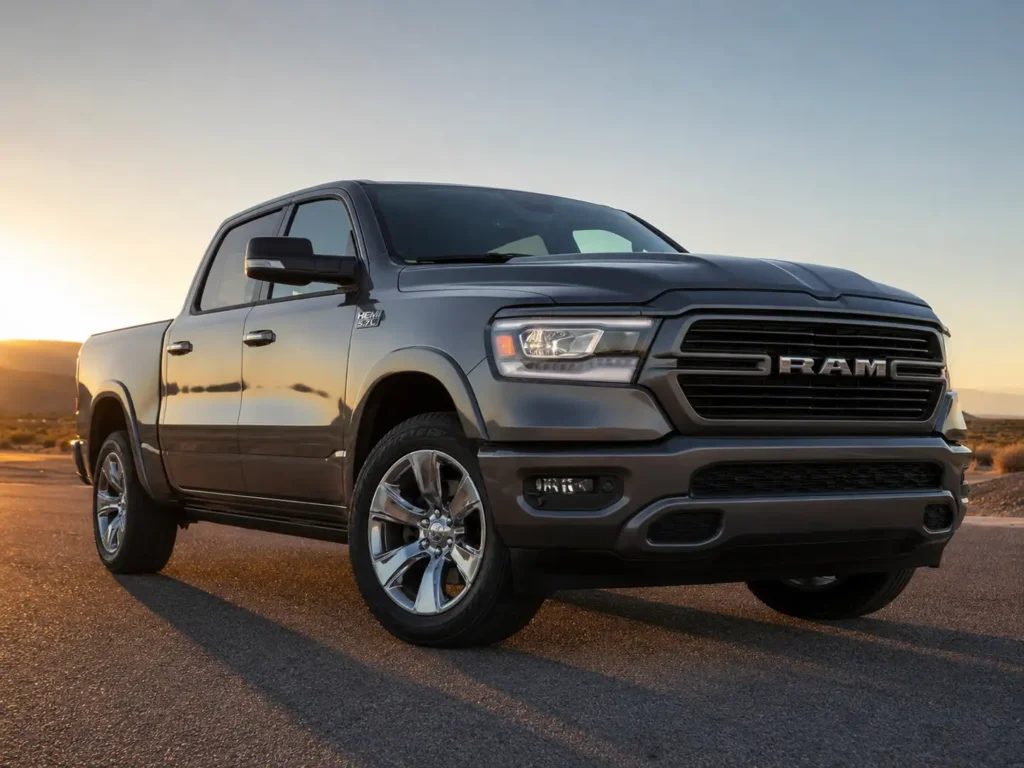
Whether you are tracking down a used truck, trying to decode what’s under your hood, or comparing generations before buying, this guide covers every engine available in the Ram 1500 from 1994 through 2026, with full horsepower and torque figures, key changeover years, and a complete specs chart for quick reference.
Ram 1500 engine options by year, infographic showing horsepower and torque across five generations from 1994 to 2026
Recommended Best Deal Products


Ram 1500 engine options by year
Horsepower, torque, and key milestones across all five generations — 1994 to 2026
Peak horsepower by engine, across generations
Ram 1500 Engine Options at a Glance by Generation
The generation your truck belongs to determines which engines were physically available at the factory. Ram’s five generations span 30-plus years and three distinct powertrain philosophies: naturally aspirated Magnum engines, the naturally aspirated HEMI era, and today’s turbocharged and electrified platforms.
The table below maps each generation to its available engine families before the detailed sections cover specs and milestones.
| Generation | Years | Platform | Available Engines |
|---|---|---|---|
| Gen 2 | 1994–2001 | BR/BE | 3.9L V6 Magnum, 5.2L V8 Magnum, 5.9L V8 Magnum |
| Gen 3 | 2002–2008 | DR/DH | 3.7L V6, 4.7L V8, 5.7L HEMI V8 |
| Gen 4 | 2009–2018 | DS | 3.7L V6, 4.7L V8, 5.7L HEMI V8, 3.6L Pentastar V6, 3.0L EcoDiesel V6 |
| Gen 5 | 2019–2024 | DT | 3.6L Pentastar V6 eTorque, 5.7L HEMI V8 eTorque, 3.0L EcoDiesel V6 (2020–2023), 6.2L Supercharged HEMI V8 (TRX only) |
| Gen 5 Refresh | 2025–2026 | DT | 3.6L Pentastar V6 eTorque, 3.0L Hurricane I-6 SO, 3.0L Hurricane I-6 HO, 5.7L HEMI V8 eTorque (2026 only) |
Each generation introduced or retired at least one engine. The sections below cover each one with verified horsepower, torque, and key change notes.
Gen 2 Dodge Ram 1500 Engine Options from 1994 to 2001
Recommended Best Deal Products


The second-generation Ram 1500 launched with three Magnum-series engines, all beneficiaries of a significant 1993 pre-launch upgrade that added multi-port fuel injection and revised cylinder heads to the existing V-series block family. These were mechanically straightforward, naturally aspirated engines with no cylinder deactivation or hybrid assist.
3.9L V6 Magnum
The base engine across the entire Gen 2 run. It produced 175 hp at 4,800 rpm and 225 lb-ft of torque, with a slight output reduction to 170 hp for the 1996 model year during an emissions tune. Work-truck buyers used it for light hauling, but most enthusiasts and towing-focused owners stepped up immediately to one of the V8 options.
5.2L V8 Magnum
The mid-range V8 produced 220 hp and 300 lb-ft of torque. It was standard in some 4×4 configurations and optional on the 1500 series. Solid for moderate towing and widely regarded as the more reliable of the two Magnum V8s due to its smaller displacement and lower thermal stress.
5.9L V8 Magnum
The top gasoline engine in the Gen 2 lineup. Output was 230 hp and 330 lb-ft for 1994-1995, then upgraded to 245 hp for 1996-2001 after cam and exhaust changes removed the need for an EGR system. The 5.9L was the towing choice of the generation, though it carried over the same basic Chrysler LA block architecture that dated to 1964.
The Magnum V8 family was retired entirely when the third generation arrived in 2002, replaced by modern overhead-cam architecture and one of the most significant engine introductions in Ram history.
Gen 3 Dodge Ram 1500 Engine Options from 2002 to 2008
The third generation is where the 5.7L HEMI V8 entered the Ram 1500 lineup for the first time, replacing the aging 5.9L Magnum and raising the performance benchmark substantially. The 5.9L Magnum was used for the 2002 model year only; the HEMI arrived for 2003.
3.7L V6 PowerTech
Produced 215 hp and 235 lb-ft of torque across the 2002-2008 run. It was the base engine on most trims, but reviewers consistently called it underpowered for truck duty. The 3.7L shared its block architecture with the 4.7L V8, essentially the same engine with two cylinders removed. It remained in the lineup through early Gen 4.
4.7L V8 PowerTech
Rated at 235 hp and 295 lb-ft of torque for most of the Gen 3 run (2002-2007). For 2008, Ram gave the 4.7L a significant upgrade, pushing it to 310 hp and 330 lb-ft through a new camshaft, revised fuel calibration, and forged connecting rods. A flex-fuel (E85-capable) version also joined the lineup in 2007.
5.7L HEMI V8
Introduced in 2003, the 5.7L HEMI produced 345 hp and 375 lb-ft of torque, a jump of roughly 100 hp over the 5.9L Magnum it replaced. For 2006, Ram added the Multi-Displacement System (MDS), which shuts down four of the eight cylinders under light load to improve fuel economy. The 5.7L HEMI was the clear performance and towing engine of the generation, rated for up to 9,100 lb of towing when properly equipped.
Note: The SRT-10 variant (2004-2006) carried the Dodge Viper’s 8.3L V10 producing 500 hp, but it was sold as a distinct performance model, not a standard 1500 configuration.
The fourth generation brought the biggest powertrain shakeup yet, retiring the 3.7L and 4.7L engines and introducing the modern 3.6L Pentastar V6 and the first half-ton diesel of the modern era.
Gen 4 Ram 1500 Engine Options from 2009 to 2018
Recommended Best Deal Products


The fourth-generation Ram 1500 ran from 2009 to 2018, but the engine lineup at launch looked nothing like the one at exit. Ram retired two engines and introduced two new ones during this span, making it the most transition-dense generation in the truck’s history. The platform also moved to the coil-spring rear suspension that dramatically improved ride quality.
3.7L V6 (2009-2012, Final Years)
The 3.7L V6 carried forward from Gen 3 with the same 215 hp and 235 lb-ft ratings. Ram discontinued it after 2012, replacing it with the far more capable 3.6L Pentastar for 2013. By 2012, the 3.7L’s fuel economy was no better than the HEMI’s, making it a poor value proposition at any trim level.
4.7L V8 (2009-2013, Final Years)
The updated 4.7L carried its 2008-spec numbers of 310 hp and 330 lb-ft into Gen 4. Ram discontinued it after the 2013 model year when the 3.0L EcoDiesel arrived and filled the mid-range towing role more efficiently. A flex-fuel version remained available through the end of its run.
3.6L Pentastar V6 (2013-2018)
The Pentastar replaced the 3.7L V6 for 2013 and was a genuine upgrade in every measurable way: 305 hp and 269 lb-ft of torque, paired with the new 8-speed TorqueFlite 845RE automatic transmission. Fuel economy improved from a flat 14/20 mpg (3.7L) to an EPA-rated 17/25 mpg. It became the standard base engine from 2013 onward and continues in the Gen 5 platform.
5.7L HEMI V8 (2009-2018)
The Gen 4 HEMI launched at 390 hp and 407 lb-ft of torque for 2009, up from the Gen 3’s 345 hp, thanks to revised breathing and a new variable valve timing system. For 2013, Ram pushed the output to 395 hp and paired it with electric power steering. Towing capacity reached up to 10,650 lb when configured with the Max Tow Package and proper axle ratio.
3.0L EcoDiesel V6 (2014-2018)
The 3.0L EcoDiesel (Diesel Exhaust Fluid system required) debuted for 2014, making the Ram 1500 the first modern half-ton pickup to offer a light-duty diesel engine. It produced 240 hp and 420 lb-ft of torque, with an EPA rating of 20/27 mpg and towing capacity up to 9,200 lb. Ram pulled the EcoDiesel mid-2017 due to an emissions investigation, then brought it back for 2018. For the full reliability story on which years to avoid, the EcoDiesel reliability guide by year covers every generation in detail.
The fifth generation launched in 2019 with eTorque mild hybrid technology across most engines, and eventually introduced the Hurricane I-6 that replaced the HEMI entirely for 2025.
Gen 5 Ram 1500 Engine Options from 2019 to 2026
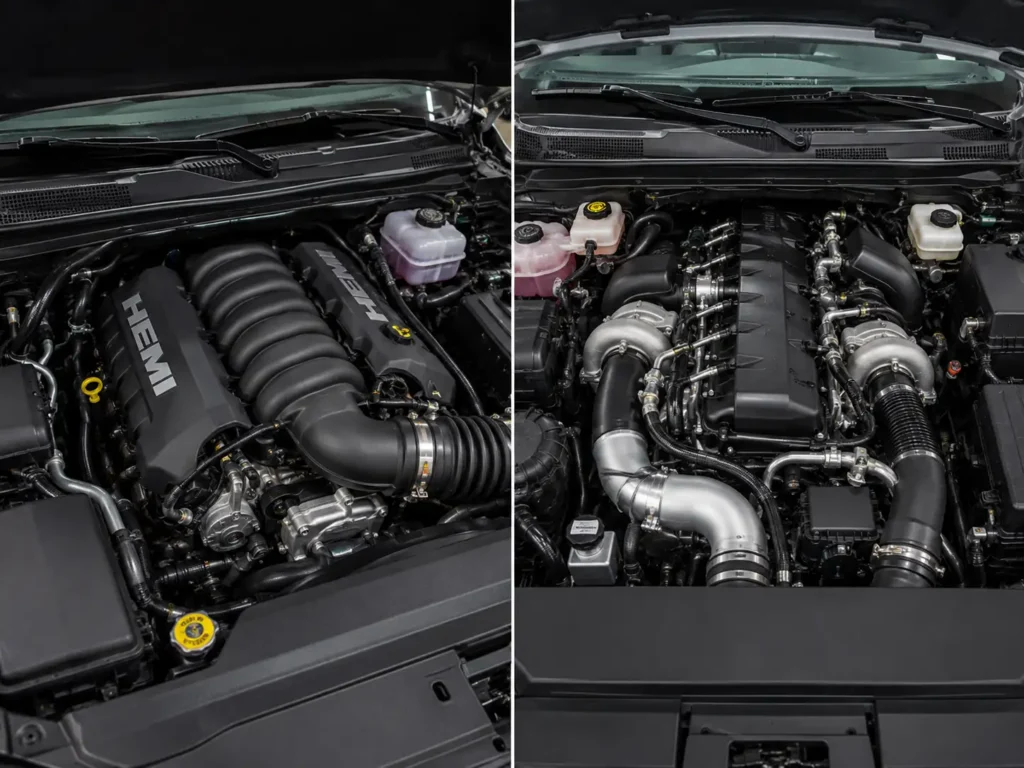
The fifth-generation Ram 1500 launched in 2019 with eTorque mild hybrid technology on most engines. The eTorque system replaces the traditional alternator with a belt-driven motor generator unit paired with a 48-volt lithium-ion battery pack, adding supplemental torque at low engine speeds and enabling smoother stop-start operation. It is not a plug-in hybrid. There is no external charging port.
3.6L Pentastar V6 with eTorque (2019–Present)
Output remains 305 hp and 269 lb-ft of torque from the engine itself, but the eTorque system adds up to 90 lb-ft of supplemental torque at initial throttle input. Fuel economy improved to an EPA-rated 20/25 mpg in 2WD configuration. It remains the base engine across all current Ram 1500 trims and delivers up to 7,730-8,130 lb of towing capacity depending on configuration.
5.7L HEMI V8 with eTorque (2019–2024, 2026)
The eTorque system added 130 lb-ft of supplemental torque on top of the HEMI’s rated 395 hp and 410 lb-ft. Towing capacity with the Max Tow Package reached up to 12,750 lb when properly configured with Crew Cab, 4×4, and a 3.92 rear axle. Ram removed the HEMI from the 1500 lineup for 2025, then reversed course and restored it for 2026 at the same output figures in response to widespread buyer objections.
3.0L EcoDiesel V6 Gen 2 (2020–2023)
The refreshed second-generation EcoDiesel arrived for 2020 with output bumped to 260 hp and 480 lb-ft of torque, enabling up to 12,560 lb of towing. Fuel economy reached up to 32 mpg highway in 2WD trim. Ram ended production of this engine in January 2023 as part of a broader shift away from diesel in the half-ton segment. For the complete specs and discontinuation timeline, the Hurricane engine specs guide covers the transition in full detail.
6.2L Supercharged HEMI V8 (TRX Only, 2021–2024)
The Ram 1500 TRX carried the same supercharged 6.2L HEMI V8 found in the Dodge Hellcat family, producing 702 hp and 650 lb-ft of torque. This engine was exclusive to the TRX performance variant and was not available on any other Ram 1500 trim. Ram discontinued the TRX after the 2024 model year due to emissions compliance costs.
3.0L Hurricane Twin-Turbo I-6, Standard Output (2025–Present)
The Hurricane SO produces 420 hp and 469 lb-ft of torque, meaningfully more than the HEMI V8 it replaced in the 2025 lineup, and with better fuel economy. Towing capacity with the SO engine reaches up to 11,610 lb. The Hurricane uses a twin-turbocharged inline-six architecture rather than the V8 layout Ram owners had known for 22 years.
3.0L Hurricane Twin-Turbo I-6, High Output (2025–Present)
The HO version of the Hurricane produces 540 hp and 521 lb-ft of torque, available on upper trims including the Tungsten and RHO. It delivers 0-60 mph performance that surpasses the discontinued TRX in some configurations, though towing capacity is rated at up to 10,000 lb due to the suspension and brake tuning of the performance-oriented trims it occupies.
With all five generations covered, the full specs chart below puts every engine side-by-side for direct comparison.
Complete Ram 1500 Engine Specs Chart by Year and Generation
The table below covers every Ram 1500 engine option from 1994 to 2026. Use the Notes column to catch critical mid-year changes, trim-specific restrictions, and discontinuation dates.
| Year Range | Engine | HP | Torque (lb-ft) | Transmission | Notes |
|---|---|---|---|---|---|
| GEN 2 (1994-2001) | Platform BR/BE | Magnum Engine Family | |||||
| 1994–2001 | 3.9L V6 Magnum | 175 | 225 | 4-spd auto / 5-spd manual | Base engine; 170 hp in 1996 due to emissions retune |
| 1994–2001 | 5.2L V8 Magnum | 220 | 300 | 4-spd auto | Optional on 1500; standard on some 4×4 trims |
| 1994–1995 | 5.9L V8 Magnum | 230 | 330 | 4-spd auto | Pre-1996 output; cam/exhaust upgrade coming |
| 1996–2001 | 5.9L V8 Magnum | 245 | 335 | 4-spd auto | EGR removed; cam revised; peak tow ~7,200 lb |
| GEN 3 (2002-2008) | Platform DR/DH | HEMI Debut Generation | |||||
| 2002–2008 | 3.7L V6 PowerTech | 215 | 235 | 4-spd auto / 6-spd manual | Base engine; same block as 4.7L V8 minus 2 cylinders |
| 2002–2007 | 4.7L V8 PowerTech | 235 | 295 | 4/5-spd auto; 5/6-spd manual | Mid-range V8; flex-fuel version added 2007 |
| 2008 | 4.7L V8 PowerTech (revised) | 310 | 330 | 5-spd auto / 6-spd manual | New cam, forged rods, revised calibration for final Gen 3 year |
| 2003–2005 | 5.7L HEMI V8 | 345 | 375 | 5-spd auto | HEMI debut replacing 5.9L Magnum; no MDS |
| 2006–2008 | 5.7L HEMI V8 (MDS) | 345 | 375 | 5-spd auto | MDS cylinder deactivation added 2006; tow up to 9,100 lb |
| GEN 4 (2009-2018) | Platform DS | Pentastar and EcoDiesel Era | |||||
| 2009–2012 | 3.7L V6 PowerTech | 215 | 235 | 4-spd auto | Final generation for 3.7L; discontinued after 2012 |
| 2009–2013 | 4.7L V8 (310 hp spec) | 310 | 330 | 5-spd auto | Final generation for 4.7L; discontinued after 2013 |
| 2009–2012 | 5.7L HEMI V8 | 390 | 407 | 5-spd auto | VVT added; 10% efficiency gain over Gen 3; tow up to 10,450 lb |
| 2013–2018 | 3.6L Pentastar V6 | 305 | 269 | 8-spd TorqueFlite | Replaced 3.7L V6; 8-spd trans debut; 17/25 mpg EPA est. |
| 2013–2018 | 5.7L HEMI V8 | 395 | 410 | 8-spd TorqueFlite | Electric power steering added 2013; tow up to 10,650 lb (Max Tow) |
| 2014–2016 | 3.0L EcoDiesel V6 Gen 1 | 240 | 420 | 8-spd auto (ZF 8HP70) | First modern half-ton diesel; 20/27 mpg; tow up to 9,200 lb |
| 2018 | 3.0L EcoDiesel V6 Gen 1 (returned) | 240 | 420 | 8-spd auto (ZF 8HP70) | Pulled mid-2017 for emissions review; returned for 2018 MY |
| GEN 5 (2019-2026) | Platform DT | eTorque and Hurricane Era | |||||
| 2019–Present | 3.6L Pentastar V6 eTorque | 305 | 269 + 90* | 8-spd TorqueFlite | *eTorque adds 90 lb-ft supplemental torque; 20/25 mpg; tow up to 8,130 lb |
| 2019–2024, 2026 | 5.7L HEMI V8 eTorque | 395 | 410 + 130* | 8-spd TorqueFlite | *eTorque adds 130 lb-ft; tow up to 12,750 lb (Max Tow); removed 2025, returned 2026 |
| 2020–2023 | 3.0L EcoDiesel V6 Gen 2 | 260 | 480 | 8-spd auto (ZF 8HP75) | +20 hp / +60 lb-ft vs Gen 1; tow up to 12,560 lb; production ended Jan 2023 |
| 2021–2024 | 6.2L Supercharged HEMI V8 | 702 | 650 | 8-spd ZF 8HP95 | TRX variant only. Not available on standard 1500 trims; TRX discontinued after 2024 |
| 2025–Present | 3.0L Hurricane I-6 Standard Output | 420 | 469 | 8-spd auto | Replaced HEMI for 2025; tow up to 11,610 lb; better MPG than HEMI |
| 2025–Present | 3.0L Hurricane I-6 High Output | 540 | 521 | 8-spd auto | Upper trims (Tungsten, RHO); tow up to 10,000 lb; replaces TRX as halo engine |
Towing capacity figures in the chart represent maximum ratings under optimal configurations. Actual capacity varies by cab style, axle ratio, 4WD vs. 2WD, and installed packages. For configuration-specific towing ratings by year, engine, cab, and axle ratio, see the Ram Towing Capacity Chart by Year for the complete breakdown.
Which Ram 1500 Generation Has the Strongest Engine Lineup
The right engine depends entirely on what the truck will do. Here is where each generation stands for three common use cases.
Best for maximum towing: Gen 5 (2019-2024) with the 5.7L HEMI V8 eTorque and Max Tow Package. The 12,750 lb towing ceiling was the highest ever achieved by a Ram 1500 with a gasoline engine, and the eTorque system’s supplemental torque makes trailer hookup noticeably smoother at low speeds. Going forward into 2025-2026, the Hurricane SO technically tows more than the HEMI on paper at 11,610 lb, but real-world owner data is still accumulating.
Best for fuel economy: The Gen 2 EcoDiesel (2020-2023) remains the leader on the used market. At 260 hp and 480 lb-ft of torque, it pulls up to 12,560 lb while returning up to 32 mpg on the highway, numbers no gasoline Ram 1500 has come close to matching. The Gen 1 EcoDiesel (2014-2016) had emissions-related issues that make 2020-2023 trucks the safer buy in this segment.
Best balance of reliability and power: The late Gen 4 (2016-2018) with the 5.7L HEMI V8 and 8-speed TorqueFlite represents the most mature version of Ram’s proven gas platform. The transmission and engine combination had been in production long enough to have its early bugs ironed out, and the 395 hp output is more than adequate for most truck use cases. We recommend this window specifically for used-truck buyers who want HEMI power without paying Gen 5 prices.
Ram 1500 Engine Options by Year: Frequently Asked Questions
What engine does the Ram 1500 have by default?
The base engine has varied by generation. From 2013 onward, the standard engine is the 3.6L Pentastar V6 producing 305 hp. Before 2013, Gen 3 and early Gen 4 trucks came standard with the 3.7L V6 at 215 hp, which Ram discontinued after the 2012 model year.
When did the Ram 1500 drop the 5.7L HEMI?
Ram removed the 5.7L HEMI V8 from the 1500 lineup for the 2025 model year, replacing it with the 3.0L Hurricane twin-turbo I-6. Customer response was strongly negative, and Ram reversed course. The HEMI returned for 2026 at the same 395 hp and 410 lb-ft of torque ratings it had before.
What years did the Ram 1500 offer the EcoDiesel?
The 3.0L EcoDiesel V6 was available from 2014 through early 2023. The first generation (2014-2016) made 240 hp and 420 lb-ft of torque. The second generation (2020-2023) made 260 hp and 480 lb-ft. The engine was briefly pulled mid-2017 due to an emissions investigation and returned for 2018, then ended production in January 2023.
Does the Ram 1500 come with a V8 in 2026?
Yes. The 5.7L HEMI V8 with eTorque is available again on the 2026 Ram 1500 after being absent for 2025. It produces 395 hp and 410 lb-ft of torque and is offered on most Ram 1500 trims from Tradesman through Longhorn, with Rebel availability confirmed for late in the model year.
What is the most powerful engine ever offered in the Ram 1500?
The most powerful factory Ram 1500 engine is the 6.2L supercharged HEMI V8 found exclusively in the TRX performance variant from 2021 to 2024. It produced 702 hp and 650 lb-ft of torque. The TRX was discontinued after 2024, making it a collectible on the used market. Among standard 1500 trims, the Hurricane HO at 540 hp now holds the top spot.
Choosing the Right Ram 1500 Engine for Your Year and Needs
The Ram 1500 engine options by year tell the story of a platform that has never stood still. The Magnum V8 era gave way to the transformative 5.7L HEMI in 2003. The Pentastar V6 and EcoDiesel modernized the 2013-2018 trucks. And the Gen 5 eTorque platform pushed capability to levels the Big Rig generation could not have imagined.
For used-truck buyers, the late Gen 4 window (2016-2018) with the HEMI and 8-speed transmission is the proven sweet spot for reliability and value. For buyers who need maximum towing from a gas engine, the 2019-2024 Gen 5 HEMI with eTorque and the Max Tow Package is the peak of what Ram has achieved in the 1500 class.
If you need configuration-specific towing numbers for your year and engine, the Ram Towing Capacity Chart by Year on TruckGuider has every cab, axle, and engine combination covered.
![2019 Ram 1500 Coolant Type: Specs & Fitment Guide [2026]](https://truckguider.com/wp-content/uploads/2026/03/2019-ram-1500-coolant-type-featured.webp)