
Ram 2500 Diesel Towing Capacity & Payload Guide 2026

The three-quarter-ton truck segment represents one of the most fiercely contested battlegrounds in the automotive industry, characterized by continuous engineering escalation. Historically, the Ram 2500 has defined the intersection of unladen ride comfort and severe-duty hauling capability.
However, the transition into the 2025 and 2026 model years marks a profound architectural overhaul for the Stellantis heavy-duty platform. The engineering strategy has shifted from incremental updates to a comprehensive re-evaluation of powertrain dynamics, transmission mapping, and critical chassis certifications.


For over a decade, the Ram 2500 diesel platform relied heavily on a bifurcated engine strategy, offering a Standard Output (SO) Cummins paired with the proprietary 68RFE transmission, while reserving the High-Output (HO) variant and Aisin transmission exclusively for the one-ton 3500 models.
Market telemetry and real-world consumer behavior dictated a change; data indicates that approximately seventy percent of Ram Heavy-Duty consumers select the diesel engine, prioritizing maximum torque for towing heavy recreational and commercial loads.
Responding to this demand, the manufacturer discontinued the Standard Output variant entirely. The Ram 2500 is now propelled exclusively by the redesigned 6.7L High-Output Cummins Turbo Diesel, paired with a revolutionary ZF Powerline eight-speed automatic transmission.
Simultaneously, a quiet but critical regulatory recertification has increased the Gross Vehicle Weight Rating (GVWR) of the diesel-equipped Ram 2500, resolving historical payload deficits that plagued the platform when hooking up to heavy fifth-wheel trailers.
This exhaustive analysis deconstructs the Ram 2500 diesel towing capacity, examining engine performance metrics, detailed configuration limitations, suspension dynamics, advanced trailering technology, and the strict maintenance protocols required for severe-duty applications.
Ram 2500 Diesel Towing Capacity
The definitive data-driven guide to the 6.7L Cummins Turbo Diesel capabilities, payload limits, and real-world hauling performance.
The Heavy-Duty Workhorse Overview
When assessing the heavy-duty truck market, the Ram 2500 diesel towing capacity remains a critical benchmark for contractors, RV enthusiasts, and hotshot truckers. Equipped with the legendary 6.7-liter Cummins inline-six turbo diesel engine, the Ram 2500 transforms from a standard pickup into a commercial-grade hauling machine. This guide breaks down the precise metrics, configuration variations, and technological advantages that dictate exactly how much weight you can confidently pull behind the hitch.
Max Diesel Towing
19,990 lbs
Max Torque
850 lb-ft
Max Diesel Payload
3,150 lbs
Gas vs. Diesel: The Powertrain Breakdown
Understanding the Ram 2500 requires comparing its two primary powertrains. While the 6.4L HEMI V8 offers higher payload numbers due to its lighter physical weight, the 6.7L Cummins Turbo Diesel dominates in torque and absolute towing capacity. The chart below illustrates the stark contrast between horsepower, torque, and towing capabilities.
Engine Performance & Capability
Why Diesel Dominates Towing
-
✓
Low-End Torque: The Cummins engine delivers its peak 850 lb-ft of torque at an exceptionally low RPM, providing immediate pulling power from a dead stop.
-
✓
Exhaust Braking: Built-in smart diesel exhaust brakes use engine compression to slow heavy loads on steep descents, saving mechanical brake wear.
-
✓
Fuel Efficiency Under Load: While gas engines suffer severe fuel economy drops when towing near capacity, diesel engines maintain better efficiency during heavy hauls.
Historical Towing Capacity Evolution
The Ram 2500 diesel towing capacity hasn’t remained static. Through chassis reinforcements, suspension upgrades, and engine tuning, Stellantis has steadily increased the legal and safe towing limits over the past decade. This trend highlights the competitive nature of the heavy-duty truck segment.
Ram 2500 Cummins Towing Capacity (2014 – 2024)
How Trim & Cab Affect Your Tow Rating
It is a common misconception that every Ram 2500 diesel can tow 19,990 lbs. The maximum rating is specifically for the Regular Cab, 8-foot box, 2WD Tradesman configuration. As you add weight to the truck itself (4WD components, larger Mega Cabs, luxury Laramie/Limited interiors), your towing capacity decreases.
According to industry analyses by MotorTrend, buyers must consult the specific door jamb sticker of a vehicle to confirm its exact Gross Combined Weight Rating (GCWR).
Towing Capacity Penalty by Configuration
Essential Towing Technologies
Modern towing isn’t just about raw muscle; it relies heavily on software and chassis technology to ensure safety and stability.
🎥 360° Surround View Camera
Includes Trailer Reverse Guidance, providing multiple viewpoints to easily align your hitch and navigate tight campsites without a spotter.
🛞 Auto-Leveling Air Suspension
A class-exclusive rear air suspension system that automatically adapts to shifting loads, keeping the truck level to maintain optimal headlight aim and steering geometry.
📊 Trailer TPMS
Trailer Tire Pressure Monitoring System provides live readings for up to 12 trailer tires directly on the dashboard digital cluster.
🪝 Factory Fifth-Wheel Prep
Integrated mounting hardware integrated directly into the structural frame from the factory, making gooseneck or fifth-wheel hitch installation seamless.

Engine Dynamics: 6.7L High-Output Cummins Turbo Diesel vs. 6.4L HEMI V8
The foundational element of the Ram 2500’s towing prowess is its powerplant. The longstanding partnership between continues to dictate the standards of heavy-duty diesel performance. Built in Columbus, Indiana, the modern 6.7L engine represents over thirty-five years of iterative evolution from the original 5.9-liter block.
The High-Output Cummins Exclusivity
The discontinuation of the standard output engine elevates the baseline capability of the Ram 2500. The redesigned High-Output Cummins features a reworked cast-iron block and cylinder head, a high-performance intake manifold, and an upgraded Variable Geometry Turbocharger (VGT).
A pivotal enhancement is the Bosch fuel delivery system, which now operates at an astonishing 32,000 PSI—an increase of 3,000 PSI over previous generations—to dramatically improve fuel atomization and combustion efficiency.
The resulting performance metrics establish a formidable benchmark. The engine produces 430 horsepower at 2,800 rpm and an immense 1,075 lb-ft of torque peaking at a remarkably low 1,800 rpm. This represents an increase of 60 horsepower and 225 lb-ft of torque compared to the outgoing Standard Output model.
This accessible low-end torque is critical for initiating movement with trailers approaching the 20,000-pound maximum capacity on steep inclines, minimizing driveline shock and eliminating the need for excessive engine speeds. The engine operates with a 16.2:1 compression ratio and requires ultra-low sulfur diesel, maintaining thermal stability through a massive 23.8-quart coolant capacity and a 12.0-quart oil sump.
The 6.4L HEMI V8 Alternative
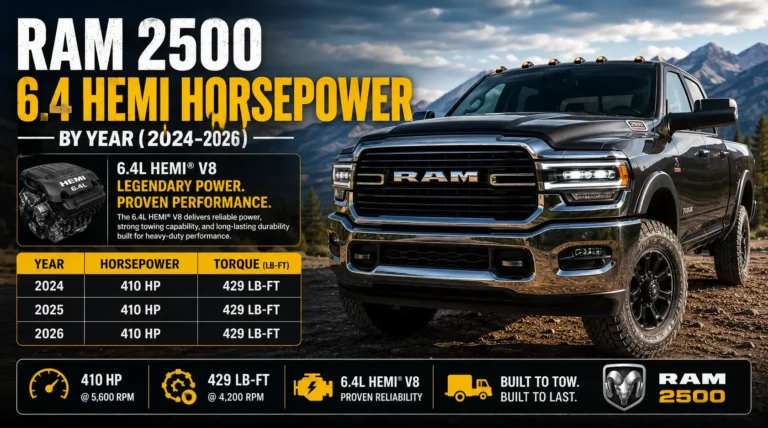
While the Cummins diesel remains the premier choice for frequent, heavy towing, the standard 6.4L HEMI V8 gasoline engine provides a vital baseline for comparison. The gasoline powerplant utilizes a cast-iron block with aluminum heads and forged steel internals, producing 405 horsepower at 5,600 rpm and 429 lb-ft of torque at 4,000 rpm.
The primary advantage of the HEMI V8 is mechanical weight. The cast-iron Cummins engine block and its associated emissions equipment (including the Diesel Particulate Filter, Selective Catalytic Reduction system, and DEF tank) add nearly 900 to 1,000 pounds to the front axle. Consequently, the gasoline engine affords a significantly higher payload capacity, often allowing for an additional 800 to 1,000 pounds of cargo or pin weight compared to a similarly equipped diesel model.
Furthermore, the gasoline engine benefits from Multiple Displacement System (MDS) cylinder-deactivation technology and Variable Cam Timing (VCT) to enhance unladen fuel economy. However, the high-rpm requirement to reach peak torque makes the gasoline engine less efficient and more thermally strained when towing heavy, aerodynamic loads through mountain passes, where the diesel “chugs away” effortlessly at lower rotational speeds.
| Engine Specification | 6.7L High-Output Cummins Turbo Diesel | 6.4L HEMI V8 (Gasoline) |
| Configuration | Inline-6, Cast Iron Block/Head | V-8, Cast Iron Block, Aluminum Head |
| Peak Horsepower | 430 hp @ 2,800 rpm | 405 hp @ 5,600 rpm |
| Peak Torque | 1,075 lb-ft @ 1,800 rpm | 429 lb-ft @ 4,000 rpm |
| Maximum Engine Speed | 3,200 rpm | 5,800 rpm |
| Compression Ratio | 16.2:1 | 10.0:1 |
| Oil Capacity | 12.0 Quarts (11.3 Liters) | 7.0 Quarts (6.6 Liters) |
| Coolant Capacity | 23.8 Quarts (22.5 Liters) | 16.6 Quarts (15.75 Liters) |
Drivetrain Evolution: The ZF Powerline 8-Speed Transmission
Perhaps the most universally praised engineering upgrade for the modern Ram 2500 diesel is the retirement of the Stellantis-built 68RFE six-speed automatic transmission. Historically, the 68RFE was considered the mechanical bottleneck in the Cummins powertrain. Fleet operators and performance enthusiasts frequently reported that the 68RFE required expensive aftermarket rebuilds to reliably handle increased power outputs or continuous heavy towing duties.
The current platform introduces the highly anticipated ZF Powerline 8-speed automatic transmission (specifically designated as the TorqueFlite HD 8AP1075). This transmission brings several critical mechanical and software advantages to the towing experience.
Thermal Management and Gear Spacing
The ZF transmission features a sophisticated five clutch-pack design with only two open clutches in any given gear state. This architecture significantly reduces parasitic drag and the resulting frictional heat, which is the primary catalyst for transmission failure during extreme towing.
The transition from six to eight forward gears dramatically reduces the RPM drop between shifts. This tighter gear spacing ensures the Cummins engine remains locked within its narrow, optimal powerband (1,700–2,000 rpm), improving acceleration, momentum retention on grades, and overall fuel economy under load.
Adaptive Shift Logic and Tow/Haul Mode
The transmission’s software control unit features over forty individual shift maps that adapt in real-time based on vehicle payload, grade incline, and throttle position. When unladen, the vehicle utilizes a load-sensing algorithm that automatically selects second gear for smoother, less abrupt takeoffs, minimizing driveline wear.
When the operator engages the Tow/Haul mode, the shift mapping is aggressively altered to protect the drivetrain. The system typically locks out the highest overdrive gears to prevent “gear hunting”—a phenomenon where the transmission continuously shifts between top gears on slight highway inclines, causing massive heat buildup and clutch wear.
Tow/Haul mode delays upshifts, allowing the engine to build more kinetic energy before transitioning to the next gear. Crucially, it forces aggressive downshifts during deceleration to maximize the efficacy of the integrated exhaust brake, sparring the hydraulic disc brakes from excessive thermal load.
Axle Ratio Standardization
The axle gear ratio serves as the final multiplier of the engine’s torque before it reaches the wheels. The introduction of the ZF 8-speed transmission, which features an extremely low first-gear ratio, allowed engineers to standardize a 3.42 rear axle ratio for all Cummins-equipped Ram 2500 models.
The low transmission gearing provides ample off-the-line pulling power to move 20,000-pound trailers, while the 3.42 axle ratio subsequently allows for lower engine speeds at highway cruising velocities, optimizing fuel economy. In contrast, the gasoline HEMI V8, which lacks the low-end torque of the diesel, requires numerically higher 3.73 or 4.10 axle ratios to maintain its powerband under load.
Suspension Architecture: Coil Springs vs. Auto-Level Air Suspension
The Ram 2500 distinguishes itself from the heavy-duty competition—and from its Ram 3500 sibling—through its rear suspension architecture. Rather than utilizing traditional, rigid leaf springs designed purely for static load bearing, the Ram 2500 employs a class-exclusive five-link coil spring rear suspension.
While coil springs provide an unladen ride quality that is vastly superior to the stiff, jarring ride of traditional heavy-duty trucks, they are inherently more prone to compression under heavy payload. To combat this compression while maintaining ride refinement, Ram offers the sophisticated Auto-Level Rear Air Suspension system.
Dynamics of the Auto-Level System
This system replaces the rear coil springs with robust pneumatic air bags managed by an onboard compressor and electronic ride-height sensors. When a heavy trailer is dropped onto the hitch, the system detects the geometric compression and automatically inflates the bags to return the truck to a perfectly level, parallel stance.


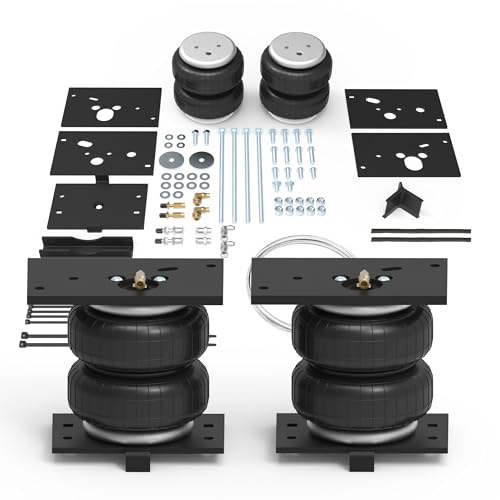
The second-order and third-order benefits of this system are profound for towing stability:
- Steering Geometry Preservation: By eliminating “rear squat,” the air suspension prevents the front suspension from lifting. This maintains optimal tire contact patches on the front axle, preserving steering precision and front-wheel braking authority during emergency maneuvers.
- Dynamic Damping: The pneumatic system provides a progressive spring rate that stiffens as it compresses. This actively reduces “porpoising”—the rhythmic, oscillating bouncing effect caused by heavy trailer tongue weight reacting to highway expansion joints.
- Optical Alignment: A level truck ensures that the LED reflector headlamps project safely down the road rather than blinding oncoming traffic. It also ensures that the onboard camera systems maintain their calibrated visual horizons.
- Hitch Assist: The suspension can be manually lowered via a cabin switch, allowing the driver to easily align the vehicle beneath a fifth-wheel kingpin or gooseneck ball, and then raised to securely connect the load without manual cranking.
Demystifying Gross Vehicle Weight Rating (GVWR) and Payload Constraints
The towing capacity of the Ram 2500 is not a singular, arbitrary figure; it is a highly variable metric determined by cab configuration, drivetrain, and the resulting Gross Combined Weight Rating (GCWR). All towing specifications adhere to the strict SAE J2807 testing protocols, which calculate trailer weight ratings based on specific acceleration, gradeability, and thermal parameters, factoring in a 300-pound passenger weight and 100 pounds of optional equipment.
The 11,040-lb GVWR Recertification
Historically, the Ram 2500 was administratively constrained to a 10,000-pound Gross Vehicle Weight Rating (GVWR) to remain within the legal definition of a Class 2b vehicle. Because the Cummins engine and its heavy-duty transmission weigh significantly more than the gasoline components, subtracting the truck’s high curb weight from the 10,000-pound GVWR resulted in notoriously low payload capacities. Heavily optioned Crew Cab 4×4 diesel models frequently featured payload stickers hovering around 2,000 to 2,200 pounds.
This presented a massive operational paradox for RV owners. While the Cummins engine possessed the thermodynamic and mechanical power to easily pull a 19,000-pound fifth-wheel, the heavy pin weight of such a trailer (typically 15 to 20 percent of the trailer’s total weight) would illegally overload the truck’s payload capacity and rear axle weight rating. For example, a 16,000-pound fifth-wheel exerts approximately 2,800 pounds of pin weight, instantly exceeding the payload of a legacy 2500 diesel before accounting for passengers, the hitch itself, or cargo.
In a pivotal engineering update for the 2025 and 2026 model years, Stellantis re-evaluated the braking, axle, and frame components and quietly recertified the Ram 2500 diesel configurations to an 11,040-pound GVWR. This 1,040-pound structural promotion effectively bridges the gap between the 2500 and 3500 series, adding up to 850 pounds of usable payload capacity directly to the yellow door sticker. This update provides essential peace of mind and strict legal compliance for operators hauling modern, heavy fifth-wheel trailers.
Configuration Capabilities
When equipped with the 6.7L High-Output Cummins and the 3.42 axle ratio, the maximum capacities are highly dependent on the vehicle’s physical footprint. The data reveals crucial operational insights: as cab size and luxury features increase, curb weight increases, which inversely reduces both payload and maximum towing capacity.
| Cab & Bed Configuration | Drive Type | GVWR (lbs) | GCWR (lbs) | Max Payload (lbs) | Max Towing (lbs) |
| Regular Cab, 8′ Box | 4×2 | 10,190 / 11,040 | 28,010 | 2,750 | 20,000 |
| Regular Cab, 8′ Box | 4×4 | 10,190 / 11,040 | 27,870 | 2,740 | 19,960 |
| Crew Cab, 6′ 4″ Box | 4×2 | 10,190 / 11,040 | 28,110 | 2,650 | 19,960 |
| Crew Cab, 6′ 4″ Box | 4×4 | 10,190 / 11,040 | 26,580 | 2,310 | 19,890 |
| Crew Cab, 8′ Box | 4×2 | 10,190 / 11,040 | 28,110 | 2,750 | 20,000 |
| Crew Cab, 8′ Box | 4×4 | 10,190 / 11,040 | 26,580 | 2,450 | 18,320 |
| Mega Cab, 6′ 4″ Box | 4×4 | 10,190 / 11,040 | 24,290 | 2,050 | 15,680 |
The heaviest configuration—the sprawling Mega Cab 4×4—sacrifices over 4,000 pounds of towing capacity compared to the Regular Cab due to its immense unladen curb weight approaching 8,000 pounds. Fleet operators seeking maximum absolute utility should favor the Regular Cab, while the Crew Cab with the 6’4″ box represents the optimal geometric compromise for residential and recreational towing.
Heavy-Duty Hitch Hardware: Factory 5th Wheel and Gooseneck Prep
To safely manipulate loads approaching ten tons, a conventional bumper-pull hitch attached to the rear receiver is mechanically insufficient. The manufacturer strictly mandates the use of a fifth-wheel or gooseneck hitch for any trailers exceeding 18,000 pounds.
Ram offers a highly sophisticated Fifth-Wheel/Gooseneck Prep Group designed to integrate mounting hardware directly into the frame cross-members beneath the bed. Known universally in the industry as the “Puck System,” this package utilizes four cast-steel outer pucks and a central gooseneck receptacle that sit completely flush beneath removable rubber caps.
The engineering and financial advantages of this system are substantial. Factory integration eliminates the need for technicians to drill into the high-strength steel frame to install aftermarket bed rails, preserving the vehicle’s structural integrity. When the hitch is removed, the bed remains completely flat and unobstructed, allowing the truck to haul sheet goods or pallets without interference from protruding metal rails.
Furthermore, the prep package routes an auxiliary 7-pin electrical wiring harness deep inside the bed wall, preventing the trailer’s heavy umbilical cord from draping over the tailgate and rubbing against the paint.
The puck pattern is an industry standard, seamlessly accepting premium drop-in hitches. Popular aftermarket options include the B&W Companion RVK3670 slider hitch (specifically designed for short-bed clearance and retailing for approximately $1,699) and the CURT Manufacturing OEM Puck System 2-5/16″ Gooseneck Kit (Part #60618, rated for 30,000 lbs and retailing around $328). These systems feature quarter-turn latch systems that allow for toolless, drop-in installation and removal.
Advanced Towing Technology and Driver Aids
The sheer mechanical force required to move 20,000 pounds is only half the towing equation; maintaining safe control over that mass requires sophisticated computational assistance. The modern Ram 2500 integrates a dense array of sensor and camera systems, largely consolidated within the optional Towing Technology Group.
Trailer Reverse Steering Control
Reversing a trailer—particularly navigating a heavy boat down a slippery algae-covered ramp or backing a forty-foot RV into a narrow, angled campsite—is a complex cognitive task involving counter-intuitive steering inputs. The(https://www.ramtrucks.com/towing.html) mitigates this challenge by transferring steering authority from the traditional steering wheel to an intuitive rotary knob mounted on the center console.
Smart Exhaust Brake (Integrated Engine Braking)
The system features two distinct operational modes :
- Full Mode (Orange Indicator): Engages maximum backpressure immediately upon the release of the accelerator pedal. This mode is highly aggressive and is used to actively and rapidly decelerate the vehicle.
- Smart/Auto Mode (Green Indicator): Functions in tandem with the vehicle’s braking sensors and cruise control module. It dynamically modulates the turbo vanes to maintain a specific speed on a descent without unnecessarily slowing the vehicle down. This mode prevents harsh lurching and ensures smooth momentum management on long highway grades.
Camera and Visibility Integration


The Digital Rearview Mirror 3.0 replaces the traditional reflective glass with an LCD monitor that streams a live, high-definition feed from a rear-mounted camera. When Tow Mode is activated, the system integrates a wired camera mounted on the rear of the trailer, completely eliminating the primary rear blind spot.
Furthermore, the Trailer Tire Pressure Monitoring System (TPMS) relays real-time pressure and temperature data for up to twelve trailer tires directly to the digital cluster, alerting the driver to slow leaks before they escalate into catastrophic blowouts at highway speeds.
Competitive Market Analysis: The Heavy-Duty Segment
| Metric | 2025 Ram 2500 (6.7L HO) | 2025 Ford F-250 (6.7L HO) | 2025 Silverado 2500HD (6.6L) |
| Max Towing Capacity | 20,000 lbs | 22,000 – 23,000 lbs | 22,500 lbs |
| Engine Torque | 1,075 lb-ft | 1,200 lb-ft | 975 lb-ft |
| Rear Suspension | Five-Link Coil / Air | Traditional Leaf Spring | Traditional Leaf Spring |
While the Ford F-250 leads the class in absolute, on-paper maximums (achieving up to 23,000 pounds of towing and pushing 1,200 lb-ft of torque) , the Ram 2500 dominates in qualitative performance metrics. The Ram’s sophisticated coil and air suspension systems provide a superior unladen ride quality and a more planted, stable geometric feel under heavy load.
Furthermore, the execution of towing technology—specifically the Trailer Reverse Steering Control, Smart Exhaust Brake modulation, and the Uconnect software interface—remains highly regarded in the segment. For operators who tow 15,000-pound loads but also rely on the truck as a daily driver, the Ram offers a uniquely balanced and refined chassis.
Severe-Duty Maintenance Protocols
Subjecting a vehicle to the extreme thermal and mechanical stresses of towing 20,000 pounds dictates strict adherence to a severe-duty maintenance schedule. The intense heat generated in the engine block, transmission planetary gears, and differentials requires accelerated fluid replacement intervals to prevent catastrophic component failure.
- Engine Oil and Filter: While the intelligent Oil Change Indicator System monitors oil life based on engine hours, idle time, and load, oil should be replaced every 7,500 to 10,000 miles (or every 12 months) for severe-duty applications. The use of API-certified synthetic oils (such as CES 20081 specification) is critical to prevent thermal breakdown.
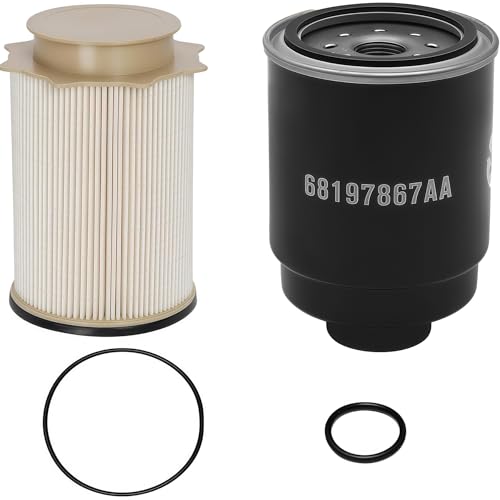
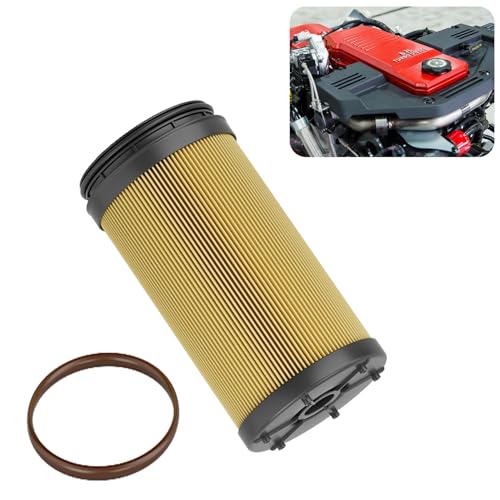
- Fuel Filtration: The high-pressure Bosch fuel system is extraordinarily sensitive to water and particulate contamination. The chassis-mounted water separator and the engine bay fuel filter must be drained regularly and replaced simultaneously every 15,000 to 30,000 miles.
- Transmission Service: Under frequent towing conditions, transmission fluid undergoes rapid thermal shear. Fluid and filter replacement is mandated every 60,000 miles, but this interval should be shortened to 30,000 miles if the vehicle is subjected to continuous mountain grades or stop-and-go commercial towing.
- Closed Crankcase Ventilation (CCV) Filter: Critical for internal pressure management and emissions compliance, this filter requires replacement every 60,000 miles.
- Valvetrain Maintenance: The solid lifters of the Cummins engine require a manual valve lash clearance adjustment at 150,000 miles to ensure optimal combustion sealing, exhaust flow, and engine longevity.
Questions and Answer
Why is the Ram 2500 diesel payload capacity historically lower than the gas engine?
Class 2b trucks were federally limited to a 10,000-pound Gross Vehicle Weight Rating (GVWR). Because the cast-iron Cummins diesel engine block and its requisite emissions equipment weigh approximately 900 to 1,000 pounds more than the 6.4L HEMI V8, that extra mass is mathematically subtracted directly from the available payload capacity. However, the 2025/2026 recertification increased the Ram 2500 diesel GVWR to 11,040 pounds, largely mitigating this payload deficit.
Is the High-Output Cummins engine available in the Ram 2500?
Yes. In a major architectural shift for the 2025 model year, the manufacturer discontinued the Standard Output engine. The High-Output 6.7L Cummins Turbo Diesel—producing 430 horsepower and 1,075 lb-ft of torque—is now the standard and exclusive diesel engine option available across both the 2500 and 3500 series.
What is the difference between the Ram 2500 Auto and Full exhaust brake settings?
The “Full” exhaust brake setting (indicated by an orange light) engages maximum turbocharger backpressure immediately when the driver lifts off the accelerator, aggressively and rapidly slowing the vehicle. The “Auto” or “Smart” setting (indicated by a green light) integrates with the braking system and adaptive cruise control to modulate the turbo vanes, maintaining a steady, targeted downhill speed without unnecessary or abrupt deceleration.
Does the Ram 2500 utilize leaf springs or coil springs?
Unlike the one-ton Ram 3500, which utilizes traditional heavy-duty leaf springs to maximize absolute payload capability, the Ram 2500 features a class-exclusive five-link coil spring rear suspension. This provides vastly superior ride quality when unladen. The standard coil springs can also be upgraded from the factory with the Auto-Level Rear Air Suspension system for dynamic load leveling.
What does the Tow/Haul button mechanically do?
Engaging Tow/Haul mode comprehensively alters the transmission’s shift mapping. It locks out the highest overdrive gears to prevent excessive shifting (“gear hunting”) on highway inclines, holds lower gears longer to maximize engine torque output, increases internal transmission line pressure for firmer shifts to reduce clutch slippage, and forces aggressive downshifts during braking to utilize engine compression to slow the load.
What components are included in the Ram 5th Wheel/Gooseneck Prep Package?
The factory prep package (often referred to as the Puck System) includes a high-strength under-bed structural cross-member equipped with five integrated mounting points: a center port for a gooseneck ball and four outer “pucks” that accept drop-in fifth-wheel hitches from aftermarket manufacturers like B&W or CURT. The package also features a 7-pin electrical wiring harness located inside the truck bed for secure and convenient trailer connection.

![Dodge 2500 Lug Pattern Specifications For Ram Heavy Duty [2026]](https://truckguider.com/wp-content/uploads/2026/03/featured-f475b848.webp)
![2022 Ram 2500 Running Boards [2026]](https://truckguider.com/wp-content/uploads/2026/03/2022-ram-2500-running-boards-featured.webp)
![2019 Ram 2500 Bolt Pattern: Specs & Fitment Guide [2026]](https://truckguider.com/wp-content/uploads/2026/03/2019-ram-2500-bolt-pattern-featured.webp)