Ram Truck Running Boards [2026]

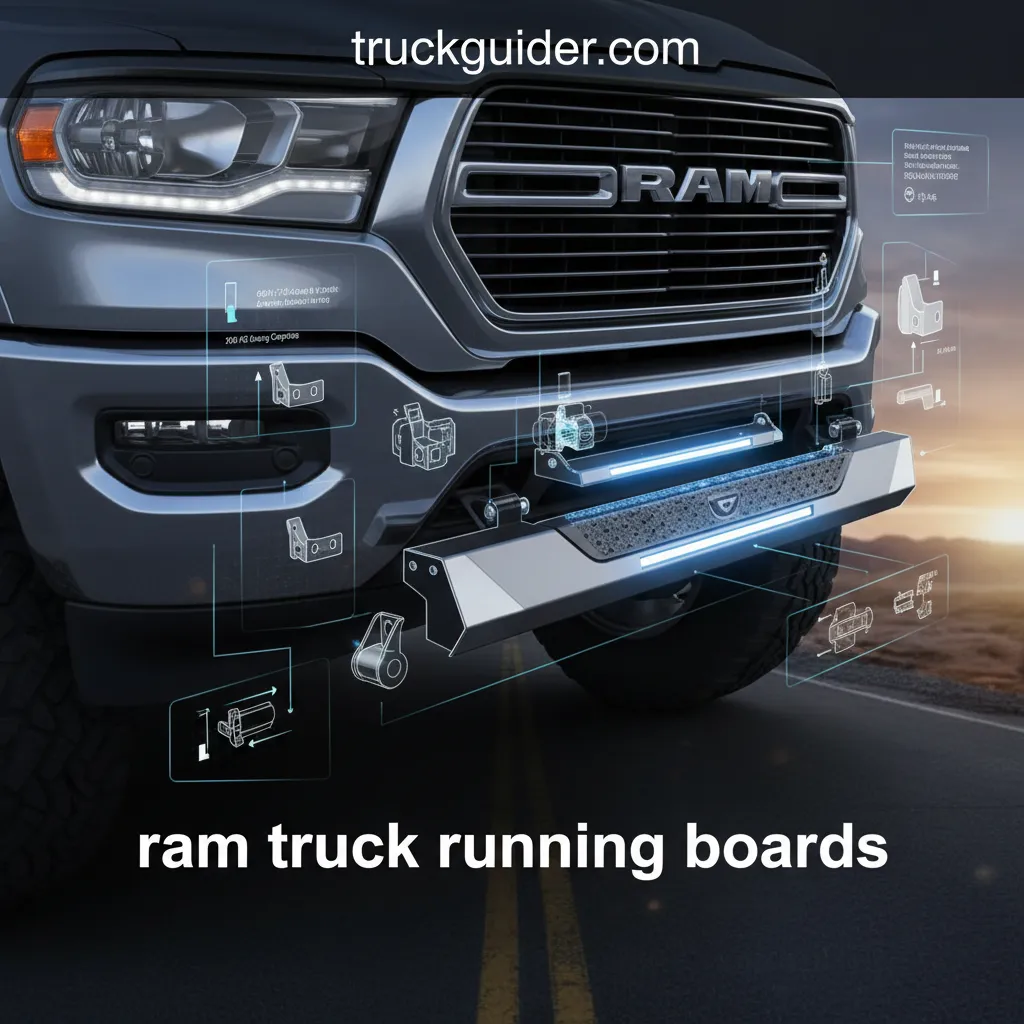
For the modern Ram truck owner, a set of running boards is more than a convenience—it is a critical ergonomic upgrade that bridges the gap between the ground and a high-clearance cabin. As trucks like the Ram 1500 and 2500 Heavy Duty continue to grow in stature and ground clearance, the necessity for a reliable stepping surface becomes paramount for vehicle accessibility and rocker panel protection. While many owners seek improved accessibility, the market is saturated with low-quality options that flex under weight, corrode within seasons, or require invasive drilling into the truck’s chassis. In this expert guide, we will analyze the technical specifications of Ram truck running boards, covering material science, load ratings, and the installation nuances required for both the Classic (DS) and 5th Generation (DT) models.
Material Composition and Structural Integrity of Ram Truck Running Boards
📤 Share Image
The longevity of any exterior truck accessory begins with its metallurgical foundation. In the professional aftermarket space, we categorize materials into three primary tiers: aircraft-grade aluminum, marine-grade stainless steel, and mild steel. For Ram owners in the “Rust Belt,” where liquid calcium chloride and rock salt are standard winter fare, the distinction between these materials determines whether a board lasts a decade or a single season.
6061-T6 Aluminum vs. 304 Stainless Steel
6061-T6 aircraft-grade aluminum is the gold standard for weight-conscious performance. By utilizing this alloy, manufacturers produce systems that are 30-50% lighter than steel counterparts. This weight reduction is crucial for maintaining the payload capacity and fuel efficiency of a Ram 1500. Conversely, 304 marine-grade stainless steel offers the highest level of natural corrosion resistance due to its high chromium and nickel content. Unlike chrome-plated mild steel, which can pit and flake when the surface is breached, 304 stainless remains chemically stable even when scratched.
Advanced Protective Coatings
Modern engineering has introduced dual-stage powder coating processes that provide an additional layer of defense. These coatings often feature a zinc-rich primer followed by a textured topcoat. This specific texture is not merely for aesthetics; it provides essential “bite” for footwear while hiding the micro-abrasions caused by road debris. ASTM B117 salt spray testing results often show that high-quality aluminum boards can withstand over 1,000 hours of exposure without surface degradation, whereas entry-level mild steel boards may show oxidation in as little as 250 hours.
Avoid “black e-coat” on mild steel if you reside in a high-salt or coastal environment. While inexpensive, any stone chip will lead to rapid sub-surface oxidation, causing the board to fail structurally from the inside out within 24-36 months.

Evaluating Nerf Bars vs. Power Steps for Ram 1500 and 2500 Models
Choosing between a fixed nerf bar and an electric power step requires a comprehensive analysis of your truck’s height and intended use. A stock Ram 1500 Big Horn has different ergonomic requirements than a Ram 2500 Laramie equipped with a 4-inch suspension lift.
The Mechanical Advantage of Power-Deployable Boards
For lifted trucks, electric power steps are the trusted solution for extreme height. These units utilize a motorized linkage system to drop the stepping surface significantly lower than a fixed board could ever sit without sacrificing ground clearance. Technical data suggests that power steps typically offer a 2-3 inch lower step-down height compared to fixed boards, which can reduce knee strain by up to 25%. This is a game-changer for families with small children or owners with mobility concerns.
Functional Configurations: Cab-Length vs. Wheel-to-Wheel
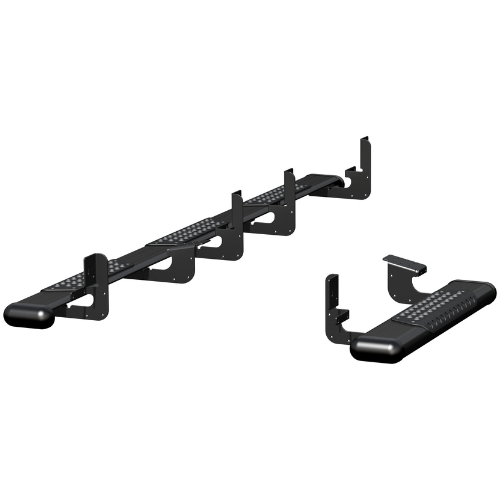
Fixed steps generally come in two lengths. Cab-length boards cover the area beneath the doors, while wheel-to-wheel (W2W) configurations extend to the rear wheel well. On a Ram 3500 Dually, a W2W step is indispensable for reaching items in the front of the bed or adjusting a gooseneck hitch without climbing over the side of the truck. Furthermore, traditional 4-inch and 5-inch oval nerf bars provide significant side-impact protection for the rocker panels against shopping carts or light off-road brush.
Load Capacity Ratings and Safety Compliance Standards
Safety is not an area for compromise. When evaluating a complete set of running boards, you must distinguish between static load capacity and dynamic weight impact. A 250lb person stepping onto a board with momentum exerts much more force than their resting weight. This is why professional-grade aftermarket running boards for Ram trucks are generally rated for 500 lbs per side, exceeding the standard 300 lb OEM requirements.
Mounting Hardware and Frame Integrity
The strongest board is useless if the mounting brackets are the weak link. Reliable systems utilize heavy-duty, laser-cut steel brackets that mount to factory-drilled holes in the inner rocker panels. This ensures that the vehicle’s frame integrity is maintained and that the installation is fully warranty-compliant. Engineering specifications for high-end boards often include internal ribbing and extruded designs within the board itself to prevent bowing or “oil-canning” under heavy loads.
Slip-Resistance and SAE Compliance
Traction is a critical safety metric, especially in wet or icy conditions. Industry-leading boards utilize SAE-standard exterior component testing to ensure hardware doesn’t fail under extreme temperature fluctuations. Traction patterns vary:
- Rubberized Step Pads: Offer excellent grip for work boots and are UV-resistant to prevent cracking.
- Serrated Steel Treads: Found on “HD” or off-road boards, these allow mud and snow to fall through while providing aggressive grip.
Consider a work truck fleet: technicians carrying 80 lbs of gear require a board with a 500lb-rated capacity and high-traction steel treads to prevent workplace injuries.
By The Numbers
Professional Load Rating
Salt Spray Endurance
Knee Strain Reduction
Installation Logistics for DS and DT Chassis Generations
Ram trucks have undergone significant chassis evolution. The “Classic” (DS) body style and the “New” (DT) 5th Generation models have different mounting point configurations. Understanding these nuances is the hallmark of an expert installer. A “one-size-fits-all” approach often results in poor fitment or wind noise at highway speeds.
📋
Step-by-Step Installation Logic
Identify if your truck is a DS or DT model. 5th Gen (DT) Rams feature six mounting studs per side, whereas earlier models may require the use of clip-nuts or specialized hardware in factory-ready slots.
Hand-tighten all M8/M10 hardware first. Once the board is leveled, torque M8 bolts to 15-20 ft-lbs and M10 bolts to 30-35 ft-lbs. This prevents loosening from chassis vibration and road harmonics.
Integration with Factory Sensors
Advanced Ram trims, such as the Limited or TRX, come equipped with Active Aero Grille Shutters and ParkSense systems. It is vital to ensure that aftermarket boards, particularly the wider 6-inch models, do not interfere with the sensors’ field of vision or the vehicle’s aerodynamic components. Professional installation for fixed boards typically takes 60-90 minutes, whereas power-deployable systems require a 3-5 hour commitment due to the complexities of tapping into the OBD-II port or the vehicle’s CAN bus for door-trigger signals.
Long-Term Maintenance and Aesthetic Preservation
Even the most reliable running boards require periodic maintenance to withstand the rigors of daily driving. Neglecting your boards can lead to pitted finishes or squeaky motorized joints. A proactive maintenance schedule ensures your investment looks as good in year five as it did on day one.
Finish Restoration
Use UV-resistant trim conditioners on plastic step pads to prevent the “chalking” effect caused by sun exposure.
Correct Lubrication
Use non-silicone based dry lubricants on power step pivot points to prevent dust and grit from sticking to the moving parts.
Cleaning Protocols
Avoid using harsh degreasers or acid-based wheel cleaners on polished stainless or powder-coated finishes, as these can cause permanent chemical staining. A simple solution of pH-neutral car wash soap is usually sufficient. Pro Tip: Applying a ceramic coating to your running boards can reduce cleaning time by 60% and provide a robust barrier against UV-induced fading for up to two years.
In high-exposure winter climates, rinse your running boards weekly. Focus specifically on the mounting brackets and the gap between the board and the rocker panel where salt-slush tends to accumulate and sit dormant.
In summary, choosing the right material, such as T6 aluminum or 304 stainless steel, ensures long-term reliability against the elements while maintaining the structural integrity required for heavy-duty use. Correct load capacity assessment—ideally looking for 500lb ratings—and strict adherence to factory mounting points are essential for both passenger safety and vehicle warranty preservation. Whether you opt for professional-grade power steps for their superior ergonomics or fixed boards for their rugged protection, ensuring compatibility with your specific Ram trim level and wheelbase is the final step in a successful upgrade. Consult with a professional installer or technical specialist to finalize your selection and enjoy a safer, more accessible driving experience.
Frequently Asked Questions
Will installing aftermarket running boards void my Ram factory warranty?
No, installing aftermarket running boards will not void your Ram factory warranty, provided the installation does not involve structural modifications or cause damage to other components. Most high-quality boards utilize existing factory mounting holes, ensuring a non-invasive fit. Under the Magnuson-Moss Warranty Act, a manufacturer cannot deny a warranty claim unless the aftermarket part directly caused the failure.
What is the weight capacity for standard Ram 1500 running boards?
Most professional-grade running boards for the Ram 1500 are rated for a static load capacity of 300 to 500 pounds per side. Heavy-duty options designed for the Ram 2500 and 3500 often feature reinforced brackets that lean toward the 500-pound limit. Always check the specific manufacturer’s rating to ensure the boards can safely support the intended dynamic loads during daily use.
How do I distinguish between the DS and DT Ram models for fitment?
Identifying your chassis is crucial for correct fitment. The ‘DS’ model refers to the Ram 1500 Classic (2009–present), characterized by a four-bolt lug pattern on some older models and specific body lines. The ‘DT’ model is the 5th Generation Ram (2019–present), which features a larger cab and different mounting point spacing. Always verify your truck’s production year and model type before purchasing.
Are electric power steps reliable in cold, snowy climates?
Electric power steps are engineered for reliability, but they require consistent maintenance in winter climates. Modern systems from trusted brands feature anti-pinch technology and weather-sealed motors. However, ice buildup in the articulating hinges can cause resistance. Regularly spraying the pivot points with a non-stick lubricant and pressure washing road salt away will ensure the steps function correctly throughout the winter season.
Can I install running boards on a Ram truck with factory air suspension?
Yes, running boards are compatible with Ram trucks equipped with the Active-Level Four-Corner Air Suspension. Because the air suspension changes the vehicle’s ride height, many owners find that running boards are even more necessary. When the truck is in ‘Entry/Exit’ mode, the step height is reduced, but the boards still provide a safer, more stable transition into the cab.

![P0138 Code Dodge: Fix & Reset Guide [2026]](https://truckguider.com/wp-content/uploads/2026/03/featured-46e0066a-768x768.webp)