Remote Start Disabled: Causes & Fixes [2026]

To resolve the ‘Remote Start Disabled’ message, you must manually start the engine using the key or push-button to reset the system’s security logic. This lockout is most commonly triggered by the two-consecutive-start limit, an active check engine light, or an open hood sensor.
🎯 Key Takeaways
Recommended Best Deal Products


- Takeaway 1:Manually cycle the ignition to reset the two-consecutive-start safety limit.
- Takeaway 2:Clear any active Check Engine Lights to restore remote start functionality.
- Takeaway 3:Ensure the hood, doors, and trunk are fully latched and sensors working.
- Takeaway 4:Maintain fuel levels above 1/4 tank to prevent automatic system disabling.
- Takeaway 5:Check battery health; low voltage often triggers remote start system inhibits.
The message “Remote Start Disabled: Start Vehicle to Reset” is a security and safety lockout triggered by your vehicle’s Body Control Module (BCM). To clear this error immediately, you must enter the cabin, perform a manual ignition start using your key or push-button, allow the engine to idle for at least 30 seconds, and then shut the vehicle off. This physical cycle clears the software flag that prevents the remote transmitter from engaging the starter.
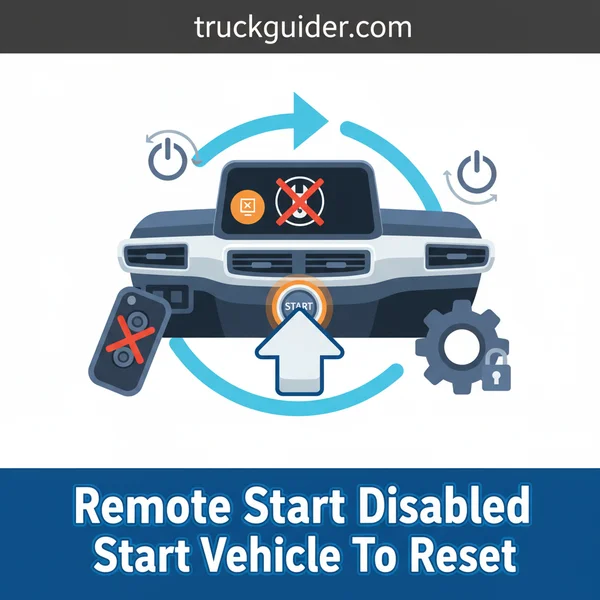
This lockout occurs because the vehicle requires a “handshake” to verify that a driver is present and the engine is operating within safe parameters. If you have exceeded the maximum number of remote start attempts or if a sensor detects a potential safety hazard, the system enters a dormant state. Understanding the specific triggers for this lockout will help you prevent it from happening during the coldest or hottest days of the year when you need the climate control most.
Common Remote Start Inhibitors and Safety Logic
Your vehicle’s remote start system is governed by a strict set of safety protocols. It is not a simple “on/off” switch; rather, it is a complex logic loop that checks dozens of variables before allowing the engine to turn over. When the “Remote Start Disabled” message appears, it means one of these variables has failed a pre-start check. The system shuts down to prevent engine damage or potential injury to anyone near the vehicle.
The Two-Start Limit Rule
Most manufacturers, including GM, Ford, and RAM, program a two-start limit into their systems. You are typically allowed two remote start cycles—usually 10 to 15 minutes each—before the vehicle requires a manual reset. Once the second cycle expires or is aborted, the BCM disables the remote feature. This prevents the vehicle from idling indefinitely in an enclosed space, such as a garage, which could lead to carbon monoxide buildup. To reset this specific timer, you must physically turn the ignition to the “On” or “Run” position.
Hardware and Sensor Interference
The system also monitors the physical state of the vehicle’s entry points. If the BCM receives a signal that the vehicle is “unsecured,” it will disable the remote start feature to prevent theft or safety accidents. Common hardware-related triggers include:
- The Hood Pin Switch: If your hood is slightly ajar or the sensor is failing, the car assumes a technician might be working on the engine. Starting the car remotely in this state is a major safety violation.
- Door and Trunk Latches: Any “Door Ajar” signal will immediately kill the remote start sequence.
- Transmission Position: The Neutral Safety Switch must confirm the vehicle is in Park. If the linkage is loose and the car is technically between gears, the remote start will be disabled.
- Hazard Lights: If your emergency flashers are active, most factory systems will ignore remote start commands.
- Valet Mode: If your vehicle was recently serviced, it might be in Valet Mode, which purposely deactivates remote start for security.
Everything You Need to Know About Resetting a Disabled Remote Start System
Recommended Best Deal Products


The “Remote Start Disabled: Start Vehicle to Reset” message is a common occurrence for owners of modern vehicles, particularly those from General Motors, Ford, and Chrysler. This message is not necessarily an indication of a broken system; rather, it is a built-in safety protocol designed to protect the engine or the surrounding environment. When certain conditions are met—such as a previous failed start attempt, an open hood, or a triggered check engine light—the computer locks out the remote start functionality until a manual ignition cycle is performed. This guide will walk you through the systematic process of diagnosing the cause, performing the physical reset, and ensuring your vehicle’s convenience features are fully restored.
Step 1: Identify and Resolve Dashboard Warning Lights
What you need: An OBD-II scanner (optional but recommended) and a visual inspection of the instrument cluster.
Instructions: The most frequent reason for a disabled remote start is an active Check Engine Light (CEL) or a Malfunction Indicator Lamp (MIL). Modern Engine Control Modules (ECMs) are programmed to disable remote start if any fault code is detected to prevent starting the car without an operator present to monitor potential issues like overheating or oil pressure drops. Sit in the driver’s seat, turn the ignition to the “On” position, and look for any warning icons. If you see a CEL, you must address the underlying code first. Even a minor issue, such as a loose gas cap, can trigger this lockout. Use an OBD-II scanner to read the codes; if the codes are transient, clearing them may immediately restore remote start functionality.
Pro Tip: Many auto parts stores will scan your vehicle’s codes for free. If you find a “Pending” code, it may not trigger the light yet, but it can still disable the remote start system.
Step 2: Verify the Hood and Trunk Latch Status
What you need: A clean microfiber cloth and a can of silicone-based lubricant.
Instructions: For safety reasons, a vehicle will never allow a remote start if it perceives the hood is open, as this prevents injury to someone working in the engine bay. Over time, the hood pin switch or the latch sensor can become coated in grime, rust, or road salt, causing it to send a false “open” signal to the computer. Physically open your hood and inspect the latch mechanism. Clean away any debris with a cloth and apply a small amount of lubricant to ensure the sensor moves freely. Close the hood firmly—don’t just let it drop; press down to ensure the secondary latch is fully engaged. Repeat this process for the trunk or liftgate, as some manufacturers tie these sensors into the same security loop.
Pro Tip: If the dash still says the hood is open when it is clearly shut, the sensor may be misaligned or faulty. Try unplugging the sensor connector and plugging it back in to “wake up” the circuit.
Step 3: Perform the Manual Ignition Reset Cycle
What you need: Your primary ignition key or key fob.
Instructions: The literal instruction “Start Vehicle to Reset” refers to a manual ignition cycle. This is required if you have already used the remote start twice in a row, as most vehicles have a “two-start limit” before requiring a manual key cycle. Enter the vehicle, close all doors, and fasten your seatbelt to ensure all safety circuits are closed. Insert the key into the ignition (or press the Start/Stop button while depressing the brake) and start the engine. Let the vehicle idle for at least 30 to 60 seconds. This allows the Body Control Module (BCM) to register that a driver is present and that the vehicle is operating within normal parameters. Turn the engine off, remove the key, and exit the vehicle.
Pro Tip: Ensure that you do not have a secondary key fob left inside the vehicle, as the presence of another “active” signal can sometimes confuse the BCM and prevent the reset from registering.
Step 4: Check Fuel Levels and Fluid Temperatures
What you need: A look at your fuel gauge and temperature sensors.
Instructions: Remote start systems are programmed to fail if the fuel level is too low, typically below 1/8th of a tank or when the “Low Fuel” warning light is active. This prevents the vehicle from running out of gas and stalling while unattended. Additionally, if the engine coolant temperature is excessively high or if the oil pressure is dangerously low, the system will disable itself to prevent engine damage. Check your gauges; if you are low on fuel, drive to the nearest station and fill the tank. Once the fuel level is above the threshold, the “Remote Start Disabled” message should clear after the next manual start. Similarly, ensure your engine has cooled down if you recently finished a long, high-stress drive.
Pro Tip: Extreme ambient temperatures (both hot and cold) can sometimes trigger a temporary lockout if the battery voltage drops too low during the initial crank attempt.
Step 5: Inspect and Clear the Hazard Light Switch
What you need: No tools required.
Instructions: A commonly overlooked safety feature is the hazard light (emergency flasher) system. If your hazard lights are turned on, the remote start system is automatically disabled on almost every vehicle make. This is a safety precaution to ensure that a vehicle indicating an emergency state cannot be started remotely. Check your center console or steering column to ensure the hazard button is in the “Off” position. Even if the lights aren’t flashing, if the button is partially depressed or stuck, it can interrupt the remote start circuit. Press the button firmly a few times to ensure the internal switch is cycling correctly, then leave it in the off position before attempting a reset.
Pro Tip: If your hazards are stuck on due to an electrical short or a flasher relay issue, the remote start will remain disabled until the electrical fault is repaired.
Step 6: Execute a Hard Module Reset (Battery Disconnect)
What you need: A 10mm wrench or socket set.
Instructions: If the message persists despite checking all sensors and performing a manual start, the vehicle’s computer modules may have a “glitch” or a stubborn temporary memory. To perform a hard reset, park the vehicle in a safe location and turn it off. Open the hood and locate the battery. Use your wrench to loosen the nut on the negative (black) battery terminal and slide the cable off the post. Ensure the cable is not touching any metal. Wait exactly 15 minutes; this allows the capacitors in the ECU and BCM to fully discharge, clearing any temporary “Logic Locks.” Reconnect the terminal and tighten it securely. Note that you may need to reset your clock and radio presets after this step.
Pro Tip: While the battery is disconnected, inspect the terminals for corrosion. Use a mixture of baking soda and water to clean any white or blue powder, as poor voltage can also cause remote start failures.
Step 7: Test the Key Fob Signal and Battery
What you need: A fresh CR2032 or CR2025 battery (check your manual) and your key fob.
Instructions: Sometimes the “Disabled” message is a result of a weak signal from the key fob that the car interprets as an unauthorized or “noisy” start attempt. If your fob battery is dying, the encryption rolling code might not sync perfectly with the car’s receiver. Replace the battery in your key fob by prying the casing open with a small flathead screwdriver or a coin. Ensure the positive (+) side is facing the correct direction. Once replaced, stand about 20 feet away from the vehicle. Press the “Lock” button once (most systems require the vehicle to be locked first) and then hold the “Remote Start” button for 3 to 5 seconds. If the lights flash but the engine doesn’t turn over, check the dash again for a specific error code.
Pro Tip: If you have a second key fob, try using it. If the second fob works perfectly, the issue is localized to the hardware or programming of the first fob rather than the vehicle itself.
✅ Final Checklist
- Confirm the Check Engine Light is OFF and no OBD-II codes are pending.
- Ensure the fuel tank is at least 1/4 full to bypass low-fuel safety lockouts.
- Verify that the hood, trunk, and all four doors are completely latched and sealed.
- Perform at least one full 60-second manual engine run-time to reset the BCM counter.
- Test the remote start from outside the vehicle after locking all doors with the fob.
Important Notes:
- Safety Warning: Never attempt to diagnose or reset a remote start system in a closed garage; always ensure the vehicle is in a well-ventilated outdoor area to avoid carbon monoxide poisoning.
- When to Seek Help: If the “Remote Start Disabled” message returns immediately after a manual reset and there is no Check Engine Light, you may have a faulty BCM or a broken hood pin wire that requires professional diagnostic tools.
- Estimated Time: 15 to 30 minutes.
- Estimated Cost: $0 (DIY reset) to $50 (replacement fob battery or OBD-II scanner).
The Role of the Check Engine Light in System Lockouts
The most frequent culprit for a persistent “Remote Start Disabled” message is an active Check Engine Light (CEL). If your vehicle’s computer detects a mechanical or emissions-related fault, it will proactively disable the remote start feature. This is a protective measure designed to ensure that the driver is present to monitor the dashboard for critical warnings like overheating or low oil pressure.
Why the PCM Prioritizes Engine Health
The Powertrain Control Module (PCM) will not allow the engine to run unattended if it cannot guarantee stable operation. When a Diagnostic Trouble Code (DTC) is stored, the engine may be running in a “limp mode” or with altered fuel mapping. Starting the vehicle remotely under these conditions could exacerbate a mechanical failure. For example, if the car has a misfire code (P0300), idling without supervision could lead to catalytic converter damage. By forcing a manual start, the vehicle ensures you are in the driver’s seat to respond to any immediate mechanical symptoms.
Common Codes That Trigger Disable Commands
Not every code will disable your remote start, but those affecting the engine’s core vitals almost always will. Key examples include:
- Coolant Temperature Codes (P0128): If the car thinks the thermostat is stuck, it won’t allow a remote start because it cannot accurately monitor engine heat.
- Low Fuel Pressure or Level: If the fuel light is on, or if the sensor detects low pressure, the system locks out to prevent the car from stalling out and depleting the battery.
- EVAP System Leaks (P0455): Large leaks in the emissions system often trigger a remote start bypass to prevent excess fumes.
- Throttle Position Sensor (TPS) Faults: If the computer isn’t sure where the throttle plate is, it will never risk an unattended start.
Note: Even if you clear the Check Engine Light with a scanner, the remote start may remain disabled until you complete a full “drive cycle,” allowing the computer to verify that the fault has truly been resolved.
Environmental and Mechanical Factors Affecting Remote Start
While software glitches are common, your vehicle’s hardware and the environment play a massive role in whether that remote start command actually works. Most modern vehicles are programmed with a “fail-safe” logic. If the onboard computer detects any condition that could potentially damage the engine or compromise safety, it will automatically disable the remote start feature and prompt you to start the vehicle manually to verify everything is clear.
Fluid Levels and Temperature Thresholds
Your car is constantly monitoring its “vitals” before allowing a remote ignition. If your engine coolant temperature is too high or your oil pressure is too low, the system will prevent a remote start to avoid catastrophic engine failure. Similarly, low fuel levels are a primary culprit. Most manufacturers disable remote start once the fuel tank drops below 15-20% capacity. This prevents the vehicle from running out of gas while idling in your driveway, which could lead to fuel pump damage or leaving you stranded when you’re finally ready to drive.
Safety Sensors and External Latches
The remote start system is heavily reliant on a network of safety sensors located around the vehicle. These sensors act as “gatekeepers” for the ignition system. If any of the following components are not in the correct position, you will see the “Remote Start Disabled” message:
- Hood Pin Switch: This is a common failure point. If the sensor thinks the hood is slightly ajar, it disables remote start for the safety of anyone who might be working under the hood.
- Door and Trunk Latches: A faulty door sensor that signals a “door ajar” status will immediately kill the remote start sequence.
- Hazard Lights: Surprisingly, if your hazard lights are active, many factory systems will reject a remote start command as a safety precaution.
Diagnostic Differences Between Factory and Aftermarket Systems
The way your vehicle communicates an error depends heavily on whether you are using a system installed at the factory or an aftermarket kit like Viper or Compustar. Understanding these differences can save you hours of frustration when trying to decipher why the vehicle refuses to warm up or cool down on its own.
Factory Systems and Integrated Messaging
Factory-installed systems (like those found in Ford, GM, or Jeep vehicles) have the advantage of being fully integrated into the vehicle’s Driver Information Center (DIC). This means the car can give you specific text feedback. When the “Remote Start Disabled” message appears, it is often tied to a stored Diagnostic Trouble Code (DTC). Even if your Check Engine Light isn’t glowing on the dash yet, there may be a “pending” code in the ECU that is blocking the remote start command. These systems are highly sensitive to battery voltage; even a slightly weak battery can cause the computer to prioritize “cranking power” for a physical key turn over a remote request.
Aftermarket Bypass Modules and Signal Interference
Aftermarket systems operate a bit differently. They rely on a bypass module to “mimic” the signal of your transponder key. If the communication between this module and the vehicle’s CAN bus system is interrupted, the system will fail. Diagnostic clues for aftermarket units often include:
- Light Flash Codes: Instead of a text message on the dash, many aftermarket systems will flash the parking lights a specific number of times to indicate the error (e.g., 3 flashes for door open, 5 flashes for hood open).
- Valet Mode: It is incredibly easy to accidentally put an aftermarket remote into “Valet Mode” via a specific button combination. This disables the remote start functionality entirely until the mode is toggled off.
- Key Fob Battery Strength: Unlike factory remotes, some aftermarket fobs require a very strong signal to initiate the two-way “handshake” required for ignition.
Conclusion
Seeing the “Remote Start Disabled” message is certainly frustrating, but it is ultimately a sign that your vehicle’s safety protocols are working exactly as intended. Whether it is a protective measure against low fuel, a warning about an open hood sensor, or a simple need for a manual ignition cycle to clear a system timeout, the fix is usually straightforward. Most of the time, the vehicle just needs you to step into the driver’s seat and turn the key to prove that everything is under control.
Next Steps: Start by ensuring all your doors and hood are securely latched and that your fuel tank is at least half full. If the issue persists, use an OBD-II scanner to check for any hidden engine codes that might be blocking the system. Don’t let a minor sensor glitch keep you out in the cold—take a few minutes to verify your vehicle’s vitals and get your remote start back in action!
💬 Quick Questions & Answers
Why does my car say remote start is disabled?
It is usually due to reaching the two-start limit or a safety sensor like the hood pin being triggered.
Will a check engine light disable remote start?
Yes, most modern vehicles disable remote start if any diagnostic trouble codes (DTCs) are present to protect the engine.
How many times can I remote start my car consecutively?
Most manufacturers allow two remote starts before requiring a manual ignition cycle with the key or button.
Does low fuel disable remote start functionality?
Yes, vehicles typically disable the feature once fuel levels drop below a certain threshold (usually 1/8 to 1/4 tank).
Can a weak car battery cause a remote start lockout?
Low battery voltage during the initial crank attempt will often trigger a system disable to preserve remaining power.
❓ Frequently Asked Questions
Why do I need to start the vehicle manually to reset the system?
Manual starting signals to the Body Control Module (BCM) that a driver is present and the vehicle is safe, which clears the temporary safety lockout counter.
Can a faulty hood pin switch cause a remote start disable message?
Yes, if the sensor fails or the hood is slightly ajar, the vehicle disables remote start to prevent the engine from running during service.
Why does the engine shut off immediately after a remote start?
This occurs if the system detects a critical fault, such as low oil pressure or high coolant temperature, immediately after the engine fires up.
Does the ‘Remote Start Disabled’ message clear itself automatically?
The message typically only clears after a successful manual ignition cycle and once the underlying safety trigger (like an open door) is resolved.
Will disconnecting the car battery reset the remote start system?
While it may clear temporary memory, it will not fix hardware issues like a bad sensor or an active check engine light causing the lockout.
Is there a way to bypass the two-start limit on factory systems?
No, this is a hard-coded safety feature designed to prevent excessive idling and carbon monoxide buildup in enclosed environments.
![Ram 1500 Bed Rack with Tonneau Cover: Compatibility Guide [2026]](https://truckguider.com/wp-content/uploads/2026/03/ram-1500-bed-rack-with-tonneau-cover-featured.webp)
![2007 Ram 1500 5.7 Hemi: Specs, Reliability & Common Issues [2026]](https://truckguider.com/wp-content/uploads/2026/03/2007-ram-1500-5-7-hemi-featured.webp)