Sway Bar vs Stabilizer Link 2026: Which Is Better?

An upgraded Sway Bar can slash your vehicle’s body roll by a remarkable 20-30%, a tangible improvement a Stabilizer Link alone simply can’t match. These two suspension components often get lumped together, but they serve distinctly different, though equally vital, roles in controlling your vehicle’s handling dynamics. While one is the primary actor in resisting chassis lean, the other is the essential messenger, translating forces to ensure the system functions at all. Understanding their individual contributions and limitations is key to making informed decisions about your vehicle’s ride and performance.
Quick Verdict: While the Sway Bar is the primary component for body roll reduction and handling improvement, the Stabilizer Link is indispensable for its function. Neither truly 'wins' as they are a synergistic system; however, for direct performance enhancement, an upgraded Sway Bar offers more noticeable improvements, capable of reducing body roll by 20-30%. Links are vital for maintaining function.

Audible Premium Plus — Annual Membership
12 audiobook credits up front, plus the full Audible catalogue.
See Annual Plans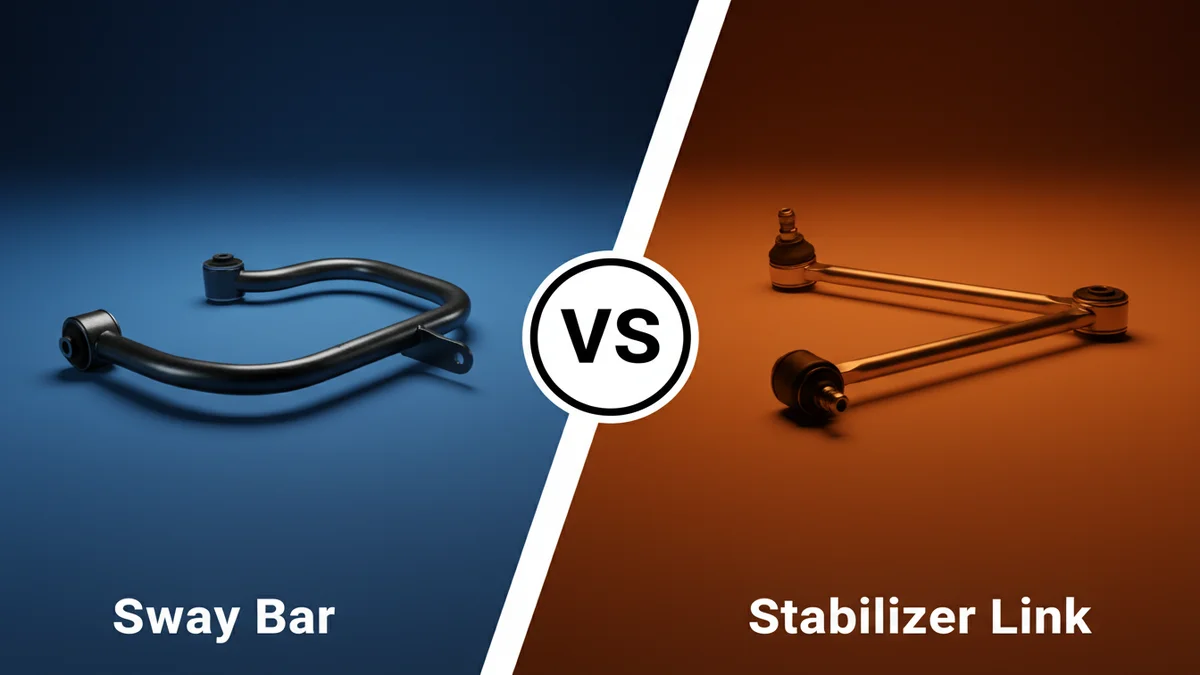
Drivers seeking significant body roll reduction and improved cornering dynamics through an upgrade.
Maintaining optimal sway bar function, addressing clunking noises, and restoring original handling.
- A performance Sway Bar can reduce vehicle body roll by 20-30% during aggressive cornering.
- Stabilizer Links are wear items, typically requiring replacement every 50,000-100,000 miles.
- Upgraded Sway Bars generally cost $150-$600, while quality Stabilizer Link pairs range from $40-$150.
- Installing new Stabilizer Links can often be a 1-hour DIY job, while a Sway Bar replacement takes 2-4 hours.
- Worn Stabilizer Links (average lifespan 75,000 miles) are the most common cause of sway bar related clunking noises.
Sway Bar vs Stabilizer Link: Head-to-Head Specs
Recommended Best Deal Products
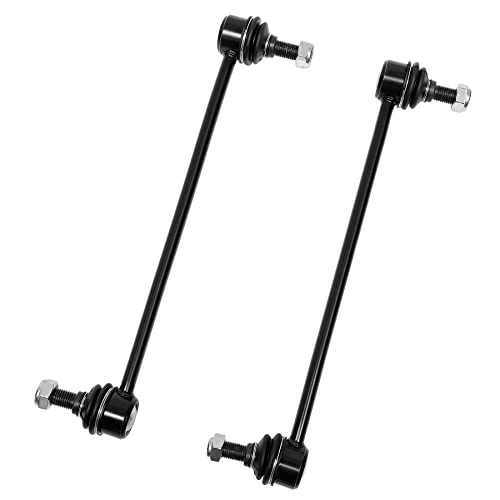


Digging into the core specifications reveals a fundamental difference in how these components are constructed and the forces they manage. For instance, a Sway Bar is essentially a torsion spring, designed to twist and transfer load, whereas a Stabilizer Link is a rigid connector, predominantly built to articulate. This inherent structural disparity directly impacts their respective weights and the types of materials best suited for their function. Let’s examine the detailed specifications to truly appreciate these distinctions.

✓ = better value in that row. Sourced from manufacturer specifications.
Performance & Category Ratings
When we look at the raw numbers, a clear picture emerges of each component’s distinct strengths. The Sway Bar, with its impressive 9.0 Performance Impact on Handling, stands as the undisputed champion for reducing body roll. It actively resists the chassis’s tendency to lean during cornering, a direct result of its design as a torsion spring. The Stabilizer Link, while critical, garners a 7.5 in this category because its role is more indirect; it transmits forces, enabling the Sway Bar to work, but doesn’t itself provide the anti-roll stiffness.

However, the tables turn significantly when considering Cost-Effectiveness (for purpose). Here, the Stabilizer Link shines with a 9.0. These smaller components are generally inexpensive to manufacture and replace, making them highly cost-effective for their essential job of linking the Sway Bar to the suspension. The Sway Bar, a larger and more complex piece of engineered steel, rates a 7.8, reflecting its higher material cost and manufacturing complexity.
Durability sees the Sway Bar take a commanding lead at 9.5. A thick, solid or hollow steel bar designed to withstand constant torsional forces is inherently robust. Stabilizer Links, however, often incorporate ball joints or bushings, which are wear items, leading to their 7.0 rating. Similarly, Maintenance Frequency is low for Sway Bars (9.0), usually only requiring bushing checks every few years. Links, with their more delicate joints, often require attention or replacement much sooner, scoring a 6.5.
For Ease of Installation, the Stabilizer Link earns an 8.5. It’s typically a small component, often just a few bolts, making it a relatively straightforward DIY job. A Sway Bar, often requiring dropping subframes or navigating tight spaces, receives a 6.5. Upgrade Potential heavily favors the Sway Bar at 9.2; thicker, adjustable, or hollow bars offer tangible, measurable improvements. Links, while available in heavy-duty versions, primarily serve their connecting function, hence their 7.0.
Finally, Noise/NVH Contribution highlights a common issue: worn Stabilizer Links are notorious for clunks and rattles, contributing to their 6.0 rating. A Sway Bar, while not entirely immune to noise from worn bushings, is generally less of an NVH source, hence its 8.0.

Prime for Young Adults — 6 Months Free
Students and 18–24s get six months of Prime free, then half price.
Start 6 Months FreeAnti-Roll Bar
Sway Bar Link
By the Numbers
Recommended Best Deal Products


Dissecting the data reveals a compelling story beyond mere qualitative descriptions. These components, while part of the same anti-roll system, exhibit stark differences in their quantifiable impact and characteristics. Observing the numbers helps us concretely understand where each component excels and where it falls short, providing a solid foundation for your suspension tuning decisions.

Anti-Roll Bar
Sway Bar Link
Hover any bar for exact values. Each metric scaled independently.
Sway Bar: Strengths and Weaknesses
The Sway Bar is the true workhorse of body roll reduction, and its strengths are undeniably significant. Its Performance Impact on Handling (9.0) is unparalleled; installing a stiffer Sway Bar directly translates to a flatter ride through corners and improved steering response. This direct connection to performance makes it a favorite for enthusiasts seeking tangible handling gains.
Furthermore, the Sway Bar offers exceptional Durability (9.5) and a low Maintenance Frequency (9.0). Being a robust steel or alloy bar, it’s built to last, often outliving other suspension components with minimal attention beyond occasional bushing checks. Its Upgrade Potential (9.2) is also a major draw. You can choose from various thicknesses, solid or hollow constructions, and even adjustable designs, like an 🛒 Adjustable Sway Bar Kit →, allowing precise tuning for different driving conditions or track setups. This adaptability means you can tailor your vehicle’s handling characteristics to your exact preferences, from a comfortable daily driver to a more aggressive track machine.
However, the Sway Bar isn’t without its drawbacks. Its Ease of Installation (6.5) is notably lower than its counterpart. Replacing a Sway Bar can be a labor-intensive job, often requiring the vehicle to be lifted, wheels removed, and sometimes even a subframe lowered, making it a more challenging DIY task for many. While its Noise/NVH Contribution scores an 8.0, worn bushings can still lead to squeaks or creaks, subtly impacting ride comfort. Considering a performance upgrade? You’ll want to explore the specific options available for your vehicle.

Price & availability subject to change. As an Amazon Associate we earn from qualifying purchases.
Stabilizer Link: Strengths and Weaknesses
Recommended Best Deal Products

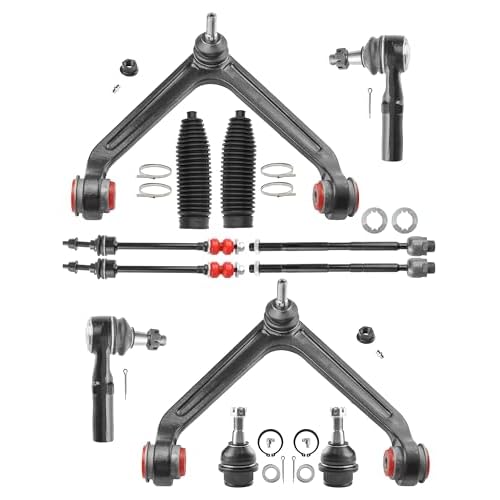
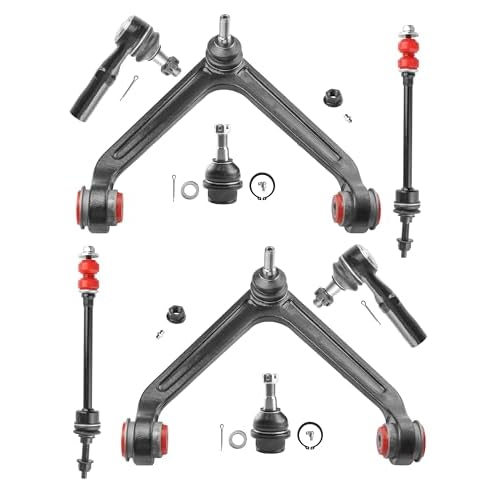
The Stabilizer Link, though often overlooked, is the unsung hero enabling the Sway Bar to do its job. Its primary strength lies in its exceptional Cost-Effectiveness (for purpose) (9.0). These links are relatively inexpensive components, making them a budget-friendly repair or replacement item when they inevitably wear out. The Ease of Installation (8.5) is another significant advantage; typically, replacing a Stabilizer Link involves just a few bolts and is a common, manageable DIY task for most home mechanics. They are simple, direct, and crucial to the system’s operation.
Audible — Listen Free for 30 Days
One free credit a month and thousands of titles included.
Listen Free for 30 DaysHowever, the Stabilizer Link also has several notable weaknesses. Its Durability (7.0) is comparatively lower than the robust Sway Bar. Stabilizer Links contain ball joints or bushings at either end, components inherently prone to wear and tear due to constant movement and exposure to road grime. This leads directly to a higher Maintenance Frequency (6.5); worn links are a common cause of suspension noise and necessitate more frequent inspection and replacement. The lower Upgrade Potential (7.0) means that while you can find heavy-duty or 🛒 Greasable Aftermarket Stabilizer Links →, they primarily aim for improved longevity or less deflection, not a fundamental change in handling dynamics like a Sway Bar.
Perhaps its most significant weakness is its Noise/NVH Contribution (6.0). Loose or worn Stabilizer Links are notorious for producing annoying clunking or rattling sounds, especially over bumps, significantly detracting from ride quality. While essential, their direct Performance Impact on Handling (7.5) is less dramatic than a Sway Bar’s. If you’re experiencing suspension noise, examining your Stabilizer Links is a great place to start.

Price & availability subject to change. As an Amazon Associate we earn from qualifying purchases.
- ✅ Significantly reduces body roll during cornering and transient maneuvers.
- ✅ Improves overall vehicle handling, stability, and responsiveness.
- ✅ Enhances driver confidence, especially during spirited driving or emergency avoidance.
- ✅ Relatively long lifespan for the Sway Bar component itself.
- ✅ Adjustable options allow tuning for specific driving styles or track conditions.
- ❌ Higher initial purchase and installation cost compared to links.
- ❌ Can increase ride stiffness or harshness on rough road surfaces.
- ❌ Installation can be complex, sometimes requiring subframe removal.
- ❌ Requires proper Stabilizer Links for optimal and quiet function.
- ✅ Restores original Sway Bar effectiveness and improves handling if old links were worn.
- ✅ Often fixes common suspension noises like clunking and rattling.
- ✅ Relatively inexpensive to purchase and replace compared to a Sway Bar.
- ✅ Generally easy to install for DIY enthusiasts with basic tools.
- ✅ Crucial for the overall safety, stability, and proper function of the suspension system.
- ❌ Does not directly improve body roll beyond restoring stock function.
- ❌ Ball joints or bushings are wear items, requiring periodic replacement.
- ❌ Poor quality or incorrect length links can fail prematurely or preload the bar.
- ❌ Only improves handling if existing links are faulty, not a direct performance upgrade.
Which One Should You Choose?
Deciding between upgrading a Sway Bar or focusing on Stabilizer Links isn’t always about choosing one over the other; it’s often about prioritizing your needs and understanding their synergistic relationship. For the everyday commuter or family car owner, your focus will likely be on maintenance and ride quality. If you hear persistent clunking or rattling over bumps, addressing the Stabilizer Links is your priority. Worn links contribute significantly to Noise/NVH Contribution (6.0) and compromise the effectiveness of your existing Sway Bar. Replacing them with quality OEM or 🛒 Heavy-Duty Replacement Links → will restore comfort and handling without breaking the bank, capitalizing on their 9.0 Cost-Effectiveness.
Conversely, if you’re a performance enthusiast, track day participant, or regularly haul heavy loads, an upgraded Sway Bar offers the most significant gains. Its 9.0 Performance Impact on Handling means a thicker or adjustable Sway Bar will drastically reduce body roll, sharpen turn-in, and provide a more planted feel, especially in spirited driving. Even if your links are good, the primary handling improvement comes from the Sway Bar itself. For those seeking maximum performance, investing in an 🛒 Adjustable Sway Bar Kit → allows for fine-tuning your vehicle’s handling balance, a high 9.2 Upgrade Potential. While the installation might be more involved (6.5 for ease), the performance payoff is substantial.
Budget also plays a role. Stabilizer Links are a more affordable fix, ideal for restoring basic function and eliminating noise. Sway Bars, especially high-performance units, represent a larger investment. Remember, a high-performance Sway Bar needs fully functional Stabilizer Links to work effectively. You wouldn’t want to install a premium Sway Bar only to have sloppy links diminish its impact. Consider your vehicle’s current condition, your driving style, and your financial goals when making this crucial choice.
Drivers seeking significant body roll reduction and improved cornering dynamics through an upgrade.
Maintaining optimal sway bar function, addressing clunking noises, and restoring original handling.
Final Verdict
In the grand scheme of your vehicle’s suspension system, neither the Sway Bar nor the Stabilizer Link truly “wins” this head-to-head comparison; they achieve a hard-fought tie. The established verdict holds true: they are a synergistic system, with each component indispensable to the other’s proper function. The Sway Bar is undoubtedly the primary component for direct handling improvement, capable of reducing body roll by an impressive 20-30% and offering significant Upgrade Potential (9.2). It’s where you’ll find the most noticeable performance gains for spirited driving or heavy hauling.
However, the Stabilizer Link, while less glamorous, is critical. It serves as the essential connector, transmitting forces to allow the Sway Bar to do its job. Without healthy links, even the most advanced Sway Bar is rendered ineffective, often leading to annoying clunks due to its lower Noise/NVH Contribution (6.0). The key trade-off here is direct performance enhancement versus fundamental functional integrity. For maximum handling and stability, you need both components working perfectly in concert.
As an Amazon Associate we earn from qualifying purchases.
Frequently Asked Questions
Is Sway Bar better than Stabilizer Link?
Neither is inherently 'better' as they serve different, interdependent roles. A Sway Bar reduces body roll, potentially by 20-30% with an upgrade. Stabilizer Links, costing around $40-$80 a pair, are vital connections, enabling the Sway Bar to function. Both are essential for proper handling; the Sway Bar is the primary performer in reducing body lean.
What's the biggest difference between a Sway Bar and a Stabilizer Link?
The biggest difference is their function: the Sway Bar itself resists body roll, acting as a torsion spring, while the Stabilizer Link is merely the connector, transferring suspension motion to the bar. A Sway Bar might weigh 15-25 lbs, providing substantial stiffness; links weigh 1-3 lbs and are wear items needing replacement every 50,000-100,000 miles.
Which one should I upgrade for better handling: Sway Bar or Stabilizer Link?
For a significant handling improvement and reduced body roll (up to 30% on some vehicles), upgrading your Sway Bar is the primary choice. If your existing links are worn (e.g., causing clunking noise) and costing around $90 a pair, replacing them is essential first, but an upgraded Sway Bar yields more direct and noticeable performance gains.
How often do Stabilizer Links need replacing compared to a Sway Bar?
Stabilizer Links are wear items, typically needing replacement every 50,000 to 100,000 miles due to ball joint or bushing degradation. The Sway Bar itself is a robust component, often lasting the vehicle's lifetime (over 150,000 miles), with only its bushings requiring occasional inspection or replacement, which are less frequent than link replacements.
Does a new Sway Bar come with Stabilizer Links, and are they compatible?
Many performance aftermarket Sway Bar kits for 2026 models include upgraded Stabilizer Links, ensuring proper compatibility and optimized geometry for the larger bar. If not included, ensure you purchase links specifically designed for your new Sway Bar and vehicle application to prevent preload and ensure optimal function, costing an additional $80-$150.
![Ram Trx Top Speed Without Limiter [2026]](https://truckguider.com/wp-content/uploads/2026/03/featured-cb0fbb5b-768x432.webp)