
How to Replace a Water Pump Pulley: Tools & Pro Tips [2026]

The most critical step in a water pump pulley replacement is loosening the mounting bolts while the serpentine belt is still under tension to prevent the pulley from spinning. This efficient approach eliminates the need for specialized holding tools and simplifies the entire removal process.
🎯 Key Takeaways
- Loosen pulley bolts before removing the belt for natural resistance.
- Use a strap wrench or pulley holder if the belt is missing.
- Inspect for wobbling or chirping as primary signs of pulley failure.
- Always follow specific torque specs to prevent bolt shearing.
- Verify pulley alignment with other accessories to avoid belt wear.
The secret to removing a water pump pulley is loosening the bolts before you touch the belt tensioner. By keeping the serpentine belt tight, you use the engine’s own tension to hold the pulley stationary. If you remove the belt first, the pulley will spin freely, making it nearly impossible to break the bolt torque without specialized tools. This simple sequence is the difference between a quick fix and an afternoon of frustration.
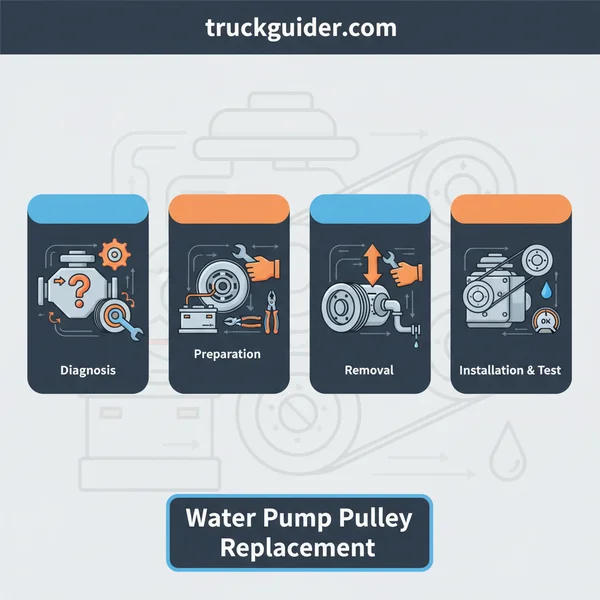
Practically speaking, mastering this technique protects your hardware. These pulleys are often made of stamped steel or aluminum, which can bend if you try to jam them with a pry bar. Using the “belt-on” method ensures the force is distributed evenly across the ribs of the pulley, preventing distortion. Whether you are dealing with a press-fit or a bolt-on style, managing torque is the most critical hurdle you will face.
Essential Tools for Managing Pulley Torque and Tension
Having the right tools on hand prevents the pulley from becoming a spinning obstacle. While a standard socket set is the foundation of the job, you need specific items to create the necessary counter-leverage when the belt is not enough.
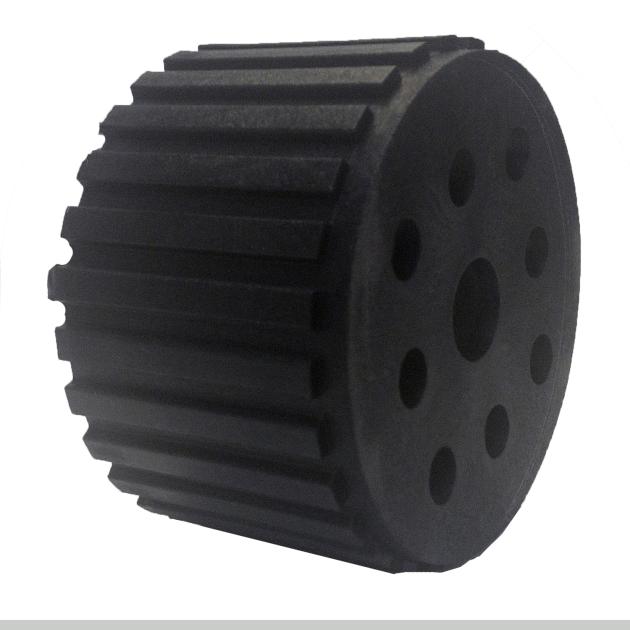
Mechanical Holding Tools
If the drive belt has already snapped or if it is too greasy to provide grip, you must lock the pulley in place manually. You cannot rely on the engine’s internal compression to hold the water pump shaft still.
- Universal Pulley Holder: This tool features two adjustable arms with pins that fit into the holes or gaps on the pulley face. It provides a solid handle to hold against the direction of your wrench.
- Strap Wrench: A heavy-duty rubber strap wrench wraps around the circumference of the pulley. This is the best option for smooth pulleys where there are no holes to insert a holding tool.
- Extra-Long Box-End Wrenches: You can often use the two-wrench technique. Place one wrench on a bolt to hold it steady while using a second wrench to loosen the adjacent bolt in a counter-clockwise motion.
- Pry Bar: A long, thin pry bar can be wedged between two of the bolt heads. This creates a bridge that prevents the pulley from rotating while you break the torque on the remaining bolts.
The Advantage of Impact Torque
A cordless 1/4-inch or 3/8-inch impact driver is the ultimate “cheat code” for this repair. The high-frequency internal hammering action breaks the “stiction” of the threads almost instantly. Often, the bolt will loosen so fast that the pulley’s own mass and inertia keep it from spinning, even without a belt. If you are using hand tools, remember that a quick, sharp snap of the wrench is more effective than a slow, steady pull. Slow pressure almost always results in the pulley rotating under the belt tension.
The Ultimate Water Pump Pulley Walkthrough
Replacing a water pump pulley is a critical maintenance task that often goes overlooked until a squeal, wobble, or catastrophic failure occurs. This guide provides a comprehensive, professional-grade walkthrough to help you navigate the process of removing an old, damaged, or glazed pulley and installing a fresh one to ensure your cooling system operates efficiently. Following these steps precisely is vital because an improperly installed pulley can lead to belt slippage, premature bearing wear on the water pump, or even engine overheating if the belt snaps at high speeds.
Step 1: Preparation and Engine Cooling
What you need: Wheel chocks, safety glasses, mechanic gloves, and a flashlight.
Instructions: Before touching any mechanical component, ensure the vehicle is parked on a level surface with the parking brake engaged and wheel chocks behind the rear tires. The most critical safety factor here is temperature; a water pump pulley is located in close proximity to the radiator and engine block. Allow the engine to cool for at least 45 to 60 minutes. Use your flashlight to inspect the area around the pulley for any signs of active coolant leaks. If the pulley is wet with coolant, it may indicate that the water pump seal has failed, and you might need to replace the entire pump rather than just the pulley. Disconnect the negative battery terminal to ensure the cooling fans do not activate unexpectedly while you are working near the belt drive.
Pro Tip: Use an infrared thermometer to check the engine block temperature. Anything above 110 degrees Fahrenheit (43°C) is still uncomfortably hot for manual work in tight engine bays.
Step 2: Loosening the Pulley Bolts
What you need: A 10mm or 12mm wrench (usually), a flathead screwdriver or a pulley holder tool.
Instructions: This is the most important “secret” step in the process. Do NOT remove the serpentine belt yet. The tension provided by the belt acts as a brake, holding the pulley in place while you break the bolts loose. Use your wrench to turn each of the four (usually) bolts counter-clockwise just a quarter-turn. If the pulley still spins while you try to loosen the bolts, you can use a long flathead screwdriver wedged between two bolt heads to create leverage, or use a dedicated universal pulley holder tool. Your goal here is only to “crack” the initial torque of the bolts, not to remove them entirely. Removing them now would make the belt removal much more difficult and potentially dangerous.
Pro Tip: Spray the bolt heads with a high-quality penetrating oil like PB Blaster 10 minutes before this step to prevent snapping a rusted bolt head.
Step 3: Serpentine Belt Removal
What you need: A serpentine belt tool or a long-handled ratchet/breaker bar, and a phone to take a photo.
Instructions: First, take a clear photo of the belt routing path or locate the belt routing diagram on the radiator shroud. Misrouting the belt during reassembly is the most common DIY mistake. Locate the belt tensioner—a spring-loaded arm with a roller. Insert your tool into the tensioner’s drive hole (usually 3/8″ or 1/2″) or over the center nut. Rotate the tensioner in the direction indicated by the arrow (usually clockwise) to compress the internal spring and release the tension on the belt. While holding the tensioner back, slide the belt off the water pump pulley first, then slowly release the tensioner. Carefully pull the belt out of the engine bay, inspecting it for cracks, fraying, or glazing.
Pro Tip: If the belt looks “shiny” or has deep transverse cracks every inch, it’s time to replace the belt along with the pulley to ensure a quiet operation.
Step 4: Extracting the Old Pulley
What you need: The same wrench used in Step 2, a small magnetic tray.
Instructions: Now that the belt tension is gone, you can fully unthread the pulley bolts by hand. Since you pre-loosened them in Step 2, they should come out easily. Place the bolts in a magnetic tray so they don’t fall into the lower engine splash shield or onto the ground. Once all bolts are removed, firmly grasp the pulley and pull it straight off the water pump’s mounting flange. Sometimes, heat cycles cause the pulley to “seize” onto the hub. If it doesn’t move, give the edge of the pulley a light tap with a rubber mallet to break the surface tension. Do not use a metal hammer, as you could damage the water pump shaft or bearings.
Pro Tip: Inspect the back of the old pulley. If you see metal shavings or “dust,” it indicates the pulley was misaligned or the water pump bearing is failing.
Step 5: Cleaning the Mounting Flange
What you need: A wire brush, brake cleaner, and a lint-free shop rag.
Instructions: With the pulley removed, the water pump’s mounting flange is exposed. It is common for rust, road grime, and old belt residue to accumulate here. If the new pulley is installed over this debris, it will not sit perfectly flush, leading to a “wobble” that will shred your belt in minutes. Spray a small amount of brake cleaner onto your rag and wipe the flange. Use the wire brush to gently scrub away any oxidation until the mounting surface is smooth and shiny. Check the bolt holes for any galled threads. This step ensures that the new pulley makes 100% surface contact with the pump, which is vital for balanced rotation at high RPMs.
Pro Tip: Avoid spraying brake cleaner directly onto the water pump’s shaft seal, as the chemicals can degrade the rubber seal and cause a leak.
Step 6: Installing the New Pulley
What you need: The new water pump pulley and the original bolts.
Instructions: Align the bolt holes of the new pulley with the holes on the water pump flange. Most pulleys are symmetrical, but check if there is a “front” marking. Slide the pulley onto the hub. Start each bolt by hand—do NOT use a wrench or impact tool yet. Hand-threading is essential to prevent cross-threading, which would require replacing the entire water pump. Tighten the bolts until they are finger-tight and the pulley is seated flat against the flange. The pulley will likely spin as you do this, so just get them as snug as possible by hand for now. Ensure there is no gap between the back of the pulley and the pump mounting face.
Pro Tip: Apply a tiny drop of blue (medium-strength) thread locker to the bolts to prevent them from vibrating loose over time without making them impossible to remove later.
Step 7: Belt Reinstallation and Final Torque
What you need: Serpentine belt tool and a torque wrench.
Instructions: Refer to your photo or the routing diagram. Loop the belt around all pulleys (crankshaft, alternator, A/C compressor), leaving the water pump pulley or the tensioner for last. Compress the tensioner again and slide the belt into its final position. Ensure the belt’s ribs are perfectly seated in the grooves of all “ribbed” pulleys. Once the belt is on, the tension will again hold the pulley in place. Use your torque wrench to tighten the pulley bolts to the manufacturer’s specification—usually between 15 and 22 foot-pounds. Work in a “star pattern” (tightening opposite bolts) to ensure even pressure across the flange. This prevents the pulley from warping.
Pro Tip: Double-check the belt on the “hidden” pulleys, like the A/C compressor at the bottom of the engine, as the belt often slips off those during installation.
Step 8: Testing and Verification
What you need: Battery wrench and safety glasses.
Instructions: Reconnect the negative battery terminal. Remove all tools from the engine bay—check the fan shroud and lower trays for forgotten wrenches. Start the engine while standing to the side (never stand directly in line with a spinning belt). Let the engine idle for 60 seconds. Observe the water pump pulley: it should spin perfectly straight with no visible “wobble” or oscillation. Listen for any high-pitched squealing or chirping, which would indicate a misalignment or a belt that isn’t seated correctly. Turn on the A/C to put a load on the belt system and ensure the pulley remains stable. If everything looks and sounds smooth, the job is complete.
Pro Tip: After the first 50 miles of driving, perform a quick visual inspection of the pulley bolts to ensure the vibrations of the road haven’t caused any loosening.
✅ Final Checklist
- Are all four pulley bolts torqued to the specific foot-pound rating for your vehicle?
- Is the serpentine belt seated perfectly in every groove of every pulley?
- Did you reconnect the negative battery terminal and tighten the clamp?
- Is the pulley spinning “true” without any lateral wobble?
- Have all tools and shop rags been removed from the engine compartment?
Important Notes:
- Safety Warning: Never attempt this procedure while the engine is running or immediately after driving. Cooling system components can cause severe burns.
- When to call a pro: If you find that the water pump shaft has “play” (wiggles in and out or up and down), the internal bearings are gone and a pulley replacement won’t fix the problem; you need a new water pump.
- Estimated Time: 45 to 90 minutes.
- Estimated Cost: $30 – $80 for the pulley; $100+ if you also replace the serpentine belt.
Common Symptoms of a Failing Water Pump Pulley
Before you begin the disassembly, you must confirm that the pulley—and not the pump itself—is the source of your trouble. Pulley failure is frequently misdiagnosed as a bad internal pump bearing or a faulty belt tensioner.
Visual and Auditory Warning Signs
The most common sign of a failing pulley is a rhythmic chirping or high-pitched squealing. This noise typically changes pitch as you increase the engine RPMs. Unlike a belt squeal, which is often a long, continuous moan, a pulley bearing failure usually sounds like “metal-on-metal” chatter.
- Pulley Wobble: With the engine idling, look down the line of the belt drive. If the water pump pulley appears to flutter or move in and out, the pulley face is likely warped or the mounting bolts have loosened.
- Belt Glazing: Inspect the belt for a shiny, “glass-like” appearance on its back or ribs. This indicates the pulley is creating excessive friction or is not spinning at the same speed as the belt.
- Visible Dust: Look for fine silver or black dust around the water pump housing. This is often a sign of the pulley rubbing against the engine block or the belt being slowly shaved away by a misaligned pulley.
Physical Inspection for Play and Runout
Once the engine is off and cool, grab the pulley and attempt to move it side-to-side. There should be absolutely zero play. If you feel a “click” or see movement independent of the water pump shaft, the pulley mounting holes may have become elongated. This occurs when bolts were undertightened during a previous service, allowing the pulley to “hammer” against the bolts. Additionally, check for runout by spinning the pulley by hand; any eccentric, “egg-shaped” rotation means the pulley must be replaced immediately to avoid shredding your serpentine belt.
The Mechanics of the ‘Belt-on’ vs. ‘Belt-off’ Methods
Understanding the physics of pulley resistance is essential before you even pick up a wrench. The primary challenge when dealing with a water pump pulley is that it is designed to spin freely. Without a way to lock the pulley in place, the bolts will simply turn the entire assembly rather than loosening. This is where the debate between “belt-on” and “belt-off” mechanics comes into play.
Utilizing Tension to Your Advantage
The “belt-on” method is a favorite among seasoned technicians because it uses the engine’s own serpentine belt tension to create friction. By attempting to loosen the pulley bolts while the belt is still fully tensioned, you are using the resistance of the entire accessory drive system to hold the pulley still. It acts as a built-in “third hand” that prevents the pulley from spinning while you apply torque to the fasteners.
- Pro Tip: Only loosen the bolts a quarter-turn while the belt is on; do not remove them entirely until the tensioner has been released.
- Real-World Example: On many transverse-mounted engines where space is tight, using the belt-on method saves you from having to wedge a pry bar into cramped quarters.
- Efficiency: This method significantly reduces the need for specialized counter-hold tools.
The Free-Spin Challenge
If you have already removed the belt, you are facing the “free-spin” challenge. Without that external tension, the pulley will rotate the moment you apply pressure. In these cases, mechanics must rely on mechanical interference—such as a strap wrench or a specialized pulley holder—to create the necessary counter-torque. Relying on the “belt-off” method without the right holding tool often leads to slipped wrenches and rounded bolt heads.
Potential Risks of Incorrect Pulley Installation and Alignment
Precision is not just a suggestion when it comes to the cooling system; it is a requirement. A water pump pulley that is off by even a fraction of an inch can cause a catastrophic failure of the entire front-end accessory drive. The relationship between the pulley, the belt, and the water pump bearing is a delicate balance of force and motion.
The Silent Killer: Pulley Misalignment
Misalignment occurs when the pulley is not seated perfectly flush against the water pump flange. This creates a “tracking” issue where the belt tries to climb the edges of the pulley grooves. Over time, this doesn’t just wear out the belt; it puts lateral pressure on the water pump’s internal bearings, leading to premature leaks or total pump seizure.
- Warning Signs: Listen for a high-pitched “chirp” or a rhythmic “thump,” which often indicates the belt is struggling to stay centered.
- Visual Inspection: Look for “belt dust” (fine black powder) accumulating around the pulley—this is a surefire sign of excessive friction due to poor alignment.
- The Straight-Edge Rule: Pros often use a laser alignment tool or a simple metal straight-edge to ensure the water pump pulley is perfectly parallel with the crank pulley.
Torque Specs and Structural Integrity
Over-tightening the pulley bolts is just as dangerous as leaving them loose. Excessive torque can distort the pulley’s mounting holes or even crack the water pump flange. Conversely, under-tightened bolts can vibrate loose due to the high RPMs of the engine, potentially sending the pulley flying through your radiator or into the fan blades.
Always refer to your vehicle’s specific torque ratings. A “snug” fit is rarely enough; you need the exact foot-pounds to ensure the vibrations of the engine don’t back the fasteners out over time.
Conclusion: Achieving a Professional Result
Replacing a water pump pulley is a task that rewards patience and the right mechanical approach. By understanding the mechanics of belt tension and the critical importance of alignment, you move beyond mere part-swapping and into the realm of professional-grade maintenance. Remember, the goal isn’t just to get the new pulley on—it is to ensure it spins true for the next 100,000 miles without compromising your engine’s cooling efficiency.
Next Steps: Before you begin, inspect your current serpentine belt for cracks and verify that you have the correct torque specifications for your specific make and model. If your belt shows any signs of glazing, it is the perfect time to replace it alongside the pulley.
Ready to get started? Take your time, double-check your alignment, and keep your engine running cool!
❓ Frequently Asked Questions
Why is my water pump pulley making a chirping noise?
Chirping often indicates a misaligned pulley or a failing bearing within the water pump itself. If the pulley is bent or has surface damage, it can cause the belt to vibrate and produce high-pitched noises during operation.
Is it necessary to replace the pulley when replacing the water pump?
It is not mandatory, but highly recommended if the pulley shows signs of wear, corrosion, or distortion. Reusing a damaged pulley can lead to premature failure of the new water pump’s internal bearings.
What DIY tools can I use if I don’t have a specialized pulley holder?
You can wedge a large flat-head screwdriver between two bolt heads to provide counter-leverage while loosening a third bolt. Alternatively, a rubber strap wrench is an affordable tool that grips the pulley’s outer circumference safely.
Can a loose pulley cause engine overheating?
Indirectly, yes. If the pulley slips or the bolts shear off, the water pump will stop circulating coolant, leading to a rapid rise in engine temperature and potential engine damage.
How tight should the water pump pulley bolts be?
Torque specifications vary by vehicle but are typically low, often between 15-25 ft-lbs. Over-tightening can snap the small bolts, while under-tightening can cause them to vibrate loose over time.
How can I tell the difference between a bad pulley and a bad water pump?
Remove the belt and spin the pulley by hand; grittiness or shaft play indicates a bad pump bearing. If the pump is quiet but the pulley has cracked metal or ovalized holes, the pulley is the issue.
![General EVAP System Failure: Causes, Symptoms, & Repair Costs [2026]](https://truckguider.com/wp-content/uploads/2026/03/general-evap-system-failure-featured-768x403.webp)
![Top Radiator Hose Hot and Bottom Cold? Causes & Fixes [2026]](https://truckguider.com/wp-content/uploads/2026/03/top-radiator-hose-hot-bottom-cold-featured.webp)
![2014 Dodge Durango Oil Type, Capacity, and Specifications [2026]](https://truckguider.com/wp-content/uploads/2026/03/2014-dodge-durango-oil-type-featured.webp)
![P0420 Dodge Caravan: Diagnostic Guide & Repair Costs [2026]](https://truckguider.com/wp-content/uploads/2026/03/p0420-dodge-caravan-featured-768x403.webp)