
2014 Dodge Durango Oil Type, Capacity, and Specifications [2026]

The 2014 Dodge Durango requires SAE 5W-20 engine oil for both the 3.6L V6 and 5.7L V8 engines to ensure proper lubrication and fuel efficiency. It is essential to use oil that meets the Chrysler MS-6395 certification, with capacities ranging from 6 to 7 quarts depending on the engine size.
🎯 Key Takeaways
- Takeaway 1:Both 3.6L and 5.7L engines utilize SAE 5W-20 viscosity oil.
- Takeaway 2:Use only oils meeting the Chrysler MS-6395 material standard.
- Takeaway 3:The 3.6L Pentastar V6 engine requires 6.0 quarts of oil.
- Takeaway 4:The 5.7L HEMI V8 engine requires 7.0 quarts of oil.
- Takeaway 5:Synthetic oil is recommended for maximum engine protection and longevity.
For your 2014 Durango third generation technical specifications”>Dodge Durango, the manufacturer-recommended oil is SAE 5W-20 for both engine options: the 3.6L Pentastar V6 and the 5.7L HEMI V8. If you have the V6 engine, you will need 6 quarts of oil, while the V8 HEMI requires exactly 7 quarts. It is crucial to use oil that meets the Chrysler MS-6395 material standard to ensure your engine remains under warranty and operates at peak efficiency throughout its lifespan. This specific viscosity and certification ensure that the internal components receive adequate lubrication during cold starts while maintaining enough film strength at high operating temperatures.
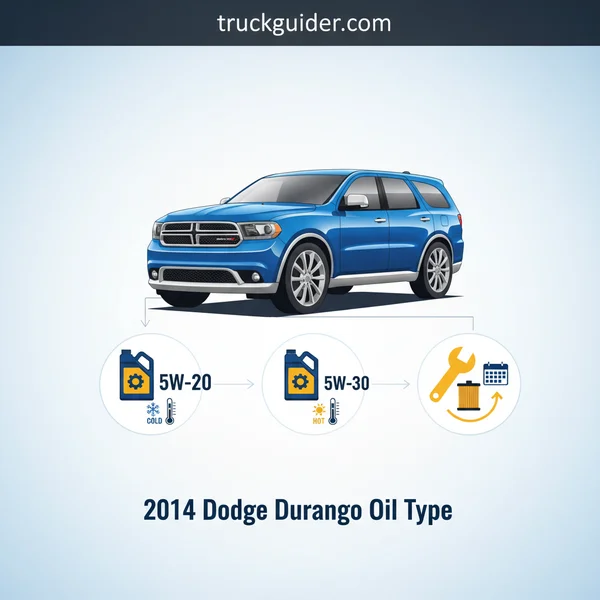
Maintaining the correct oil type and volume is not just about lubrication; it directly affects the complex mechanical systems inside your Durango. For V8 owners, the 5W-20 viscosity is vital for the proper operation of the Multi-Displacement System (MDS), which shuts down cylinders to save fuel. Using a heavier oil can lead to sluggish performance or even trigger check engine lights related to the MDS solenoids. This guide provides the specific technical data you need to manage your vehicle’s maintenance and keep your powertrain running smoothly without the guesswork.
Engine-Specific Oil Viscosity and Performance Standards
The 3.6L Pentastar V6 and Chrysler MS-6395
The 2014 Dodge Durango equipped with the 3.6L Pentastar V6 engine is designed to run exclusively on SAE 5W-20 engine oil. This engine is a workhorse known for its efficiency, but it relies on thin oil to navigate the tight tolerances of its variable valve timing (VVT) system. Chrysler specifically requires oils that meet the MS-6395 specification. This isn’t just a marketing label; it is a rigorous standard that requires the oil to undergo a multi-year fleet test to ensure it prevents sludge buildup and resists thermal breakdown.
- Viscosity: SAE 5W-20 is mandatory. While 5W-30 might seem like a safe alternative, it can negatively impact your fuel economy and timing chain tensioner performance.
- Certification: Always look for the API (American Petroleum Institute) “Starburst” symbol on the bottle alongside the MS-6395 designation.
- Synthetic vs. Conventional: From the factory, your Durango didn’t strictly require full synthetic, but it is highly recommended. Full synthetic oils offer better protection for the V6’s complex valvetrain and help extend the life of the oil cooler.
The 5.7L HEMI V8 and the MDS System
If your Durango is powered by the 5.7L HEMI V8, sticking to the SAE 5W-20 recommendation is even more critical. The HEMI utilizes a Multi-Displacement System (MDS) that deactivates four of the eight cylinders during light cruising conditions. This system operates using oil pressure and incredibly small oil passages. If you use a thicker oil, such as 10W-30 or 5W-30, the oil may not flow quickly enough through the MDS solenoids, leading to rough transitions or a complete failure of the system to engage.
Using the correct MS-6395 certified 5W-20 oil ensures that the lifters stay properly lubricated, which is a common concern for HEMI owners. High-quality synthetic oil is the best choice here, as it resists the high heat generated by a large-displacement V8, especially if you use your Durango for towing or heavy hauling. Ensure you are checking your oil levels regularly, as the HEMI can be sensitive to even slight drops in oil volume.
2014 Dodge Durango Oil Maintenance Made Easy: Your Essential Action Plan
Maintaining the engine of your 2014 Dodge Durango is the single most effective way to ensure its longevity and performance, whether you are hauling a trailer or navigating the daily commute. This guide provides a comprehensive walkthrough for identifying the correct oil type, gathering the necessary tools, and executing a professional-grade oil change from your own garage. Following these specific steps prevents engine sludge, optimizes fuel economy, and protects the sensitive internal components of both the 3.6L Pentastar V6 and the 5.7L HEMI V8 engines. By the end of this guide, you will have the confidence to manage your vehicle’s most vital maintenance task with precision.
Step 1: Identify Your Engine and Procure the Correct Oil
What you need: Owner’s manual, VIN number (optional), and 6-7 quarts of high-quality synthetic oil.
Instructions: Before you turn a single wrench, you must confirm which engine is under the hood of your 2014 Dodge Durango, as the oil requirements differ significantly. If you have the 3.6L Pentastar V6, you require 6 quarts of 0W-20 full synthetic oil. If you have the 5.7L HEMI V8, you will need 7 quarts of 5W-20 full synthetic oil. It is crucial to use oil that meets the Chrysler MS-6395 material standard. Using the wrong viscosity can trigger “Check Engine” lights or lead to poor lubrication of the Multi-Displacement System (MDS) in the V8 models. Purchase a high-quality filter as well—a cartridge style for the V6 or a spin-on style for the V8.
Pro Tip: Many 2014 Durango owners mistake the V6 oil requirement for 5W-30 because previous years used it; however, 2014 was the transition year to 0W-20 for the Pentastar. Always double-check the oil cap on your specific engine to verify the weight.
Step 2: Prepare Your Workspace and the Vehicle
What you need: Car ramps or a floor jack with jack stands, wheel chocks, and nitrile gloves.
Instructions: Start your engine and let it run for about five minutes to warm the oil. Warm oil flows much more freely than cold oil, ensuring that more contaminants are flushed out during the drain process. Park the Durango on a level surface, engage the parking brake, and use ramps or a jack to lift the front of the vehicle. If using a jack, you must place jack stands under the frame rails for safety—never work under a car supported only by a hydraulic jack. Place wheel chocks behind the rear tires to prevent the vehicle from rolling. Pop the hood and remove the oil fill cap to allow air to enter the system, which helps the oil drain faster.
Pro Tip: Lay down a large piece of cardboard or a plastic drop cloth under the engine area. Even the most experienced mechanics deal with occasional splashes, and this makes cleanup significantly easier.
Step 3: Drain the Old Oil
What you need: 13mm socket or wrench, oil drain pan (at least 8-quart capacity), and shop rags.
Instructions: Locate the oil drain plug at the bottom of the engine’s oil pan. Position your drain pan directly underneath the plug, but slightly offset to account for the trajectory of the oil as it first shoots out. Using your 13mm socket, loosen the bolt counter-clockwise. Once it is loose, use your hand to unscrew it the rest of the way, applying inward pressure so the oil doesn’t leak out until the very last thread is clear. Quickly pull the plug away. Let the oil drain until it slows to a very thin, intermittent drip. This usually takes about 10 to 15 minutes. While it drains, inspect the drain plug’s gasket (O-ring) for cracks or flattening.
Pro Tip: If the drain plug gasket looks worn, replace it with a new Mopar-spec washer. A $1 gasket is cheap insurance against a slow, annoying leak on your driveway.
Step 4: Replace the Oil Filter
What you need: 24mm socket (for V6 cartridge) or an oil filter wrench (for V8 spin-on).
Instructions: The process varies by engine. For the 3.6L V6, the filter is a cartridge located on top of the engine. Use a 24mm socket to unscrew the plastic cap, pull the old filter out, and replace the rubber O-ring on the cap (usually provided with the new filter). Snap the new filter into the cap and torque to 18 ft-lbs. For the 5.7L V8, the filter is a traditional spin-on located near the front of the engine. Use a filter wrench to loosen it. Before installing the new V8 filter, smear a light film of fresh oil on the rubber gasket and hand-tighten it until snug, then give it another quarter to half turn. Do not over-tighten the V8 filter with a wrench.
Pro Tip: For V8 engines, “pre-filling” the new oil filter with fresh oil before screwing it on helps the engine achieve oil pressure faster during the first start-up, reducing metal-on-metal wear.
Step 5: Reinstall the Drain Plug and Refill
What you need: 13mm socket, torque wrench, and a clean funnel.
Instructions: Once the oil has finished dripping, wipe the area around the drain hole with a clean rag. Hand-thread the drain plug back into the oil pan to ensure you don’t cross-thread it. Once hand-tight, use your wrench to snug it down. The recommended torque is approximately 20-25 ft-lbs. Do not over-torque, as the oil pan is often made of aluminum or thin steel and can strip easily. Move back to the top of the engine and place your funnel into the oil fill port. Slowly pour in the required amount of oil (6 quarts for V6, 7 quarts for V8). Pouring slowly prevents air pockets and overflow spills.
Pro Tip: After pouring 5.5 quarts (V6) or 6.5 quarts (V8), stop and check the level. It is much easier to add a little more than it is to drain out an overfilled engine.
Step 6: Check the Level and Verify Seals
What you need: The vehicle’s dipstick and a clean paper towel.
Instructions: Replace the oil fill cap and start the engine. Let it idle for about two minutes while you look underneath the vehicle with a flashlight to check for any leaks around the drain plug or the filter. Turn the engine off and let the vehicle sit for five minutes to allow the oil to settle back into the pan. Pull the dipstick, wipe it clean, reinsert it fully, and pull it again. The oil level should be within the “Safe” or cross-hatched area. If it is low, add the remaining half-quart. Once the level is perfect, you can safely lower the vehicle from the ramps or jack stands.
Pro Tip: Always check the oil level on level ground. Even a slight incline can give you a false reading on the dipstick, leading to overfilling or underfilling.
Step 7: Reset the Oil Life Indicator
What you need: Just your key fob and the vehicle’s ignition button.
Instructions: The 2014 Dodge Durango features an electronic oil life monitoring system that must be reset so the vehicle can accurately track your next service interval. Sit in the driver’s seat with the doors closed. Without touching the brake pedal, press the “Start/Stop” button twice to put the vehicle in “Run” mode (the dash lights will come on, but the engine should not be running). Fully depress the accelerator pedal slowly three times within 10 seconds. Turn the ignition off. When you start the engine again, the “Oil Change Required” message should be cleared. If it remains, repeat the process ensuring the pedal presses are firm and deliberate.
Pro Tip: Keep a small notebook in your glovebox or use a windshield sticker to record the date and mileage of the change. Digital monitors are great, but a manual backup ensures you never miss a service if the electronics glitch.
✅ Final Checklist
- Verify that the oil drain plug is torqued to 20-25 ft-lbs and is not leaking.
- Confirm the oil filter is properly seated (V6 cap torqued or V8 gasket lubricated).
- Ensure the oil level on the dipstick is exactly in the “Safe” zone after the engine has settled.
- Check that the oil fill cap and dipstick are both fully reinstalled and secure.
- Reset the dashboard oil life monitor to 100%.
Important Notes:
- Safety First: Never work under a vehicle supported only by a jack; always use rated jack stands.
- Environmental Responsibility: Take your used oil and filter to a local auto parts store or recycling center. Never pour oil down a drain or into the ground.
- Seek Help If: You notice metal shavings in the old oil, or if you cannot remove the old filter without damaging the housing.
- Estimated Time: 45–60 minutes.
- Estimated Cost: $40–$70 (depending on oil brand and filter type), compared to $100+ at a dealership.
Understanding Oil Capacities and Filter Requirements
Exact Fluid Capacities for Every Engine
When you are preparing for an oil change, knowing the exact volume is the difference between a job well done and an accidental overfill. Overfilling can lead to oil aeration, where the crankshaft whips air into the oil, reducing its ability to lubricate. Conversely, underfilling can lead to oil starvation during sharp turns or heavy braking. For the 2014 model year, the capacities are straightforward but vary significantly between the two engine types.
- 3.6L V6 Engine: Requires 6.0 Quarts (5.7 Liters). This includes the volume held within the oil filter housing.
- 5.7L V8 HEMI Engine: Requires 7.0 Quarts (6.6 Liters). This is a substantial amount of oil, so ensure you have a large enough drain pan before starting.
Always verify the level on the dipstick after filling. Add the first 5.5 quarts (for the V6) or 6.5 quarts (for the V8), let it settle for a few minutes, and then check the level. It is common for “drain and fill” operations to vary slightly based on how long you let the old oil drip out and the angle of the vehicle.
Selecting the Right Oil Filter for 2014 Models
The 2014 Dodge Durango uses two very different styles of oil filters depending on the engine. One of the most important things to note for 2014 V6 owners is that Chrysler updated the oil filter design mid-cycle in previous years, but the 2014 model uses a specific cartridge style that is different from the older 2011-2013 versions. Using the wrong filter will result in a poor seal and potential engine damage.
- V6 Filter (3.6L): This engine uses a cartridge-style filter located on top of the engine. The Mopar part number is MO-349 (or 68191349AC). It features a distinct “nipple” on the bottom that must be seated correctly in the housing.
- V8 Filter (5.7L): This engine uses a traditional spin-on metal canister filter located on the bottom of the engine. The Mopar part number is MO-899 (or 04892339AA). If you prefer aftermarket brands, the Wix 57060 or Mobil 1 M1-113A are common high-quality alternatives.
When replacing the V6 cartridge filter, it is imperative to replace the O-ring on the filter cap and lubricate it with a small amount of fresh oil. For the V8 spin-on filter, always ensure the old rubber gasket came off with the old filter to avoid “double-gasketing,” which causes immediate oil pressure loss upon startup.
The Importance of the Chrysler MS-6395 Certification
When you are browsing the oil aisle at your local auto parts store, you will notice dozens of different brands. However, for a 2014 Dodge Durango, the viscosity grade (5W-20) is only half the story. To keep your engine running as the engineers intended, you should always look for a bottle that explicitly lists the Chrysler MS-6395 certification on the back label.
What Makes MS-6395 Special?
Chrysler MS-6395 is a unique material standard developed by Fiat Chrysler (FCA). Unlike generic industry standards, this certification requires the oil to undergo rigorous testing for oxidation resistance, wear protection, and deposit control specifically within the architecture of Chrysler engines. For 2014 Durango owners, using an oil that meets this spec ensures that the internal components of your Pentastar or Hemi engine remain free of sludge over long-term use.
Protecting Your Warranty and Engine Longevity
Using the correct certified oil isn’t just about performance; it’s about peace of mind. If you ever face an internal engine issue while under an extended warranty, manufacturers often look for service records that prove the correct specification was used. Many premium brands offer MS-6395 compliant oils, including:
- Pennzoil Platinum: Often the factory-fill choice for Dodge vehicles.
- Mobil 1: Most of their full synthetic lines carry the MS-6395 approval.
- Valvoline Advanced: A popular choice for high-mileage Durango models.
- Mopar: The official OEM brand specifically formulated for your vehicle.
Maintenance Considerations: Torque Specs and Oil Life Monitoring
Owning a 2014 Dodge Durango means managing a sophisticated machine that monitors its own health. Beyond just knowing which oil to buy, understanding the technical specifications for your hardware and the logic behind your dashboard alerts is crucial for long-term reliability.
Understanding the Oil Life Monitoring System
Your 2014 Durango is equipped with an Automatic Oil Change Indicator System. Instead of a hard-and-fast rule like “every 3,000 miles,” this system uses a duty-cycle-based algorithm. It factors in engine temperatures, ambient conditions, driving habits (like towing or idling), and trip duration to calculate when the oil has actually degraded. While the maximum interval should never exceed 10,000 miles or 12 months, you might see the “Oil Change Required” light as early as 3,500 miles if you frequently tow heavy trailers through the mountains.
Critical Torque Specifications
Applying the correct amount of force when securing your oil components prevents leaks and expensive damage to the oil pan. Because the 3.6L Pentastar uses a top-mounted plastic filter housing, over-tightening is a common cause of cracked components. Here are the essential numbers to remember:
- Oil Drain Plug: Approximately 20–25 ft-lbs (27–34 Nm).
- 3.6L V6 Filter Cap: 18 ft-lbs (25 Nm) — be careful here, as the plastic is fragile!
- 5.7L V8 Spin-on Filter: Generally “hand tight” plus an additional 3/4 turn after the gasket makes contact.
Conclusion
Taking care of your 2014 Dodge Durango doesn’t have to be a guessing game. By sticking to the 5W-20 weight, ensuring the oil carries the Chrysler MS-6395 certification, and respecting the specific capacities for the 3.6L and 5.7L engines, you are setting your SUV up for years of dependable service. Whether you are daily commuting or heading out on a cross-country road trip, the right oil is the literal lifeblood of your vehicle’s performance.
As a next step, take a quick peek at your dashboard to check your current oil life percentage and verify your engine type under the hood. If you’re approaching that “Change Oil” alert, grab the correct supplies and give your Durango the high-quality maintenance it deserves!
❓ Frequently Asked Questions
Why is the Chrysler MS-6395 specification required for the Durango?
The MS-6395 specification is a proprietary Chrysler standard that ensures the oil has specific additives to prevent sludge and wear in Mopar engines. Using oil without this certification can potentially affect your engine warranty and long-term reliability.
What happens if I use the wrong oil viscosity in the 5.7L HEMI?
The 5.7L V8 uses a Multi-Displacement System (MDS) that relies on the thin consistency of 5W-20 to operate correctly. Using a heavier oil like 10W-30 can cause the MDS to malfunction, trigger check engine lights, and reduce fuel economy.
Are the oil filters interchangeable between the V6 and V8 engines?
No, they are not interchangeable. The 3.6L V6 uses a top-access cartridge filter (MO-349), while the 5.7L V8 uses a traditional bottom-mounted spin-on filter (MO-899).
How often should the oil be changed in a 2014 Dodge Durango?
Dodge recommends following the automatic Oil Life Indicator system, which typically signals a change every 7,500 to 10,000 miles. However, you should never exceed 10,000 miles or 12 months between oil changes.
Does the 2014 Durango require a special oil for towing?
While the viscosity (5W-20) remains the same for towing, using a high-quality full synthetic oil is strongly advised. Synthetic oil handles the higher thermal loads generated during heavy towing better than conventional oil.
How do I reset the oil life light on the dashboard?
With the engine off, turn the ignition to ‘Run,’ then slowly press the accelerator pedal to the floor three times within 10 seconds. Turn the ignition off, then start the engine to confirm the reset was successful.
![2019 Ram 2500 Tradesman: Full Specs & Data [2026]](https://truckguider.com/wp-content/uploads/2026/03/2019-ram-2500-tradesman-featured.webp)
![Dodge Ram Extended Cab Guide: Quad Cab vs. Crew Cab [2026]](https://truckguider.com/wp-content/uploads/2026/03/dodge-ram-extended-cab-featured-768x403.webp)
![Reprogram Dodge Key Fob Push Start [2026]](https://truckguider.com/wp-content/uploads/2026/03/featured-bb1a0e6c-768x432.webp)
![How To Install In Channel Rain Guards [2026]](https://truckguider.com/wp-content/uploads/2026/03/featured-b43761fc-768x432.webp)
![Dodge P0305 Code: Cylinder 5 Misfire Causes & Solutions [2026]](https://truckguider.com/wp-content/uploads/2026/03/po305-code-dodge-featured.webp)