
2013 Ram 1500 5.7L HEMI V8: The Definitive Technical Review, Reliability Analysis, and Market Guide 2026

The 2013 model year represented a watershed moment for the Ram 1500. Having officially separated from the Dodge brand in 2009 to form the standalone Ram Truck division, the 2013 iteration was not merely a mid-cycle refresh; it was a technological overhaul that fundamentally altered the trajectory of the half-ton pickup segment.
While the exterior aesthetics received subtle updates—such as improved aerodynamics and new projector headlamps—the chassis, powertrain, and interior architecture underwent radical modernization.


The defining characteristic of the 2013 Ram 1500 is the introduction of the class-exclusive TorqueFlite 8 (ZF 8HP70) 8-speed automatic transmission, a component that dramatically improved the fuel efficiency and drivability of the 5.7L HEMI V8 engine. This technology, paired with the new Pentastar V6 and the segment-first Active-Level™ Four-Corner Air Suspension, allowed Ram to claim best-in-class fuel economy and ride quality, directly challenging the Ford F-150 and Chevrolet Silverado 1500.
However, the legacy of the 2013 model is complex. As a “split-year” vehicle, it straddles the line between legacy engineering (some models retained the 6-speed transmission and HOAT coolants) and modern innovation (8-speed transmission, OAT coolants, electric power steering). For the used truck buyer in 2026, understanding these distinctions is critical.
This report provides an exhaustive technical analysis of the 5.7L HEMI configuration, dissecting its capabilities, common failure points—specifically the notorious camshaft/lifter issues—and long-term maintenance requirements.
2013 Dodge Ram 1500
5.7L HEMI V8 Legend
The pivotal model year that redefined the full-size truck market. Introducing the 8-speed TorqueFlite transmission, air suspension, and refined interiors, the 2013 Ram 1500 bridged the gap between raw capability and daily drivability.
The Hemi Heart
At the core is the legendary 5.7L HEMI V8. In 2013, this engine was paired with Variable Valve Timing (VVT) and Fuel Saver Technology (cylinder deactivation), delivering massive power without completely sacrificing efficiency.
Figure 1: 2013 Ram Power Output vs. Key Competitors (Silverado 5.3L & F-150 5.0L)
Transmission Revolution: 6 vs 8 Speed
2013 marked the debut of the ZF 8-Speed “TorqueFlite” transmission (Dial Shifter). This was a game-changer compared to the carry-over 6-speed, offering significantly better acceleration and fuel economy.
Towing Capability by Axle Ratio
Not all Hemis tow the same. The rear axle ratio is the critical factor. The 3.92 gears maximize pulling power, while 3.21 gears prioritize highway fuel economy.
*Based on Regular Cab 4×2 configurations. Crew cabs slightly lower due to weight.
The Secret Weapon: Coil-Link Rear Suspension
While Ford and Chevy utilized archaic leaf springs in 2013, Ram switched to a Multi-Link Coil Spring rear setup. This provided a best-in-class ride quality without sacrificing significant payload capacity.
- ✔ Eliminates “bed hop” on empty loads.
- ✔ Superior cornering stability vs. leaf springs.
- ✔ Allowed for the optional 4-Corner Air Suspension.
Ownership Watchlist
Common issues reported by owners over the last decade. The “Hemi Tick” (broken manifold bolts) is the most pervasive annoyance.
Real World MPG Range
Distribution of real-world owner reported fuel economy (Combined City/Hwy).
© 2026 TruckGuider Infographics
Powertrain Engineering: The 5.7L HEMI V8 (EZH)
The heart of this configuration is the legendary 5.7-liter HEMI V8, code-named Eagle. By 2013, this engine had evolved significantly from its initial launch in 2003, incorporating advanced fuel-saving technologies while retaining the pushrod architecture that defines American V8 muscle.
Engine Architecture and Output
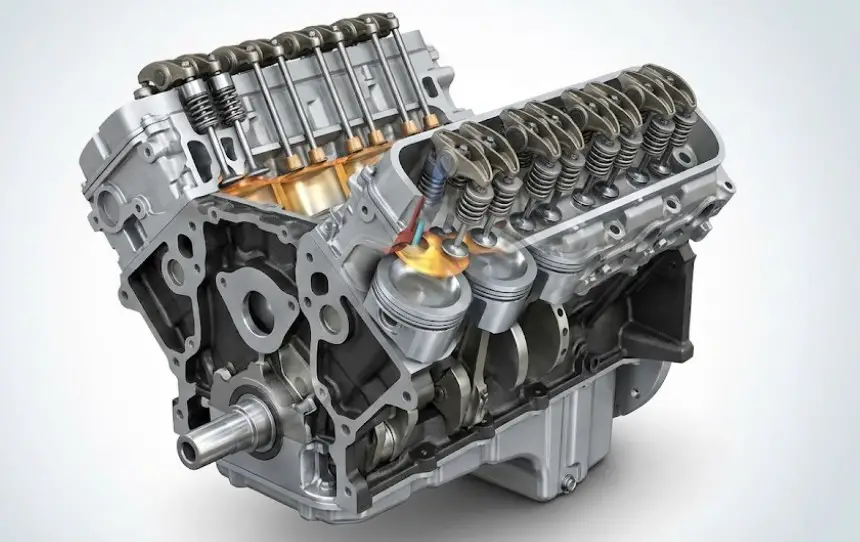
The 2013 5.7L HEMI utilizes a deep-skirt cast-iron block with aluminum alloy heads, featuring a hemispherical combustion chamber design that optimizes airflow and thermal efficiency. The engine produces 395 horsepower at 5,600 RPM and 407 lb-ft of torque at 3,950 RPM. These figures placed it at the top of the naturally aspirated V8 class for 2013, surpassing the Ford 5.0L Coyote (360 hp) and the Chevrolet 5.3L Vortec (315 hp).


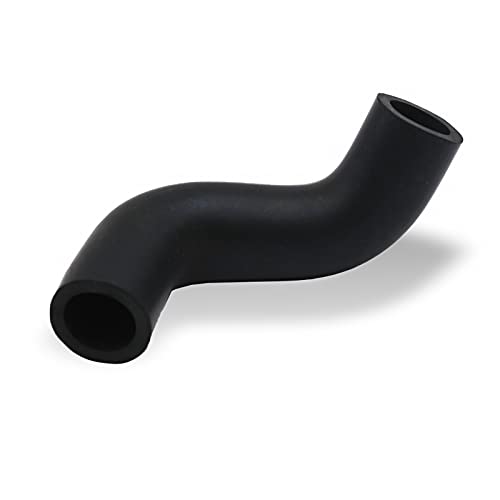

A critical component of this performance is Variable Valve Timing (VVT). The VVT system adjusts the timing of the valves via a phase-able camshaft, broadening the torque curve. This ensures that the engine delivers low-end grunt for towing while maintaining high-RPM breathability for highway passing. The compression ratio stands at 10.5:1, necessitating the recommendation of 89-octane fuel for optimal performance, though 87-octane is permissible.
Multi-Displacement System (MDS)
To address the inherent fuel consumption of a large displacement V8, the 2013 HEMI is equipped with Chrysler’s Multi-Displacement System (MDS), marketed as “Fuel Saver Technology”.
- Operation Mechanism: Under light load conditions—such as steady-state highway cruising or gentle deceleration—the Powertrain Control Module (PCM) deactivates four of the eight cylinders (1, 4, 6, and 7).
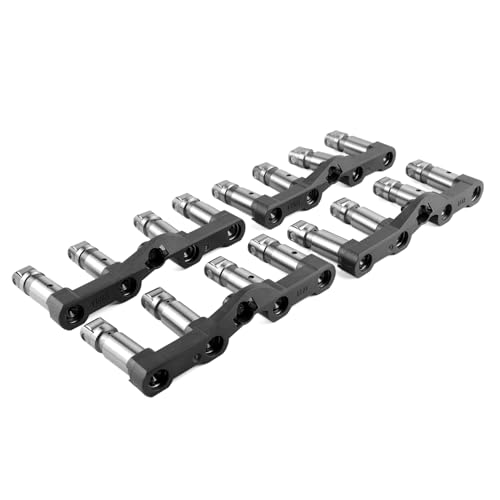
- Hydraulic Activation: The system uses dedicated solenoids to control oil pressure to special collapsible valve lifters. When activated, these lifters collapse, preventing the valves from opening. The piston continues to move, compressing the trapped gas as an air spring, which minimizes pumping losses.
- Transition: The switch between 8-cylinder and 4-cylinder modes occurs in roughly 40 milliseconds, theoretically imperceptible to the driver.
- Maintenance Implication: The MDS system is extremely sensitive to oil viscosity. The use of 5W-20 oil is mandatory. Heavier oils (like 10W-30 or 5W-40) can impede the hydraulic function of the MDS solenoids, leading to check engine lights (P3400 codes) and potential lifter failure.
The “Hemi Tick”: A Critical Reliability Analysis
No discussion of the 5.7L HEMI is complete without addressing the phenomenon known as the “Hemi Tick.” In the 2013 model year, this manifests in two distinct forms, often confused by owners but requiring vastly different repair strategies.
Type A: Exhaust Manifold Failure (The “Cold Tick”)
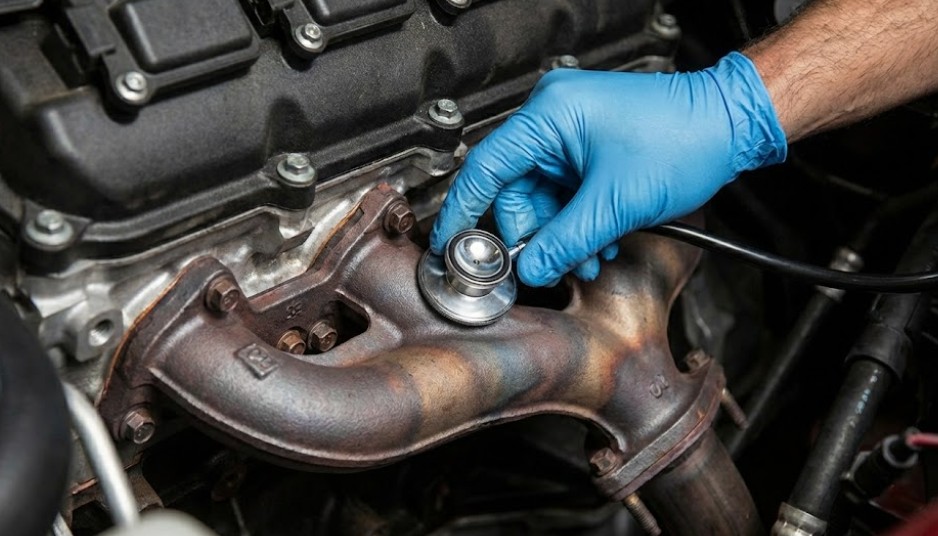
This is the most common and less catastrophic issue.
- Symptoms: A rhythmic ticking noise audible through the wheel wells upon cold start. The noise typically dissipates or quiets significantly after 2–5 minutes of engine operation as the components heat up and expand.
- Root Cause: The 5.7L engine generates significant heat, particularly at the rear cylinders (7 and 8). The disparity in thermal expansion rates between the cast iron exhaust manifold and the aluminum cylinder head places immense shear stress on the manifold retention bolts. Over time, the rear bolts snap, creating an exhaust leak.
- Repair: Extraction of broken studs and replacement of the manifold gasket and bolts. Utilizing aftermarket “shorty” headers can sometimes alleviate the stress, though factory replacement is standard.
Type B: Camshaft and Lifter Failure (The “Fatal Tick”)
This represents a major mechanical failure found in a subset of HEMI engines, particularly those with high idle hours (e.g., police or fleet use).
- Symptoms: A persistent, loud tapping or ticking sound that does not go away when the engine warms up. It typically increases in frequency with engine RPM. It may eventually trigger a misfire code (P0300, P0303, P0305).
- Root Cause: The failure mechanism involves the needle bearings within the roller lifter. If these bearings fail due to lack of lubrication or metal fatigue, the roller seizes. The seized roller then drags across the hardened camshaft lobe, acting like a grinding wheel and wiping the cam lobe flat. This prevents the valve from opening properly.
- The Lubrication Factor: At idle, the HEMI’s camshaft is lubricated primarily by “splash” oiling rather than direct pressure. Prolonged idling can lead to oil starvation at the top end of the engine/camshaft interface, accelerating wear.
- Financial Impact: Repair requires removing the cylinder heads to replace all 16 lifters and the camshaft. Costs range from $2,500 to $4,000 at independent shops, with dealership quotes often exceeding $7,000.
Transmission Technology: The 6-Speed vs. 8-Speed Split
The 2013 model year is unique because it offered two distinct automatic transmissions for the 5.7L HEMI. Identifying which transmission a specific truck possesses is the single most important factor in determining its performance, towing capability, and resale value.
The 6-Speed Automatic (65RFE)
Standard on lower trims (Tradesman, Express) and early-build 2013 models, this unit is a carryover from the previous generation.
- Engineering: The 65RFE is essentially a software-reprogrammed version of the older 545RFE 5-speed transmission. It enables a “2nd Prime” gear for downshifting but effectively operates as a wide-ratio 6-speed.
- Performance: Owners often report “gear hunting” and a significant RPM drop between shifts, particularly when towing heavy loads on grades. The wide spacing between gears means the engine frequently falls out of its optimal power band.
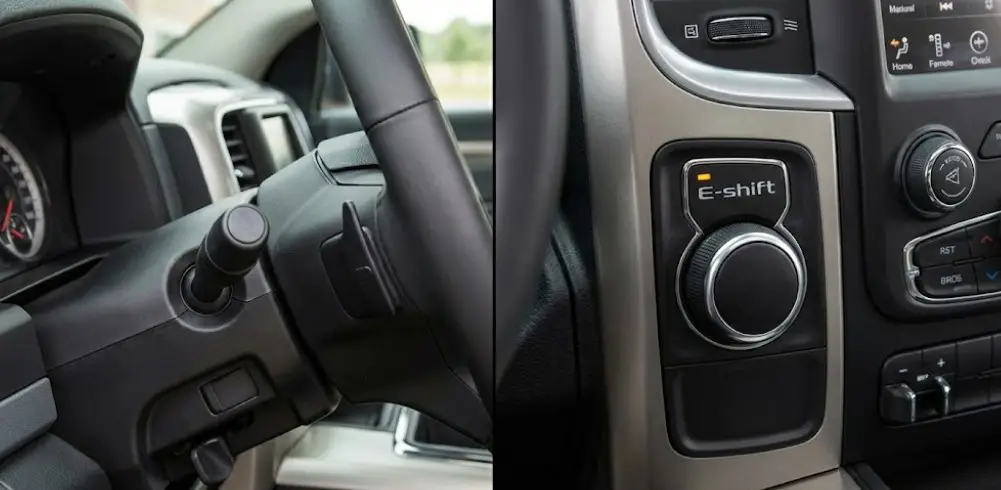
- Identification: Controlled via a traditional column-mounted shift lever.
- Fluid: Requires ATF+4 fluid.
The 8-Speed Automatic (ZF 8HP70) – TorqueFlite 8
Introduced as an option late in the 2013 model year for the HEMI (and standard on the V6), this transmission is widely regarded as the superior choice.
- Engineering: Licensed from ZF Friedrichshafen, this transmission uses four planetary gearsets and five shift elements to provide eight forward speeds.
- Benefits:
- Ratio Spread: The wide 7.03 ratio spread allows for a very low first gear (4.71) for aggressive launches and towing, while the two overdrive gears (0.84 and 0.67) keep highway RPMs low for fuel economy.
- Shift Speed: Shift times are reduced to 200 milliseconds, providing a seamless flow of power that makes the truck feel significantly faster than the 6-speed counterpart (0-60 mph in ~6.9 seconds).
- Efficiency: The 8-speed improves fuel economy by approximately 10-15% over the 6-speed, helping the HEMI achieve up to 22 MPG on the highway.
- Identification: Controlled via the rotary “E-shift” dial on the dashboard.
- Reliability: The ZF 8HP70 is considered “bulletproof” by the enthusiast community, capable of handling torque well beyond stock levels. However, it requires specialized ZF Lifeguard 8 fluid (green color), which is significantly more expensive than ATF+4.
Transmission Comparison Matrix
| Feature | 6-Speed (65RFE) | 8-Speed (ZF 8HP70) |
| Availability | Standard (Early/Lower Trims) | Optional (Late/Higher Trims) |
| Shifter Type | Column Shifter | Rotary Dial (Dash) |
| Gear Spread | Wide (RPM drops) | Close Ratio (smooth power) |
| Towing Feel | Adequate, frequent downshifts | Superior, holds gears better |
| Fluid Type | ATF+4 | ZF Lifeguard 8 / Mopar 8&9 Speed |
| Serviceability | Steel Pan, separate filter | Composite Pan w/ integrated filter |
Capability Analysis: Towing and Payload
The 2013 Ram 1500’s towing capacity is not a single number; it is a matrix dependent on cab configuration, drive system, and most critically, the rear axle ratio. A 5.7L HEMI truck can tow anywhere from 6,500 lbs to 10,450 lbs depending on these variables.
The Axle Ratio Factor
Ram offered three rear axle ratios for the 2013 HEMI:
- 3.21: Optimized for fuel economy. The engine spins slower at highway speeds. This ratio significantly cripples towing capacity, often capping it around 6,000–8,000 lbs.
- 3.55: The balance point. Offers decent MPG and respectable towing.
- 3.92: The “Max Tow” ratio. This gearing multiplies torque more effectively, allowing for the highest tow ratings (10,000+ lbs) and quicker acceleration, at the cost of slightly higher fuel consumption.
Towing Capacity Chart (5.7L HEMI V8)
The following table breaks down the maximum trailer weight for the most common configurations.
| Cab Style | Drive | Axle Ratio | Transmission | Max Towing (lbs) | GCWR (lbs) |
| Regular Cab 8′ | 4×2 | 3.21 | 8-Speed | 7,200 | 12,100 |
| Regular Cab 8′ | 4×2 | 3.92 | 8-Speed | 10,450 | 15,650 |
| Quad Cab 6’4″ | 4×2 | 3.55 | 6-Speed | 8,750 | 14,150 |
| Quad Cab 6’4″ | 4×4 | 3.92 | 8-Speed | 10,150 | 15,650 |
| Crew Cab 5’7″ | 4×4 | 3.21 | 8-Speed | 6,500 | 12,100 |
| Crew Cab 5’7″ | 4×4 | 3.92 | 8-Speed | 9,900 | 15,650 |
Critical Insight for Buyers: It is a common misconception that all HEMI Rams are heavy haulers. A 2013 Crew Cab Laramie 4×4 with the 3.21 axle—a common dealer configuration for luxury buyers—has a tow rating of only 6,500 lbs. This is lower than many midsize trucks. Buyers must verify the axle ratio via the VIN build sheet or the axle tag before purchasing for towing duties.
Payload Limitations
While the Ram 1500’s towing numbers are competitive, its payload capacity often serves as the limiting factor. The coil-spring rear suspension, while providing a superior ride, generally results in lower payload ratings compared to the leaf-sprung Ford F-150.
- Real-World Payload: A fully loaded Crew Cab Laramie or Longhorn may have a door-sticker payload rating as low as 1,100 to 1,200 lbs.
- The Calculation: If you have four adult passengers (800 lbs) and 100 lbs of gear, you only have 200 lbs remaining for trailer tongue weight. This effectively limits the towable trailer size significantly below the engine’s theoretical max.
Chassis and Suspension: Innovation and Issues
Rear Coil-Link Suspension
In 2013, Ram replaced the industry-standard leaf spring rear suspension with a multi-link coil spring setup.
- Benefit: This design provides improved articulation for off-roading and, most notably, a ride quality that is far smoother and more compliant than competitors. It eliminates the “bed hop” common in unladen pickup trucks.
- Trade-off: As noted, this design contributes to slightly lower payload stability compared to stiff leaf springs, leading some owners to install aftermarket airbags (like Air Lift 1000) to prevent squat when towing.
Active-Level™ Four-Corner Air Suspension
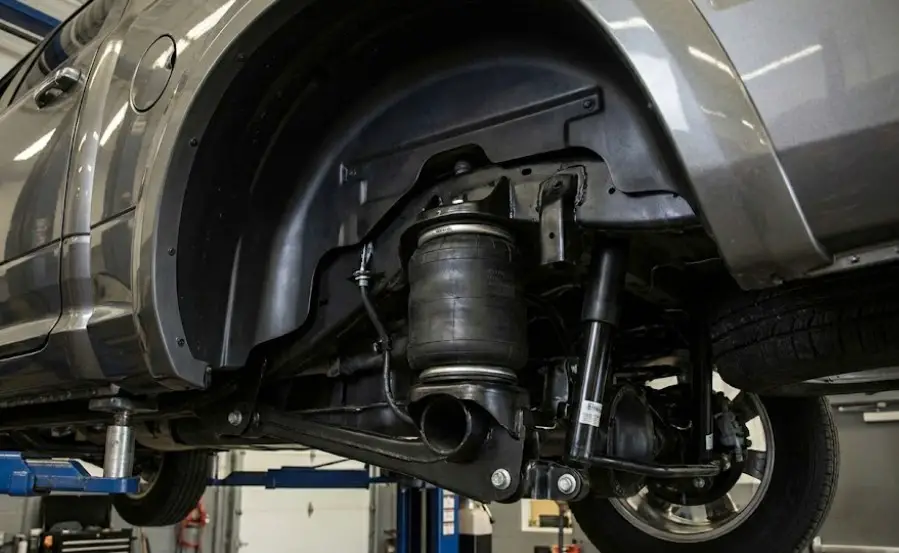
Ram introduced an optional air suspension system in 2013, a first for the segment.


- Function: The system uses air bags at all four corners to provide five distinct ride heights:
- Normal: Standard ride height (8.7 inches clearance).
- Aero: Lowers the truck 1.1 inches at highway speeds (automactic) to improve MPG by reducing drag.
- Off-Road 1: Lifts 1.2 inches for obstacle clearance.
- Off-Road 2: Lifts 2.0 inches for maximum clearance (up to 10.7 inches).
- Entry/Exit: Lowers 2.0 inches below normal to assist with ingress/egress and loading.
- Load Leveling: The system automatically detects payload and pumps up the rear bags to maintain a level stance, a major benefit for towing.
Reliability Warning: The Cold Weather Failure
While excellent when working, the 2013-era air suspension is notorious for failure in freezing temperatures.
- The Problem: Condensation builds up within the closed nitrogen system. When temperatures drop below freezing, this moisture turns to ice within the valve block or compressor lines.
- Consequence: The truck may blow the main 40A fuse, burn out the compressor, or get stuck in “Entry/Exit” mode, riding on the bump stops. This results in a jarring, un-drivable suspension.
- The Fix: Dealers often replace individual components at high cost ($1,500+). However, many long-term owners opt to permanently convert the truck to standard coil springs using aftermarket kits from companies like Strutmasters or Arnott, which cost roughly $1,000 and eliminate the headache forever.
Electrical and Technology Architecture
Uconnect 8.4 System (RA3/RA4)
The 2013 Ram 1500 debuted the Powernet electrical architecture and the highly acclaimed Uconnect 8.4 infotainment system.
- Versions:
- Uconnect 8.4A (RA3): Touchscreen, Bluetooth, potential for dealer-activated navigation.
- Uconnect 8.4AN (RA4): Adds HD Radio, 3D Navigation, and SiriusXM Traffic/Travel Link.
- Connectivity: 2013 models operate on a 3G cellular network (Sprint). Since the 3G shutdown in 2022, the remote features (Uconnect Access, remote start from app, 911 assist) no longer function on 2013 hardware. While 2017+ models can be upgraded to 4G, 2013 models generally cannot without significant hardware swaps.
Totally Integrated Power Module (TIPM)
The TIPM acts as the fuse box and electrical distribution computer. In 2013 Rams, it is a known weak point.
- Fuel Pump Relay Failure: The most common issue is the internal fuel pump relay soldering failing.
- Symptoms: The truck will crank but not start (fuel pump not engaging) or the battery will drain overnight (fuel pump stuck on).
- Solution: Since the relay is soldered to the board, the official fix was replacing the entire TIPM ($1,200). However, simple bypass cables (costing ~$50) or external relay kits are now the standard, permanent fix.
Electric Power Steering (EPS)
2013 marked the switch from hydraulic to electric power steering. This reduced parasitic loss on the engine, contributing to MPG gains. While generally reliable, if the EPS unit fails, it requires replacement of the entire rack assembly, as it is a sealed unit.
Maintenance Guide: The “Split-Year” Challenge
Maintaining a 2013 Ram 1500 requires specific attention to detail because 2013 was a transition year for Chrysler fluids. Using 2012-spec or 2014-spec fluids incorrectly can cause damage.
Engine Oil
- Specification: API Certified SAE 5W-20.
- Synthetic Recommendation: To protect against the “Hemi Tick” and lifter failure, high-quality full synthetic oil (such as Pennzoil Ultra Platinum or Amsoil) is strongly recommended due to its superior film strength and flow at startup.
- Interval: The oil change monitoring system varies, but owners should aim for 5,000 to 7,000 miles, regardless of what the dashboard monitor says, to minimize sludge buildup in the VVT solenoids.
- Capacity: 7.0 Quarts.
Coolant: The OAT vs. HOAT Danger
CRITICAL WARNING: This is the most common maintenance error for 2013 owners.
- Pre-2013: Used HOAT (Hybrid Organic Acid Technology) – typically orange/yellow (MS-9769).
- 2013+: Switched to OAT (Organic Acid Technology) – typically purple (MS-12106).
- The Confusion: Early 2013 manuals and reservoir caps sometimes had conflicting info, and the purple OAT coolant can look orange over time as it degrades.
- The Risk: Mixing HOAT and OAT causes a chemical reaction (precipitation) that forms a thick gel/sludge. This clogs the heater core (loss of heat) and radiator (overheating).
- Action: Verify the fluid type carefully. If in doubt, perform a full flush and switch to the spec listed in the specific owner’s manual (usually OAT for 2013, but verify VIN). Do not mix “universal” coolants.
Spark Plugs
The 5.7L HEMI uses a dual-spark system (two plugs per cylinder), totaling 16 plugs.
- 2013 Spec: 2013 models typically use NGK Nickel (Copper) plugs (Part: LZFR5C-11).
- Interval: Copper plugs wear out faster. The service interval is 30,000 miles.
- Upgrade: Later years (2014+) switched to Iridium plugs (100k mile interval). Owners can install Iridium plugs in a 2013, but must ensure the heat range is correct. Neglecting the 30k interval on copper plugs puts stress on the ignition coils.
2026 Market Analysis and Buying Advice
As of 2026, the 2013 Ram 1500 is fully depreciated, offering high value for buyers willing to navigate the potential repair risks.
Price Guide (Estimated 2026 Values)
Prices vary heavily by trim, engine hours, and condition.
| Trim Level | Condition | Est. Price Range |
| Tradesman / Express | Fair/High Miles | $5,000 – $9,000 |
| SLT / Big Horn | Good | $10,000 – $14,000 |
| Sport / Laramie | Good | $13,000 – $17,000 |
| Laramie Longhorn | Excellent | $16,000 – $21,000 |
Source:.
Pre-Purchase Inspection (PPI) Checklist
When inspecting a 2013 Ram 1500, specifically check:
- Cold Start: Arrive when the engine is stone cold. Listen for the manifold tick (fades away) vs. the lifter tick (persists).
- Idle Hours: Toggle the dash menu to “Vehicle Info” -> “Engine Hours”. High idle hours (common in ex-police/construction trucks) are a red flag for cam failure, even if total mileage is low.
- Air Suspension: If equipped, cycle through all height modes. Look for warning messages on the dash.
- Heating: Turn the heat to max. If the passenger side is cold but the driver side is hot, the heater core may be clogged (likely due to coolant mixing) or the blend door actuator has failed.
- Transmission: Verify if it is the 6-speed (column shift) or 8-speed (dial). The 8-speed commands a premium.
Competitor Comparison
| Feature | 2013 Ram 1500 (HEMI) | 2013 Ford F-150 (5.0L) | 2013 Chevy Silverado (5.3L) |
| Horsepower | 395 | 360 | 315 |
| Torque | 407 lb-ft | 380 lb-ft | 335 lb-ft |
| Max Towing | 10,450 lbs | 10,000 lbs (5.0L) | 9,600 lbs |
| Suspension | Coil Spring (Smooth) | Leaf Spring (Stiff) | Leaf Spring (Stiff) |
| Interior | Modern (Uconnect 8.4) | Aging (MyFord Touch) | Dated (Pre-2014 redesign) |
Conclusion
The 2013 Ram 1500 5.7L HEMI stands as a landmark vehicle in the evolution of the modern pickup truck. By prioritizing ride comfort via coil suspension, fuel efficiency via the 8-speed transmission, and cabin technology via Uconnect, Ram forced the rest of the industry to innovate.
For the used buyer, the 2013 Ram represents a “sweet spot” of value. It offers 80-90% of the capability and luxury of a modern 2026 truck for a fraction of the price. However, this value comes with the responsibility of informed ownership. Avoiding the “Hemi Tick” requires diligent oil maintenance and low idle times. Navigating the air suspension and “split-year” fluid requirements demands attention to detail.
If a buyer can find a well-maintained example—preferably with the 8-speed transmission and 3.92 axle ratio—the 2013 Ram 1500 remains one of the most capable and comfortable half-ton trucks on the road.
FAQ
Q1: How do I tell if a 2013 Ram has the 8-speed transmission?


A: Look at the shifter. If it has a rotary dial on the dashboard, it is the 8-speed (ZF 8HP70). If it has a standard lever on the steering column, it is the 6-speed (65RFE).
Q2: Can I tow 10,000 lbs with any 5.7L HEMI Ram?
A: No. You must have the 3.92 axle ratio. Trucks with the 3.21 axle ratio are often limited to significantly less (approx. 6,500–8,000 lbs). Check the door jamb sticker or run the VIN.
Q3: Is the “Hemi Tick” guaranteed to happen?
A: No, but it is common. Manifold bolts (Type A) eventually break on most trucks but are a minor repair. Lifter failure (Type B) is less common but catastrophic. Using high-quality synthetic oil and reducing idle time minimizes the risk.
Q4: Should I avoid the air suspension?
A: In cold climates (Northern US/Canada), yes. The risk of freezing failure is high. In warm climates, it offers excellent utility. If it fails, converting to coils is a viable one-time fix.
Q5: What coolant should I use?
A: Strictly check your owner’s manual. 2013 is a transition year. Most require OAT (Purple), but do not mix it with older orange/green coolants.
![Service Electronic Throttle Control Ram 1500 [2026]](https://truckguider.com/wp-content/uploads/2026/03/service-electronic-throttle-control-ram-featured.webp)
![P018C Ram 1500: Fix & Reset Guide [2026]](https://truckguider.com/wp-content/uploads/2026/03/featured-fde55ade-768x768.webp)