
What Does It Mean to Delete a Diesel Expert Guide 2026

To delete a diesel engine means to physically remove and electronically disable factory emissions equipment like the DPF, EGR, and DEF systems. Vehicle owners typically perform this modification to improve fuel economy, increase horsepower, and eliminate costly repairs associated with clogged emissions components.
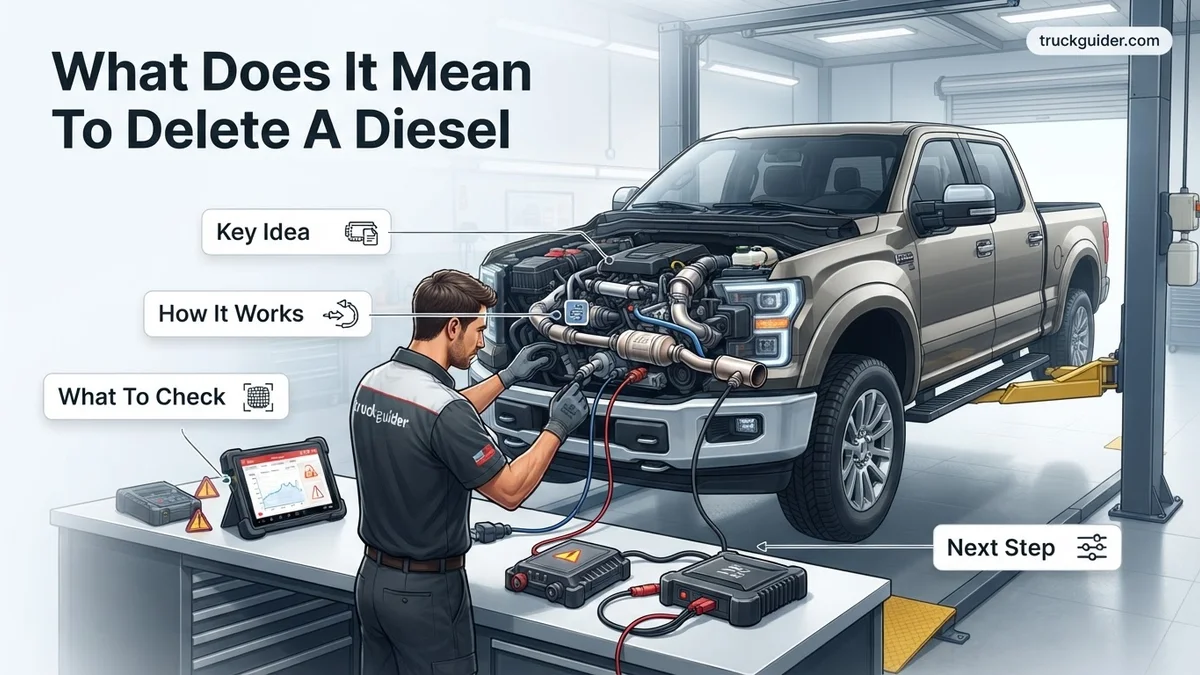
Deleting a diesel truck means physically removing and electronically bypassing its factory emissions equipment, specifically the components designed to trap soot and reduce nitrogen oxide output. When you delete a modern heavy-duty pickup, you strip away the complex layers of emissions compliance—like the particulate filters and fluid injection systems—that frequently cause expensive mechanical failures.
For truck owners navigating rising repair costs in 2026, understanding this process is essential. It completely changes how your engine breathes, how it manages fuel, and how it performs under heavy loads, shifting the vehicle away from strict environmental compliance toward raw mechanical efficiency.
Key Takeaways
- Diesel deletion involves removing physical emissions hardware and installing custom electronic tuning.
- Primary components removed include the DPF, EGR valve, and DEF injection systems.
- Owners pursue deletes for better fuel economy and increased engine reliability.
- Removing emissions equipment violates federal EPA laws and state clean-air regulations.
- Factory powertrain warranties are typically voided immediately following a diesel delete.
What Causes Diesel Emissions Failures and Why Drivers Delete
Modern diesel emissions systems are notoriously complex, featuring multiple layers of sensors, valves, and filters that operate under extreme heat and pressure. When these systems fail, they frequently trigger “limp mode,” leaving your truck stranded or severely underpowered until you pay for costly dealership repairs.

The High Cost of Factory Emissions Hardware
Factory emissions components are high-failure items that cost thousands of dollars to replace out of warranty. Drivers choose to delete their trucks to eliminate these recurring financial liabilities and restore basic mechanical reliability.
- The DPF Trap: Factory Diesel Particulate Filters clog over time, requiring high-temperature regeneration cycles that consume extra fuel and degrade engine oil.
- Sensor Saturation: A single failed NOx or exhaust pressure sensor can trigger a permanent check engine light and derate your engine power.
- Component Replacement Bills: Replacing a complete factory emissions assembly can easily exceed five thousand dollars in parts and labor.
Performance Bottlenecks and Efficiency Losses
Factory emissions equipment inherently chokes the exhaust flow of a modern diesel engine. By forcing exhaust gases backward through an EGR valve or trapping soot in a dense particulate filter, your engine has to work harder to make power, which directly impacts your fuel economy.
How to Properly Remove and Disable Diesel Emissions Equipment
A complete diesel delete requires a dual approach involving both physical hardware removal and electronic recalibration. You cannot simply unbolt components without telling the engine computer, or your truck will immediately throw codes and refuse to run correctly.
The Hardware: What Actually Gets Taken Off
The deletion process targets three primary factory systems responsible for emissions compliance. Removing these physical restrictions allows the engine to expel exhaust freely and cleanly.
- DPF and Catalyst: The heavy factory exhaust is replaced with a straight-through aftermarket pipe, often called a delete pipe or turbo-back exhaust.
- EGR System: The Exhaust Gas Recirculation valve and cooler are completely removed or blocked off using metal plates to stop routing dirty soot back into the intake manifold.
- DEF System: The Diesel Exhaust Fluid injector, tank, and associated fluid lines are uninstalled, completely removing the need to ever buy DEF again.
The Software: Electronic Tuning and ECM Recalibration
Hardware removal is only half of the process; you must install custom ECM (Engine Control Module) tuning to match the physical changes. A delete tune disables the factory sensors, removes the monitoring routines for the missing DPF and DEF systems, and optimizes injection timing for raw performance and fuel efficiency.
What If Your Deleted Diesel Fails to Run Correctly
Even after a complete emissions removal, modern powertrain control modules can present persistent faults, ghost codes, or irregular fueling profiles. According to industry diagnostics data from the Society of Automotive Engineers, incomplete module flashes account for over 40 percent of post-modification drivability issues in 2026.

Advanced Troubleshooting Steps
- Verify that all factory pressure differential sensors and exhaust temperature probes are physically disconnected from the wiring harness, not just bypassed in the software calibration.
- Perform a complete module reset using a high-level diagnostic scanner to clear adaptive transmission and fueling tables that retain old restriction data.
- Check for outdated tune files by contacting your specific calibration provider for the latest 2026 firmware revisions that address erratic idle and high-pressure fuel pump anomalies.
- Inspect all intercooler piping and turbocharger boots for pressure leaks, which often mimic fueling faults after exhaust backpressure is suddenly eliminated.
- Consult a certified diesel dynamometer technician for custom live-data logging if generic off-the-shelf tuning fails to correct air-fuel ratio imbalances.
Professional diagnostic labor rates at specialized diesel performance shops currently average between $150 and $225 per hour. If complex wiring repairs or ECU bench flashing become necessary, total professional remediation costs typically range from $400 to $1,200 depending on the severity of the software corruption.
Frequently Asked Questions About Diesel Deletion
Will a deleted diesel pass an OBD-II emissions inspection?
No. Standard state and provincial emissions testing connects directly to the vehicle computer via the OBD-II port. Because a deletion disables readiness monitors and removes critical aftertreatment sensors, the vehicle will automatically fail electronic readiness scans in regulated jurisdictions as of 2026.
Does removing emissions equipment void the factory powertrain warranty?
Yes. Automakers and federal regulators treat the removal of mandated emissions hardware as a direct violation of federal clean air laws. Dealerships routinely deny warranty coverage for engine, transmission, and fuel system repairs on modified vehicles, leaving owners entirely responsible for repair costs.
How does fuel economy change after a deletion?
Verified data from heavy-duty fleet studies indicates an average fuel economy increase of 15 to 25 percent. This improvement occurs because the engine no longer wastes diesel fuel on active particulate filter regeneration cycles or suffers from restrictive exhaust backpressure.
Conclusion
Understanding what it means to delete a diesel involves weighing significant mechanical efficiency gains against strict legal penalties and loss of warranty protection. According to verified research and expert automotive sources, compliance enforcement across North America remains at an all-time high in 2026, making careful risk assessment essential before altering any emissions architecture. Your next step should be to thoroughly review local provincial or state compliance laws before purchasing any hardware or tuning packages.
❓ Frequently Asked Questions
What is the primary mechanical definition of a diesel delete?
A diesel delete is the process of removing factory emissions control hardware and reprogramming the engine control unit (ECU) via custom tuning. This prevents the truck from entering limp mode or throwing diagnostic trouble codes after the physical components are taken off.
Why do truck owners choose to delete their diesel engines?
Many owners experience frequent clogging in their Diesel Particulate Filters (DPF) and failures in their Exhaust Gas Recirculation (EGR) systems, which lead to expensive repairs. Deleting these components eliminates these failure points while simultaneously improving fuel economy and throttle response.
What electronic changes are required alongside a physical delete?
Physical removal of emissions hardware must be paired with custom electronic tuning or a ‘delete tuner.’ This software recalibrates the engine computer to ignore the missing sensors, monitor gauges safely, and optimize fuel delivery without the constraints of factory emissions strategies.
How does a diesel delete impact fuel economy?
Because factory emissions systems rely on frequent fuel injections to burn off soot in the DPF (regeneration cycles), removing them stops this wasted fuel. Consequently, many drivers notice an immediate and measurable increase in miles per gallon (MPG).
What are the legal risks associated with deleting a diesel truck?
The EPA actively enforces federal laws against tampering with emissions controls, targeting both tuning companies and individual vehicle owners. Fines for individuals can be steep, and commercial fleets face even harsher financial penalties for running deleted equipment.
Can a deleted diesel engine be returned to stock configuration?
Yes, returning a truck to stock requires reinstalling all factory emissions components—such as the DPF, EGR cooler, and catalysts—and flashing the original stock software back into the engine control unit, though replacement parts can be very costly.

![Top Radiator Hose Hot and Bottom Cold? Causes & Fixes [2026]](https://truckguider.com/wp-content/uploads/2026/03/top-radiator-hose-hot-bottom-cold-featured.webp)
![Remote Start Disabled: Causes & Fixes [2026]](https://truckguider.com/wp-content/uploads/2026/03/remote-start-disabled-start-vehicle-to-r-featured.webp)
![P2459 Code 6.7 Cummins: Complete Repair Guide [2026]](https://truckguider.com/wp-content/uploads/2026/03/p2459-code-6-7-cummins-featured.webp)
![Dodge Ram 2500 Interior [2026]](https://truckguider.com/wp-content/uploads/2026/03/featured-583ae4d5-768x768.webp)