What Size Winch for Car Trailer? Sizing Formula & Chart [2026]

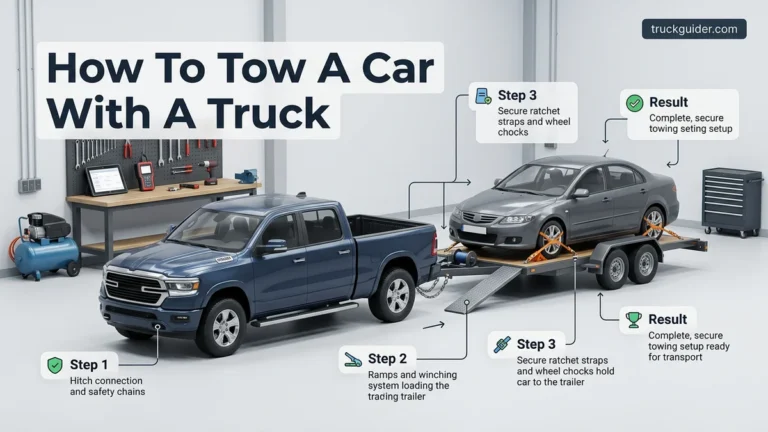
The primary rule for trailer winches is to select a capacity that is at least 1.5 times the Gross Vehicle Weight (GVW) of your heaviest load. This margin is essential to overcome rolling resistance and ramp inclines, which can triple the force required compared to a flat pull. For non-rolling ‘dead’ loads, a capacity of 2.0 times the weight is highly recommended.
🎯 Key Takeaways
Recommended Best Deal Products


- Apply the 1.5x multiplier to the vehicle’s weight to determine minimum winch capacity.
- Account for ‘dead weight’ by increasing capacity for vehicles with seized brakes or flat tires.
- Factor in ramp steepness, as gravity increases the load on the winch motor significantly.
- Prioritize synthetic rope for trailer loading due to its superior safety and lower recoil risk.
- Ensure your trailer battery can handle the high amp draw of a heavy-duty winch.
To determine the correct winch size for your car trailer, you need a winch with a pulling capacity between 1.5 and 2 times the weight of the heaviest vehicle you plan to load. For a standard 5,000-pound sedan or small SUV, this means you should look for a winch rated for at least 7,500 to 10,000 pounds. This overhead isn’t just a suggestion; it is a mechanical necessity to ensure the winch motor survives the strain of pulling a stationary object up an incline.
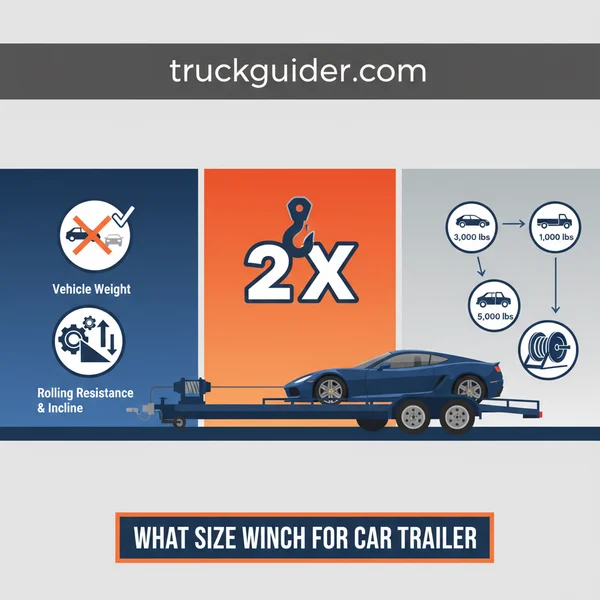
Choosing the right size matters because a winch rating reflects its maximum capacity under perfect conditions on the first layer of the drum. In the real world, you are dealing with steep ramp angles, tire friction, and potentially flat tires or seized bearings. If you undersize your winch, you risk blowing a fuse, melting the motor windings, or having the cable snap under excessive tension. Getting the math right the first time keeps your equipment safe and your loading process efficient.
The 1.5x Formula: Calculating Your Minimum Pulling Capacity
The most reliable way to size your trailer winch is the 1.5x multiplier rule. This formula accounts for the basic physical resistance of moving a vehicle from a flat surface up onto a raised trailer deck. While your car might weigh 4,000 pounds, the force required to move it is rarely just 4,000 pounds. You must use the vehicle’s Gross Vehicle Weight Rating (GVWR) rather than its empty curb weight to ensure you have enough power for any situation.
How to Apply the Multiplier
To get your minimum rating, take the GVWR of your heaviest intended load and multiply it by 1.5. For a more “heavy-duty” buffer—which is recommended if you frequently load vehicles in poor condition—multiply by 2.0. This safety margin ensures the winch operates within its “comfort zone” rather than at its absolute breaking point.
- Small Cars (3,000 lbs GVWR): Use a 4,500 lb to 6,000 lb winch.
- Standard SUVs/Trucks (6,000 lbs GVWR): Use a 9,000 lb to 12,000 lb winch.
- Heavy Duty Pickups (9,000 lbs GVWR): Use a 13,500 lb to 18,000 lb winch.
The “First Layer” Rule
It is critical to remember that a winch’s rated capacity (e.g., 9,500 lbs) is only true when the cable is almost entirely unspooled, leaving just one layer of wire on the drum. As the cable wraps around the drum and creates more layers, the effective pulling power drops significantly. By the time you reach the fourth or fifth layer of cable, your 10,000-pound winch might only be pulling with 6,000 pounds of force. Using the 1.5x formula compensates for this natural loss of mechanical advantage as the vehicle nears the front of the trailer.
Physics of the Pull: Rolling Weight vs. Dead Weight on Inclines
Recommended Best Deal Products


One of the biggest mistakes trailer owners make is assuming that a 5,000-pound winch can easily pull a 5,000-pound car. Winch ratings are calculated based on “rolling weight” on a flat, level surface with zero friction. As soon as you tilt that car back on a trailer ramp, the physics change entirely. You are no longer just overcoming rolling resistance; you are fighting the constant pull of gravity.
Rolling vs. Dragging (Dead Weight)
If the vehicle you are loading has four inflated tires and a working transmission in neutral, it is considered a rolling load. However, trailers are often used to move “project cars” or salvage vehicles. If a vehicle has seized brakes, a locked transmission, or flat tires, it becomes “dead weight.” Dragging a 4,000-pound car with locked wheels requires significantly more force than rolling a 6,000-pound truck. If you anticipate loading vehicles that don’t roll freely, you must lean toward the 2.0x multiplier to prevent the winch from stalling.
The Impact of Ramp Incline
The angle of your trailer ramps acts as a force multiplier. A steep ramp requires the winch to work significantly harder than a long, shallow ramp. On a standard 15-degree incline, the winch has to pull roughly 25% to 30% of the vehicle’s weight just to keep it from rolling backward, plus the force needed to actually move it forward.
- Rolling Resistance: Even on a flat surface, tires have “drag.” This is usually about 5% of the vehicle weight.
- Gradient Resistance: For every degree of incline, the “perceived weight” the winch feels increases.
- Surface Friction: Pulling a car up metal ramps creates different resistance than pulling it across a wood deck or over a beaver-tail edge.
By understanding that your winch is fighting a combination of gravity, friction, and mechanical disadvantage, you can see why a “matched” weight rating is never enough. You aren’t just moving the car; you are overcoming the physical environment of the trailer itself. This is why the extra capacity provided by the 1.5x or 2.0x formula is your best insurance against equipment failure at the track or on the job site.
Comparing Winch Cable Types: Synthetic Rope vs. Steel Wire
Choosing the right winch capacity is only half the battle. You also need to decide what is actually pulling the load. For car trailers, the debate between synthetic rope and steel wire cable is a hot topic, as each has distinct advantages depending on your typical hauling environment.
The Rugged Durability of Steel Wire
Steel wire has been the industry standard for decades, and for good reason. It is incredibly durable and highly resistant to abrasion. If you frequently load vehicles with sharp frames or work in gravel-heavy environments, steel is a workhorse that can handle the friction. However, it is heavy and can develop “barbs” or “fishhooks” over time—tiny shards of broken wire that will easily slice through a pair of gloves.
- Pros: Excellent heat resistance, budget-friendly, and stands up well to rough edges.
- Cons: High weight, prone to kinking, and stores significant kinetic energy (dangerous if it breaks).
- Pro Tip: Always use a winch dampener or a heavy moving blanket over a steel line to drop it to the ground safely if it snaps.
The Lightweight Safety of Synthetic Rope
Synthetic rope is made from high-tech polyethylene fibers that are actually stronger than steel of the same diameter. It is significantly lighter, making the trailer tongue weight easier to manage. The biggest draw for most car enthusiasts is safety; because synthetic rope doesn’t store energy like steel, it simply falls to the ground if it breaks rather than whipping through the air.
- Pros: Extremely easy to handle, floats on water, and has no sharp splinters.
- Cons: Vulnerable to UV damage and heat; can be damaged by internal grit if not cleaned.
- Practical Example: If you are loading an expensive classic car in a show environment, synthetic rope is often preferred because it won’t scratch the vehicle’s finish if the line accidentally brushes against the bumper.
Power Requirements and Electrical Factors for Trailer Winches
Recommended Best Deal Products
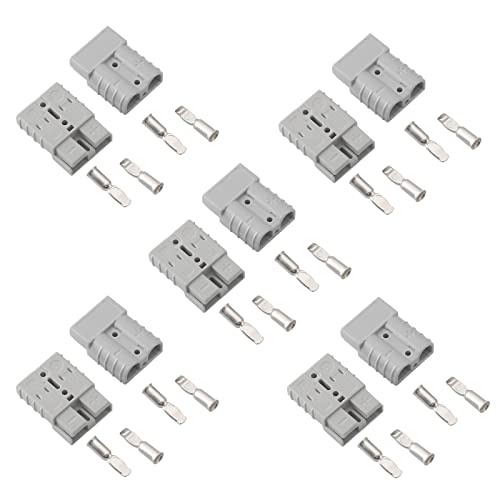


A high-capacity winch is useless if it doesn’t have enough electrical “juice” to perform. Most trailer winches run on 12V DC power, but the amount of current they pull under a heavy load is staggering. Understanding your power supply is critical to preventing motor burnout or a dead battery in the middle of a job.
Battery Capacity and the Charging Circuit
Most car trailer setups utilize a dedicated deep-cycle battery mounted on the trailer tongue. While your truck’s alternator provides some power through the 7-way plug, that thin wire isn’t enough to run a 9,500-lb winch at full tilt. The 7-way plug acts more like a “trickle charger” to keep the trailer battery topped off between uses.
- Battery Tip: Use a battery with at least 650 Cold Cranking Amps (CCA) for smaller winches, or a dedicated Group 24 or 27 deep-cycle battery for larger setups.
- Circuit Protection: Always install an inline circuit breaker (usually 60-100 amps depending on the winch) to protect your motor from surges.
The Importance of Wiring Gauge
Distance is the enemy of electrical current. The longer the distance from the power source to the winch, the thicker the wire needs to be to prevent voltage drop. If your winch is starved for power, it will run hot and significantly decrease its lifespan. For most car trailers, using 2-gauge or 4-gauge wiring is the gold standard for maintaining a steady flow of amperage.
- Quick Tip: Ensure your ground wire is just as thick as your power wire. A poor ground is the leading cause of “clicking” winches and intermittent power loss.
- Example: A standard 18-foot open car trailer usually requires a 2-gauge “quick-connect” kit if you are powering the winch directly from the truck’s battery.
Conclusion
Selecting the right winch for your car trailer doesn’t have to be a guessing game. By using the 1.5x Gross Weight formula, you ensure that your winch has the muscle to handle rolling loads and the occasional “dead drag” scenario without breaking a sweat. Whether you choose the ruggedness of steel wire or the safety of synthetic rope, matching your cable to your environment is key to a successful recovery.
Your next steps should be to calculate your heaviest potential load and inspect your trailer’s battery health. Remember, a winch is a safety tool first and a convenience tool second. Investing in a slightly larger capacity than you think you need is the best way to ensure you’re never left stranded at the track or on the side of the road. Get the right gear today and haul with confidence!
❓ Frequently Asked Questions
Why do I need a winch rated higher than my car’s actual weight?
A winch’s rated capacity is measured on the first layer of the drum under ideal conditions. Incline, friction from the tires, and the ‘dead drag’ of a non-rolling vehicle require significantly more power than the vehicle’s static weight suggests.
Should I choose a winch with synthetic or steel cable for my trailer?
Synthetic rope is generally preferred for trailers because it is lighter, easier to handle, and doesn’t store dangerous kinetic energy if it breaks. However, steel cable is more resistant to abrasion if it rubs against the trailer frame.
What is the standard winch size for a 5,000 lb vehicle?
You should aim for a minimum of 7,500 lbs (1.5x capacity), though many professionals prefer a 9,000 lb or 9,500 lb winch to ensure the motor isn’t constantly running at its limit.
How does the number of cable layers on the drum affect pulling power?
Winch capacity decreases as more layers of cable are wound onto the drum. You have the most pulling power when the cable is mostly extended and the least power when the drum is full.
Do I need a dedicated battery for my trailer winch?
While you can run wires from your truck, a dedicated deep-cycle battery mounted on the trailer is recommended. This provides a consistent power source and prevents your tow vehicle’s battery from being drained during loading.
Can I use a snatch block to increase my trailer winch capacity?
Yes, a snatch block allows for a double-line pull, which effectively doubles the winch’s pulling capacity while halving the retrieval speed. This is a great tool for loading heavy vehicles that exceed your single-line rating.


![3.6 Pentastar Oil Type & Capacity Guide (2011: Specs & Fitment Guide [2026]](https://truckguider.com/wp-content/uploads/2026/03/3-6-pentastar-oil-type-featured.webp)