
Where Is The Tpms Reset Button Ram 1500: Steps To Restore System Calibration

Searching for a TPMS reset button on your Ram 1500 can be a frustrating exercise when the dashboard warning light refuses to disappear despite your best efforts. While many vehicles feature a physical button tucked under the steering column to recalibrate tire pressure monitors, the Ram 1500 utilizes a sophisticated, automated system that often leaves drivers wondering how to clear the alert. This guide will reveal why you can’t find a physical button, provide the exact driving procedure to restore your system, and explain how to achieve a clean factory reset of your sensors using industry-standard techniques.


Locating the TPMS Reset Button on a Ram 1500 (Does It Exist?)
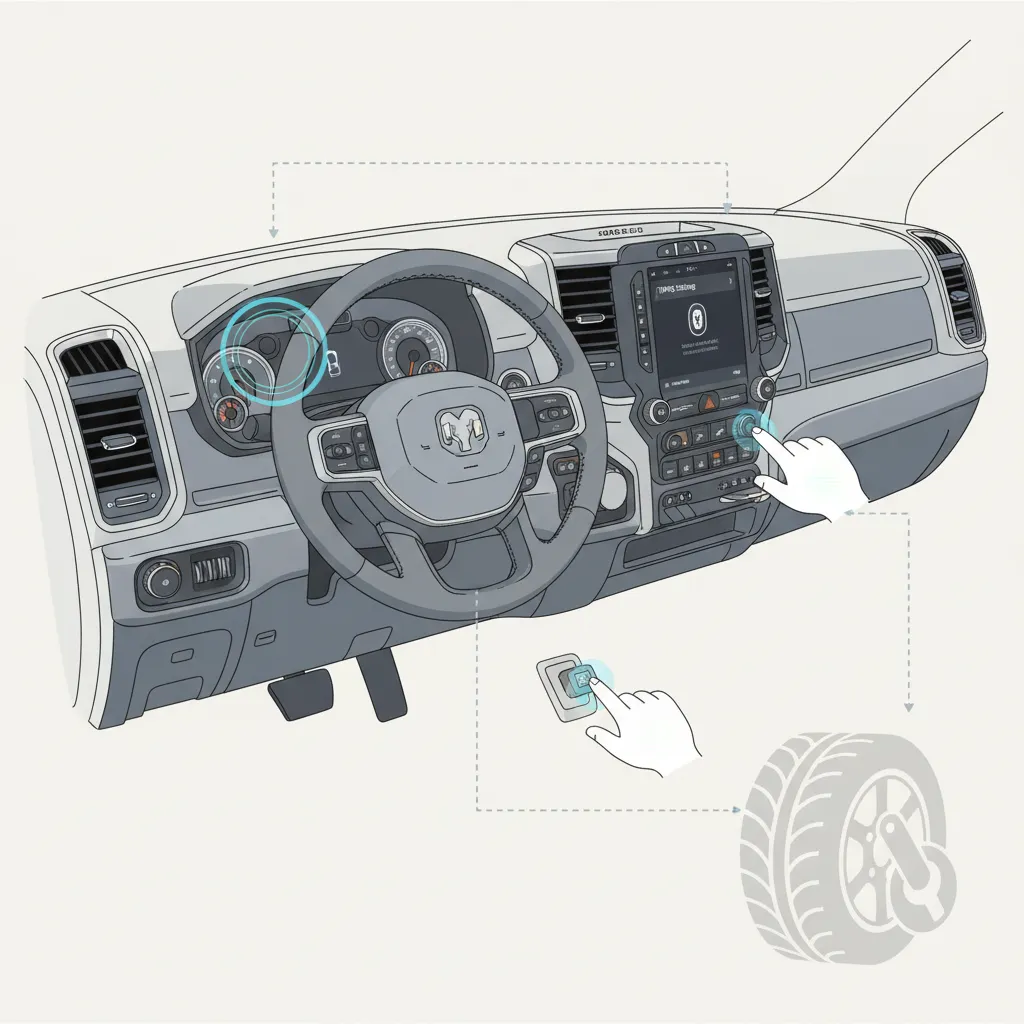
One of the most common questions I receive from Ram owners is, “Where did they hide the reset button?” The short answer is: they didn’t hide it; they removed it entirely. For the vast majority of Ram 1500 models, specifically the 4th generation (DS) and 5th generation (DT), there is no dedicated physical TPMS reset button located under the dashboard, inside the glovebox, or on the center console. This is a deliberate engineering shift toward automated self-learning systems that utilize the vehicle’s Engine Control Unit (ECU) to detect sensor signals in real-time.
In older automotive architectures, a manual reset button was necessary to tell the computer that the current tire pressure should be the new “baseline.” However, modern Ram trucks use a “smart” TPMS module. This module is programmed with factory default inflation levels based on the specific load rating of the truck. Instead of a tactile button, the dashboard’s Driver Information Digital (DID) display functions as your primary interface. You monitor the “clean” status of your tires through the vehicle info menu rather than a “reboot” switch.
Whether you are driving a 2014 Tradesman or a 2024 Limited, the architecture remains consistent: the vehicle is designed to be self-healing. This transition to “smart” TPMS modules began industry-wide in the mid-2000s to reduce driver error. By removing the button, manufacturers ensure that drivers don’t simply “reset” the light to hide a dangerously low tire without actually adding air. If you need specific technical data for your trim, always check the official guide provided by Mopar.
The Automatic Relearn Procedure to Restore Factory TPMS Monitoring
Since there is no button to press, the “reset” is triggered by a specific drive cycle. To restore the system to its proper monitoring state after a tire rotation or pressure adjustment, you must perform an automatic relearn. This process requires the vehicle to see consistent data from the sensors while in motion to confirm that all four (or five) sensors are reporting stable pressures.
To achieve a fresh start, you must drive the vehicle for 10 to 20 minutes of continuous driving at speeds consistently above 15 mph. During this window, the TPMS sensors “wake up” from their battery-saving sleep mode and begin broadcasting radio frequency (RF) signals to the truck’s receiver. If you are stuck in heavy city traffic with frequent stops, the system may delay its ability to initialize the new readings because the ECU requires a steady stream of data to verify the sensor positions.

📋
Step-by-Step Relearn Guide
Fill all tires to the exact PSI listed on your driver-side door jamb sticker while the tires are cold.
Drive for at least 15 minutes at speeds over 15 mph. Highway driving is ideal for a clean sync.
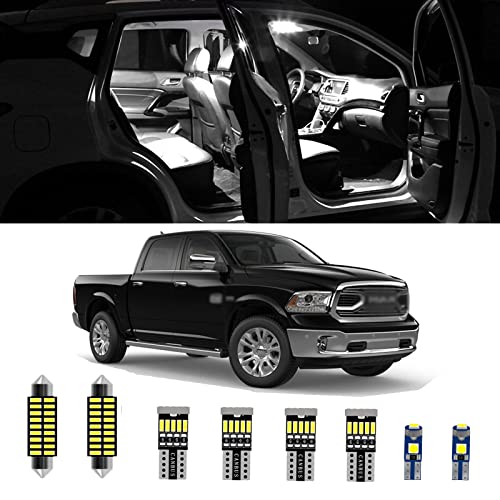


Check the ‘Tire Pressure’ screen in your instrument cluster. The light should extinguish automatically.
The NHTSA confirms that TPMS systems improve fuel efficiency by ensuring tires remain at optimal inflation, which reduces rolling resistance. By completing this drive cycle, you aren’t just turning off a light; you are ensuring your truck is operating at its maximum efficiency. For more community-driven Ram specs and troubleshooting, fellow owners often share their drive-cycle experiences online.
Ensuring Correct Inflation for a Clean TPMS Calibration
The most common reason a Ram 1500 TPMS light won’t reboot or clear is incorrect inflation—even if you think you’ve added enough air. The system is programmed to a very specific threshold. To find this, you must locate the Tire and Loading Information placard on the driver-side door jamb. This sticker dictates the factory PSI requirements for your specific VIN. If your truck requires 39 PSI and you only filled to 35 PSI, the light will remain stubborn.
An “expert tip” I always share is the concept of “Cold Tire Pressure.” You must measure your PSI before the vehicle has been driven more than a mile or after it has been parked for at least three hours. Driving generates heat, which expands the air inside the tire and gives a false high reading. If you calibrate your tires while they are hot, they will drop below the threshold once they cool down, triggering the light again.
On premium trims like the Laramie or Limited, the full-size spare tire may actually have a TPMS sensor. If your four main tires are perfect but the light stays on, check the pressure in your spare. It’s a often-overlooked culprit for a persistent warning light.
Seasonal temperature changes are also a major factor. For every 10-degree drop in outside temperature, your tire pressure can decrease by approximately 1 PSI. This is why TPMS lights are so common on the first cold morning of autumn. According to official fuel economy data, properly inflated tires can improve gas mileage by up to 3%. Using a high-quality digital gauge is essential; the pop-up “pencil” gauges found at gas stations are notoriously inaccurate and can prevent you from achieving the precision needed for a clean system reset.
By The Numbers
Avg. Sensor Replacement Cost
Improvement in Fuel Economy
Ram Sensor Frequency
When to Use a TPMS Scan Tool for a Fresh Start
While the automatic relearn works for 90% of situations, there are technical scenarios where you must manually intervene with an OBD-II TPMS scan tool. If you have just installed brand-new aftermarket sensors or if the automatic relearn fails after multiple drive cycles, the vehicle’s ECU may need to be “forced” to recognize the new hardware. This is common when switching to winter tire setups or using non-OEM sensors.
A TPMS scan tool performs a function called “writing” the sensor IDs. Every sensor has a unique 8- or 10-digit identification code. A technician (or a well-equipped DIYer) uses the tool to “ping” each wheel, capturing that ID, and then plugs the tool into the OBD-II port to upload those IDs directly to the truck’s computer. This bypasses the drive-to-learn method and provides an immediate backup of the sensor positions.


✅ Pros of Scan Tools
- Immediate system reset without driving
- Ability to diagnose dead sensor batteries
- Required for many aftermarket sensors
- Confirms exact sensor frequency (433MHz)
❌ Cons of Scan Tools
- High cost for professional-grade units
- Steep learning curve for some software
- Requires OBD-II port access
- Potential for incorrect ID entry
It is important to distinguish between “clonable” sensors and “programmable” sensors. Clonable sensors are programmed to mimic your original IDs, meaning the truck never even knows they changed. Programmable sensors require the scan tool to assign them a role. According to RepairPal, the average replacement cost for a single TPMS sensor is between $143 and $183, including labor and parts. If you are replacing all four, investing in a mid-range scan tool might actually save you money in the long run.
Troubleshooting Persistent Warnings and Faulty TPMS Hardware
If you have inflated your tires to the correct PSI and performed the 20-minute drive cycle but the light remains, you are likely dealing with a hardware failure rather than a calibration issue. TPMS sensors are powered by small internal lithium-ion batteries. These batteries typically last 5 to 10 years. In a 7-year-old Ram 1500, it is very common for one sensor battery to reach its end-of-life, causing a intermittent or flashing TPMS light.
Pay close attention to the message on your dashboard. A solid light usually indicates a pressure issue (low or high). However, a flashing light that eventually turns solid, or a “Service TPMS” message, indicates a system malfunction. This means the receiver is not hearing from one or more sensors at all. This cannot be fixed by adding air; the sensor must be replaced.
Avoid using chemical “fix-a-flat” tire sealants unless it is an absolute emergency. The liquid chemicals can coat the internal TPMS sensor mechanism, hardening over the pressure port and permanently destroying the sensor’s ability to read PSI. This will result in a mandatory sensor replacement.
Another common pitfall involves RF interference. Most modern Ram 1500 sensors operate on the 433MHz frequency. I have seen cases where aftermarket electronic accessories—such as cheap dash cams, GPS units, or even LED headlight conversions—emit electromagnetic interference that “drowns out” the sensor signals. If your TPMS light started acting up immediately after installing a new gadget, try unplugging that device to see if the system can achieve a clean status again. Finally, ensure you haven’t accidentally installed 315MHz sensors (common on older GM/Ford vehicles), as they will never sync with a Ram 1500 system.
Conclusion
To summarize, the Ram 1500 does not have a physical TPMS reset button; it relies on an automatic relearn process that triggers during normal driving. To restore your system calibration, you must inflate your tires to the exact PSI listed on your door jamb and drive for at least 20 minutes at speeds above 15 mph. Persistent lights or “Service TPMS” messages often indicate a dead sensor battery or frequency interference that requires a professional scan tool to diagnose. To maintain peak fuel efficiency and avoid future interruptions, I recommend checking your tire pressure monthly with a high-quality digital gauge rather than waiting for the dashboard light to appear.
Frequently Asked Questions
Where is the TPMS reset button on my Ram 1500?
There is no physical TPMS reset button on most Ram 1500 models. The system is designed to be self-learning. Once you adjust your tire pressure to the correct PSI listed on the driver-side door jamb, the system will automatically recalibrate and clear the light after a short period of driving.



How do I reset the TPMS light on my Ram 1500 without a button?
To reset the light without a button, ensure all tires—including the spare if monitored—are at the manufacturer’s recommended pressure. Then, drive the vehicle at a speed of at least 15 mph for approximately 10 to 20 minutes. This allows the TPMS module to detect the sensor signals and restore factory default monitoring.
How long does it take for the TPMS to reset automatically?
The automatic reset typically occurs within 10 to 20 minutes of continuous driving. It is important to maintain a steady speed above 15 mph. If you are stuck in stop-and-go traffic, the system may take longer to receive the consistent data packets needed to verify the new pressure levels and clear the warning.
What does a flashing TPMS light mean compared to a solid light?
A solid TPMS light indicates that one or more tires have low pressure. A flashing light that eventually stays solid usually indicates a system malfunction, such as a dead sensor battery or a communication error. If the light flashes, you likely need a professional diagnostic or a sensor replacement rather than a simple air adjustment.
Can I reset the TPMS myself, or do I need a mechanic?
You can perform a standard reset yourself by properly inflating the tires and driving the vehicle. However, if you have replaced a sensor or rotated tires on certain older models, the system may require a TPMS scan tool to relearn the sensor IDs. If the light persists after a long drive, a mechanic is necessary to check for hardware failure.
![Ram Trx Top Speed Without Limiter [2026]](https://truckguider.com/wp-content/uploads/2026/03/featured-cb0fbb5b-768x432.webp)
![2013 Ram 1500 Oil Type [2026]](https://truckguider.com/wp-content/uploads/2026/03/featured-21030e95-768x768.webp)
![2015 RAM 1500 AC Recharge Port Location & Identification [2026]](https://truckguider.com/wp-content/uploads/2026/03/2015-ram-1500-ac-recharge-port-featured.webp)