
Why Is My Heat Blowing Cold Air in My Car Expert Fix 2026

When your vehicle’s heater blows cold air, it is usually caused by low coolant levels, a stuck thermostat, or a malfunctioning blend door actuator. Addressing these mechanical issues quickly restores cabin warmth and prevents potential engine overheating.
When your car heater blows freezing air on a bitter morning in 2026, the issue usually boils down to four main culprits: low engine coolant, a stuck thermostat, a clogged heater core, or a broken blend door actuator. Because your cabin heater relies entirely on waste heat generated by your engine, any disruption in this thermal loop stops the warmth from reaching your vents.
Fixing this quickly is vital not just for your comfort, but for your engine’s health. Ignoring a heating issue often means ignoring a failing thermostat or a dangerous coolant leak, which can rapidly lead to catastrophic engine overheating and expensive repairs.
Key Takeaways
- Check your engine coolant level first when the engine is completely cold.
- A stuck-open thermostat prevents the engine from reaching proper operating temperature.
- Blown fuses or broken blend door actuators stop warm air from mixing properly.
- Clogged heater cores restrict hot coolant flow through the dashboard dashboard unit.
- Consult a certified mechanic if your engine shows signs of overheating while driving.
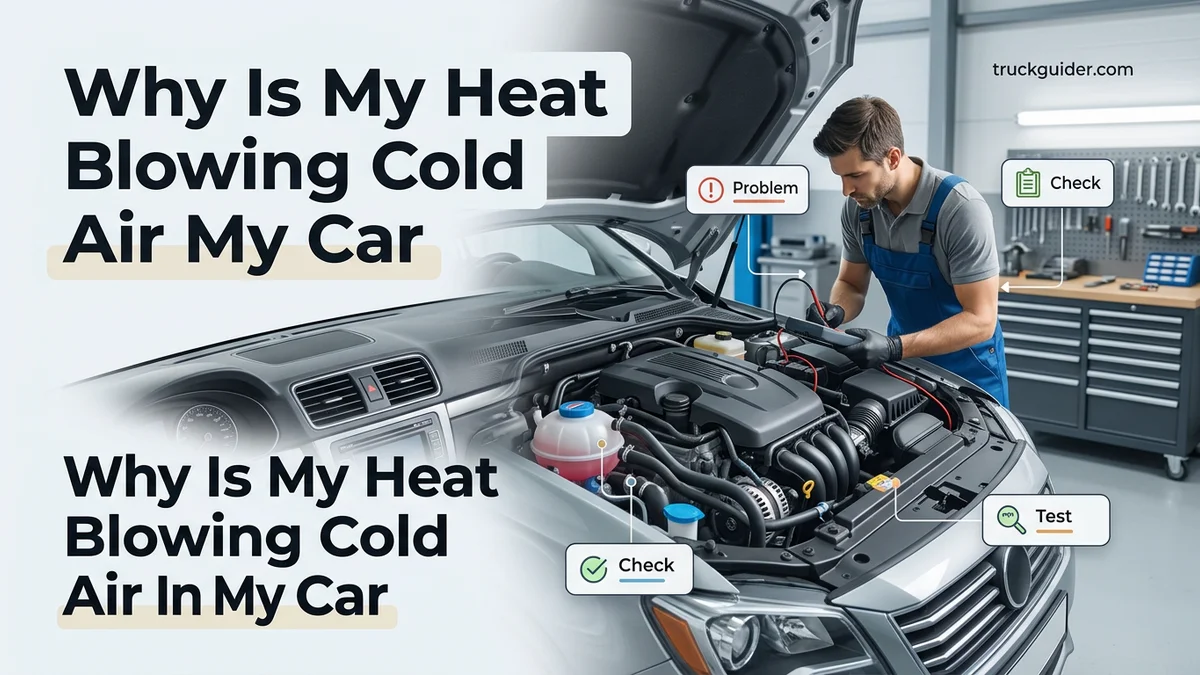
What Causes Your Car Heater to Blow Cold Air
Recommended Best Deal Products


Low Coolant and Leaks
Your engine coolant absorbs heat and carries it to the heater core inside your dashboard. If your coolant level drops too low due to a leak in a hose, radiator, or head gasket, there is simply not enough fluid to flow up into the heater core. You will often notice the air turning cold first, followed quickly by the temperature gauge creeping into the red danger zone.

Stuck Thermostat and Heater Core Issues
The thermostat acts as a gatekeeper between your engine and the radiator. If it gets stuck in the open position, your engine coolant never reaches proper operating temperature, leaving you with lukewarm or freezing air blowing through the vents even after a long commute. Alternatively, a clogged heater core blocks hot coolant from circulating through the dashboard entirely. This is commonly caused by rust, scale, or improper coolant mixing over the years.
Blend Door Actuator Failure
Sometimes your engine is making plenty of heat, but it never reaches you. The blend door actuator is a small electric motor that moves a plastic flap inside your dashboard, mixing hot and cold air based on your climate control settings. When this motor strips its gears or fails electrically, the door stays permanently stuck on the cold air side.
Step-by-Step Guide to Diagnosing and Fixing Car Heat Issues
Observe Your Symptoms While Driving
You can pinpoint the exact mechanical failure by paying close attention to how your car behaves on the road. Use this quick diagnostic checklist:
- Air gets warm only when driving fast: This is a classic symptom of low coolant. At high RPMs, the water pump spins fast enough to push remaining fluid up into the heater core.
- Engine overheats alongside cold air: You have a severe coolant leak, a blown head gasket, or a completely blocked radiator loop. Stop driving immediately to prevent engine damage.
- Temperature gauge stays dead-cold: Your thermostat is stuck open and needs immediate replacement.
- All dash vents blow cold, but defrost works partially: You are likely dealing with a stuck blend door actuator or a vacuum leak in your climate control system.
Inspect and Test the Cooling System
Always let your engine cool down completely before performing any checks to avoid severe burns from pressurized steam. Start by opening the hood and checking your coolant recovery tank and radiator cap (never open a hot radiator cap). If the fluid is low, top it off with the manufacturer-specified coolant mixture for 2026 vehicles. Next, carefully feel the two heater hoses running through the firewall into the cabin. If one hose is scorching hot and the other is cold, you have successfully isolated a blocked heater core or a pinched line.
How to Flush a Clogged Heater Core and Replace a Thermostat
Recommended Best Deal Products


When diagnostic checks point toward restricted coolant flow or a stuck-open thermostat, taking immediate action restores cabin warmth. According to automotive service data from 2026, dealing with these components requires precise mechanical steps to prevent engine overheating while clearing the blockage.

Flushing the Heater Core
- Allow the engine to cool completely to avoid severe burns from pressurized hot coolant.
- Locate the two rubber heater hoses entering the firewall on the passenger side of the engine bay.
- Disconnect both hoses using standard pliers to loosen the factory spring clamps.
- Attach a garden hose to the outlet heater core tube, gently flushing water backward to dislodge trapped mineral scale and debris.
- Switch to the inlet tube and flush forward until the outgoing water runs completely clear.
- Reconnect both hoses securely and refill your cooling system with the manufacturer-recommended antifreeze mixture.
Replacing the Thermostat
- Drain approximately one gallon of coolant from the radiator drain valve into a clean catchment pan.
- Locate the thermostat housing, which sits directly where the upper radiator hose meets the engine block.
- Remove the retaining bolts and lift off the housing cover to expose the old thermostat.
- Extract the failed thermostat and thoroughly scrape away any old gasket material from the mating surfaces.
- Install the new thermostat alongside a fresh rubber gasket or O-ring seal, ensuring correct directional orientation.
- Bolt the housing back down to factory torque specifications and top off the coolant reservoir.
What If It Still Doesn’t Work and You Need a Mechanic?
If you have successfully flushed the heater core, replaced the thermostat, and verified proper coolant levels yet your vents still blow freezing air, the issue involves more complex mechanical failures. Professional intervention becomes necessary for deeper diagnostic procedures.
- Inspect the blend door actuator motor using an advanced OBD-II scanner capable of reading body control modules to verify electrical signals.
- Check for a blown head gasket, which introduces combustion gases into the cooling system and instantly creates large air pockets in the heater core.
- Test the water pump impeller for internal erosion, a hidden defect that drastically reduces overall coolant circulation at idle speeds.
- Expect professional labor costs to range from $150 to $400 for blend door actuator replacements, and $1,000 to $2,500 for severe head gasket repairs depending on your vehicle make and model.
Conclusion
Recommended Best Deal Products


A car blowing cold air typically stems from low coolant levels, a stuck thermostat, a clogged heater core, or a malfunctioning blend door actuator. Resolving these issues early prevents engine damage and ensures safe, comfortable winter driving. According to verified research and expert automotive technician sources, performing a simple coolant flush or replacing a $30 thermostat often restores full heating capacity immediately. Schedule a diagnostic inspection with a certified mechanic today if basic fixes fail to warm your cabin.
❓ Frequently Asked Questions
Why does my car heater blow cold air even after the engine has warmed up?
If the engine reaches normal operating temperature but the vents stay cold, the issue is likely a stuck blend door actuator or a clogged heater core blocking hot fluid from entering the cabin.
How much does it cost to fix a car heater blowing cold air?
Repair costs vary widely depending on the root cause. Adding coolant or replacing a fuse is inexpensive, while replacing a heater core or dashboard actuator can range from a few hundred to over a thousand dollars due to labor.
Can low coolant cause my car heater to stop working?
Yes, low coolant is the most common reason for a failing heater. If there is not enough fluid to reach the heater core, the blower fan will only push unheated ambient air into your vehicle.
How can I tell if my heater core is clogged?
A clogged heater core often results in both inlet and outlet hoses feeling drastically different in temperature, alongside sweet-smelling coolant odors or foggy windows inside the car.
Is it safe to drive my car if the heater is blowing cold air?
It is generally safe to drive short distances, provided the engine temperature gauge remains normal. However, if the cold air is accompanied by engine overheating, stop driving immediately to avoid severe engine damage.
How do I remove air pockets from my cooling system?
You can ‘burp’ the cooling system by running the engine with the radiator cap removed (on a cold engine) or using a specialized funnel kit to allow trapped air bubbles to escape safely.
![RAM 2500 Rear Suspension: Specs & Fitment Guide [2026]](https://truckguider.com/wp-content/uploads/2026/03/ram-2500-rear-suspension-featured.webp)
![3.6 Pentastar Oil Type & Capacity Guide (2011: Specs & Fitment Guide [2026]](https://truckguider.com/wp-content/uploads/2026/03/3-6-pentastar-oil-type-featured.webp)
![P0440 Code Dodge: Complete Repair Guide [2026]](https://truckguider.com/wp-content/uploads/2026/03/featured-15d10483-768x768.webp)