2012 Ram 1500 Transmission Guide: Problems, Specs & Repair [2026]

The 2012 Ram 1500 is primarily equipped with the 65RFE 6-speed automatic transmission, which is known for specific vulnerabilities like solenoid block failures and torque converter shudder. Maintaining the unit with ATF+4 fluid and dual-filter replacements is critical for preventing expensive premature transmission failure.
🎯 Key Takeaways
- The 65RFE transmission requires specific ATF+4 fluid to prevent internal clutch damage.
- Error code P0750 frequently indicates a failure in the transmission solenoid pack.
- Torque converter shudder is a common symptom often mistaken for engine misfires.
- Dual-filter systems (sump and spin-on) must both be replaced during routine maintenance.
- Remanufactured transmissions often include updates to address known factory design flaws.
The 2012 Ram 1500 relies on the 65RFE six-speed automatic transmission, a gearbox designed to handle the torque of the 5.7L Hemi but one that frequently suffers from specific electronic and hydraulic failures. If your truck is experiencing delayed shifts, harsh engagement, or has suddenly locked itself into a single gear, you are likely dealing with a solenoid pack malfunction or a failing torque converter. Identifying these symptoms early is the difference between a relatively affordable sensor replacement and a complete transmission overhaul costing thousands of dollars.

Practically speaking, the 65RFE is an evolution of the older 545RFE, featuring updated software to allow for six discrete forward ratios. However, the internal hardware remains largely the same, meaning it carries over legacy issues related to fluid pressure regulation and electronic solenoid fatigue. This guide cuts through the generic advice to focus on the technical specifications you need for maintenance and the specific diagnostic codes that plague the 2012 model year.
Understanding the 65RFE Transmission and Technical Specifications
Before diving into repairs, you must understand the specific requirements of the 65RFE. This transmission is highly sensitive to fluid quality and level. Unlike older mechanical transmissions, the 65RFE uses a complex system of electronic solenoids to redirect hydraulic pressure. Using the wrong fluid or neglecting filter intervals will lead to premature clutch wear and eventual pump failure.
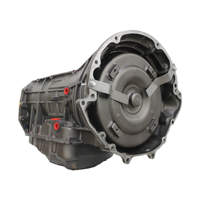
Fluid Types and Service Capacities
The most critical rule for your 2012 Ram 1500 is the fluid type. You must use Mopar ATF+4 or an equivalent fluid explicitly licensed as ATF+4. This is a synthetic-based fluid designed with specific friction modifiers that prevent the clutches from slipping or chattering. Never use “universal” fluids or Dexron/Mercon variants, as they will cause immediate shift quality issues and long-term seal damage.
- Service Fill Capacity: Approximately 7.0 quarts (6.6 liters) for a standard pan drop and filter change.
- Overhaul/Total Capacity: Approximately 14.0 quarts (13.3 liters) for a dry transmission and torque converter.
- Filter Configuration: The 65RFE utilizes a dual-filter system. You must replace the flat “sump” filter and the screw-on “cooler return” filter during every service.
- Service Interval: For normal driving, every 60,000 miles. For heavy towing or frequent stop-and-go traffic, reduce this to every 30,000 miles.
Technical Hardware Data
The 65RFE features a three-piece aluminum case. It utilizes three planetary gear sets and five clutch packs. One unique aspect of this transmission is that it does not use bands; all gear changes are handled by the application and release of the clutch packs via the solenoid block. This design makes the solenoid block the “brain” of the unit and the primary point of failure for most 2012 owners.
2012 Ram 1500 Transmission Maintenance Made Easy: Your Essential Action Plan
The transmission is the heart of your 2012 Ram 1500’s drivetrain, responsible for transferring the massive torque of the 4.7L or 5.7L Hemi engine to the wheels. Over time, the transmission fluid breaks down due to heat and friction, and the internal filters become clogged with microscopic metal shavings. This guide provides a comprehensive walkthrough for performing a transmission fluid and filter service—specifically for the 545RFE or 65RFE 6-speed transmissions common in this model year. Following these steps ensures your truck shifts smoothly, runs cooler, and avoids the common “limp mode” issues associated with neglected fluid.
Step 1: Preparation and Safety Setup
What you need: Floor jack, jack stands, wheel chocks, safety glasses, gloves, and a large drain pan (at least 10-quart capacity).
Instructions: Before you begin, drive your Ram for about 10 minutes to reach operating temperature; warm fluid flows more easily and carries away more contaminants. Park the vehicle on a level surface, engage the parking brake, and chock the rear wheels. Use the floor jack to lift the front of the truck and secure it firmly on jack stands. Never work under a vehicle supported only by a jack. Once secured, put on your safety gear. The transmission fluid will be hot, so handle with care to avoid burns. Locate the transmission pan directly behind the engine oil pan; it is a large, rectangular metal component held in place by 15 bolts.
Pro Tip: Lay down a large piece of cardboard or a plastic tarp under the work area. Transmission fluid is thin and “crawls,” making it notoriously difficult to clean off a concrete garage floor if a spill occurs.
Step 2: Draining the Old Fluid
What you need: 8mm or 10mm socket (depending on aftermarket bolts), ratchet, and an extension.
Instructions: Most 2012 Ram 1500 transmission pans do not feature a drain plug from the factory. To drain the fluid, you must carefully loosen the pan bolts. Start by loosening the bolts at the rear of the pan, leaving the front bolts tight. As you loosen the rear bolts by a few threads, the pan should tilt down, allowing fluid to pour out into your drain pan. Gradually work your way toward the front, removing bolts one by one while supporting the pan with one hand. When only the front two bolts remain, the pan will hang at an angle. Hold the pan firmly, remove the last two bolts, and carefully lower the pan, which will still contain about a quart of fluid.
Pro Tip: If the pan is stuck to the transmission housing due to the factory RTV sealant, do not pry it with a screwdriver, as this can gouge the mating surface. Instead, use a rubber mallet to gently tap the side of the pan until the seal breaks.
Step 3: Cleaning the Pan and Magnet
What you need: Brake cleaner, lint-free shop towels, and a gasket scraper or plastic putty knife.
Instructions: Once the pan is removed, you will notice a small, round magnet sitting in the bottom. This magnet’s job is to catch fine metallic debris. Remove the magnet and clean it thoroughly with brake cleaner until it is shiny and free of “sludge.” Use a plastic scraper to remove all traces of the old RTV sealant or gasket material from both the transmission housing and the pan flange. It is vital that these surfaces are perfectly smooth and dry. Spray the inside of the pan with brake cleaner and wipe it down with lint-free towels. Any dirt or lint left in the pan can travel back into the transmission and cause valve body clogs.
Pro Tip: Inspect the “sludge” on the magnet. A fine, grey paste is normal wear, but if you find large metal chunks or “glitter,” it may indicate internal mechanical failure that a fluid change won’t fix.
Step 4: Replacing the Internal Filters
What you need: Replacement flat sump filter, replacement screw-on “spin-on” cooler filter, and a T25 Torx bit.
Instructions: The 2012 Ram 1500 6-speed transmission uses a dual-filter system. First, locate the flat sump filter (the large plastic piece). Remove the T25 Torx screw holding it in place and pull the filter straight down. It will have a rubber neck seal; ensure the old seal comes out with the filter. If it stays in the transmission, carefully pick it out without scratching the bore. Next, locate the spin-on filter, which looks like a small white oil filter. Use a small oil filter wrench to unscrew it. Lubricate the rubber gasket of the new spin-on filter with fresh ATF+4 fluid and screw it on by hand until snug. Then, press the new flat filter’s neck seal into the transmission and secure the filter with the Torx screw.
Instructions: Torque the sump filter screw to 40 inch-pounds. Over-tightening this small screw into the aluminum valve body can easily strip the threads, leading to a very expensive repair.
Pro Tip: Make sure the flat sump filter’s O-ring is fully seated. If it isn’t, the pump will suck air instead of fluid, causing the transmission to slip or fail to engage gears.
Step 5: Applying Sealant and Reinstalling the Pan
What you need: High-temp RTV silicone (Mopar recommends black RTV) or a high-quality rubber gasket, and a torque wrench.
Instructions: If using RTV, apply a continuous 1/8-inch bead around the clean pan flange, circling each bolt hole. Wait about 10 minutes for the RTV to “skin over.” Carefully lift the pan back into place, taking care not to smear the RTV. Hand-start all 15 bolts to ensure they are not cross-threaded. Using a crisscross pattern, tighten the bolts in several stages. This ensures the pan applies even pressure to the seal. For the final pass, use a torque wrench to tighten the bolts to 105 inch-pounds (approximately 9 foot-pounds). Do not over-torque, as this will deform the pan flange and cause persistent leaks.
Pro Tip: If you used RTV, it is best to wait at least an hour before adding fluid, and 24 hours before driving the truck, to allow the sealant to fully cure and create a leak-proof bond.
Step 6: Refilling the ATF+4 Fluid
What you need: 6 to 7 quarts of licensed ATF+4 transmission fluid and a long-neck funnel.
Instructions: Locate the transmission dipstick under the hood (usually near the firewall on the passenger side). Insert the funnel and slowly pour in 5 quarts of fresh ATF+4. The 2012 Ram 1500 is extremely sensitive to fluid types; using anything other than ATF+4 (such as Dexron or universal fluids) will cause shift shudder and eventual clutch failure. After adding the initial 5 quarts, start the engine and let it idle in “Park” for a few minutes. While the engine is running and your foot is on the brake, cycle the shifter through every position (P, R, N, D, 2, 1), holding each for 5 seconds. This circulates the new fluid through the valve body and filters.
Pro Tip: Do not overfill! It is much easier to add fluid than to remove it. Start with 5 quarts, then check the level and add in half-quart increments until you reach the “Cold” mark on the dipstick.
Step 7: Final Level Check and Leak Inspection
What you need: Shop rag and a flashlight.
Instructions: With the engine still running at operating temperature and the vehicle on level ground, pull the transmission dipstick, wipe it clean, reinsert it fully, and pull it out again. The fluid level should be between the “HOT” holes on the dipstick once the truck is fully warmed up. Use a flashlight to inspect the perimeter of the transmission pan for any signs of weeping or dripping fluid. If you see a leak, verify the torque on the bolts. Finally, take the truck for a short test drive, paying attention to shift quality. Once you return, do one final check of the fluid level while the engine is idling.
Pro Tip: Check the fluid level twice. Transmission fluid expands significantly when hot, so a level that looks correct when cold might be overfilled once you’ve been driving on the highway.
✅ Final Checklist
- Confirm that both the flat sump filter and the spin-on cooler filter were replaced.
- Verify that the old sump filter seal was removed from the transmission pump bore.
- Ensure the pan bolts are torqued to exactly 105 inch-pounds in a crisscross pattern.
- Verify that only licensed Mopar ATF+4 (or equivalent) was used for the refill.
- Check that the fluid level is exactly between the “HOT” marks when the engine is running and at operating temperature.
Important Notes:
- Safety Warning: Transmission fluid is highly flammable; keep it away from hot exhaust manifolds. Always use jack stands—never rely on a hydraulic jack alone.
- When to seek help: If you find large metal shavings (larger than a grain of sand) or if the fluid smells burnt and is black, your transmission likely has internal damage requiring a professional rebuild.
- Estimated Time: 2 to 3 hours for a DIYer.
- Cost Range: $80 – $130 (Includes 7 quarts of ATF+4, two filters, and sealant).
Common Failure Symptoms: Solenoid Packs, Shudder, and Limp Mode
When the 2012 Ram 1500 transmission begins to fail, it rarely does so quietly. Most owners report a series of electronic “glitches” that eventually lead to the truck entering Limp Mode. In this state, the transmission stays in 4th gear to protect itself from further damage, severely limiting your acceleration and highway speed.
The Solenoid Block and the P0750 Code
The most common failure point on the 2012 65RFE is the internal solenoid pack. This component sits on top of the valve body and controls the flow of fluid to the various clutch packs. Over time, the internal electronic coils or the plastic connector pins fail, leading to specific OBD-II diagnostic trouble codes. The most notorious is P0750 (LR Solenoid Circuit).
- Symptoms: The truck suddenly drops into Limp Mode, the “Check Engine” light illuminates, and the “TOW/HAUL” light may flash.
- The Cause: Usually a broken circuit within the solenoid pack itself, though you should always inspect the 23-pin wiring harness connector on the outside of the transmission for corrosion or transmission fluid wicking first.
- The Fix: Replacement of the solenoid block. This requires dropping the transmission pan and removing the valve body. It is a “medium” difficulty DIY task that can save you over $500 in labor.
Torque Converter Shudder and Vibration
Many 2012 Ram 1500 owners experience a sensation often described as “driving over a rumble strip.” This typically happens between 40 and 60 MPH when the transmission is in a high gear and the torque converter clutch (TCC) attempts to engage. This is known as torque converter shudder. It is caused by the TCC piston slipping against the converter housing because the fluid has broken down or the friction material has glazed over.
If you ignore this shudder, the friction material will eventually shed into the transmission fluid. These tiny particles will then clog the solenoid pack and the main valve body, leading to a total transmission failure. If you feel this vibration, perform a fluid exchange immediately. If the shudder persists, the torque converter must be replaced before it ruins the entire gearbox. This is often misdiagnosed as an engine misfire, so check your transmission fluid for a burnt smell or dark color if you feel vibrations under light acceleration.
Limp Mode and Hydraulic Pressure Loss
Limp mode isn’t just a solenoid issue; it can also be triggered by a cracked internal plastic filter or a failing line pressure sensor. In the 2012 models, the “spin-on” return filter has been known to split at the seam or vibrate loose. If this happens, the transmission sucks in air instead of fluid, causing a massive drop in line pressure. The computer detects this slip and immediately locks the truck into 4th gear to prevent the clutches from burning up. Always check your filter seating before assuming you need a new transmission.
Maintenance Requirements: Fluid Capacities and Filter Types
Keeping your 2012 Ram 1500 on the road requires staying ahead of its thirst for fresh fluid. The 65RFE transmission is particularly sensitive to heat and debris, making regular service a non-negotiable task. Unlike some older trucks, these units use a specific dual-filter system that ensures even the smallest particles don’t reach the sensitive solenoid pack.
The Critical Role of ATF+4
When it comes to fluid, there is no room for experimentation. Your Ram requires Mopar ATF+4. This synthetic-based fluid is designed specifically for Chrysler transmissions to provide the correct frictional properties for smooth shifting. Using a “universal” fluid can lead to shuddering and premature clutch wear.
- Service Fill Capacity: Approximately 5.5 to 7.0 quarts (when dropping the pan).
- Total Overhaul Capacity: Roughly 14 quarts (including the torque converter).
- Practical Tip: Always check your fluid level while the engine is running and the transmission is at operating temperature on level ground.
The Dual-Filter System
Most 2012 Ram 1500 models feature two distinct filters. There is a flat “sump” filter that sits at the bottom of the pan and a “spin-on” return filter that looks remarkably like a small engine oil filter. Replacing both is essential for a complete service. If you only replace the sump filter, you’re leaving the most critical part of the filtration system clogged with old debris.
Cost Analysis: Transmission Rebuild vs. Remanufactured Units
When the 65RFE finally gives up, you are faced with a major financial decision. For most 2012 Ram owners, the choice comes down to having a local shop rebuild their current unit or purchasing a pre-built remanufactured transmission. Both paths have distinct pros and cons regarding your wallet and your truck’s downtime.
The Rebuild Route: Local and Custom
A rebuild involves a technician taking your specific transmission apart, cleaning it, and replacing the worn “soft” parts like seals, gaskets, and clutch discs. This is often the more affordable upfront option, typically ranging from $2,500 to $3,800 depending on your location and the extent of the internal damage.
- Pros: Usually cheaper; helps support local small businesses.
- Cons: Quality depends entirely on the individual builder’s skill; warranty is often limited to 12 months or 12,000 miles.
- Expert Tip: If you choose a rebuild, ensure the shop is also replacing the torque converter, as these often hold metal shavings from the previous failure.
The Remanufactured Advantage: Peace of Mind
A remanufactured transmission is built in a factory setting to original equipment (OE) specifications. These units often include “updates” to fix known factory defects that your original 2012 unit had. While more expensive—often costing between $3,500 and $5,500 including labor—they come with much stronger protection.
- Pros: Often carries a 3-year/100,000-mile nationwide warranty; built in controlled environments.
- Cons: Higher initial cost; involves a “core charge” where you must send your old unit back.
- Real-World Example: For owners who plan to keep their Ram for another five years or use it for heavy towing, the nationwide warranty of a remanufactured unit is almost always the smarter investment.
Conclusion
The transmission in your 2012 Ram 1500 is the heart of its performance, but it requires diligent care to reach high mileage. By understanding the common solenoid and torque converter issues, sticking strictly to ATF+4 fluid, and choosing the right repair path when things go wrong, you can keep your HEMI or 4.7L powered truck working hard for years to come. Don’t wait for a “Check Engine” light to appear before you pay attention to your gears. Actionable Next Step: Check your transmission fluid color and level this weekend. If it looks dark or smells burnt, schedule a fluid and filter change immediately to prevent a costly rebuild down the road!
❓ Frequently Asked Questions
Why is my 2012 Ram 1500 transmission shuddering at highway speeds?
This is often caused by the torque converter clutch failing to engage smoothly, creating a ‘rumble strip’ sensation. If fluid changes don’t help, the torque converter likely needs replacement.
What causes the P0750 code on a 2012 Ram 1500?
This code signifies a Low/Reverse solenoid circuit malfunction, which is almost always a failure of the internal solenoid block assembly. Replacing the solenoid pack usually resolves this without a full transmission teardown.
Is the 65RFE transmission considered reliable for heavy towing?
It is moderately reliable but prone to overheating under heavy loads, which degrades the fluid. Adding an auxiliary transmission cooler and changing fluid every 30,000 miles is highly recommended for towing trucks.
Can I use a universal synthetic fluid instead of ATF+4?
No, using anything other than licensed ATF+4 can lead to improper shift pressures and accelerated clutch wear. Chrysler transmissions are highly sensitive to the frictional properties of ATF+4.
What are the signs of a failing 2012 Ram transmission solenoid block?
The most common signs include the truck entering ‘limp mode,’ erratic shifting between gears, or the inability to shift into reverse or overdrive. These are often accompanied by specific ‘P’ series OBD-II codes.
How much does it cost to replace a 2012 Ram 1500 transmission?
A remanufactured 65RFE transmission typically costs between $2,500 and $4,000 including labor. While a rebuild may be cheaper, remanufactured units often come with a better warranty and corrected internal components.
![Ram 1500 Off-Road Build Guide: Best Lifts, Tires & Mods [2026]](https://truckguider.com/wp-content/uploads/2026/03/ram-1500-off-road-build-featured.webp)
![2015 RAM 1500 Oil Filter Guide: Part Numbers & Compatibility [2026]](https://truckguider.com/wp-content/uploads/2026/03/2015-ram-1500-oil-filter-featured.webp)