2016 Ram 1500 Oil Filter Guide: Part Numbers & Best Brands [2026]

The 2016 Ram 1500 uses different filter types depending on the engine: a spin-on filter for the 5.7L Hemi and cartridge-style filters for the 3.6L V6 and 3.0L Diesel. Selecting the correct Mopar or premium aftermarket part number is critical for maintaining oil pressure and engine longevity.
🎯 Key Takeaways
- Identify your engine type first as filters are not cross-compatible.
- 5.7L Hemi V8 models require a spin-on Mopar MO-339 filter.
- 3.6L Pentastar V6 models use the Mopar 68191349AC cartridge filter.
- 3.0L EcoDiesel engines require the specialized 68229402AA cartridge element.
- High-efficiency synthetic filters are recommended for extended 10,000-mile drain intervals.
If you are ready to change the oil in your 2016 Ram 1500, the first thing you need to identify is your specific engine displacement. This model year utilizes three distinct engines: the 3.6L Pentastar V6, the 5.7L HEMI V8, and the 3.0L EcoDiesel V6. Each of these engines requires a completely different oil filter design. You cannot interchange them, and using the wrong part number can lead to improper sealing or even engine starvation.
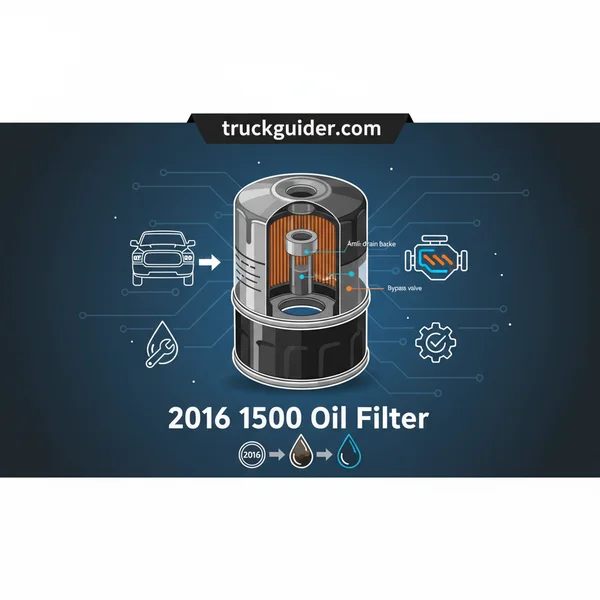
Getting the right fitment ensures your truck maintains optimal oil pressure and filtration. While the 5.7L HEMI uses a traditional metal spin-on canister, both the 3.6L Pentastar and the 3.0L EcoDiesel use modern cartridge-style filters. This guide breaks down the exact part numbers you need for each engine type, including the original equipment manufacturer (OEM) Mopar numbers and the best aftermarket cross-references available at your local auto parts store.
2016 Ram 1500 Oil Filter Cross-Reference by Engine Type
Identifying your engine is the critical first step. The 2016 Ram 1500 engine options vary significantly in how they house and filter oil. Below is the direct fitment data for the three available powerplants. Whether you prefer the factory Mopar parts or aftermarket brands like Wix, Fram, or Mobil 1, these part numbers are confirmed for the 2016 model year.

3.6L Pentastar V6 (Cartridge Filter)
The 3.6L Pentastar engine in the 2016 Ram 1500 uses a top-mount cartridge filter. It is important to note that Chrysler updated the design of this filter in 2014. For your 2016 model, the filter features a distinct “nipple” or stem on the bottom. If you buy a filter for a 2013 or older Ram, it will not fit your housing. Always ensure the box specifies fitment for 2014-2016 3.6L engines.
- OEM Mopar Part Number: 68191349AA (Model MO-349)
- Wix Part Number: WL10010
- Fram Part Number: CH11665
- Mobil 1 Part Number: M1C-455A
- Purolator Part Number: L36296
5.7L HEMI V8 (Spin-On Filter)
The 5.7L HEMI V8 is the most common engine for this truck. Unlike the other two options, this engine uses a standard spin-on metal canister. In 2016, Ram used a smaller diameter filter with a 22mm x 1.5mm thread pitch. You should look for the Mopar MO-339 or the higher-capacity MO-899. Both fit the 2016 HEMI perfectly, though the MO-339 is the standard factory-issued size for this specific year.
- OEM Mopar Part Number: 04892339AA (Model MO-339)
- Wix Part Number: 57060
- Fram Part Number: PH10060 (Extra Guard) or FE10060 (Force)
- Mobil 1 Part Number: M1-113A
- K&N Part Number: HP-1017
3.0L EcoDiesel V6 (Cartridge Filter)
The 3.0L EcoDiesel requires a heavy-duty cartridge filter designed to handle the higher soot levels common in diesel engines. This filter is located in a housing on the front of the engine. It is significantly larger than the Pentastar cartridge and uses a specific O-ring to prevent high-pressure leaks. Always ensure your replacement filter includes the new rubber gasket, as the old one will likely be compressed and prone to leaking if reused.
- OEM Mopar Part Number: 68229402AA
- Wix Part Number: WL10060
- Fram Part Number: CH11794
- Purolator Part Number: L38157
- Aidelon Part Number: ADL-68229402AA
How to Change Your 2016 Ram 1500 Oil Filter Like a Pro: A Practical Walkthrough
Performing an oil and filter change on your 2016 Ram 1500 is one of the most rewarding maintenance tasks you can handle at home. Whether you are running the 5.7L Hemi V8 or the 3.6L Pentastar V6, ensuring your engine has clean oil and a fresh filter is the single most important thing you can do to promote engine longevity and performance. This guide focuses on the nuances of the 2016 model year, specifically addressing the notorious placement of the oil filter on the Hemi engines and providing a clear, actionable path to completing the job without making a massive mess in your driveway. Following these steps will save you money and give you the peace of mind that the job was done with care and precision.
Step 1: Gather Tools and Specifications
What you need: A high-quality oil filter (Mopar MO-339 for Hemi or MO-744 for V6), 7 quarts of full synthetic 5W-20 oil (for Hemi) or 6 quarts 5W-20 (for V6), a 13mm wrench or socket for the drain plug, an oil filter wrench, a large drain pan (at least 8-quart capacity), shop towels, and safety glasses.
Instructions: Before you even crawl under the truck, verify you have the correct parts. The 2016 Ram 1500 with the 5.7L Hemi engine is particularly picky about filters; while many aftermarket brands fit, the OEM Mopar filter is highly recommended to prevent “dry start” noises. If you have the 3.6L V6, remember that your filter is a cartridge type located on top of the engine, not a spin-on type underneath. Lay out all your tools on a clean mat or piece of cardboard. Having everything within arm’s reach prevents the “oil-covered hand” scramble later. Check your owner’s manual one last time to confirm your specific engine’s oil capacity so you aren’t caught short mid-fill.
Pro Tip: Always check that the new oil filter has its rubber O-ring gasket attached. It is a rare manufacturing defect for it to be missing, but it is a catastrophic one if you don’t notice it before installation.
Step 2: Warm Up and Position the Vehicle
What you need: Your truck, a flat surface, and wheel chocks or vehicle ramps (optional but recommended).
Instructions: Start your Ram and let it idle for about 5 to 10 minutes. You want the oil to be warm so that it flows quickly and carries away more contaminants, but you don’t want it “operating temperature” hot, which can cause severe burns. Once warmed, park the truck on a level surface. While the Ram 1500 has decent ground clearance, using a set of heavy-duty ramps can make accessing the oil filter much easier, especially on 4WD models. If you use ramps, ensure the parking brake is firmly set and the rear wheels are chocked for safety. Turn off the ignition and remove the key to ensure no one accidentally starts the vehicle while you are underneath it.
Pro Tip: Open the hood and remove the oil fill cap before you go under. This breaks the vacuum within the engine and allows the oil to drain much faster and more smoothly into your pan.
Step 3: Drain the Old Engine Oil
What you need: 13mm wrench or socket, drain pan, and nitrile gloves.
Instructions: Locate the oil pan at the bottom of the engine. The drain plug is situated on the rear or side of the pan. Position your drain pan slightly behind the plug, as the oil will initially stream out with some force and distance. Use your 13mm wrench to loosen the plug. Once it is loose, use your fingers to unscrew it the rest of the way while applying slight inward pressure; this prevents the oil from leaking out until the very last thread is clear. Quickly pull the plug away. Let the oil drain until it slows to a very thin, intermittent drip. This usually takes about 10 to 15 minutes. While it drains, inspect the drain plug’s washer for any cracks or flattening; replace it if it looks worn.
Pro Tip: If the drain plug falls into the hot oil pan, don’t fish for it with your hands. Use a small telescoping magnet to retrieve it safely without getting covered in waste oil.
Step 4: Navigate the Oil Filter Access
What you need: An empty 1-liter plastic bottle (cut in half) or a specialized oil filter funnel tool, and shop towels.
Instructions: On the 2016 Ram 1500 Hemi, the oil filter is located just above the electronic power steering (EPS) rack and a crossmember. This is the most frustrating part of the job because removing the filter often results in oil dripping directly onto the steering components. To manage this, take a plastic soda bottle cut into a “trough” shape or use a piece of flexible aluminum foil to create a gutter underneath the filter. This gutter should lead the dripping oil away from the rack and directly into your drain pan. If you have the 3.6L V6, you can skip the “gutter” step, as your cartridge filter is conveniently located on top of the engine near the intake manifold.
Pro Tip: Many Ram owners find that turning the steering wheel all the way to the right provides slightly better clearance to reach the filter on the Hemi models.
Step 5: Remove the Spent Oil Filter
What you need: Oil filter wrench (cap style or “claw” style) and more shop towels.
Instructions: Grip the filter firmly. If it was installed correctly last time, you might be able to unscrew it by hand. However, heat cycles often tighten them, so you will likely need your filter wrench. Turn the filter counter-clockwise (lefty-loosey). Once it breaks loose, only turn it a quarter turn at a time. Let the oil begin to bleed out of the top of the filter and down your homemade gutter. Wait a minute for the flow to subside before unscrewing it completely. Keep the filter upright as you pull it out to avoid spilling the remaining contents. Once removed, use a clean rag to wipe the mounting surface on the engine block. Ensure the old rubber gasket is NOT stuck to the engine; “double-gasketing” is a primary cause of massive oil leaks.
Pro Tip: If the filter is stuck, a “cap-style” wrench that fits onto a 3/8-inch drive ratchet is often the best tool for the tight quarters of the Ram’s engine bay.
Step 6: Prepare and Install the New Filter
What you need: New oil filter and a small amount of fresh 5W-20 oil.
Instructions: Dip your finger into a bottle of clean oil and spread a thin film over the rubber gasket of the new filter. This ensures a proper seal and makes it easier to remove during your next oil change. For the Hemi engine, many professionals recommend “pre-filling” the filter about halfway with fresh oil. This reduces the amount of time the engine runs without oil pressure upon the first start. Carefully thread the new filter onto the engine mount by hand. It should spin on effortlessly. If you feel resistance immediately, stop and realign it to avoid cross-threading. Tighten the filter until the gasket makes contact with the base, then turn it an additional 1/2 to 3/4 of a turn. Do not use a wrench to tighten it; hand-tight is sufficient.
Pro Tip: Use a permanent marker to write the date and current mileage on the side of the filter. This provides a quick visual reference for your next service interval.
Step 7: Reinstall Drain Plug and Refill Oil
What you need: Clean drain plug, 13mm wrench, funnel, and 6-7 quarts of oil.
Instructions: Wipe the area around the drain hole one last time. Thread the drain plug back in by hand to ensure it isn’t cross-threaded, then snug it up with your 13mm wrench. You want it tight (about 20-25 ft-lbs), but do not over-crank it, as you could strip the threads in the oil pan. Move to the top of the engine and place your funnel into the oil fill neck. Pour in the manufacturer-recommended amount of oil. For the 5.7L Hemi, this is exactly 7 quarts. For the 3.6L V6, it is 6 quarts. Pour slowly to avoid air bubbles and overflow. Once finished, replace the oil cap and double-check that you haven’t left any tools or rags in the engine bay.
Pro Tip: Buy your oil in the 5-quart “jugs” rather than individual quarts; it is significantly cheaper and easier to pour without glugging.
Step 8: Final Check and Reset
What you need: Ignition key and the truck’s dashboard interface.
Instructions: Start the engine and let it idle for about 2 minutes. While it is running, look underneath the truck with a flashlight. Specifically, check the drain plug and the base of the oil filter for any signs of weeping or dripping. If you see a leak, shut the engine off immediately and tighten the component. After the idle period, shut the engine off and let it sit for 5 minutes to allow the oil to settle into the pan. Pull the dipstick, wipe it clean, reinsert it, and check the level. It should be right at the “Full” mark. Finally, sit in the driver’s seat, turn the ignition to “Run” (don’t start), navigate the menu to “Vehicle Info,” then “Oil Life,” and hold the “OK” button to reset the monitor to 100%.
Pro Tip: Dispose of your used oil and filter responsibly. Most local auto parts stores will accept used oil for recycling at no charge.
✅ Final Checklist
- Verify the old oil filter gasket was removed from the engine block.
- Ensure the drain plug is tightened to approximately 25 ft-lbs and isn’t leaking.
- Check that the oil level on the dipstick is between the “Safe” or “Full” marks.
- Confirm the oil life monitoring system has been reset to 100% via the dash menu.
- Clean any spilled oil off the electronic power steering rack to prevent rubber degradation.
Important Notes:
- Safety Warning: Never work under a vehicle supported only by a floor jack; always use jack stands or heavy-duty ramps.
- When to Seek Help: If you notice metal shavings in the drained oil or if the drain plug threads feel stripped, consult a professional mechanic immediately.
- Estimated Time: 45 to 60 minutes.
- Estimated Cost: $40 – $70 (depending on the oil brand and filter quality).
Comparing OEM Mopar vs. Premium Aftermarket Filter Brands
When shopping for your 2016 Ram 1500 oil filter, you will likely choose between the factory Mopar brand and various premium aftermarket options. For most owners, the Mopar filter is the “safe” choice because it is the exact part used by the dealership. However, aftermarket brands often offer specialized features, such as synthetic blend media for extended drain intervals or high-flow designs for performance enthusiasts.
The Case for Mopar OEM Filters
Using the Mopar filter is the best way to ensure your truck stays within warranty guidelines. These filters are engineered by Chrysler specifically for the flow rates of your engine. The Mopar MO-349 for the V6 and MO-339 for the V8 feature bypass valves designed to open at exact pressure points. This prevents the engine from being starved of oil if the filter ever becomes clogged. For the EcoDiesel, the Mopar filter is often preferred because it uses a specific felt-like material that is highly effective at capturing diesel soot.
- Guaranteed Fit: No issues with thread pitch or O-ring sizing.
- Warranty Protection: Eliminates any potential disputes with Chrysler regarding engine damage.
- Standard Media: Uses high-quality cellulose/synthetic blend media for 5,000 to 10,000-mile intervals.
Top Aftermarket Options for Performance and Longevity
If you prefer to use full-synthetic oil and want to stretch your oil change intervals, premium aftermarket filters are often superior. Brands like Wix XP and Mobil 1 Extended Performance use 100% synthetic filtration media. This media is reinforced with wire backing, allowing it to hold more contaminants without restricting oil flow. If you use your 2016 Ram 1500 for heavy towing or frequent short trips in cold weather, upgrading to a high-tier aftermarket filter can provide an extra layer of protection for your engine internals.
- Wix XP: Best for synthetic oil and high-mileage users.
- Fram Ultra Synthetic: Known for having a 99% filtration efficiency at 20 microns.
- K&N Performance: Features a nut on the end of spin-on models (for the HEMI) for incredibly easy removal.
Technical Specifications: Cartridge vs. Spin-On Filter Requirements
When selecting a filter for your 2016 Ram 1500, the first thing you need to identify is the filter housing type. Unlike older trucks where every engine used a similar metal canister, the 2016 model year utilizes two very different designs depending on what is under the hood. Getting this wrong means you’ll be stuck with a part that physically cannot be installed on your vehicle.
Knowing Your Filter Type by Engine
The 3.6L Pentastar V6 and the 3.0L EcoDiesel engines both use a cartridge-style filter. This is a “naked” pleated element that drops into a permanent plastic housing located on top of the engine. On the other hand, the 5.7L Hemi V8 sticks with the traditional spin-on filter, which is a self-contained metal canister that screws onto the bottom of the engine block. Pro tip: If you have the Hemi, always double-check your clearance, as some aftermarket filters are slightly longer than the OEM Mopar MO-339, which can make a tight squeeze even tighter near the electric power steering rack.
O-Rings and Bypass Valve Specs
For cartridge users, the technical specifications aren’t just about the paper; they are about the seal. Every 3.6L and 3.0L filter should come with a new rubber O-ring. Reusing the old one is a recipe for a messy leak under high pressure. For the 5.7L Hemi, ensure the filter has an internal bypass valve rated specifically for Chrysler’s pressure requirements. This valve ensures that if the filter becomes clogged or the oil is too thick during a freezing morning start, your engine still receives lubrication, even if it’s temporarily unfiltered.
- 3.6L V6: Requires a top-load cartridge with a high-temperature O-ring.
- 5.7L Hemi: Requires a 22mm x 1.5mm thread pitch spin-on canister.
- 3.0L EcoDiesel: Needs a heavy-duty cartridge designed for high-soot diesel environments.
Critical Factors for Choosing High-Efficiency Oil Filtration
It is tempting to grab the cheapest filter on the shelf, but for a 2016 Ram 1500—especially one used for towing or heavy commuting—the internal components matter immensely. Modern synthetic oils can last 10,000 miles, but your oil is only as good as the filter’s ability to keep it clean for that entire duration. High-efficiency filters do more than just “stop dirt”; they maintain oil flow rates while capturing microscopic particles.
Micron Ratings and Capture Efficiency
The “Micron Rating” tells you the size of the particles the filter can trap. Most “budget” filters are rated at 40 microns, which is roughly half the width of a human hair. However, the most engine wear is caused by particles in the 10 to 20-micron range. High-efficiency brands like Royal Purple or WIX XP use synthetic blended media to achieve 99% efficiency at 20 microns. This prevents those tiny abrasive particles from scarring your cylinder walls or bearings over time.
Silicone Anti-Drainback Valves
If you own the 5.7L Hemi, you may have heard of the infamous “Hemi Tick.” While there are many causes, a common one is dry starts. Look for a filter equipped with a silicone anti-drainback valve. Cheaper filters use nitrile rubber, which can harden over time and allow oil to drain out of the filter and back into the pan when the truck is parked. A silicone valve stays flexible in extreme heat and cold, ensuring oil stays at the top of the engine so lubrication is instantaneous the moment you turn the key.
- Synthetic Media: Provides better flow and higher dirt-holding capacity than standard cellulose (paper).
- Wire-Backing: Premium filters often have a wire mesh backing the pleats to prevent them from collapsing under high pressure.
- Gasket Material: Look for pre-lubricated or high-density rubber gaskets to prevent “welding” to the engine block from heat.
Conclusion
Choosing the right oil filter for your 2016 Ram 1500 is one of the easiest ways to ensure your truck reaches the 200,000-mile club. Whether you are running the 3.6L Pentastar with its cartridge system or the 5.7L Hemi with a heavy-duty spin-on, the priority should always be quality over cost. A premium filter with a silicone anti-drainback valve and a high micron efficiency rating protects your engine from premature wear and ensures your oil stays clean between changes.
Before your next maintenance interval, take a moment to verify your engine type and pick up a high-quality filter from a trusted brand like Mopar, WIX, or Mobil 1. Your Ram works hard for you—give it the protection it deserves. Ready to get started? Check your owner’s manual for your specific oil capacity and grab your supplies today!
❓ Frequently Asked Questions
What are the OEM Mopar part numbers for all 2016 Ram 1500 engines?
For the 5.7L V8, use MO-339 (04892339AA). The 3.6L V6 requires MO-349 (68191349AC), and the 3.0L EcoDiesel uses 68229402AA. Using OEM parts ensures the bypass valve meets Chrysler’s exact specifications.
What is the benefit of using synthetic-media oil filters for the Ram 1500?
Synthetic media, like that found in Mobil 1 Extended Performance or WIX XP filters, provides higher filtration efficiency and better durability. This is especially beneficial if you use full synthetic oil and follow the truck’s maximum service intervals.
Why did Ram switch to cartridge filters for the 3.6L Pentastar engine?
Cartridge filters reduce environmental waste because they don’t require a metal canister. They also allow for easier visual inspection of the filter element for debris or metal shavings during every oil change.
Are aftermarket filters like Fram or WIX safe for my 2016 Ram 1500?
Yes, as long as they meet or exceed Chrysler’s MS-6395 standards or specific diesel requirements. Brands like WIX, Purolator, and Mobil 1 are widely regarded as safe alternatives to Mopar OEM filters.
What tool is required to remove the oil filter on a 2016 Ram 1500?
The 5.7L V8 typically requires a standard 74mm or 76mm oil filter cup wrench. The 3.6L V6 and 3.0L EcoDiesel both require a 24mm or 27mm socket to unscrew the cartridge housing cap located in the engine bay.
How often should I change the oil filter on my Ram 1500?
The oil filter should be replaced during every oil change, typically every 7,500 to 10,000 miles. Always monitor your truck’s Oil Life Indicator and never exceed 12 months between filter changes regardless of mileage.

![RAM Big Horn vs. Laramie: Which Trim Level is Worth It? [2026]](https://truckguider.com/wp-content/uploads/2026/03/ram-big-horn-vs-laramie-featured.webp)