2013 Ram 1500 Blend Door Actuator Location: A Guide To Hvac Temperature Control Repair

Maintaining a comfortable cabin temperature in your 2013 Ram 1500 is essential for both driver focus and passenger comfort, especially during extreme seasonal shifts. When your HVAC system begins blowing lukewarm air or emits a persistent clicking sound from behind the dashboard, a faulty blend door actuator is the likely culprit. This guide provides the exact location of the blend door actuators in your truck, details the symptoms of failure, and outlines the steps for professional-grade diagnosis and replacement to restore your climate control system.


Understanding the 2013 Ram 1500 Blend Door Actuator Location and Function
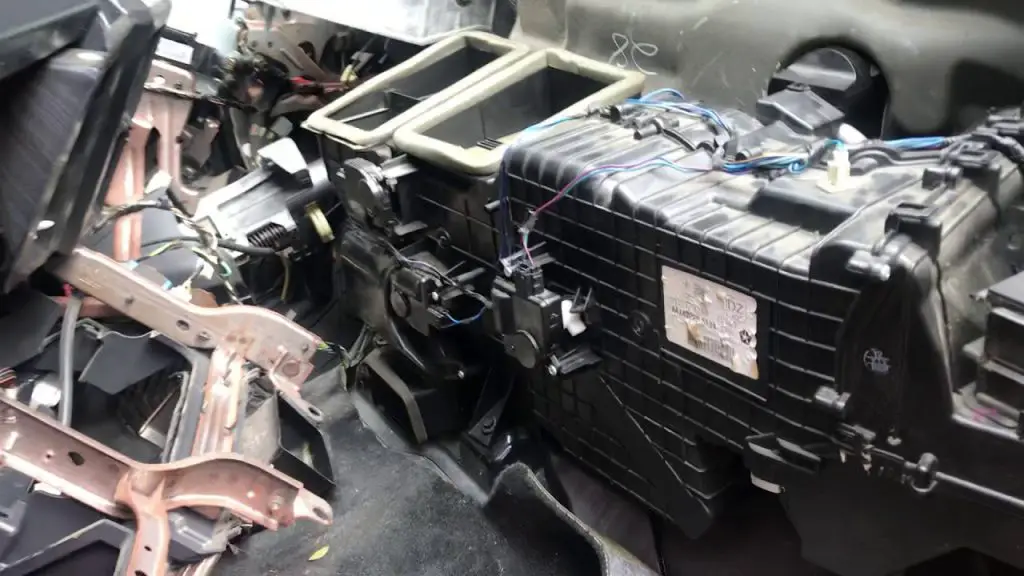
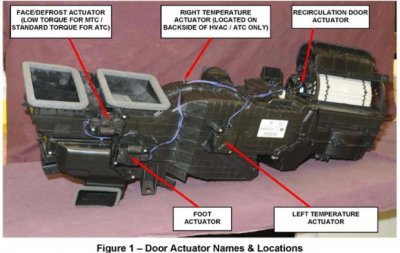
The 2013 Ram 1500 utilizes a series of small electric motors, known as actuators, to control air flow and temperature within the HVAC plenum. These actuators are the mechanical “arms” of your climate control system; they receive electrical signals from the dash interface and physically move doors inside the heater box to direct air or mix temperatures. The 2013 model year belongs to the fourth generation Ram, which standardized many electronic HVAC components across the 1500, 2500, and 3500 lines, making parts relatively accessible for the DIY community.
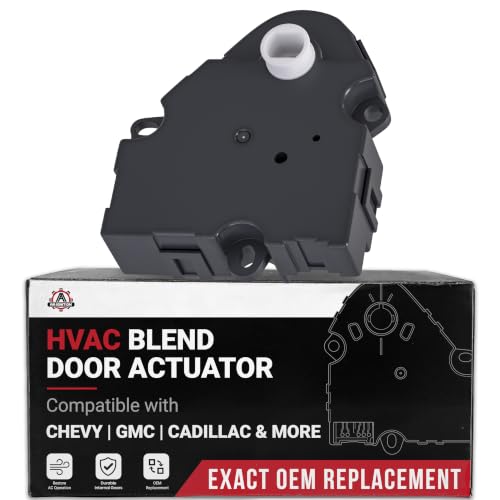
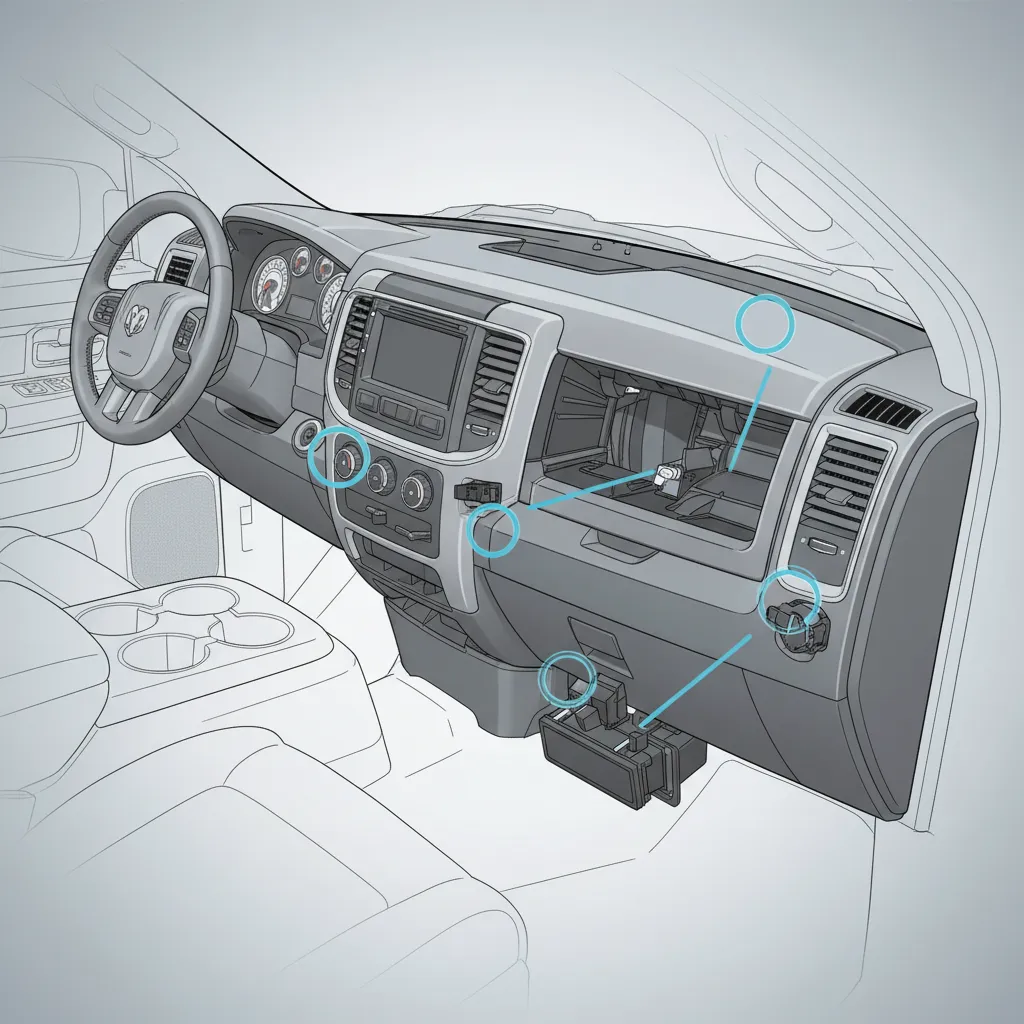
The primary location for the main blend door actuator is behind the lower glove box assembly on the passenger side of the dashboard. This specific motor is responsible for the “blend”—mixing hot air from the heater core with cold air from the A/C evaporator to reach your desired temperature setting. However, the complexity of your system depends heavily on your trim level. A base Tradesman with a single-zone system uses fewer actuators, whereas a Laramie or Longhorn with dual-zone climate control features a more intricate HVAC housing layout.
Differentiating HVAC Doors
It is critical to differentiate between the various doors within the plenum to ensure you are replacing the correct part:
- Blend Door: Controls the temperature mix (Hot vs. Cold).
- Mode Door: Controls the direction of airflow (Defrost, Vents, or Floor).
- Recirculation Door: Controls whether the system pulls fresh air from outside or recirculates cabin air.
In a common failure scenario for dual-zone trucks, you might experience a situation where the passenger side blows cold while the driver side blows hot. This indicates that only one of the two blend door actuators has failed or become stuck. Identifying the specific actuator causing the problem is the first step toward a successful repair.
Accessing the Passenger Side and Driver Side Actuator Units
Locating the actuators requires some basic interior disassembly. While the passenger side is notoriously straightforward, the driver’s side is more “convenient” only if you have small hands and a flexible ratchet.
Passenger Side Access (Primary Location)
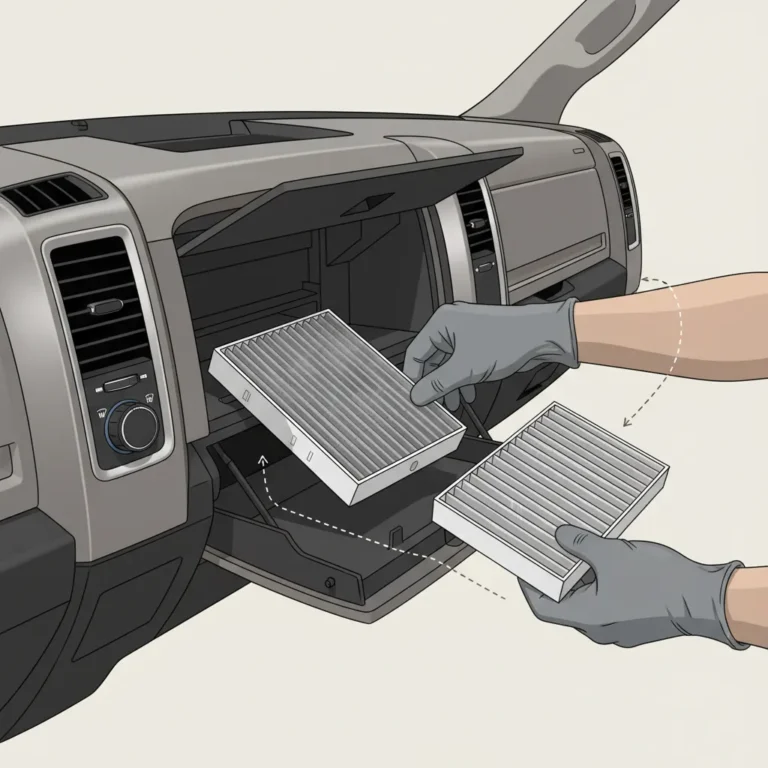
To reach the passenger-side actuator, you must remove the lower glove box. This is done by opening the box, depressing the side tabs to let it swing further down, and unhooking the dampener cord. Once the bin is removed, the HVAC housing is revealed. The blend door actuator is typically mounted on the side of the housing, held in place by two or three small screws. Local community forum contributors often note that this is the most common point of failure due to its high duty cycle.
Driver Side Location (Dual-Zone Systems)
The driver-side blend door actuator is positioned high up under the dashboard near the center console. Accessing this unit requires the removal of the lower knee bolster (the plastic panel under the steering column) and potentially the steering column shroud for better visibility. You will also need to remove the dash silencer pad—a soft, fibrous panel held by plastic push-pins—to gain a clear line-of-sight to the motor. Research suggests that the upper actuator in this area is significantly more difficult to reach than the lower units due to various mounting bracket obstructions.
Ninety percent of temperature-related failures in the 2013 Ram 1500 occur at the passenger-side blend door location. If you are experiencing “stuck” temperatures on a single-zone system, always start your diagnosis behind the glove box before tearing into the driver-side dash.
Identifying Symptoms of a Failing HVAC Actuator
Before you begin pulling panels, you must confirm the actuator is indeed the culprit. Many HVAC issues can stem from a clogged heater core or a low refrigerant level, which mimic actuator failure. However, a failing blend door actuator usually presents very specific “red flags.”


Audible Clicking
A rhythmic tapping or clicking sound from behind the dash signifies stripped plastic gears within the actuator housing trying to turn.
Stuck Temperatures
The system remains stuck on full heat or full cold regardless of the dial or digital setting because the door cannot move.
RepairPal data suggests that blend door actuator failure is a frequent issue for high-mileage Rams, often appearing after the 80,000-mile mark. Another common sign is the ‘thumping’ sound heard for 10-15 seconds immediately after the ignition is turned on. This happens as the HVAC control module attempts to calibrate the door positions and detects an internal fault or a physical obstruction.
For a more definitive diagnosis, use an OBD-II scanner capable of reading Body (B) codes. Look for codes such as B1058 or B11C1, which specifically indicate actuator circuit or performance issues. Checking for these codes can help you pinpoint the exact motor that has failed before you start purchasing parts from a trusted local dealer.
Step-by-Step Replacement and System Calibration
Replacing the actuator is a task most owners can handle with the right tools. You will typically need a 7mm or 8mm socket, a small 1/4-inch drive ratchet, and potentially a T20 Torx bit for specific mounting screws. Following a professional sequence ensures the new part doesn’t fail immediately upon installation.
📋
Step-by-Step Replacement
Disconnect the negative battery terminal. This prevents electrical shorts and resets the HVAC control module memory, which is vital for the upcoming calibration.


Remove the electrical harness connector and the mounting screws. Pull the old actuator straight off the HVAC housing. Note the orientation of the D-shaped shaft.
Use a small mirror to align the D-shaped shaft of the blend door with the new actuator. Do not force it; the actuator should slide on smoothly before you tighten the screws.
The Critical Calibration Procedure
Once the new actuator is installed, the system must learn its stop positions. Proper calibration prevents the premature stripping of new nylon gears, which is the leading cause of “comeback” repairs in professional shops. To calibrate, reconnect the battery and turn the ignition to the ‘ON’ position (do not start the engine). You will hear the HVAC module perform a “sweep,” moving every door from one extreme to the other. Do not touch any climate controls for at least two minutes during this process.
Never apply 12V power directly to the actuator pins to test it. These are stepper motors controlled by pulse-width modulation from the HVAC module; direct power will instantly destroy the internal circuitry.
Estimated Costs and Finding Expert Service Nearby
When deciding whether to tackle this job yourself or hire a professional, it helps to understand the financial breakdown. While the part itself is affordable, the labor varies significantly based on the location of the faulty unit.
By The Numbers
OEM Mopar Part Cost
Avg. Professional Total
Labor Time Range
Individual OEM Mopar actuators are available from your official guide for parts, while high-quality aftermarket brands can also be reliable. Professional replacement generally takes 1 to 2 hours of labor for the passenger side. However, the driver-side actuator replacement can sometimes exceed $500 in total costs if the entire dashboard assembly requires partial disassembly in certain sub-models.
✅ Pros (DIY)
- Saves $200+ in labor
- Passenger side is very accessible
- Educational experience
❌ Cons (DIY)
- Tight spaces cause frustration
- Risk of snapping plastic door pins
- Calibration may require a scan tool
If you are uncomfortable with the cramped quarters under the dash, there are many reputable specialized mechanics serving the local community who have experience with Chrysler/Stellantis interior electronics. Seeking a professional is often the best route for dual-zone systems where improper installation can lead to a broken blend door—a repair that requires the removal of the entire dashboard and costs thousands of dollars.
In summary, the 2013 Ram 1500 features multiple actuator locations, primarily behind the glove box and the driver-side lower dash. Clicking noises and inconsistent temperatures are definitive signs that the internal gears of the actuator have failed. While the passenger-side unit is accessible for DIY enthusiasts, the driver-side unit may require professional intervention to ensure proper calibration. If you are experiencing HVAC issues, consult with a local technician serving your area to have your system scanned for codes and restored to peak performance.


Frequently Asked Questions
Where exactly is the blend door actuator located on a 2013 Ram 1500?
In most 2013 Ram 1500 models, the primary temperature blend door actuator is located behind the lower glove box. You must remove the glove box to see it mounted on the side of the HVAC plenum. If your truck has dual-zone climate control, a second actuator is located on the driver’s side, typically higher up and behind the center stack or lower dashboard panels.
How do I know if my blend door actuator is failing?
Common indicators include a clicking or tapping sound coming from the dashboard when you change the temperature or start the vehicle. You may also notice that the air temperature doesn’t change when adjusted, or one side of the cabin stays hot while the other stays cold. In some cases, an OBD-II scanner will reveal ‘B’ series HVAC fault codes.
What is the average cost to replace a blend door actuator in this vehicle?
Based on industry data from RepairPal, you can expect to pay between $263 and $363 for a professional replacement. This includes approximately $50–$100 for the part and the remainder for labor. Prices vary depending on which specific actuator location is being serviced, as the driver-side unit often requires more time-intensive disassembly of the dashboard.
Can I replace the 2013 Ram 1500 blend door actuator myself?
Replacement is a manageable DIY task for the passenger-side actuator, as it only requires basic hand tools and about an hour of time. However, the driver-side and defrost actuators are located in much tighter spaces and may require significant dashboard disassembly. If you are uncomfortable working in confined spaces or around delicate electrical harnesses, seeking professional assistance is recommended.
Do I need to calibrate the new actuator after installation?
Yes, calibration is a critical step. Once the new actuator is installed, you should perform a ‘soft reset’ by disconnecting the battery or pulling the HVAC fuse for a few minutes. Upon reconnecting, turn the ignition to the ‘ON’ position without starting the engine. The HVAC module will then cycle the doors to find the open and closed stops, ensuring accurate temperature control.
![U1424 Code Ram 1500: Causes, Symptoms, and AGS Solutions [2026]](https://truckguider.com/wp-content/uploads/2026/03/u1424-code-ram-1500-featured-768x403.webp)
![2012 Ram 1500 5.7 Oil Capacity & Type: Specs & Fitment Guide [2026]](https://truckguider.com/wp-content/uploads/2026/03/2012-ram-1500-5-7-oil-capacity-featured.webp)
![2012 Ram 1500 Radio Upgrade: Best Units & Required Parts [2026]](https://truckguider.com/wp-content/uploads/2026/03/2012-ram-1500-radio-upgrade-featured.webp)