Ram 1500 Catalytic Converter Location: Identification, Theft Prevention, And Replacement Guide

For many Ram 1500 owners, the exhaust system is an afterthought—until the sudden roar of an open manifold or a glowing dashboard light signals that the catalytic converter is missing or failing. Identifying the Ram 1500 catalytic converter location is the critical first step in addressing issues ranging from expensive mechanical failure to the rampant rise in under-vehicle component theft. Whether you are performing a routine inspection, diagnosing a “Check Engine” light, or looking to install a theft-deterrent shield, understanding where these components sit and how they function is essential for maintaining your truck’s performance and street legality. This guide provides a definitive technical breakdown of the Ram 1500 exhaust topography across various engine types, alongside expert advice on protection, repair options, and replacement costs.


Pinpointing the Ram 1500 Catalytic Converter Location Within the Exhaust System
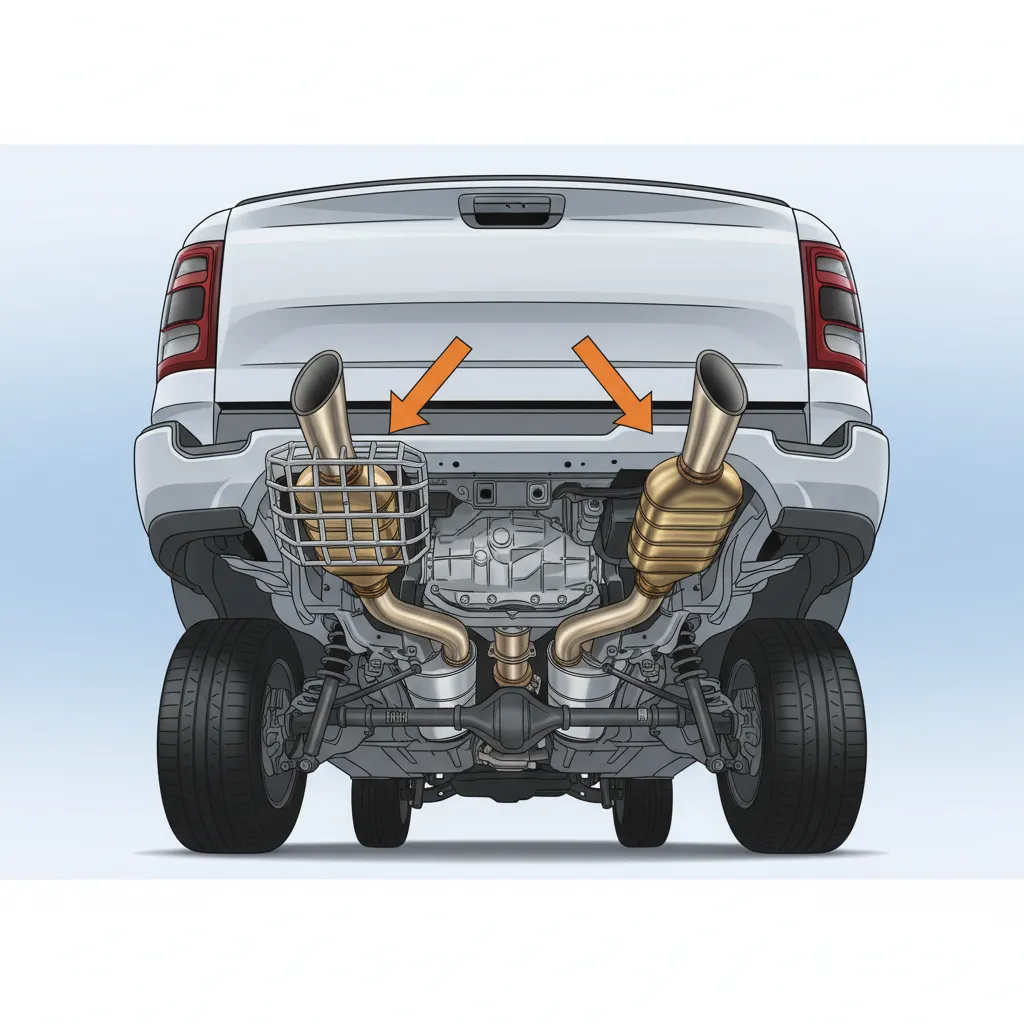
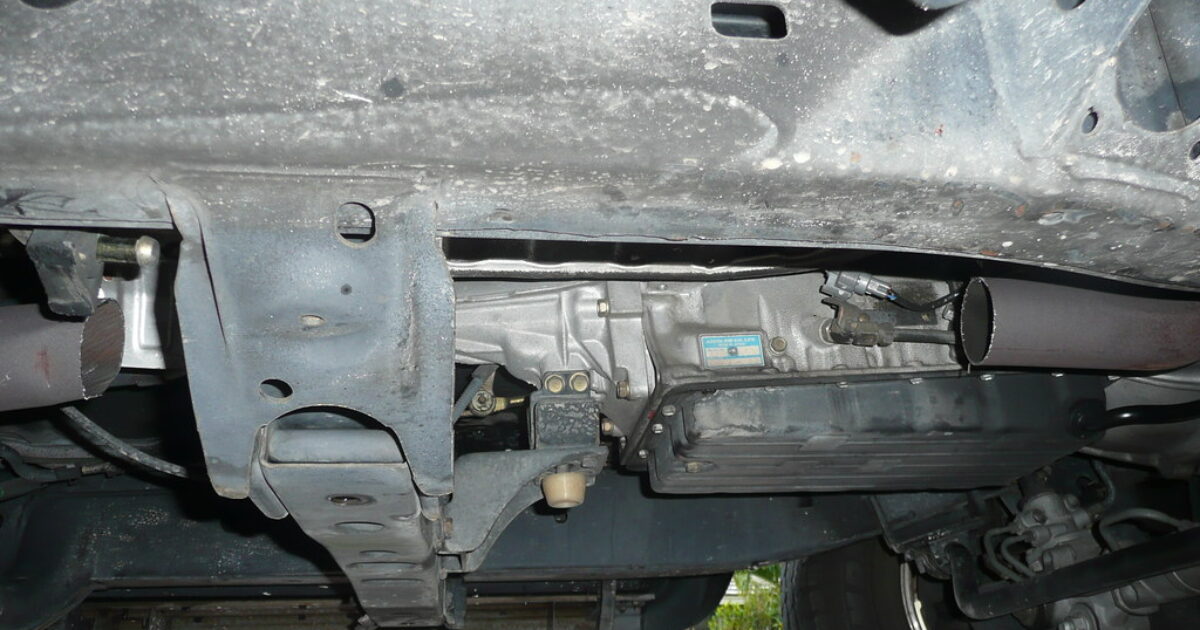
The catalytic converters on a Ram 1500 are strategically positioned along the exhaust stream to maximize chemical reduction. For those performing a visual check, the units are situated on the undercarriage, integrated into the exhaust piping between the engine’s exhaust manifolds and the rear muffler. In a standard configuration, the primary converters are located as close to the engine as possible—often immediately following the “Y-pipe” or bolted directly to the exhaust manifold flanges.
This proximity to the engine is a design necessity. To begin effectively processing harmful gases like carbon monoxide and nitrogen oxides, the internal ceramic honeycomb structure must reach a “light-off” temperature of approximately 400 to 600 degrees Fahrenheit. On most 4th and 5th Generation Ram 1500s (DS and DT platforms), you will find these units positioned roughly beneath the front floorboards of the cab. If you were to sit in the driver’s seat, the driver-side converter would be almost directly below your feet.
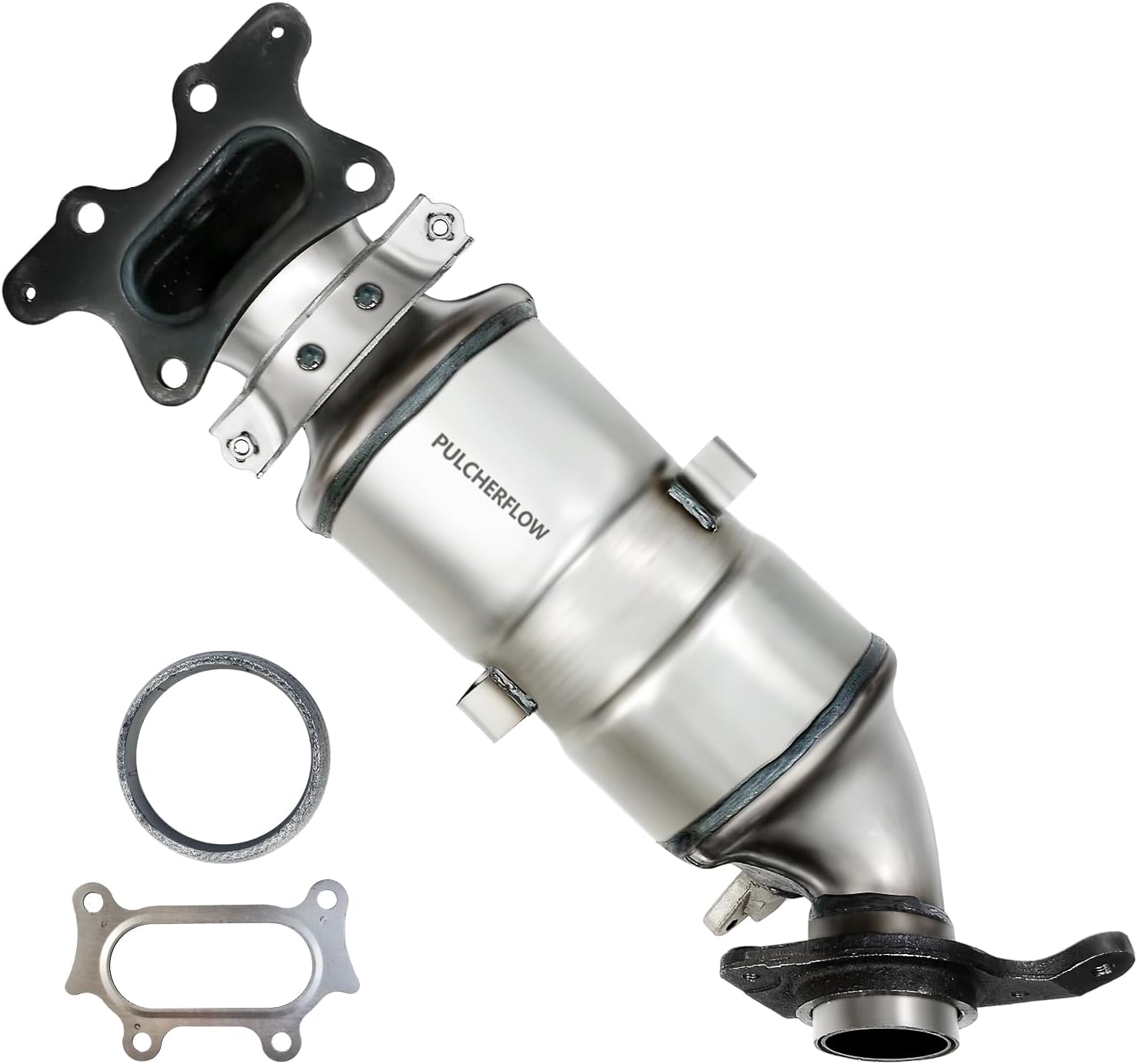
Identification involves looking for a stainless steel, bulbous “canister” shape. These units are typically wrapped in or flanked by thin metal heat shielding to protect the truck’s underbody from the intense radiant heat. Furthermore, you can identify them by the oxygen (O2) sensors; every primary converter will have an upstream sensor (before the converter) and a downstream sensor (after the converter) to monitor efficiency. Following the exhaust line from the engine block toward the rear axle is the most reliable way to spot them during a DIY inspection.
Determining How Many Catalytic Converters Your Specific Ram 1500 Configuration Has
The number of catalytic converters on your Ram 1500 is not universal; it depends heavily on your engine displacement, model year, and the emissions standards of the state where the truck was originally sold. While the “standard” answer is two, variations are common across the Ram lineup.
Engine-Specific Layouts
- 3.6L Pentastar V6 Models: These engines typically feature a dual-exhaust manifold setup that merges into two primary catalytic converters. Because the V6 is a “V” configuration, each cylinder bank requires its own catalyst to manage flow and backpressure.
- 5.7L Hemi V8 Models: As the most popular engine choice, the Hemi usually utilizes two large primary converters. However, in certain model years or “California Emissions” packages (serving states with stricter requirements), you may find “pre-cats.” These are smaller units placed even closer to the manifold to reduce cold-start emissions.
- 6.2L Supercharged V8 (TRX): High-performance models like the TRX utilize specialized high-flow catalytic converters. These are engineered to handle extreme exhaust pressures and temperatures while remaining EPA-compliant. Despite the power, the physical location remains similar—tucked high into the chassis for ground clearance.
Don’t confuse a resonator with a catalytic converter. Resonators are further back in the exhaust system, closer to the tailpipe. They are strictly for noise reduction and do not have O2 sensors or precious metal interiors. If you’re looking for the converter, always look for the unit with wires (O2 sensors) sticking out of it.
When checking your specific official guide or manual, you might notice differences between a 2019 Ram 1500 Classic (DS) and the New Body Style (DT). While both may house the 5.7L Hemi, the DT body style features more streamlined exhaust routing to accommodate the improved aerodynamics and frame design, making the converters slightly more tucked into the frame rails.
Why Ram 1500s Are Targets for Theft and Prevention Strategies Available Nearby
If you own a Ram 1500, you are driving a vehicle that is unfortunately high on the priority list for catalytic converter thieves. The reason isn’t just what’s inside the converters, but how easy they are to reach. The high ground clearance of a full-size truck allows a thief to slide underneath and remove the units with a cordless reciprocating saw in under two minutes—all without ever needing a jack.


The Value of Precious Metals
Ram 1500 converters contain significant concentrations of Palladium, Rhodium, and Platinum. These metals act as the catalysts for the chemical reactions. In recent years, the market value for Rhodium especially has seen massive spikes, making a single stolen converter worth hundreds of dollars at a shady scrap yard, while costing the owner thousands to replace.
Industry Data: Theft Trends
Increase in national thefts (2019-2022)
Upper-end replacement cost for Ram 1500
📋
Best Practices for Theft Prevention
Aluminum or stainless steel plates from brands like MillerCat are available at specialty shops in your community. These bolt over the exhaust, making it nearly impossible to saw through the pipes.
When serving as a daily driver, park in well-lit areas or near walls to limit side access. Using a garage whenever possible is the most effective deterrent.
Recognizing Symptoms of Failure and Estimated Replacement Costs
If your converter hasn’t been stolen but is simply failing, your Ram 1500 will tell you. The most common indicator is a “Check Engine” light showing Diagnostic Trouble Codes (DTCs) P0420 (Bank 1) or P0430 (Bank 2). These codes literally mean “Catalyst System Efficiency Below Threshold.”
Physical Signs of a Dying Converter
Beyond the dashboard lights, keep an ear and nose out for these symptoms:
- Rotten Egg Smell: A failing catalyst cannot process hydrogen sulfide correctly, leading to a distinct sulfur odor.
- Sluggish Performance: If the internal honeycomb melts or breaks, it creates a “clog” in the exhaust, causing reduced acceleration and poor fuel economy.
- Floorboard Heat: An obstructed converter will glow red-hot, radiating excessive heat through the truck’s floorboards.
✅ Diagnosing
- Scan for P0420/P0430 codes
- Perform the “rattle test” with a rubber mallet
- Check O2 sensor data on a live scanner
❌ Failure Risks
- Engine overheating
- Failed emissions inspection
- Potential engine damage from backpressure
Replacement costs for a Ram 1500 typically range from $800 to $3,000. The wide margin is due to the choice between OEM Mopar parts and aftermarket units. Labor generally bills between 1.5 to 3 hours per side at standard shop rates. Because Ram trucks often live in “salt states,” removal frequently requires specialized welding or high-torque impact tools to handle rusted bolts, which is why professional installation is highly recommended.


Choosing Between OEM and Aftermarket Converters Serving Your Location
When it comes time to buy, you’ll face a choice: do you go for the expensive dealer part or the “budget-friendly” aftermarket option? For a vehicle as technically sensitive as the Ram 1500, the choice matters. Consult Ram specs to see which part number is designated for your specific VIN.
The most critical factor is Legal Compliance. If you reside in one of the 14 “CARB-states” (like California, New York, or Colorado), you must use a converter that is California Air Resources Board certified. Using a standard EPA-compliant converter in these jurisdictions will result in a failed emissions test, even if the Check Engine light is off. When searching for available parts online, always filter by your specific state’s emissions regulations.
Finally, finding a trusted local mechanic is paramount. A technician who specializes in Chrysler and Ram vehicles will have the specific software needed to perform an O2 sensor “relearn” or “adaptation” after the converter is replaced. This ensures that the truck’s computer (PCM) recognizes the new catalyst and doesn’t trigger a false P0420 code immediately after you leave the shop.
Never attempt to replace a catalytic converter immediately after driving. These units operate at temperatures high enough to cause severe third-degree burns. Allow the vehicle to cool for at least two to three hours before beginning an inspection or repair.
The Ram 1500 is a robust, capable machine, but its exhaust system is a high-value target for both environmental wear and criminal activity. By knowing the Ram 1500 catalytic converter location and taking proactive steps to protect it with a shield, you can save yourself thousands in repair costs. If you suspect your converter is failing or want to install a theft-deterrent shield, contact a certified technician serving your community today for a professional inspection. Whether you choose OEM longevity or aftermarket value, keeping your exhaust healthy is the key to keeping your Hemi or Pentastar on the road for years to come.
Summary Points:
- The Ram 1500 typically features two primary catalytic converters located beneath the front cab area, easily accessible via the undercarriage.
- Engine types like the 5.7L Hemi and 3.6L V6 have specific exhaust layouts; some California-spec models may include additional “pre-cats.”
- Theft is a major concern due to high ground clearance; installing a local security shield is the most effective prevention strategy.
- Failing converters often trigger P0420/P0430 codes and may produce a rotten egg smell or sluggish acceleration.
- Always ensure replacement parts are EPA or CARB compliant for your specific region to avoid legal and inspection issues.
Frequently Asked Questions
How many catalytic converters does my Ram 1500 have?
Most Ram 1500 models, including the 5.7L Hemi and the 3.6L Pentastar V6, are equipped with two primary catalytic converters. One is assigned to each bank of the engine’s cylinders. Some specific emissions-heavy configurations or older models may feature additional resonators or pre-converters, but two is the standard for modern 4th and 5th Gen trucks.
Where exactly is the catalytic converter located on my Ram 1500?
The converters are located on the underside of the vehicle, integrated into the exhaust pipes that run from the engine to the muffler. If you slide under the truck near the front doors, you will see two cylindrical, metal canisters protected by heat shields. These are positioned just after the exhaust manifolds to maximize heat absorption from engine gases.


How much does it cost to replace a Ram 1500 catalytic converter?
The cost typically ranges between $800 and $3,000. This variance depends on whether you opt for a high-quality Mopar OEM part or an aftermarket alternative. Labor costs at a professional shop nearby usually add another $150 to $400 to the total, depending on the condition of your existing exhaust bolts and sensors.
What can I do to prevent catalytic converter theft on my truck?
The most effective prevention is installing a catalytic converter guard or ‘cat shield.’ These are heavy-duty metal plates that bolt into the frame, making it nearly impossible for a thief to cut the converter out quickly. Additionally, etching your VIN into the metal or painting it with high-temp orange paint can deter thieves by making the part harder to sell to recyclers.
Are aftermarket catalytic converters legal for my Ram 1500?
Yes, aftermarket converters are legal as long as they meet federal EPA standards. However, if you live in a state that follows CARB (California Air Resources Board) guidelines—such as California, New York, or Colorado—you must ensure the aftermarket unit is specifically CARB-certified for your engine family, or your vehicle will fail its emissions inspection.


![2012 Ram 1500 5.7 Oil Capacity & Type: Specs & Fitment Guide [2026]](https://truckguider.com/wp-content/uploads/2026/03/2012-ram-1500-5-7-oil-capacity-featured.webp)