
2014 Ram 1500 Starter Location And Accessibility Guide For 3.6L And 5.7L Engines

Finding yourself stranded in a parking lot with a truck that refuses to crank is a frustrating experience, especially when you are driving a powerhouse like the 2014 Ram 1500. While these trucks are renowned for their durability, the starter motor is a wear-and-tear component that eventually reaches its mechanical limit. Locating the starter on this specific model year can be challenging due to its tucked-away position on the driver’s side and the various components obstructing a clear view from the top of the engine bay. This guide provides the exact location of the 2014 Ram 1500 starter, detailed removal steps for both V6 and V8 engines, and the technical specifications needed for a successful replacement.
Identifying the 2014 Ram 1500 Starter Location on the Chassis
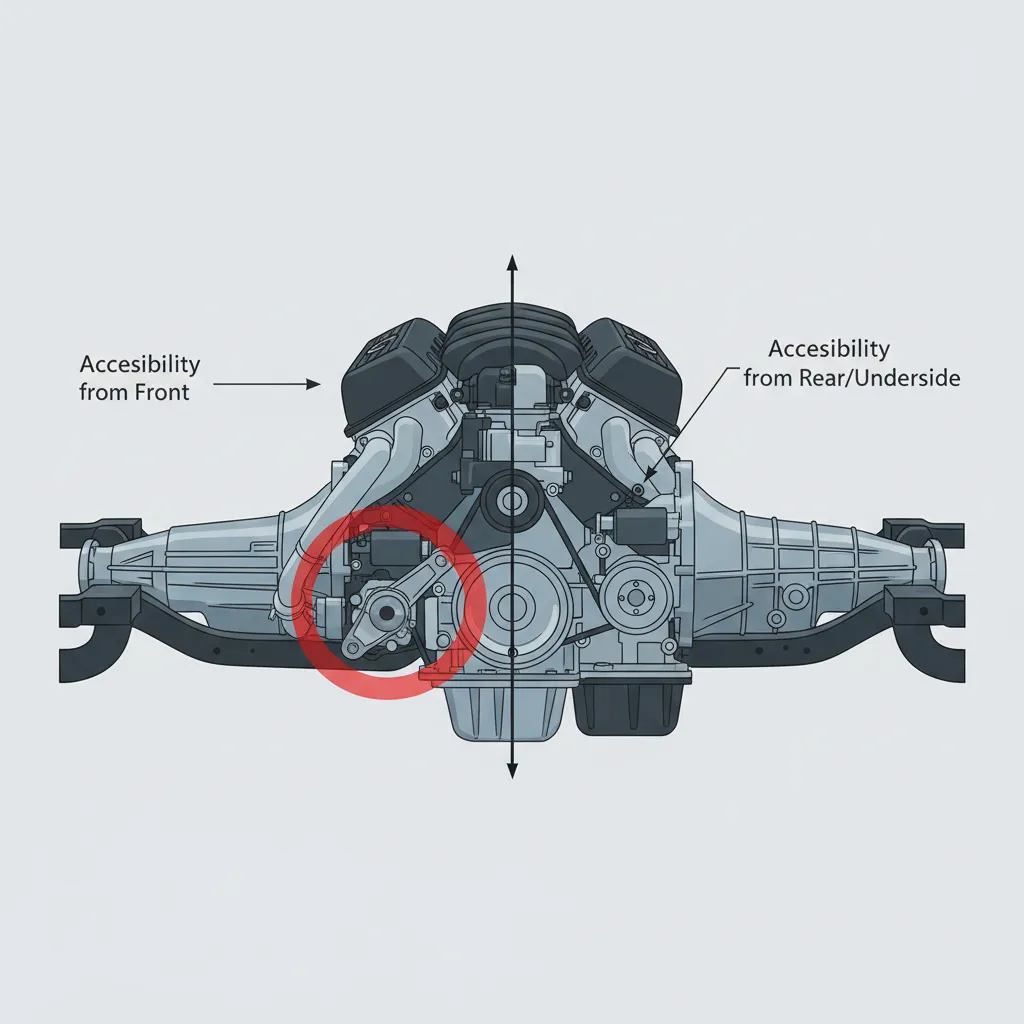
Precision is everything when diagnosing a “no-start” condition. On the 2014 Ram 1500, the starter motor is mounted firmly on the driver’s side of the engine block. It sits toward the rear of the engine, precisely where the block interfaces with the transmission bellhousing. This location is chosen to allow the starter’s pinion gear to engage the flywheel or flexplate effectively, providing the necessary torque to turn the crankshaft.
Visual identification of this component is rarely possible from the top of the engine bay. To see it, you must look past the front driver-side wheel well or, more effectively, from underneath the chassis. When you are positioned under the truck, focus your gaze on the area directly above the oil pan and adjacent to the transmission. The component is cylindrical in shape, featuring a smaller solenoid mounted directly on top of the larger motor body. You will likely see a thick copper wiring terminal protruding from the solenoid, often protected by a metallic or plastic heat wrap to prevent damage from the exhaust system.
For owners of 4WD models, the identification process is slightly more complex. The front driveshaft and differential can partially obscure the view, requiring a specific angle of approach from the rear of the front crossmember. A technician often needs a high-output flashlight to spot the “B” terminal and the mounting bolts through the narrow gap. The 2014 Ram 1500 utilizes a high-torque planetary gear reduction starter. This design allows for a smaller, more lightweight motor to generate the massive cranking force required to manage the high compression ratios found in both the Pentastar V6 and Hemi V8 engines.
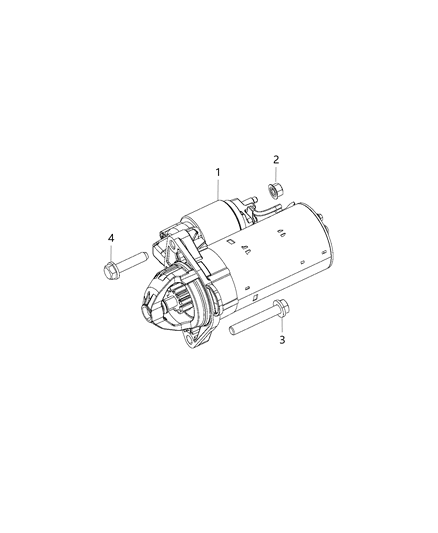
Engine-Specific Differences for 3.6L V6 and 5.7L V8 Models
While the driver-side mounting remains constant across the lineup, the physical clearance and surrounding obstructions vary significantly between engine types. Understanding these nuances is critical for a smooth repair. Research indicates that approximately 65% of 2014 Ram 1500s on the road feature the 5.7L Hemi V8, making it the most common configuration encountered in service bays.
The 5.7L Hemi V8 Configuration
In the 5.7L Hemi, the starter is tucked extremely tightly against the engine block to clear the massive exhaust manifolds. This proximity to high-heat components necessitates a robust heat shield. Accessing the mounting bolts—typically 15mm—often requires maneuvering around these shields. Hemi owners frequently encounter bolts that have undergone significant heat cycling, making them more prone to seizing than those on the V6 counterparts. Consult the official guide for specific torque values if you are performing a full rebuild.
The 3.6L Pentastar V6 Configuration
The 3.6L Pentastar V6 offers slightly more vertical clearance, but the trade-off comes in the form of complex wiring harness routing. The harnesses are often clipped ‘nearby’ the starter body, which can complicate the accessibility of the electrical terminals. While the mounting side is identical, the lack of a large exhaust manifold (compared to the Hemi) makes the 3.6L starter slightly easier to physically extract once the bolts are loosened.
Required Tools and Crucial Safety Protocols
Working on a vehicle of this size requires more than just basic hand tools. The 2014 Ram 1500 weighs between 4,500 and 6,000 lbs depending on the cab and bed configuration. Professional-grade lifting equipment is non-negotiable. Ensure you have parts available from a convenient automotive retailer before you begin disassembly to avoid leaving the truck on stands for extended periods.
Essential Tool Kit
3/8-inch drive ratchet, 15mm deep socket, 10mm socket (for shields), 13mm socket (for terminal), and 6″ + 10″ extensions.
Safety Gear
3-ton rated jack stands, wheel chocks, eye protection (to shield from falling debris), and mechanic gloves.
You MUST disconnect the negative battery terminal before touching the starter. The main “B” terminal on the starter is directly connected to the battery and is always live. Touching it with a metal tool while it is connected will cause a massive electrical short, potentially leading to battery explosion or severe burns.
Step-by-Step Access and Removal Procedures
Replacing the starter on a 2014 Ram 1500 is a task that typically takes between 1.2 and 1.8 hours in a professional shop setting. For a DIYer working in their driveway, expect to spend about 2 to 3 hours. Using a swivel or “wobble” extension is often the best way to navigate the narrow gap between the frame rail and the engine block.
📋
Starter Removal Guide
Remove the plastic skid plate (if equipped) to open up the area serving the underside of the engine. This allows you to stand directly under the driver’s side of the bellhousing.
Unbolt the heat shield protecting the starter. This usually involves two 10mm bolts. Be careful, as these are often brittle from heat and can snap if forced.
Remove the 13mm nut from the main battery cable and pull the cable free. Then, disconnect the smaller signal wire (“S” terminal) by either depressing the plastic clip or removing the small nut.
Remove the two main 15mm mounting bolts. The upper bolt is often hidden from sight. Use your hand to feel for the bolt head above the starter body and guide your socket onto it by touch.
Diagnosing Failure and Estimating Replacement Costs
Before you commit to the labor of removing the starter, it is essential to confirm that the component is actually the culprit. Many drivers mistake a dead battery or a faulty ignition switch for a bad starter. A key difference: if your interior lights dim significantly when you try to start, it’s likely the battery. If the lights stay bright but you hear a single loud click, the starter solenoid is likely the issue.
To perform a definitive test, use a multimeter to check for 12V at the “S” terminal while an assistant turns the ignition to the “start” position. If you have 12V at the signal wire but the motor doesn’t turn, the starter has failed internally. If you are checking Ram specs, ensure your battery is providing at least 12.6V resting voltage.
Always clean the terminal connectors with a wire brush before installing the new unit. Corrosion at the starter terminal is a leading cause of “ghost” failures where a perfectly good starter refuses to engage due to high electrical resistance.
By The Numbers
Average Repair Cost
Typical Mileage Life
Failure Increase (Cold)
For those looking at the bottom line, a DIY replacement part is usually available at nearby stores for between $150 and $250. However, a professional repair cost estimate typically ranges from $300 to $500 when factoring in labor. Given the accessibility issues and the heavy weight of the vehicle, many owners find the professional route to be a more convenient and safer option.
✅ DIY Pros
- Significant cost savings
- Immediate repair turnaround
- Familiarity with truck mechanics
❌ DIY Cons
- Physical strain / Tight access
- Risk of electrical shorts
- Specialized lifting tools needed
In summary, the starter on your 2014 Ram 1500 is a vital but accessible component once you know where to look. By positioning yourself on the driver’s side and following the correct safety protocols, you can successfully navigate this repair. Whether you are driving a 3.6L Pentastar or the 5.7L Hemi, the fundamentals of location and connection remain the same. Always ensure your battery is healthy before pulling the starter, and if you are ever in doubt, contact a trusted local technician in your community to handle the job with professional-grade expertise.
Frequently Asked Questions
How do I know if my 2014 Ram 1500 starter is bad?
Typical signs of a failing starter include a single metallic click when turning the ignition, intermittent starting issues, or a grinding noise during cranking. If your battery is fully charged (12.6V) and your lights remain bright, but the engine won’t turn over, the starter motor or its solenoid is the likely culprit.
Can I replace the starter on my Ram 1500 myself?
Yes, it is possible for a DIYer with moderate mechanical experience. You will need to jack up the vehicle safely and work from underneath. The most difficult part is often reaching the upper mounting bolt, which requires long extensions. Expect the job to take 2-3 hours for a first-time attempt.
What tools are needed for a 2014 Ram 1500 starter replacement?
You will need a 15mm socket for the main mounting bolts, a 13mm socket for the battery cable, and a 10mm or 8mm socket for the heat shield and signal wire. A 3/8-inch drive ratchet with at least a 10-inch extension and a swivel joint is highly recommended for reaching the tight spaces.
How much does it cost to replace the starter on this truck?
A new or remanufactured starter typically costs between $150 and $250 at nearby auto parts stores. If you take it to a professional shop, the total cost including labor usually falls between $300 and $500, depending on local labor rates and whether you choose an OEM or aftermarket part.
Do I have to remove the exhaust to get to the starter?
No, you do not need to remove the exhaust manifolds or pipes. However, you will need to remove the small metal heat shield that is bolted directly to the starter. On 4WD models, you might find it easier to navigate around the front driveshaft by approaching from the rear of the crossmember.
![2013 Ram 1500 Oil Type [2026]](https://truckguider.com/wp-content/uploads/2026/03/featured-21030e95-768x768.webp)
![Ram 1500 Resonator Delete: Sound, Drone & MDS Impacts [2026]](https://truckguider.com/wp-content/uploads/2026/03/ram-1500-resonator-delete-featured.webp)
