Dodge Ram V10 Problems: 8.0L Magnum Troubleshooting And Repair Guide

For nearly a decade, the 8.0L Magnum V10 stood as the gasoline-powered king of the Dodge Ram lineup, offering torque figures that rivaled the legendary Cummins diesel. Introduced in 1994 for the 2500 and 3500 series, this iron-block beast was designed for one thing: heavy-duty hauling without the cold-start complexities of a diesel engine. Despite its workhorse reputation and massive 450 lb-ft of torque, owners of 1994-2003 Ram trucks often face specific mechanical hurdles, from persistent exhaust leaks to complex electrical glitches that can leave a rig sidelined. This guide provides a technical breakdown of the most common Dodge Ram V10 problems, offering professional diagnostic steps and proven repair solutions to keep your heavy-duty rig on the road.


Diagnose and Repair Common Exhaust Manifold Leaks
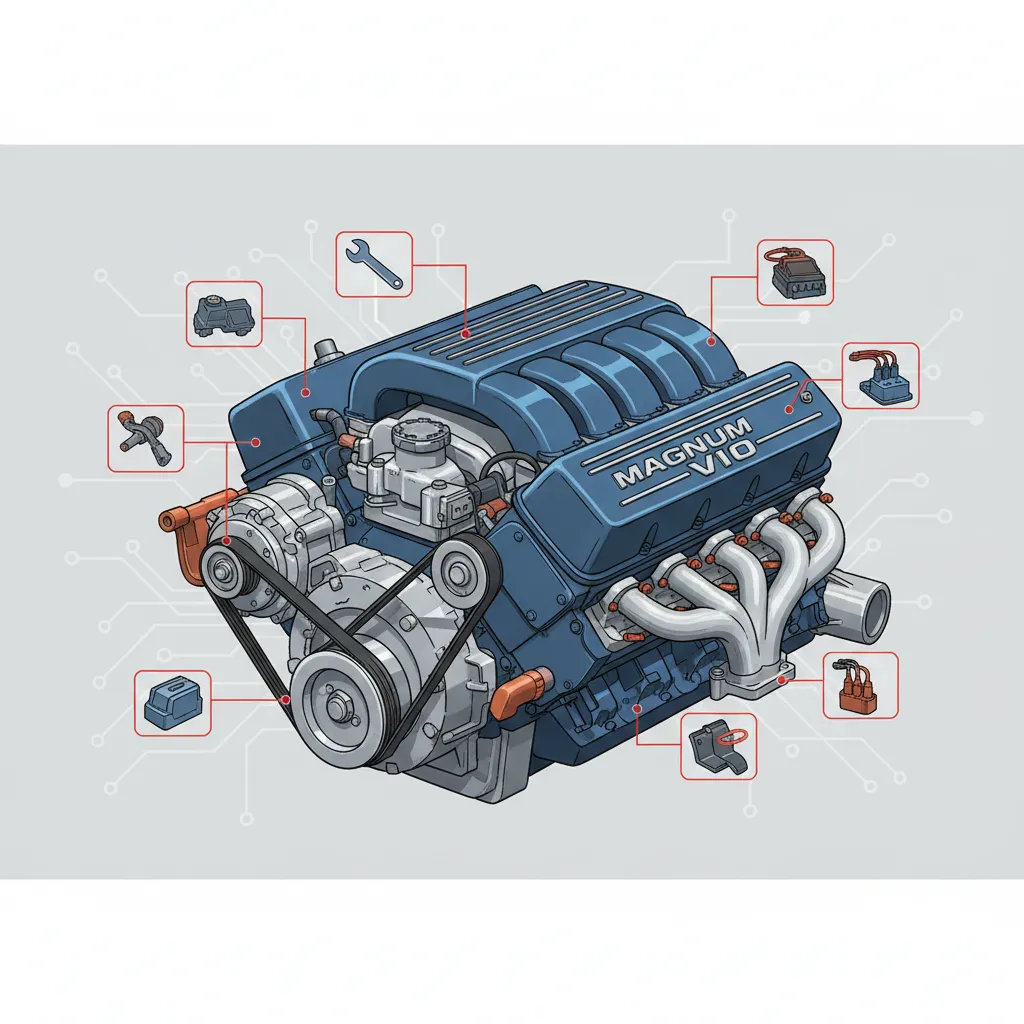
The most prevalent mechanical failure in the 8.0L engine involves the exhaust system. Because the V10 cylinder head is significantly longer than a standard V8, the cast-iron manifolds are subjected to extreme thermal expansion cycles. As the engine heats and cools, the manifold grows and shrinks, eventually exerting enough force to snap the mounting studs or warp the manifold flange itself. Research indicates that the 8.0L V10 generates significant heat compared to the 5.9L V8, increasing the rate of manifold bolt fatigue by an estimated 40% over the engine’s lifespan.
The primary symptom of this cause is a distinct “ticking” or “clacking” sound during a cold start. This sound often diminishes as the engine reaches operating temperature and the metal expands to temporarily seal the gap. However, ignoring this issue leads to eroded cylinder head surfaces and decreased backpressure, which can trigger lean codes in the fuel system.

📋
Manifold Repair Checklist
Locate snapped bolts (usually at the rear cylinders). If the bolt is flush, use a left-hand drill bit or weld a nut to the remaining stud to extract it without damaging the head threads.
Use a machinist’s straightedge to check for manifold flatness. If the manifold is warped more than 0.005 inches, it must be surfaced at a machine shop or replaced.
When reassembling, replace the factory Grade 5 bolts with Grade 8 steel bolts or, better yet, a high-quality stainless steel stud kit. Studs allow the manifold to expand and contract with less shear stress on the threads within the cylinder head.
Troubleshoot PCM Failures and Electrical Performance Issues
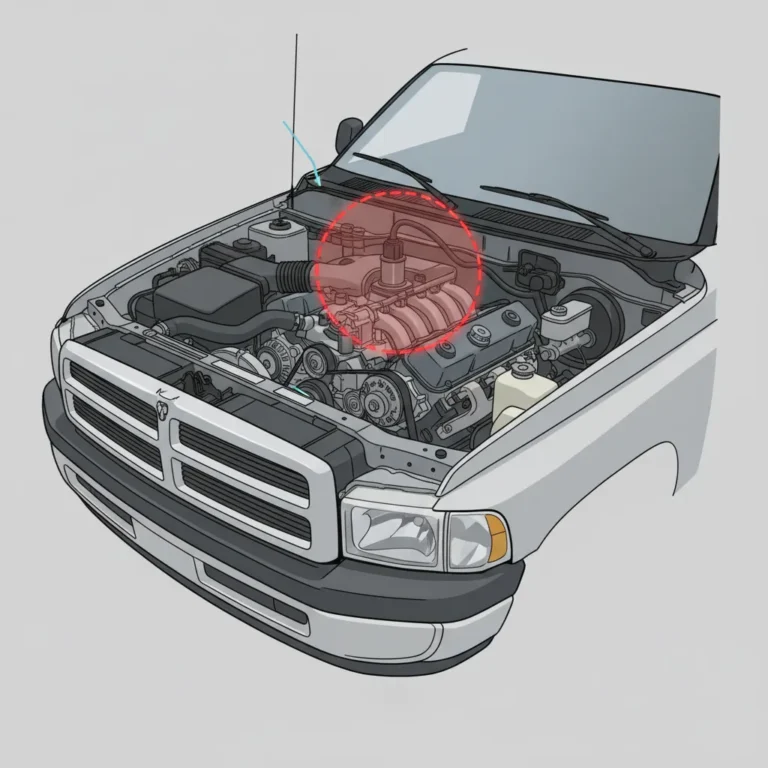
As these trucks age, the Powertrain Control Module (PCM) has become a frequent point of failure. The V10’s engine bay reaches incredibly high temperatures, and the PCM’s location on the passenger-side firewall makes it susceptible to “heat soak.” This environmental stress causes the internal solder joints to crack over time, leading to ghost stalling, intermittent no-start conditions, and erratic sensor readings. According to official guide data, electronic stability is paramount for the OBD-II era (1996-2003) trucks to maintain proper air-fuel ratios.


To diagnose a failing PCM versus a simple sensor failure, you must first rule out the wiring harness. Corrosion in the primary ground circuits or the 50-pin connector can mimic a dead computer. RepairPal identifies electrical system diagnostics as a primary contributor to the $526-$630 average annual repair cost for heavy-duty Rams, largely because technicians often spend hours chasing “phantom” codes before finding a faulty ground.
Never jump-start a V10 Ram with the ignition in the ‘On’ position. Voltage spikes are a leading cause of immediate PCM failure in the 8.0L platform.
Common Sensor Failures
- Crankshaft Position Sensor (CKP): If this fails, the truck will crank but never fire. Heat often causes the internal magnet to fail when the engine is hot.
- Camshaft Position Sensor: Located inside the distributor on early models, a failure here causes severe hesitation and backfiring.
- Oxygen Sensors: Because the V10 runs rich by design, O2 sensors often “lazy out” or foul, dropping your already low fuel economy even further.
Resolve Persistent Oil Leaks from Valve Covers and Rear Main Seals
The 8.0L V10 holds approximately 7 quarts of oil; even a ‘minor’ leak can lead to critical low-pressure situations during heavy towing. The two most common culprits are the valve cover gaskets and the rear main seal. Over time, the factory cork or rubber gaskets become brittle due to the extreme heat generated in the tight engine bay of the Ram 2500 and 3500. For community-sourced workaround methods, many owners visit expert tips sections to find better-sealing aftermarket options.
When oil is found at the back of the engine block, it is essential to debug the source. A leaking valve cover can drip down the back of the head, making it look like a rear main seal failure. I recommend using a UV dye kit to pinpoint the leak. If the rear main seal is indeed the cause, be prepared for a significant job; the transmission (typically the 47RE automatic or NV4500 manual) must be removed to access the seal housing.
Gasket Material Choice
Silicone gaskets are superior for the V10. They maintain elasticity far longer than cork under 200°F+ temperatures.
PCV Maintenance
A clogged Positive Crankcase Ventilation (PCV) valve increases internal pressure, forcing oil past perfectly good seals.
Identify and Fix Ignition System Deficiencies
Efficient combustion is a challenge for an engine with ten cylinders and a massive 488-cubic-inch displacement. The ignition system on the 8.0L Magnum is sensitive to wire routing. If the heavy-duty spark plug wires are not routed exactly according to factory specifications, induction interference (cross-firing) can occur between adjacent cylinders. This results in the infamous “V10 stumble”—a rough idle or hesitation under load.


For pre-1998 models equipped with a distributor, carbon tracking on the cap and rotor is a frequent troubleshoot item. Moisture and heat combine to create conductive paths for the spark, leading to misfires. Misfires in a V10 can quickly lead to unburned fuel dumping into the exhaust, causing the catalytic converter to exceed 1,200 degrees Fahrenheit, which creates a fire hazard and destroys the expensive emissions component.
Preventative Maintenance and Cooling System Optimization
Maintaining the cooling system is non-negotiable for 8.0L owners. Anecdotal data from fuelly.com confirms the 8.0L V10 averages 10.5 MPG, making cooling efficiency critical for managing the heat generated by such high fuel consumption. If you use your truck for mountainous towing, transitioning to a high-flow aluminum radiator is a recommended repair to prevent overheating.
Sourcing parts is becoming a hurdle. While basic components are available through official parts channels, specific V10 items like the fan shroud or certain intake sensors are becoming scarce. For long-term reliability, perform a full cooling system flush every 24 months to prevent scale buildup in the radiator and heater core, which are notorious for clogging on the Magnum engines.
By The Numbers
Combined MPG Range
Avg Max Annual Repair
Increased Stud Stress
Reliability Summary
✅ Pros
- Incredible towing torque
- Simpler to maintain than diesel
- Cast-iron block durability
- Instant throttle response
❌ Cons
- Abysmal fuel economy
- Obsolete electronic parts
- Frequent exhaust leaks
- Massive engine bay heat
In summary, the Dodge Ram 8.0L V10 is a legendary powerplant that requires a proactive owner. Addressing exhaust manifold warping early prevents costly cylinder head repairs, while systematic electrical testing is required to resolve PCM and sensor-related stalling. Adhering to a strict cooling and lubrication maintenance schedule is vital for the 8.0L’s longevity, ensuring this heavy-duty rig continues to perform for years to come. Before beginning any major repairs, perform a full OBD-II scan and pressure test your cooling system to accurately prioritize your maintenance tasks.
Frequently Asked Questions
What is the typical lifespan of a Dodge Ram V10 engine?
With meticulous maintenance, the 8.0L Magnum V10 can easily exceed 200,000 to 250,000 miles. Its low-revving nature reduces internal wear. However, longevity is heavily dependent on addressing cooling system issues and oil leaks promptly, as overheating is the primary cause of catastrophic failure in these large-displacement iron blocks.
What are the best performance upgrades for the 8.0L V10?
The most effective upgrades focus on breathing and heat management. Installing high-flow headers resolves the common manifold cracking issue while increasing torque. Upgrading to a cold air intake and a larger throttle body can improve throttle response. Many owners also find that a custom PCM tune optimizes the fuel map for better towing performance.


How can I improve the fuel economy of my V10 Ram?
Realistically, the V10 is designed for power rather than efficiency, typically averaging 9-12 MPG. To maximize what you have, ensure your oxygen sensors are functioning correctly, maintain proper tire pressure, and use a high-quality synthetic oil to reduce internal friction. Cleaning the fuel injectors and replacing aged spark plugs can also prevent efficiency drops.
Where can I find reliable replacement parts for my V10 engine?
While Mopar has discontinued some specific 8.0L components, retailers like RockAuto, Summit Racing, and JEGS carry extensive aftermarket support. For specialized items like the PCM or specific wiring harnesses, many owners turn to specialized rebuilders or reputable salvage yards that focus on heavy-duty 2nd Gen Ram trucks (1994-2002).
What type of oil should I use in my V10 Ram?
The factory recommendation for the 8.0L Magnum is generally 10W-30. However, for high-mileage engines or trucks used for heavy towing in hot climates, a high-quality 5W-40 or 10W-40 synthetic oil can provide better shear protection and improved lubrication for the overhead valve train and rear main seal.
![2013 Ram 1500 Headlight Bulb Replacement: Complete Specs Guide [2026]](https://truckguider.com/wp-content/uploads/2026/03/2013-ram-1500-headlight-bulb-replacement-featured.webp)
![2018 Ram 1500 Transmission: Specs & Fitment Guide [2026]](https://truckguider.com/wp-content/uploads/2026/03/2018-ram-1500-transmission-featured.webp)