Front Suspension Dodge Ram 2500 Front End Diagram And Component Analysis

For owners of the Dodge Ram 2500, the front suspension is the backbone of the vehicle’s legendary work ethic, supporting thousands of pounds of engine weight and extreme towing stress. Whether you are navigating a job site or hauling a heavy trailer across the state, the integrity of your front end is paramount. However, understanding the complex network of radius arms, track bars, and steering linkages is difficult without a clear, professional-grade diagram and technical breakdown. This guide provides a detailed front end diagram and identifies every critical component to help you maintain, troubleshoot, and upgrade your Ram 2500 suspension for maximum reliability.


Engineering Overview of the Ram 2500 Solid Front Axle System
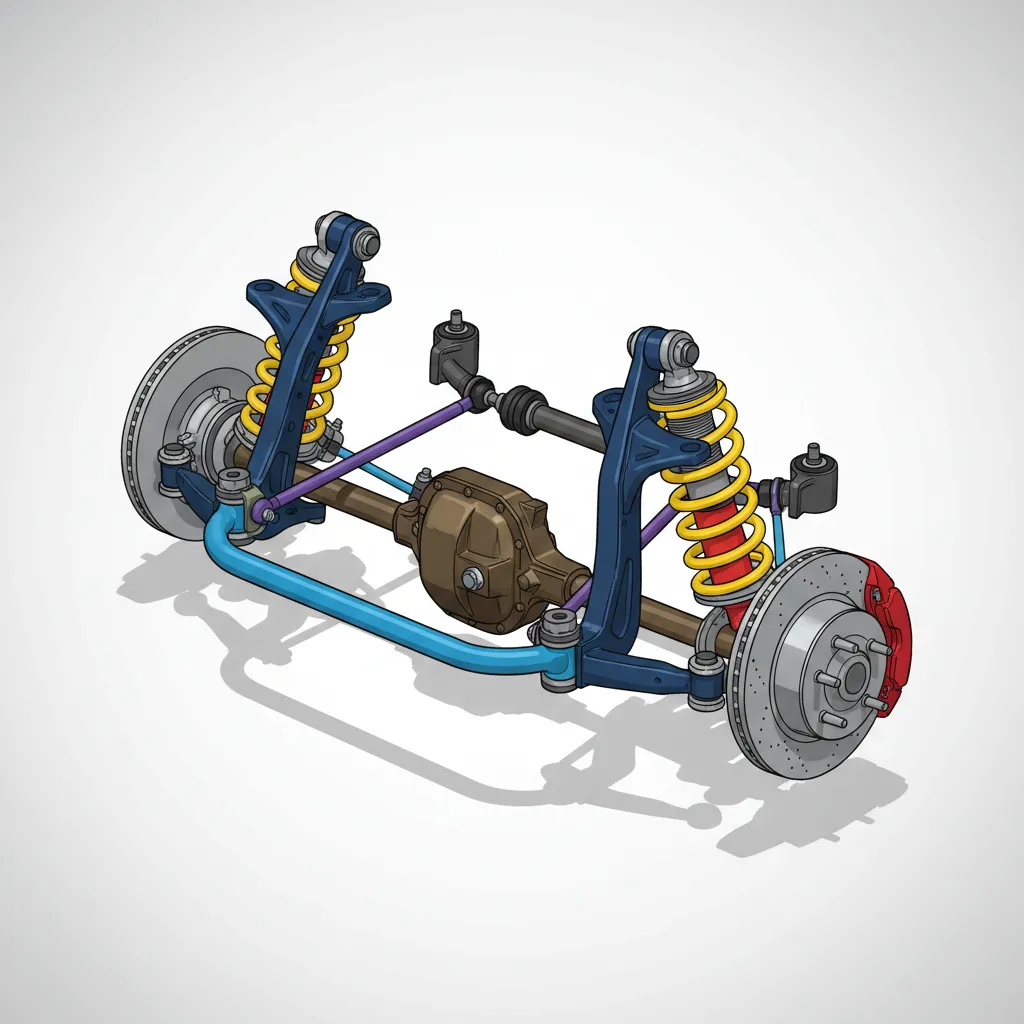
The Dodge Ram 2500 is distinguished by its use of a Solid Front Axle (SFA) suspension system. Unlike the Independent Front Suspension (IFS) found on the lighter Ram 1500, the SFA is engineered for pure durability and high-capacity performance. By connecting both front wheels via a rigid axle beam, the system ensures that ground clearance remains constant under the differential, even when the suspension is compressed. This architecture is essential for vehicles that routinely face heavy-duty workloads.
In late-model Ram 2500s, Chrysler transitioned to a radius arm setup, departing from the four-link systems used in earlier generations. This design simplifies the suspension geometry while providing excellent longitudinal control and axle wrap resistance. This technical foundation is what allows the Ram 2500 to achieve a massive towing capacity, which can range from 12,000 lbs to over 20,000 lbs depending on the specific engine and drivetrain configuration. According to the official guide for Ram specifications, these figures are made possible by the axle’s ability to distribute load directly through the frame via high-strength coil springs.
One challenge of the SFA design is managing unsprung weight. Because the entire axle assembly moves with the wheels, high-quality dampening is required to maintain ride quality. However, the trade-off is superior articulation and a much higher threshold for component fatigue compared to IFS systems, which often struggle with CV boot failures and control arm stress when pushed to their limits on job sites or off-road environments.
Detailed Front Suspension Dodge Ram 2500 Front End Diagram Key
Navigating a complete suspension rebuild or a simple inspection requires a professional understanding of the component layout. Below is a breakdown of the primary elements found in a typical Ram 2500 front-end assembly.
Dampening & Support
Includes heavy-duty coil springs and gas-charged shock absorbers that manage vertical travel and vibration.
Locating Links
The track bar (Panhard rod) prevents side-to-side shifting, while radius arms control forward and backward axle movement.
When looking at a technical diagram, you will observe the following critical connections:
- Track Bar: Connects the frame on the driver’s side to the axle on the passenger side. This is the primary lateral locator.
- Steering Linkage: Comprised of the drag link, which connects the pitman arm to the steering knuckle, and the tie rod assembly, which syncs the two wheels.
- Ball Joints: These are the pivot points located at the ends of the axle housing that allow the steering knuckles to rotate.
- Differential Housing: The center section of the axle that contains the gears and transmits power to the front axle shafts.
- Steering Stabilizer: A horizontal shock absorber that minimizes feedback from road ruts and prevents unwanted oscillations.
Functional Analysis of Steering Linkage and Lateral Stability
The reliable operation of a Ram 2500 depends heavily on its steering geometry. Historically, Ram trucks utilized a ‘Y-style’ steering linkage, but starting around the 2008.5 model year, a ‘T-style’ or Haltenberger configuration became the standard upgrade for improved durability. In this setup, the drag link connects directly from the pitman arm to the passenger side knuckle, with a tie rod branching off to the driver’s side. This reduces toe-change during suspension cycling, which is a common cause of uneven tire wear.
Front-end instability, often called ‘death wobble’, is frequently traced back to the track bar. Research indicates that even a few millimeters of play in the track bar bushings or a loose mounting bolt—often requiring torque of 150 lb-ft or more—can trigger violent steering oscillations.


Lateral stability is almost entirely dependent on the track bar. Because a solid axle is not inherently centered under the frame, the track bar acts as the anchor. If the bushings at either end of this bar become soft or cracked, the axle will shift left and right during steering maneuvers, leading to a “disconnected” feeling in the steering wheel. Professional mechanics always check the track bar mounting points first when a driver complains of wandering at highway speeds.
Critical Wear Points: Ball Joints and Control Arm Bushings
In the world of heavy-duty trucks, few components endure more punishment than ball joints. These joints bear the entire weight of the front end while simultaneously allowing for steering rotation. On a Cummins-diesel equipped Ram 2500, the massive engine weight puts extraordinary stress on the lower ball joints, often accelerating wear beyond that of gas-powered models.
By The Numbers
Avg. Ball Joint Lifespan (Miles)
Towing Capacity (Lbs)
Track Bar Torque (Lb-Ft)
According to industry data from RepairPal, the average lifespan of ball joints on a Ram 2500 can range from 50,000 to 100,000 miles. To diagnose wear, experts recommend using a dial indicator to measure axial (up and down) and radial (side to side) play. While factory rubber bushings in the radius arms provide a quiet ride, they often succumb to dry rot or tearing over time. Upgrading to polyurethane or spherical joints can significantly increase the longevity of these components, though it may introduce slightly more road noise into the cabin.
Professional Maintenance and Troubleshooting Procedures
A proactive approach to maintenance is the only way to ensure the long-term safety of your Ram’s front end. This begins with identifying which components are greaseable. Many aftermarket parts come with Zerk fittings, while OEM parts are often “sealed for life.” For greaseable units, lubrication should be part of every oil change interval.
📋
Suspension Diagnostic Guide
Check for leaking shocks, torn grease boots on tie rods, and cracked radius arm bushings. Refer to Mopar for factory-correct replacement parts.
Using a calibrated torque wrench, verify all major fasteners, especially track bar bolts and lug nuts. Loose bolts are the #1 cause of clunking.


Grease the front driveshaft double-cardan joint (if equipped) and all steering linkage Zerks. This prevents seizing and premature failure.
Troubleshooting noises can also pinpoint failures: a clunking sound during turns often suggests a worn track bar or loose ball joints, whereas a consistent whistling or humming from the front usually indicates a failing wheel hub bearing. Furthermore, proper alignment is critical; for a solid axle truck, ensuring correct caster is the secret to getting that snappy “return-to-center” feel in the steering wheel.
Aftermarket Upgrades and High-Performance Modifications
For owners who have added leveling kits or use their trucks for extreme off-roading, the factory suspension components may reach their limits quickly. Upgrading to adjustable track bars is a highly recommended first step for any lifted truck. Because the track bar moves in an arc, lifting the truck pulls the axle to the driver’s side; an adjustable bar allows you to re-center the axle perfectly.
Additionally, many enthusiasts on the ramforum suggest that replacing factory radius arms with high-clearance versions can provide better wheel travel and allow for larger tire fitment without rubbing. Upgrading to dual-rate coil springs can also transform the ride quality of a Ram 2500, offering a softer initial stroke for highway comfort while maintaining the stiffness required for maximum load-carrying capacity. High-performance shocks with larger diameters (up to 2.5 inches) provide 50% more dampening volume, significantly reducing heat fade during heavy hauling.
Never perform suspension work without properly supporting the vehicle on heavy-duty jack stands rated for the Ram 2500’s curb weight. Solid axle components are extremely heavy and can cause severe injury if they shift during disassembly.
In summary, the front suspension of the Ram 2500 is a sophisticated yet rugged system designed for longevity. By understanding the relationship between the radius arms, track bar, and steering linkage, you can ensure your truck remains a reliable and trusted partner for years to come. Whether you are sticking with OEM parts or looking for expert tips on upgrades, regular inspection remains your best defense against premature wear and mechanical failure.
The Ram 2500 relies on a robust solid front axle design engineered for high-capacity towing and durability. Regular inspection of key wear items like ball joints and track bar bushings is essential for preventing steering instability. Utilizing a detailed diagram simplifies the identification of components and streamlines the repair process. Consult your service manual for specific torque specifications and ensure all replacement parts meet or exceed OEM quality standards before beginning your next suspension project.
Frequently Asked Questions
What are the common signs of a failing track bar on a Ram 2500?
The most prevalent signs of a failing track bar include ‘death wobble’ (violent shaking of the steering wheel after hitting a bump), loose steering feel, or a rhythmic clunking sound when turning the wheel at low speeds. Because the track bar locates the axle laterally, any play in the bushings or mounting holes allows the axle to shift side-to-side, compromising safety and handling.


How do I diagnose worn ball joints on my Ram 2500?
To diagnose ball joint wear, lift the front of the truck and support it by the axle. Use a long pry bar under the tire to check for vertical (axial) movement and grasp the tire at the 12 and 6 o’clock positions to check for lateral (radial) play. Any movement exceeding manufacturer specifications—typically measured with a dial indicator—indicates that the joints require professional replacement.
Why does my Ram 2500 have a solid front axle instead of independent suspension?
Ram utilizes a solid front axle (SFA) in the 2500 series because it offers superior durability, higher load-bearing capacity, and better articulation for off-road use compared to independent systems. The SFA design maintains consistent ground clearance for the differential and is better suited for the high torque and weight of the 6.7L Cummins Turbo Diesel engine.
How often should front suspension components be inspected?
A professional inspection should be performed every 10,000 to 15,000 miles, or during every other oil change. For trucks frequently used for heavy towing, snow plowing, or off-road driving, inspections should occur every 5,000 miles. Focus on checking grease boots for tears, bushings for dry-rotting, and ensuring all steering linkage connections remain tight.
Can I replace just the bushings on my radius arms or should I replace the whole arm?
While it is possible to press out old bushings and install new ones, it often requires a heavy-duty hydraulic press and significant labor. If the radius arm itself is corroded or bent, or if you are looking for a performance upgrade, replacing the entire arm with a boxed or tubular aftermarket unit is often more efficient and provides improved geometry for leveled or lifted trucks.
![2021 Ram 1500 Classic Warlock: Full Specs & Data [2026]](https://truckguider.com/wp-content/uploads/2026/03/2021-ram-1500-classic-warlock-featured.webp)