2019 Ram 1500 Exhaust Manifold Failure Symptoms, Root Causes [2026]

For many 2019 Ram 1500 owners, the morning commute begins not with the smooth, rhythmic purr of a healthy Hemi engine, but with an annoying, metallic ticking sound that signals a failing exhaust manifold. Despite the 2019 model’s modern engineering and “DT” generation refinements, the 5.7L Hemi remains notoriously susceptible to warped manifolds and sheared mounting bolts. This failure leads to annoying exhaust leaks, decreased fuel efficiency, and potential long-term damage to the engine bay components if left unaddressed. This comprehensive guide provides an expert analysis of the symptoms, the mechanical reasons behind the failure, and a professional roadmap for choosing between standard OEM replacements or permanent performance upgrades.
Identifying Common 2019 Ram 1500 Exhaust Manifold Symptoms and Ticking Noises
Distinguishing between a benign engine noise and a critical exhaust leak requires a keen ear and a professional diagnostic approach. The most hallmark symptom of a 2019 Ram 1500 exhaust manifold failure is the “cold start tick.” This is a rapid, rhythmic tapping sound that is most audible immediately after turning the key in the morning. Interestingly, as the engine reaches operating temperature—usually within 3 to 5 minutes—the noise often fades or disappears entirely. This occurs because the cast iron manifold expands as it heats, momentarily closing the gap created by a warped flange or a broken bolt.
Owners should not confuse this with the infamous “Hemi Tick,” which is typically related to hydraulic lifter failure or valvetrain oiling issues. While a lifter tick remains constant or worsens under load regardless of engine temperature, an exhaust leak is strictly tied to thermal expansion. If you suspect a leak, perform a trusted visual inspection for “soot tracking.” Look for fine, black carbon deposits around the exhaust ports on the cylinder head, particularly near the firewall. These deposits are clear evidence of high-pressure exhaust gases escaping past the gasket.
By The Numbers
Failures occur at cylinders 7 & 8
Average time for “heat seal” to occur
Another red flag is the presence of raw exhaust fumes inside the cabin while idling at a stoplight. When the seal is breached, the HVAC intake draws in these gases, posing a safety risk and indicating a significant leak. Furthermore, modern engine management systems will notice the discrepancy. A leak upstream of the oxygen sensors introduces “false air” into the exhaust stream, causing the ECM to see a lean condition. This often results in the computer dumping extra fuel into the cylinders, negatively impacting fuel trim data and eventually triggering a Check Engine Light (CEL) for “System Too Lean” (P0171/P0174).
Technical Causes of 2019 Ram 1500 Exhaust Manifold Warp and Bolt Failure
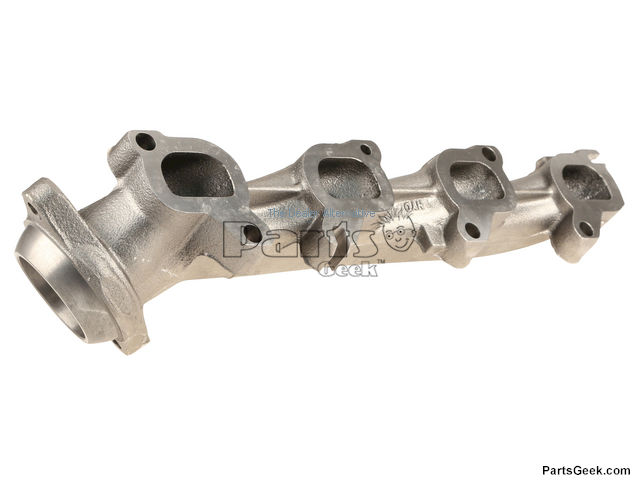
The root of the problem lies in a fundamental conflict of metallurgy and thermal dynamics. The 2019 Ram 1500 uses a heavy cast iron manifold bolted to an aluminum cylinder head. These two metals have vastly different coefficients of thermal expansion. As the engine cycles from ambient winter temperatures to over 1,200 degrees Fahrenheit under heavy towing loads, the iron manifold and aluminum head expand and contract at different rates and magnitudes.
Over time, this repeated cycling causes the cast iron to “grow” permanently—a phenomenon known as thermal creep. As the manifold expands laterally, it puts immense shear stress on the mounting bolts. The factory Grade 8 steel mounting bolts, while possessing a proof load of approximately 120,000 psi, are simply not ductile enough to withstand this repeated pulling. Eventually, the bolts (usually the ones at the very back near cylinders 7 and 8) reach their breaking point and snap off, often flush with or inside the cylinder head.
The Multi-Displacement System (MDS) on the 5.7L Hemi exacerbates manifold warping. During 4-cylinder operation, specific cylinders cool down while others stay hot, creating uneven heat distribution across the length of the manifold, which accelerates the “cupping” or bowing effect.
This structural physics leads to “cupping,” where the center of the manifold bows outward and the ends curl inward toward the engine. Beyond internal heat, environmental factors play a complete role in the failure rate. Rapid cooling—such as driving through a deep puddle or snowbank after a long highway haul—shocks the hot metal, causing immediate contraction that can snap already-stressed bolts instantly. This is why the 2019 Ram 1500, despite its comprehensive engineering, remains a frequent visitor to repair shops for this specific issue.
Evaluating Professional Repair Costs and Replacement Component Quality
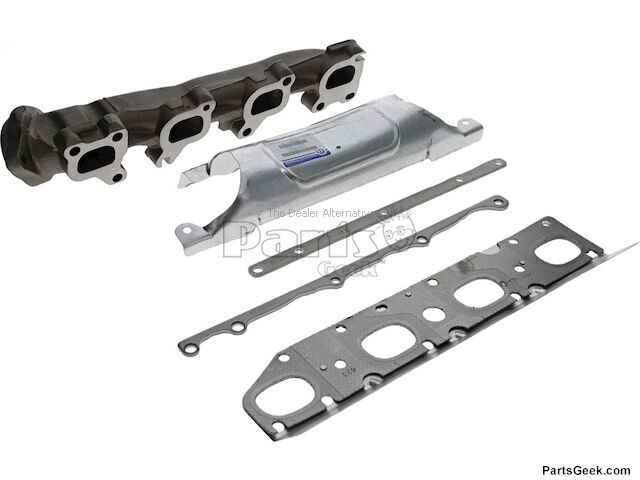
When faced with a warped manifold, owners must choose between a temporary fix and a reliable, long-term solution. A professional repair at a dealership typically involves replacing the warped manifold with a new OEM Mopar unit and new factory bolts. While this restores the vehicle to factory specifications, it utilizes the same components that failed in the first place. Labor rates for this job are significant, as a 2019 Ram 1500 requires between 4 to 6 hours of labor per side, depending on the number of broken studs that need extraction.
A common “pro secret” for those on a budget is to have the original manifold resurfaced at a machine shop. Since the manifold has already undergone its initial “growth” and heat-cycling, machining the mounting surface flat again often results in a more stable part than a brand-new factory casting. However, regardless of whether you choose new or resurfaced iron, the choice of gasket is paramount. Professional technicians avoid single-layer graphite gaskets in favor of Multi-Layer Steel (MLS) designs. These MLS gaskets offer superior recovery rates, meaning they can “spring” back and maintain a seal even as the manifold moves slightly during heat cycles.
Be wary of hidden costs. The standard quote often assumes the bolts come out cleanly. If a technician encounters three studs broken deep inside the head, the labor time can easily double. Using trusted brands like BD Diesel or Dorman for replacement manifolds can sometimes offer better-than-OEM reinforced castings that resist warping more effectively than the stock 2019 components.
Advanced Extraction Techniques for Broken Exhaust Manifold Studs
The most difficult part of the 2019 Ram 1500 manifold repair is dealing with the inevitable broken bolts. Statistically, at least two bolts will break during removal on any vehicle with over 50,000 miles. A professional approach requires patience and the right specialized tools to avoid damaging the expensive aluminum cylinder heads.
📋
Step-by-Step Extraction Guide
Apply a high-grade catalyst like Kroil or PB Blaster 24 hours before the job. Re-apply every few hours to allow the lubricant to wick into the threads.
For studs flush with the head, place a nut over the hole and weld through the center onto the stud. The extreme heat shocks the rust bond, and the nut provides a hex-head for removal.
If welding fails, use a professional drilling template (like those from Lisle) and cobalt drill bits to stay perfectly centered. Extract with a high-quality spiral flute extractor.
Advanced shops now favor induction heaters over traditional oxy-acetylene torches. An induction heater uses electromagnetic fields to heat the steel bolt specifically, leaving the surrounding aluminum cylinder head relatively cool. This prevents warping the head or damaging the valve seals. Once the stud is out, it is expert practice to chase the threads with a tap to ensure the new bolts reach their proper torque specifications without cross-threading or seizing. Skipping this step often leads to inaccurate torque readings and premature failure of the new gasket seal.
Choosing Reliable Aftermarket Upgrades and Performance Headers
If you want a complete and permanent solution that ensures you never have to deal with this issue again, upgrading to 304 stainless steel “shorty” headers is the gold standard. Unlike cast iron, stainless steel is significantly more flexible and handles thermal expansion without cracking or warping to the same degree. Furthermore, headers feature thicker flanges (usually 3/8″) that provide a much more stable clamping surface for the gasket.
Thermal Dissipation
Stainless steel headers radiate heat faster than thick cast iron, reducing the heat soak on the cylinder head and nearby electronics.
Performance Gains
Upgrading to shorty headers provides a documented 10-15 horsepower increase and improved throttle response on the 5.7L Hemi.
When installing headers, the single most important professional recommendation is to use ARP stainless steel manifold bolts. ARP fasteners are far superior to Grade 8 factory hardware; they offer higher tensile strength and are designed to handle the lateral movement of the manifold without shearing. Trusted brands like BBK, JBA, and American Racing Headers offer kits specifically tuned for the 2019 Ram 1500 5.7L engine. These kits often include the necessary heat shielding to protect brake lines and spark plug wires from the increased radiant heat of the thinner header tubes.
If you opt for headers, highly consider a ceramic-coated version. Uncoated headers can drastically increase under-hood temperatures, which may prematurely age the plastic connectors and rubber hoses common in the 2019 Ram 1500 engine bay.
In summary, while the initial cost of a performance header setup is higher, it eliminates the “ticking” cycle forever. For owners who plan on keeping their truck for the long haul or who use their Ram for heavy towing, this comprehensive upgrade is the only way to move past the engineering flaws inherent in the factory manifold design. Early identification of the “cold start tick” can prevent further damage to the cylinder head threads, and investing in quality aftermarket components offers a reliable, permanent fix that pays for itself in avoided future repair bills.
If you suspect an exhaust leak on your 2019 Ram 1500, perform a soap bubble test on a cold start or consult a trusted technician immediately. Addressing the issue early prevents excessive manifold warping, which can eventually lead to exhaust gases “burning” the cylinder head surface, requiring a much more expensive engine teardown.
Frequently Asked Questions
Is the 2019 Ram 1500 exhaust manifold covered under warranty?
Typically, the exhaust manifold is covered under the 5-year/60,000-mile powertrain warranty. However, some components might fall under the 3-year/36,000-mile basic warranty depending on the specific cause of failure. It is recommended to have a professional dealership run your VIN to verify current coverage before paying for out-of-pocket repairs.
Can I drive my Ram 1500 with a leaking exhaust manifold?
While the vehicle remains drivable, a leak allows hot exhaust gases to escape near sensitive components like spark plug wires and fuel lines. Over time, the leak will worsen, negatively impacting fuel economy and potentially causing the oxygen sensors to provide incorrect data to the ECU, leading to poor engine performance and increased emissions.
Why do the manifold bolts break so easily on the Hemi engine?
The bolts fail due to ‘thermal cycling stress.’ As the cast iron manifold gets hot, it expands more than the aluminum head. Since the manifold is heavy and rigid, it puts immense lateral shear pressure on the steel bolts. After thousands of cycles, the Grade 8 factory bolts become brittle and snap, usually at the rear cylinders.
Is it better to resurface the old manifold or buy a new one?
An expert recommendation is often to resurface the original manifold if it isn’t cracked. Once a manifold has warped and been heat-cycled for thousands of miles, the metal has ‘seasoned’ and stabilized. A new cast iron manifold is likely to warp again, whereas a machined, seasoned manifold paired with quality bolts is often more reliable.
What is the ‘Hemi Tick’ vs. a manifold leak?
A manifold leak usually disappears or quiets down once the engine warms up and the metal expands. In contrast, the ‘Hemi Tick’ caused by lifter or camshaft issues is a mechanical tap that typically persists regardless of engine temperature. A professional technician will use a stethoscope to pinpoint the sound’s origin to confirm the diagnosis.
![Maximum Steel Metallic Ram 1500 Paint Properties [2026]](https://truckguider.com/wp-content/uploads/2026/03/featured-e9ef93ea-768x768.webp)
![2015 RAM 1500 AC Recharge Port Location & Identification [2026]](https://truckguider.com/wp-content/uploads/2026/03/2015-ram-1500-ac-recharge-port-featured.webp)
![2008 Dodge Ram 1500 Towing Capacity: Complete Specs Guide [2026]](https://truckguider.com/wp-content/uploads/2026/03/featured-4b2248df-768x768.webp)
![P0520 Dodge Ram 1500: Diagnose & Fix [2026]](https://truckguider.com/wp-content/uploads/2026/03/p0520-dodge-ram-1500-featured.webp)