2019 Ram 1500 Tire Pressure Sensor Reset And Tpms Calibration Procedures

Operating a 2019 Ram 1500 with an illuminated TPMS light not only compromises your vehicle’s safety but can also lead to significant financial loss through decreased fuel economy and premature tire wear. Drivers often find that even after inflating their tires to the correct specification, the dashboard warning persists, leaving them frustrated and uncertain about the system’s integrity. Whether you have the ‘Classic’ model or the ‘New Body Style,’ understanding how to reboot the system is essential for maintaining peak performance. This guide provides an authoritative breakdown of every available method to perform a 2019 Ram 1500 tire pressure sensor reset, from onboard menu navigation to professional tool calibration, ensuring you can restore your system to factory settings with confidence.


Understanding the 2019 Ram 1500 Indirect TPMS Architecture
The 2019 Ram 1500 represents a pivotal shift in how truck owners manage their vehicle health, specifically through its adoption of an indirect Tire Pressure Monitoring System (TPMS). Unlike direct systems that use battery-powered sensors inside the wheel to measure air pressure, the indirect system is integrated into the vehicle’s Anti-lock Braking System (ABS). By utilizing the wheel speed sensors, the onboard computer calculates the rotational velocity of each wheel. When a tire loses pressure, its effective diameter decreases, causing it to spin at a different frequency compared to its counterparts. This deviation triggers the dreaded horseshoe-shaped warning icon on your dashboard.
A manual reset is frequently required to initialize a fresh start after routine maintenance. For instance, if you perform a tire rotation, the change in wheel positions can alter the speed frequency detected by the ABS module, often resulting in a false positive warning. To restore the default baseline parameters, the system must be told that the current pressures—measured physically by you—are the new ‘normal.’ This is a critical distinction between the 2019 ‘Classic’ models and the ‘New Body Style’ trucks, as the latter often features more granular data displays but still relies on these core ABS calculations.
Research indicates that the National Highway Traffic Safety Administration (NHTSA) has mandated TPMS on all light vehicles since 2007 to reduce accidents caused by under-inflation. In the 2019 Ram, the indirect system is highly reliable but requires the user to manually “confirm” pressure adjustments via the menu to prevent the ECU from chasing ghost errors.
Restoring TPMS Defaults via the Onboard Driver Information Display (DID)
For approximately 75% of owners, a simple recalibration through the steering wheel controls is sufficient to clear the system. The 2019 Ram 1500 comes equipped with either a 3.5-inch or a 7-inch cluster display. Regardless of the size, the software logic remains consistent. Before starting, you must consult the official guide or the tire placard on your driver-side doorjamb to ensure all tires are at the precise recommended PSI. Attempting a reset with uneven pressures will only result in the light returning within a few miles.

📋
Step-by-Step Cluster Reset
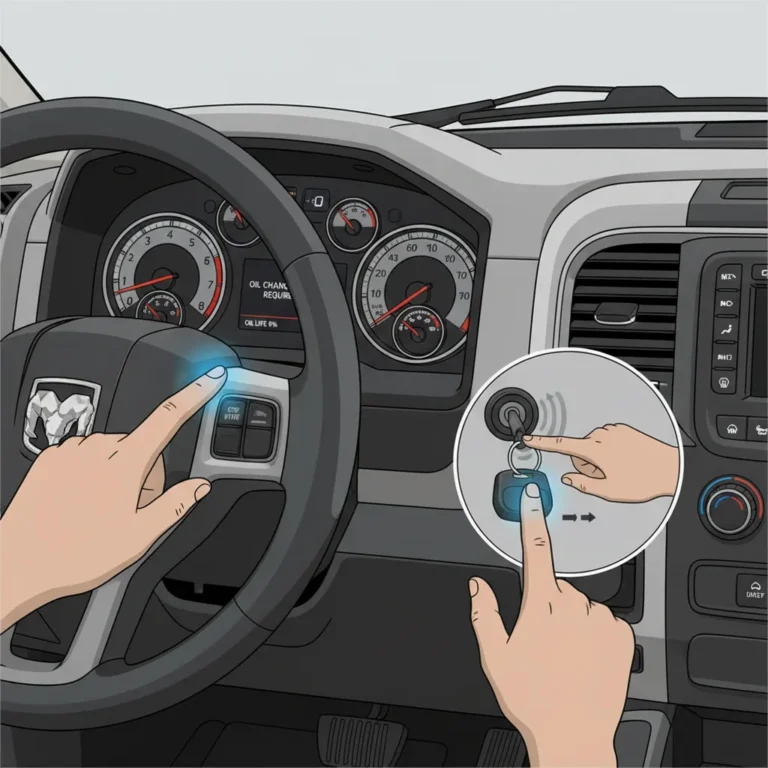
Turn the ignition to the ‘ON/RUN’ position without starting the engine (for push-button starts, press twice without touching the brake).
Use the steering wheel arrows to scroll to the ‘Vehicle Info’ menu, then use the right arrow to find the ‘Tire Pressure’ submenu.
Press and hold the ‘OK’ button on the steering wheel until the display confirms the reset has been initiated or the values clear.


It is important to note that trim levels like the Tradesman may have more limited menu options than the Limited or Laramie. If your specific cluster does not show a “Reset” prompt, the system relies entirely on the Driving Relearn procedure detailed in the next section. Always verify your Ram specs to ensure you are looking for the correct menu path for your specific infotainment version.
The Driving Relearn Procedure for a Clean TPMS Fresh Start
Because the 2019 Ram 1500 often calculates pressure based on motion, a stationary vehicle cannot always complete a full factory reboot. This is known as the ‘Driving Relearn’ protocol. The Central Body Controller (CBC) requires a specific sampling of data from the ABS sensors to identify ‘clean’ data points and override previous error codes. To initialize this, the truck must be driven under specific conditions to allow the ECU to log the diameter of all four tires across various speeds.
Speed Requirement
Maintain a consistent speed above 15 mph (24 km/h) to allow the ABS sensors to generate a steady frequency.
Time Duration
The relearn process typically requires 15 to 20 minutes of continuous driving to finalize the calibration.
Environmental factors play a role here; extreme cold or stop-and-go heavy traffic can interfere with the data logging. The ECU requires at least 10 minutes of continuous data logging to verify tire diameter consistency. A perfect scenario for a clean relearn involves a short highway commute where you can maintain 50-60 mph without frequent braking. Once the system satisfies its internal algorithm, the TPMS light will extinguish automatically, signifying a successful backup of the new pressure baselines.
Using Professional TPMS Reset Tools for Advanced Calibration
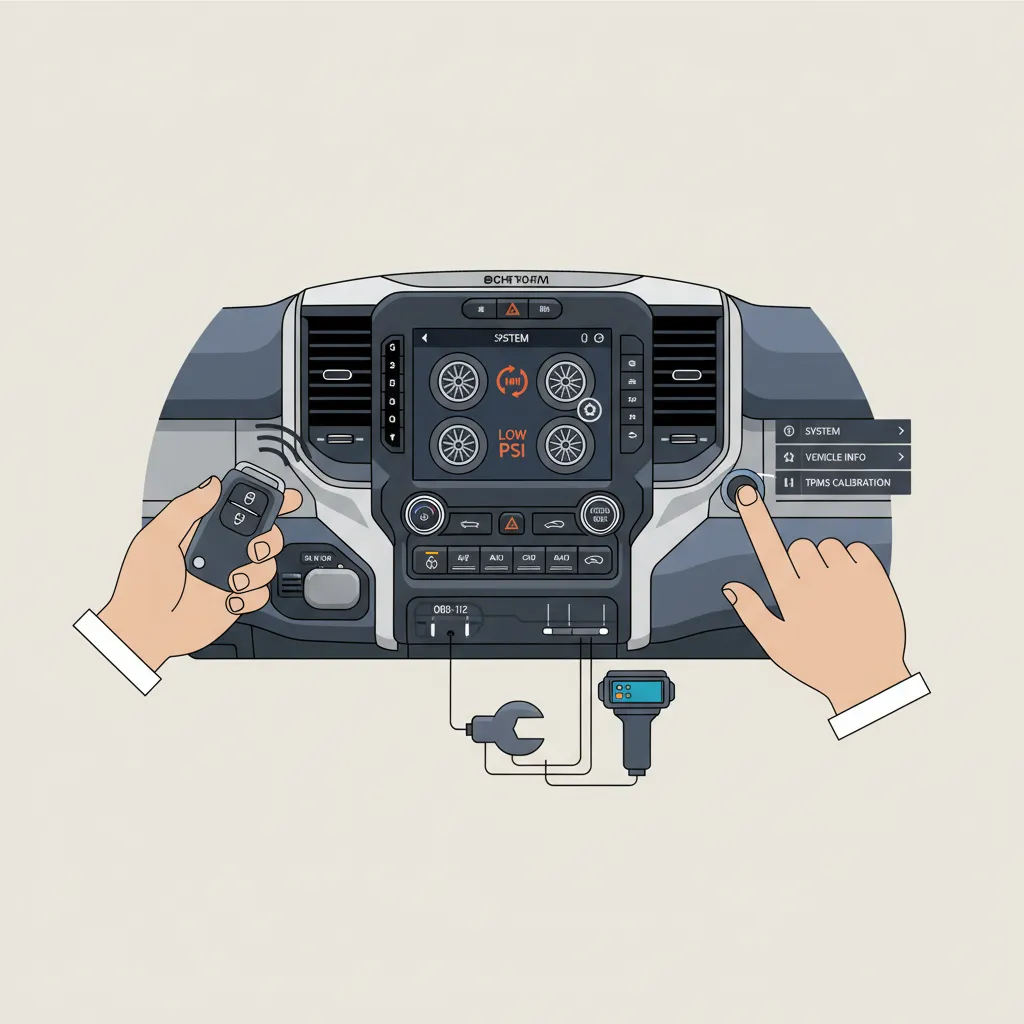
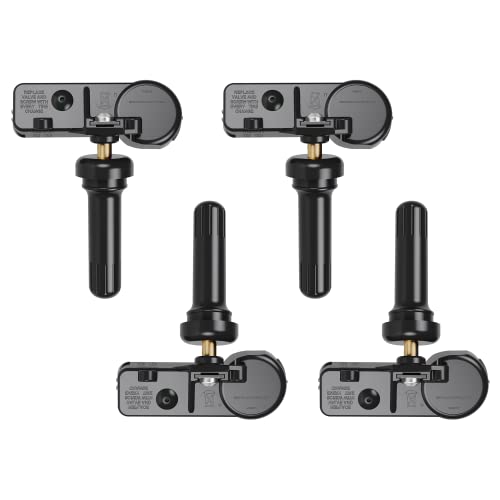
In instances where a simple drive doesn’t solve the issue, or if you have retrofitted your 2019 Ram 1500 with aftermarket wheels containing direct sensors, a professional TPMS reset tool becomes necessary. These tools interface with the OBDII port or trigger sensors via Radio Frequency (RF) to force a system rewrite. This is often the only way to clear “hard-set” Diagnostic Trouble Codes (DTCs) that prevent the dash light from turning off, even when pressures are perfect.
By The Numbers
Fuel Efficiency Boost
Potential Yearly Savings
The U.S. Department of Energy indicates that properly inflated tires can improve fuel efficiency by up to 3%, saving significant costs over the vehicle’s lifespan. Professional tools like the Autel MaxiTPMS or Schrader EZ-sensor can “wake up” sensors that have gone into a sleep mode to conserve battery. If you’ve replaced a sensor, the tool will register the new Sensor ID directly into the Central Body Controller (CBC), ensuring the truck recognizes the new hardware immediately. For those struggling with DIY methods, consulting expert tips on enthusiast forums can often reveal specific tool compatibility for the 2019 model year.


Troubleshooting Persistent TPMS Warnings and Sensor Faults
If you have performed the DID reset and the driving relearn but the light remains, you are likely dealing with a hardware failure rather than a software calibration issue. On the 2019 Ram, there is a distinct difference between a ‘Low Pressure’ warning (solid light) and a ‘TPMS Service Required’ message (flashing light for 60-90 seconds upon startup). A flashing light almost always indicates a system malfunction, such as a dead sensor battery or electronic interference.
✅ Common Fixes
- Adjusting pressure to ‘Cold’ PSI
- Removing high-power dashcams
- Completing a 20-min highway drive
- Cleaning ABS wheel speed sensors
❌ System Failures
- Dead sensor batteries (5-10 years)
- Damaged ABS tone rings
- RF interference from chargers
- Broken valve stem antennas
Sensor battery failure accounts for nearly 40% of TPMS malfunctions in vehicles older than five years. While the 2019 Ram is relatively young, early production models or those used in extreme climates may already be seeing battery depletion. Furthermore, since the indirect system relies on the ABS, a failing wheel speed sensor can mimic a tire pressure fault. If your cruise control or traction control is also acting up, the root cause is likely an ABS sensor, not the tires themselves. Always check for physical damage to the valve stem or sensor housing during tire mounting, as technicians can easily snap the internal antenna if not careful.
Safety and Performance Implications of Proper Tire Inflation
Maintaining the TPMS isn’t just about clearing a light on the dash; it is a fundamental safety requirement. There is a direct relationship between accurate TPMS readings and the functionality of the Electronic Stability Control (ESC). If the system cannot accurately track wheel speed due to uncalibrated sensors, the ESC may not intervene correctly during a skid. Furthermore, under-inflated tires are responsible for an estimated 600 fatalities and 33,000 injuries annually according to NHTSA research.
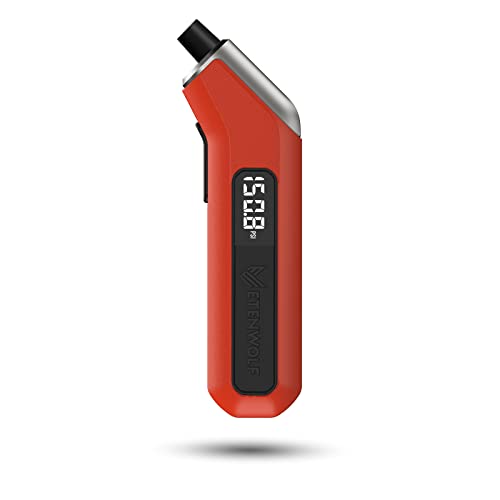
Never rely solely on the TPMS dashboard display. Always use a high-quality manual gauge to verify ‘cold’ tire pressure before performing a system reset. The difference between 25 PSI and the recommended 36 PSI can drastically increase hydroplaning risk and braking distances.
Properly inflated tires ensure that the tread footprint remains optimal, allowing for even wear and maximum grip. When you restore the factory pressure settings, you are also optimizing the truck’s load-carrying capacity and towing stability. By taking the time to initialize a correct reset, you protect your investment, ensure passenger safety, and keep your 2019 Ram 1500 running with the efficiency and poise it was designed to deliver.
In summary, the 2019 Ram 1500 utilizes an indirect TPMS that requires specific driving conditions or menu inputs to recalibrate. Successful resets depend on accurate manual pressure adjustment and understanding the difference between the ‘Driving Relearn’ and ‘Tool-based’ methods. Persistent lights often indicate underlying sensor battery failure or ABS module communication errors that require deeper diagnostic attention. Ensure your tires are set to the PSI listed on your driver-side door jamb and perform the cluster reset today to maximize your Ram’s safety and fuel efficiency.
Frequently Asked Questions
What is the correct tire pressure for my 2019 Ram 1500?
For most 2019 Ram 1500 configurations, the recommended cold tire pressure is between 33 and 36 PSI. However, this can vary based on your specific trim and load rating. Always refer to the Tire and Loading Information placard located on the driver-side B-pillar (door jamb) for the authoritative factory specification for your specific VIN.


How do I know if my TPMS sensor is bad?
A bad sensor is typically indicated by a flashing TPMS light for 60 to 90 seconds upon startup, which then remains solid. If the light simply stays solid from the moment you turn the key, the system likely just detects low pressure. A professional diagnostic tool can confirm a ‘dead’ sensor by checking for a signal response and battery status.
Can I reset the TPMS without a tool?
Yes, the 2019 Ram 1500 is designed to allow for a tool-free reset. This can be accomplished either through the ‘Vehicle Info’ menu on the instrument cluster or by performing a ‘Driving Relearn,’ which involves driving the vehicle at steady speeds above 15 mph for approximately 20 minutes after adjusting your tire pressures to the correct levels.
How long does it take for the TPMS light to turn off after a reset?
After performing a reset or inflating the tires, the TPMS light should extinguish within 10 to 20 miles of continuous driving. The vehicle’s computer needs this time to sample data from the wheel speed sensors or receive updated RF signals from the sensors to verify that the pressure has stabilized at the new baseline.
What are the symptoms of low tire pressure?
Beyond the TPMS warning light, symptoms include a noticeable decrease in fuel economy, ‘mushy’ or unresponsive steering, increased road noise, and uneven tread wear. In severe cases, you may experience a pulling sensation to one side or a significant increase in braking distance, as the tire’s footprint is no longer optimized for the road surface.