2022 Ram 1500 Problems: Troubleshooting Common Electrical, Engine, And Suspension Issues

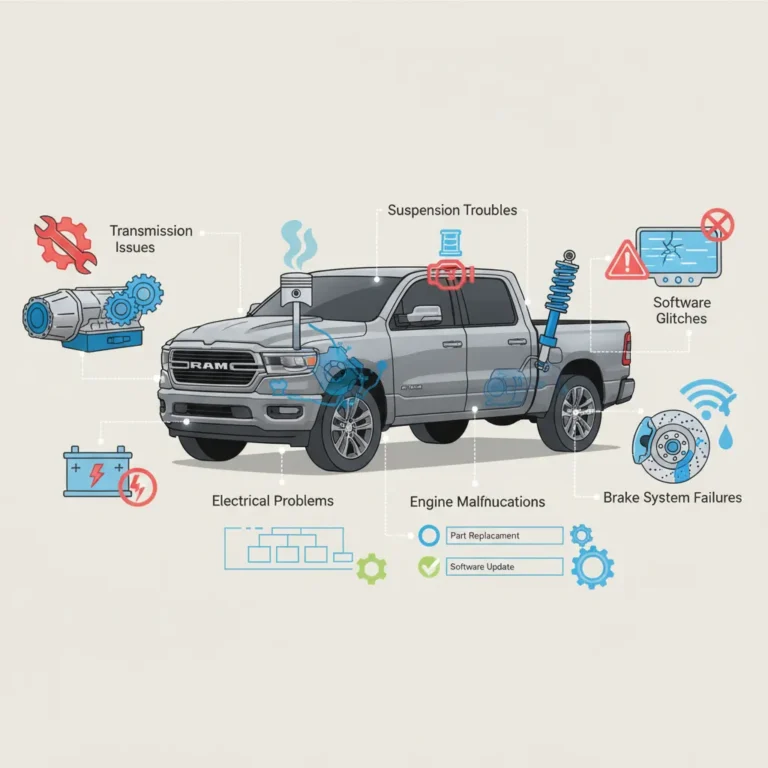
The 2022 Ram 1500 remains a benchmark in the full-size pickup segment, blending luxury-grade interiors with high-tier towing capability. However, even with its high rankings from critics, owners have reported a series of recurring issues ranging from frustrating Uconnect software glitches to critical powertrain malfunctions. Understanding these vulnerabilities is essential for maintaining the longevity and reliability of your vehicle. This guide provides a detailed analysis of the most common 2022 Ram 1500 problems, offering professional troubleshooting steps, repair advice, and recall information to keep your truck on the road.


Diagnose Uconnect 5 Infotainment System and Software Glitches
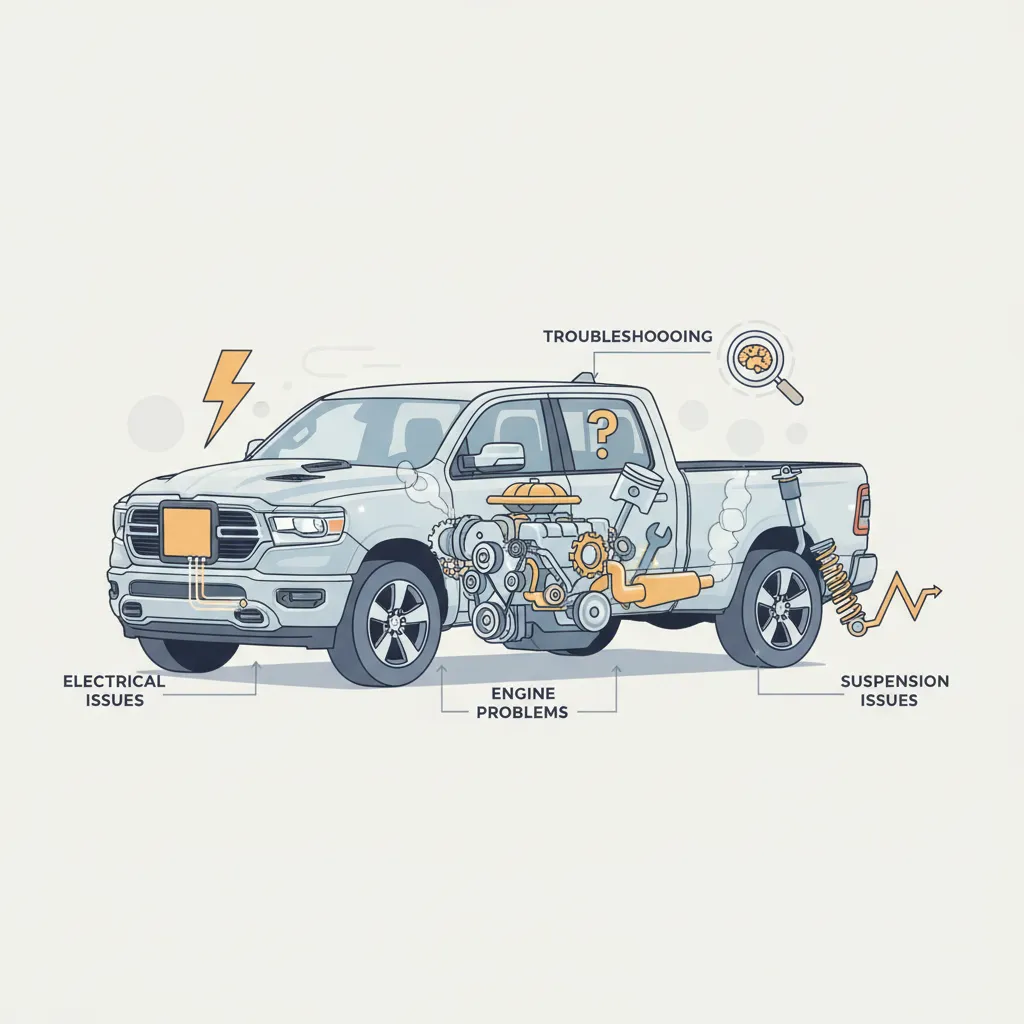
The 2022 model year introduced the upgraded Uconnect 5 system, which was touted for its increased processing speed and personalized interface. Despite the marketing, Consumer Reports noted that in-car electronics remain a top complaint for the 2022 Ram 1500, significantly impacting its overall reliability score. Many owners have reported ‘Blue Screen’ or ‘Black Screen’ events upon startup, where the entire center stack remains non-functional, disabling climate controls and backup cameras simultaneously.
Beyond total hardware failure, software instability often manifests as persistent GPS drift—where the navigation shows the vehicle off-road or in an entirely different city—and frequent drops in wireless Apple CarPlay and Android Auto connectivity. These issues are often rooted in system cache bloat or failed Over-the-Air (OTA) updates. If your vehicle fails to download the latest patches, it may be due to a weak cellular signal or a software handshake error that requires a dealer-level firmware flash to resolve the communication loop.
📋
Soft Resetting the Uconnect System
Ensure the vehicle is in the “Run” position but the engine does not necessarily need to be idling.
Press and hold both the Power Button and the Tune Knob simultaneously for 10-20 seconds.
Release the buttons when the screen goes dark; the Ram logo should appear, signaling a successful reboot.

Electrical Troubleshooting: Battery Drain and eTorque System Failures
The 2022 Ram 1500 utilizes a complex electrical architecture, particularly in models equipped with the 48-volt eTorque mild-hybrid system. One of the most common issues is parasitic battery drain, where specific modules—such as the Telematics Box Module (TBM) or the Radio Frequency Hub (RFH)—fail to enter ‘sleep mode’ after the ignition is turned off. This can lead to a truck that won’t start after sitting for 48 hours, leaving owners stranded with a dead 12V battery despite no lights being left on.


The eTorque system itself can introduce unique complications. Owners have reported jerky auto start-stop transitions and charging failures that trigger the ‘Electronic Throttle Control’ (ETC) warning light. This light often illuminates due to sudden voltage drops that confuse the powertrain control module. Technical Service Bulletins (TSBs) have been issued regarding electrical ground audits to diagnose and fix intermittent ‘No Start’ conditions, as many units left the factory with insufficient torque on the primary grounding points.
When diagnosing electrical issues, always start by checking the battery, fuses, and wiring harnesses for signs of corrosion. A battery resting below 12.4V can cause a cascade of false sensor codes in the Ram’s sensitive CAN-bus system. For more professional maintenance advice, you can view expert tips online.
2022 Ram 1500 Powertrain Issues: Transmission and Engine Misfires
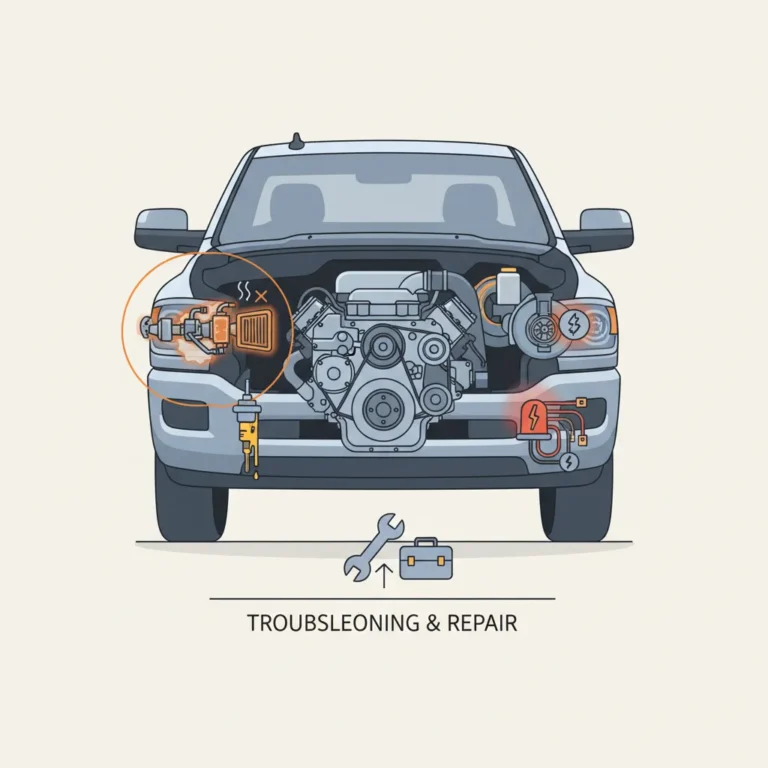
While the 5.7L Hemi V8 and 3.6L Pentastar V6 are storied engines, they are not without faults in the 2022 model year. A frequent concern is the infamous “Hemi Tick.” It is crucial to distinguish between normal fuel injector noise and a rhythmic tapping that indicates exhaust manifold bolt failure or, more severely, lifter and camshaft wear. Exhaust manifold leaks are particularly common and often manifest as a loud tick when the engine is cold that disappears once the metal expands after warming up.
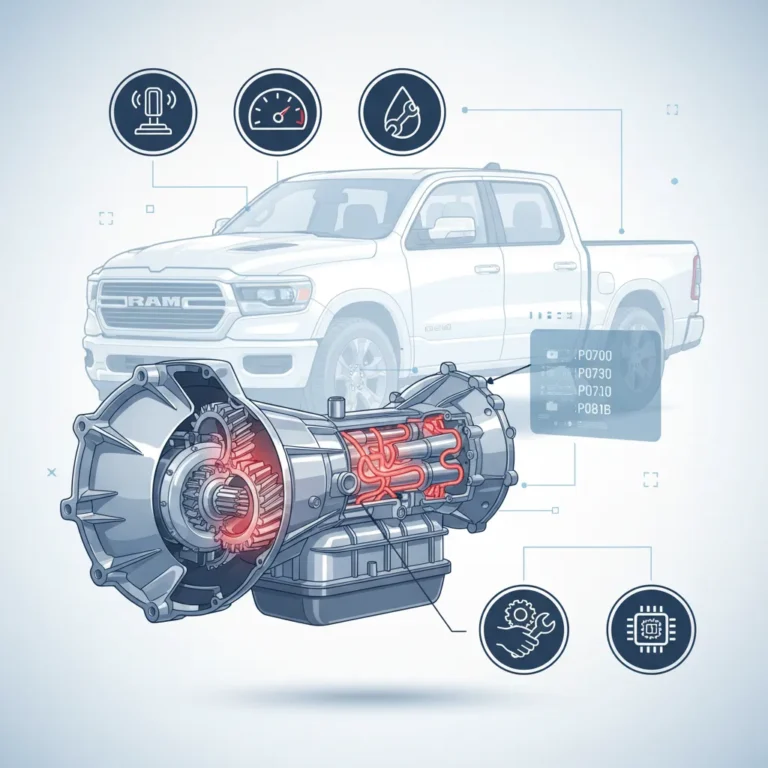
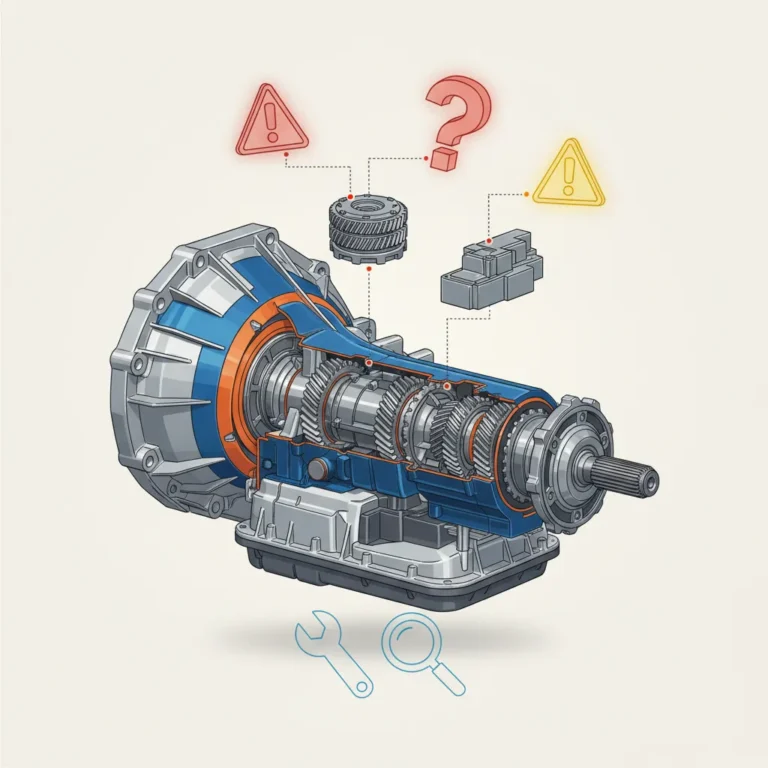
The ZF-sourced 8HP75 8-speed automatic transmission is generally robust, but software calibration issues account for 60% of reported shifting complaints. Owners often report a noticeable ‘clunk’ when downshifting from 3rd to 2nd gear or a hesitation under acceleration. This is frequently a software-based cause rather than mechanical failure, which can be addressed through a “Quick Learn” procedure at the dealership to reset the transmission’s adaptive shift logic.
Common Powertrain Symptoms & Fixes
- Misfire Codes (P0300-P0308): Often linked to premature spark plug wear or faulty ignition coils; check these before assuming valvetrain issues.
- Cooling System Leaks: Keep an eye on the water pump area; high-mileage 2022 units have shown early seal failures.
- Cooling Fan Behavior: If your fan stays on high speed indefinitely, it may be a faulty coolant temperature sensor or a stuck relay.
- MDS (Multi-Displacement System): Long-term valvetrain health can be impacted by MDS; some owners use a workaround like an OBD-II plug-in to disable cylinder deactivation.
Air Suspension System Malfunctions and Repair Solutions
The Active-Level Four-Corner Air Suspension, standard on trims like the Limited and optional on the Rebel, offers unparalleled ride quality but introduces significant complexity. A common symptom of failure is the truck leaning to one side after being parked overnight, indicating a slow leak in one of the air springs or a leaking solenoid valve. Because the system is closed-loop and pre-charged with nitrogen to prevent internal oxidation, any leak can allow moisture-laden atmospheric air into the lines.
In cold weather, this moisture can freeze, leading to an ‘Immediate Service Required’ message as the valves become stuck. If you hear the compressor running for extended periods or making excessive noise, it is struggling to maintain pressure. For those living in extreme climates, a permanent solution is often converting the air system to a traditional coil-over suspension kit, though this sacrifices the load-leveling and entry/exit height adjustments.
Never attempt to service the air suspension without properly depathturizing the system via a scan tool. The nitrogen is stored at high pressure, and improper disassembly can cause severe injury or damage to the ride height sensors.


Safety Recalls and Technical Service Bulletins (TSB) Overview
According to the official guide for vehicle safety, the 2022 Ram 1500 has been subject to over 10 separate recall campaigns depending on the specific build date. One critical recall (ID 22V-413) involves the rearview camera image not displaying, which poses a significant safety risk during reversing maneuvers. Another more serious concern is the fuel leak recall (ID 22V-936) affecting specific units, where high-pressure fuel pump (HPFP) failures could lead to an engine stall or fire risk.
Owners should also be aware of the taillight malfunction recall, where the software in the body control module might fail to illuminate the rear lamps properly. It is imperative to check your 17-digit VIN on the Mopar or NHTSA websites regularly. While recalls are mandatory and free to repair, Technical Service Bulletins (TSBs) are manufacturer recommendations for known issues. If your truck is out of warranty, a TSB repair may not be covered, though some dealerships offer ‘Goodwill’ repairs for long-standing customers facing documented defects.
2022 Ram 1500 By The Numbers
NHTSA Recalls
Software-Based Shift Issues
eTorque System Voltage
Summary of Common Issues vs. Standard Performance
To help you debug your truck’s behavior, use the table below to compare typical owner complaints against standard operational specs for the Ram specs provided by the manufacturer.
In summary, the 2022 Ram 1500 is a sophisticated machine where the Uconnect 5 system is the most frequent source of owner frustration, though most issues are resolvable via software updates. Mechanical concerns regarding the eTorque system and air suspension require proactive monitoring and specialized diagnostic tools to prevent long-term damage. Checking for NHTSA recalls is essential for safety, particularly regarding taillight and fuel system components. If your vehicle is experiencing persistent symptoms, use an OBD-II scanner to pull trouble codes before visiting a certified technician to ensure an accurate diagnosis.
Frequently Asked Questions
What are the most common problems with the 2022 Ram 1500?
The most frequently reported problems involve the Uconnect 5 infotainment system (freezing and reboots), electrical drain issues leading to dead batteries, and malfunctions in the optional air suspension system. Additionally, some owners have noted rough shifting in the 8-speed automatic transmission and minor engine misfires related to the eTorque mild-hybrid system.
Is the 2022 Ram 1500 a reliable truck?
The 2022 Ram 1500 earns average to above-average reliability scores compared to its peers. While it suffers from more electronic ‘teething’ issues than the Toyota Tundra, its mechanical foundations—specifically the 5.7L Hemi and 3.6L Pentastar engines—are well-proven. Consumer Reports and J.D. Power generally rank it highly for driver satisfaction despite these reported problems.


How do I reset the Uconnect system in my 2022 Ram 1500?
To perform a soft reset, ensure the vehicle is in park and the ignition is on. Press and hold both the Volume Power button and the Screen Tune/Scroll knob simultaneously for approximately 10 to 20 seconds. The screen will go dark and then display the Ram logo as it reboots, which often resolves connectivity and freezing issues.
Are there any major recalls for the 2022 Ram 1500?
Yes, significant recalls include a campaign for malfunctioning taillights that may not illuminate, a rearview camera software glitch, and a critical concern regarding high-pressure fuel pump failures that could cause engine stalling or fuel leaks. Owners should enter their VIN on the NHTSA website to check for specific open recalls on their vehicle.
What should I do if my Ram 1500 air suspension fails in cold weather?
Cold weather failures are often caused by moisture freezing within the air lines or valves. To troubleshoot, try parking the vehicle in a heated garage to thaw the system. If the ‘Service Air Suspension’ light persists, a technician may need to purge the system and refill it with dry nitrogen or replace a failing compressor/valve block.