6.7 Cummins Exhaust Pressure Sensor Location And Diagnostic Guide

For the 6.7 Cummins owner, a sudden loss of power or a persistent ‘DPF Full’ warning on the dashboard can be an immediate cause for concern, often pointing toward a small but critical component: the exhaust pressure sensor. These sensors are the “eyes” of the Engine Control Module (ECM), providing the data necessary to manage everything from turbocharger vane position to the timing of the next regeneration cycle. However, locating these sensors is the first hurdle, as the 6.7 Cummins platform utilizes multiple pressure-sensing units that are tucked away in different locations across various model years. In this comprehensive guide, you will learn the exact 6.7 Cummins exhaust pressure sensor location for both the EBP and DPF units, how to troubleshoot common fault codes, and where to find expert assistance available in your local community.


Differentiating 6.7 Cummins Exhaust Pressure Sensors and Their Critical Functions
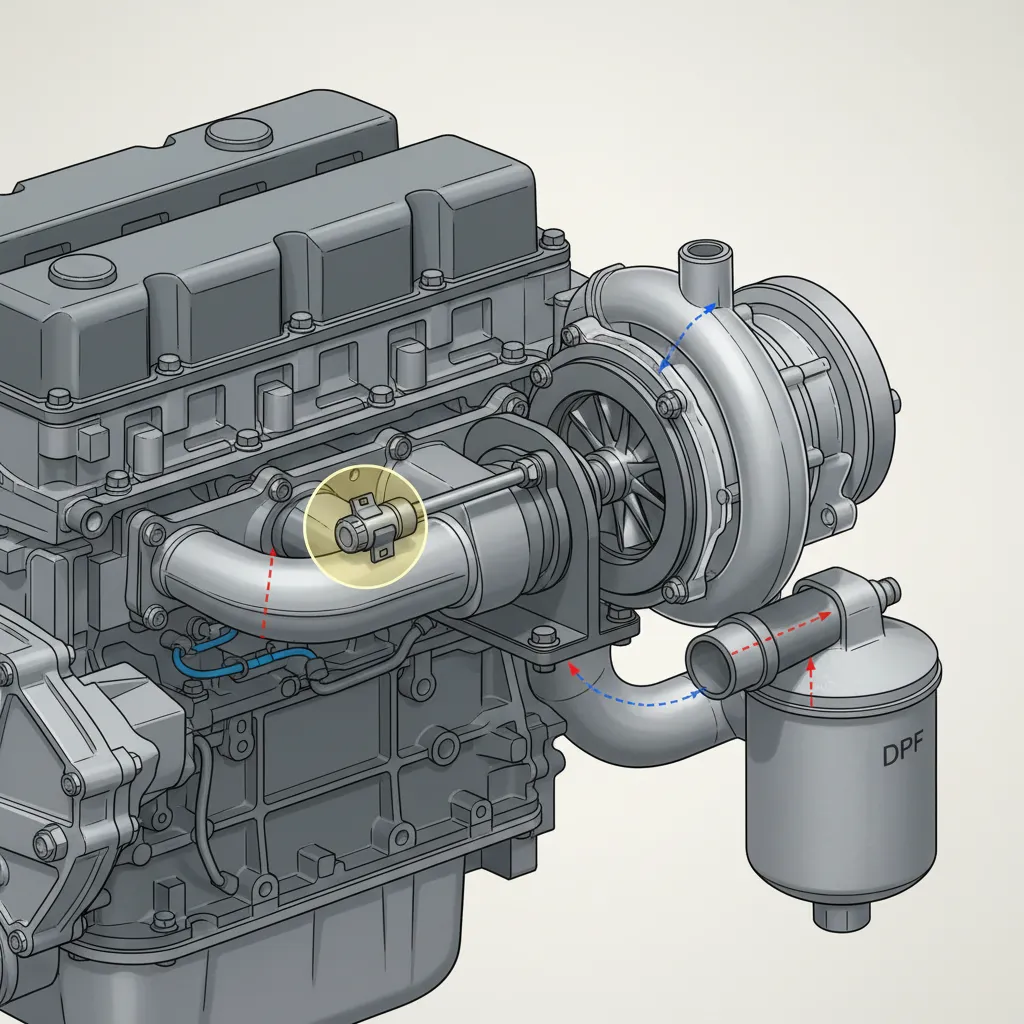
One of the most common mistakes made by truck owners and general repair shops is the misidentification of the two distinct exhaust pressure sensors used in the 6.7 Cummins engine. While both measure pressure within the exhaust stream, their roles and locations are vastly different. The 6.7 Cummins utilizes a sophisticated closed-loop feedback system where exhaust pressure data is updated to the ECM at a frequency of 10Hz or higher, making these sensors critical for real-time engine adjustments.
The Exhaust Back Pressure (EBP) Sensor
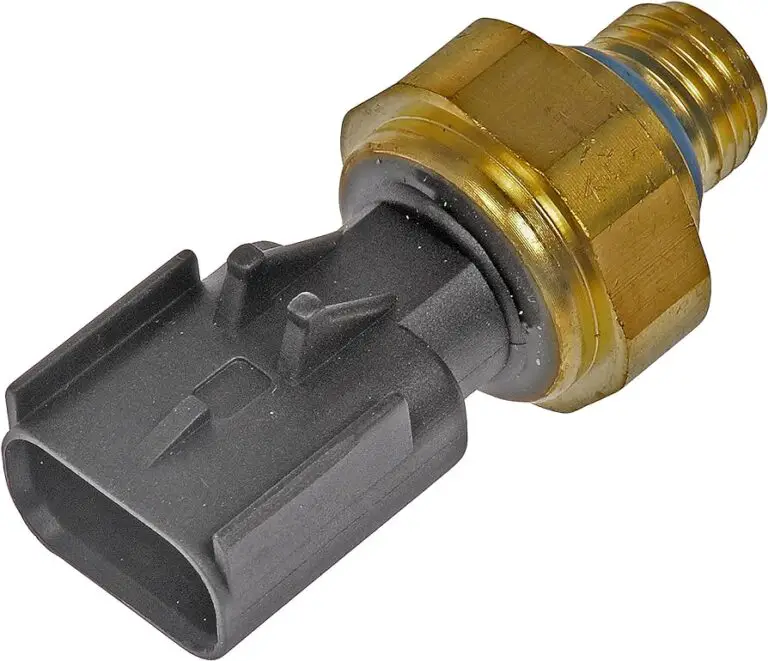
The EBP sensor, also known as the Exhaust Gas Pressure sensor, monitors the pressure inside the exhaust manifold before it reaches the turbocharger. This data is paramount for the operation of the Variable Geometry Turbocharger (VGT). By measuring the back pressure, the ECM can adjust the turbo vanes to optimize boost levels, improve engine braking performance, and manage Exhaust Gas Recirculation (EGR) flow. If this sensor fails or provides “offset” data, you may experience significant turbo lag or a total loss of engine braking.
The DPF Differential Pressure Sensor
Further down the exhaust stream lies the Diesel Particulate Filter (DPF) pressure sensor. This sensor’s job is to calculate the “Delta P” or the pressure drop across the DPF element. It uses two pressure taps—one before the filter and one after—to determine how much soot has accumulated. When the pressure difference reaches a specific threshold, the ECM initiates an active regeneration cycle to burn off the soot. A failure here often leads to frequent regeneration cycles or a “DPF Full” message that can eventually trigger a limp home mode.
Precise 6.7 Cummins Exhaust Back Pressure (EBP) Sensor Location
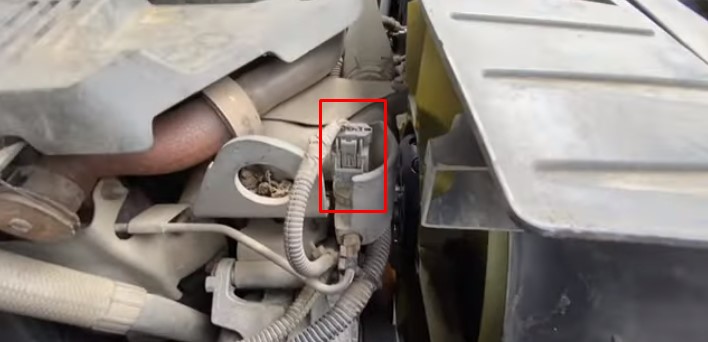
If you are hunting for the EBP sensor, you need to focus on the passenger side of the engine bay. In my 15 years of diesel diagnostics, I’ve seen many owners mistake various temperature sensors for the EBP. To find it accurately, look toward the front of the exhaust manifold, specifically near the thermostat housing area. The sensor itself is rarely mounted directly to the manifold to protect its sensitive electronics from extreme thermal cycles.
Instead, the EBP sensor is connected to the exhaust manifold via a 1/4 inch diameter stainless steel tube. This tube serves as a cooling stand-off. You can typically find the sensor bracketed near the cylinder head, just past the air intake horn. In the early 2007.5 through 2012 models, the sensor is quite prominent near the top-front of the engine. For the 2013+ RAM chassis cabs and pickup models, the bracket might be slightly lower or tucked behind other plumbing, but the principle remains: follow the metal tube from the manifold upward to the sensor.
The EBP sensor tube is a high-failure point due to soot carbonization. In many cases, the sensor itself is perfectly fine, but the tube is 100% blocked with carbon, preventing the sensor from “feeling” the manifold pressure. Always check the tube before buying a new sensor according to the official guide.

Diesel Particulate Filter (DPF) Pressure Sensor Placement and Year Variations
The DPF pressure sensor is much further downstream and is often hidden from immediate view, making it a “trusted local” mystery for many DIYers. Unlike the EBP sensor, this unit is usually mounted on the vehicle’s frame rail or the transmission bellhousing on the passenger side. This remote mounting protects the sensor from the intense vibrations of the exhaust pipe itself.
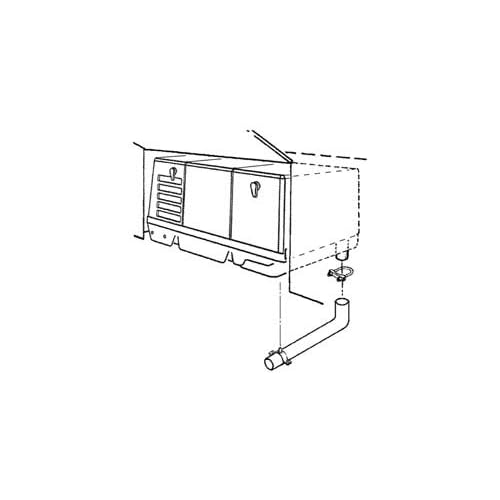
To locate it, you should slide under the truck and look at the DPF (the large canister in the exhaust system). You will see two metal tubes coming out of the exhaust—one before the DPF filter section and one after. These tubes eventually transition into rubber or silicone hoses that lead up to the sensor body. On 2013 and newer RAM 2500/3500 trucks, engineers often moved this sensor higher up on the firewall or a dedicated frame bracket. This was a strategic move to prevent moisture from accumulating in the lines, which was a frequent complaint in the Ram community during the early 6.7L years.


Configuration of Hoses
The DPF sensor utilizes a “Hose A” and “Hose B” configuration. Hose A is the high-pressure side (pre-filter), while Hose B is the low-pressure side (post-filter). If these hoses are swapped or if one is cracked, the ECM will receive “irrational” data, leading to immediate fault codes. On 4WD models, the transfer case positioning can make accessing the sensor bracket a bit tighter, so having a long extension for your ratchet is highly recommended.
Symptoms of a Bad Exhaust Pressure Sensor and Diagnostic Trouble Codes
Identifying a failing sensor before it leaves you stranded is key to maintaining your truck’s reliability. Research indicates that a faulty exhaust pressure sensor can cause various issues, including reduced engine performance, increased fuel consumption, and the dreaded “Limp Home Mode.” When the ECM cannot trust the exhaust pressure data, it defaults to a conservative map to protect the engine and emissions system.
By The Numbers
Failure Rate Before 100k Miles
Average Replacement Cost
Common drivability symptoms include surging during steady-state cruising, a noticeable drop in MPG, and frequent, unexplained regeneration cycles. In one case study, a truck showed a 15% increase in fuel consumption caused solely by an offset EBP sensor reading that forced the VGT vanes into an inefficient position. You should also watch for these specific Diagnostic Trouble Codes (DTCs):
- P0471: Exhaust Pressure Sensor Range/Performance (Often EBP sensor)
- P2452: DPF Pressure Sensor Circuit (Often the chassis-mounted sensor)
- P0472: Exhaust Pressure Sensor Low
- P2453: DPF Pressure Sensor Range/Performance
For more advanced troubleshooting, you can find expert tips online that explain how to use a multimeter to check for the 5-volt reference signal at the sensor plug.
Troubleshooting, Replacement Procedures, and Estimated Costs
Before you rush out to buy a new sensor, performing a basic diagnostic can save you hundreds of dollars. Many 6.7 Cummins issues are mechanical rather than electronic. For example, some aftermarket performance parts can affect exhaust pressure readings and may require adjustments or recalibration of the engine control unit (ECU). Always verify your hardware first.
📋
Step-by-Step Diagnostic & Replacement
Remove the EBP sensor and its stainless steel tube. Use brake cleaner and a flexible wire (like a wire hanger) to clear out carbon deposits. If you can’t blow air through the tube, it’s blocked.
Check the rubber hoses connecting the DPF sensor to the exhaust. Look for dry rot, cracks, or melting. Even a pinhole leak will cause a P2452 code.
If cleaning doesn’t work, replace the sensor. Use anti-seize on the tube fittings and torque to approximately 10-15 lb-ft. Avoid over-tightening the plastic sensor body.
When it comes to costs, the average price for replacing an exhaust pressure sensor on a 6.7 Cummins, including parts and labor, ranges from $200 to $400. While some “white box” parts are available online for $40, I strongly advise sticking with OEM Mopar or Cummins sensors. The 6.7L engine is notoriously sensitive to voltage signal variations; a cheap sensor often outputs a signal that is just slightly “off,” which can lead to ghost codes that are impossible to track down.
Never attempt to clean the sensor itself by poking a wire into the pressure port. The internal diaphragm is extremely delicate and will be destroyed instantly. Only clean the metal tubes leading to the sensor.
Finding Exhaust Pressure Sensor Service and Support Nearby
While many of these repairs are convenient for a mechanically inclined individual, some situations require professional intervention. If your truck is stuck in a deep derate (limp mode), a simple sensor swap might not be enough. The ECM may need a “forced regeneration” or a sensor calibration that can only be performed with professional-grade scan tools like WiTech or Cummins Insite.
To find a diesel specialist nearby, look for shops that specifically advertise Cummins diagnostics rather than general “auto repair.” A trusted local specialist will have the specialized software to monitor real-time pressure data and compare it to factory specifications. This is often more accessible than people think, as many mobile diesel mechanics now offer on-site calibrations for the local truck community, serving those who can’t easily tow their rigs to a dealership.
Diagnostic Precision
Certified technicians can perform a forced regeneration and sensor calibration in under 60 minutes.
Latest Updates
Local shops ensure you get the latest sensor revision for your specific VIN, avoiding outdated parts.
In conclusion, the 6.7 Cummins exhaust pressure sensor location varies between the engine-mounted EBP sensor (near the thermostat/manifold) and the chassis-mounted DPF sensor (on the frame or transmission). Faulty sensors lead to P0471/P2452 codes, decreased fuel efficiency, and potential turbocharger issues. Regular cleaning of the stainless steel EBP tube can often prevent costly replacements and keep your VGT functioning optimally. If you are experiencing persistent performance issues or are stuck in a derate, contact a diesel specialist nearby to have your exhaust system pressure tested and calibrated today. Maintaining these small sensors is the secret to the long-term longevity and performance of the 6.7L Cummins power plant.
Frequently Asked Questions
Where is the exhaust back pressure sensor located on a 6.7 Cummins?
On most 6.7 Cummins engines, the Exhaust Back Pressure (EBP) sensor is located on the passenger side of the engine near the front. It is mounted to a bracket close to the thermostat housing and is connected to the exhaust manifold via a small-diameter stainless steel tube. This tube is prone to clogging with soot and should be inspected whenever the sensor is being serviced.
Where is the DPF pressure sensor located on a 6.7 Cummins?
The Diesel Particulate Filter (DPF) pressure sensor is usually mounted remotely from the exhaust itself to protect it from heat. You can typically find it on the passenger side frame rail or attached to the transmission bellhousing. It is identifiable by two rubber hoses that run directly to the DPF unit located in the exhaust stream under the truck.
How do I test an exhaust pressure sensor?
Testing involves using a high-quality scan tool to monitor ‘Exhaust Pressure’ or ‘DPF Differential Pressure’ live data. With the key on and engine off, the sensor should read atmospheric pressure (roughly 0 psi or 14.7 psi absolute). If the reading is erratic or significantly different from the MAP sensor at rest, the sensor or its circuit is likely faulty.
What are the symptoms of a bad exhaust pressure sensor?
Symptoms include a noticeable drop in engine performance, decreased turbocharger responsiveness, and a drop in fuel economy. You may also see frequent ‘Regeneration in Progress’ messages or the truck may enter ‘Limp Mode.’ Common diagnostic trouble codes associated with these failures include P0471, P0472, and P2452.
How much does it cost to replace an exhaust pressure sensor on a 6.7 Cummins?
Replacement costs generally range between $200 and $400. This includes the cost of an OEM Mopar or Cummins sensor (usually $100-$180) and approximately one to two hours of professional labor. Costs may increase if the connecting tube is rusted or clogged and requires replacement or extensive cleaning during the service.