Can You Mix 87 and 91 Gas? Safety, Results, and Risks

Yes, you can safely mix 87 and 91 octane gasoline as they are chemically compatible and will simply create a mid-grade blend. However, while mixing is safe, using a lower octane than required by your manufacturer can lead to engine knocking and reduced performance over time.
🎯 Key Takeaways
Recommended Best Deal Products


- Mixing 87 and 91 creates a mid-range octane level like 89.
- Modern ECUs adjust timing to prevent damage from lower octane.
- Never use lower than the required octane for high-performance engines.
- Using 91 in an 87-rated car provides no performance benefits.
- Consistency with manufacturer recommendations ensures optimal engine longevity and efficiency.
Yes, you can absolutely mix 87 and 91 octane gasoline in your fuel tank without damaging your vehicle. Mixing these two fuel grades does not cause a chemical reaction that will harm your fuel lines, injectors, or engine components. Instead, the two fuels simply blend together to create a mid-grade octane level. For example, if you fill half your tank with 87 and the other half with 91, you have effectively created an 89-grade fuel right inside your car.
Understanding the safety of this mix is important because many drivers worry that different “types” of gas might separate like oil and water. In reality, all unleaded gasoline sold at reputable stations is chemically compatible. Whether you are mixing them to save a few dollars or because you accidentally hit the wrong button at the pump, your car will continue to run. The real impact isn’t on the “safety” of the fuel itself, but on how your engine’s computer adjusts to the resulting octane rating.
The Science of Mixing Different Octane Levels
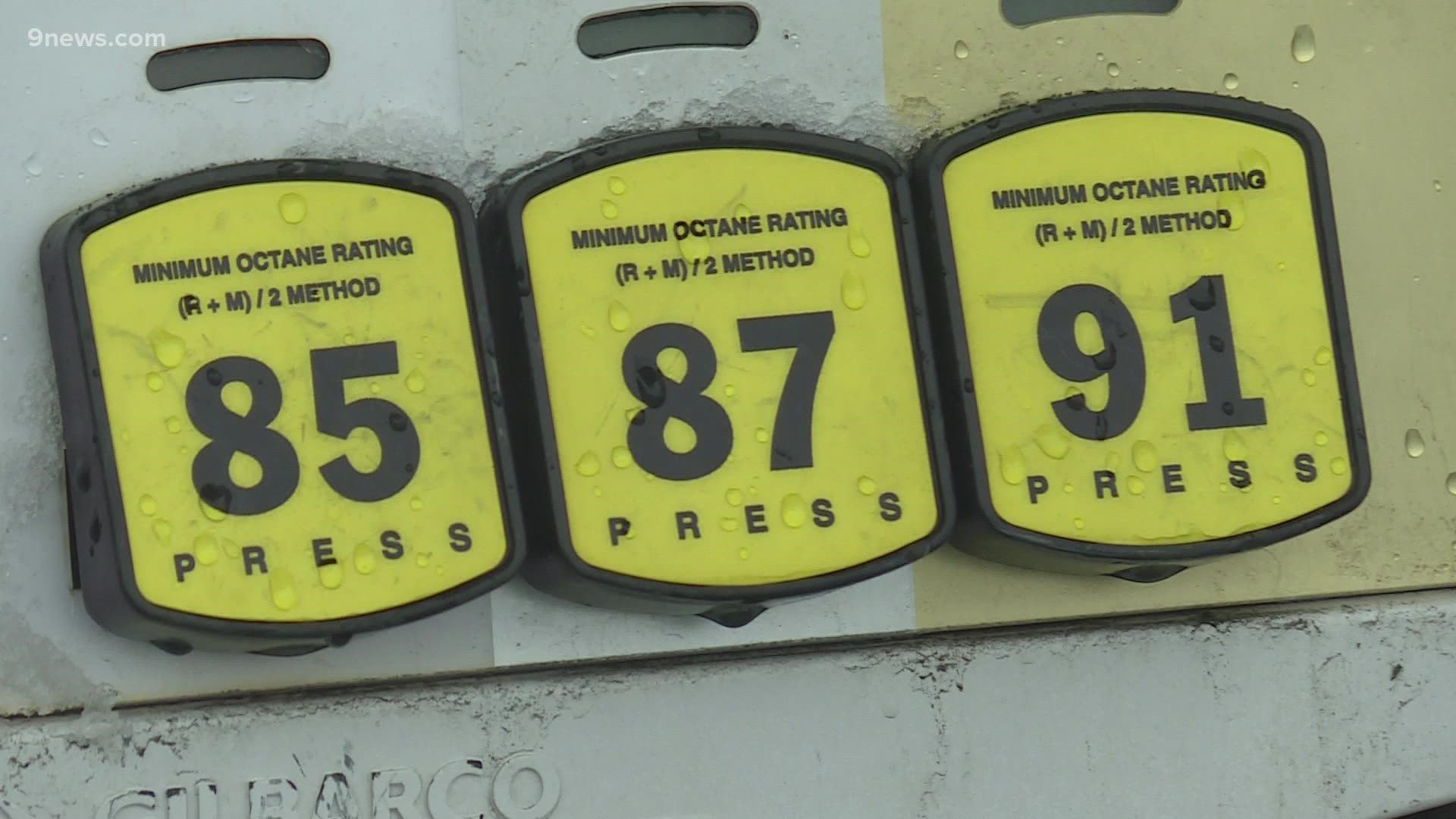
When you mix 87 and 91 octane, you are performing a simple mathematical average. Octane ratings measure a fuel’s resistance to “knocking” or “pinging,” which happens when gas ignites too early in the combustion chamber. Modern gas station pumps often only have two underground tanks: one for 87 and one for 91 or 93. When you select the “mid-grade” 89 button, the pump is actually mixing the two grades in a 50/50 ratio before it even reaches your car. Mixing them yourself in your own tank achieves the exact same result.
How the Octane Math Works
The resulting octane of your fuel depends entirely on the ratio of the mix. You aren’t stuck with one grade or the other; the engine perceives the total average of what is currently in the tank. This is helpful if you are trying to “boost” a lower grade or “dilute” a higher one. Consider these common scenarios:
- The 50/50 Split: If you have 10 gallons of 87 and add 10 gallons of 91, your tank becomes 20 gallons of 89 octane.
- The Top-Off: If you have 12 gallons of 87 and add 3 gallons of 91, your total octane will be approximately 87.8.
- The Emergency Boost: If your car requires 91 but you accidentally put in a few gallons of 87, filling the rest of the way with 91 will bring the average back up to a safer level.
Safety of the Fuel System
There is no risk of the fuels “separating” or “layering” inside your tank. Because both 87 and 91 are unleaded gasoline products, they share the same density and solvency properties. Your fuel pump will draw the mixture consistently, and your fuel filters will not be affected. The additives and detergents used in premium 91 gas are also fully compatible with those in 87 gas. In most cases, mixing the two simply means your engine gets a moderate dose of the cleaning agents found in the higher-grade fuel.
Required vs. Recommended Octane: Why It Matters
Recommended Best Deal Products


To understand the result of your mix, you must look at your owner’s manual. There is a massive difference between a car that requires 91 octane and one that merely recommends it. This distinction determines whether mixing in 87 octane is a minor efficiency loss or a potential mechanical risk. Your engine’s computer, the Engine Control Unit (ECU), is constantly monitoring how the fuel burns to prevent damage.
Putting 87 in a 91-Required Car
If your car specifically states “Premium Fuel Required,” the engine is designed with high compression or a turbocharger. These engines need the stability of 91 octane to prevent “pre-ignition” or knocking. When you mix in 87 and lower the octane, the car’s knock sensors will detect the lower stability. The ECU will then “retard” the ignition timing to protect the engine. While this prevents immediate failure, you will notice several negative results:
- Reduced Horsepower: The engine produces less power because the timing is no longer optimal.
- Lower Fuel Economy: You will likely see fewer miles per gallon, often negating the money you saved by buying the cheaper gas.
- Engine Pinging: Under heavy load, such as driving uphill or towing, you may hear a metallic rattling sound.
Putting 91 in an 87-Required Car
On the flip side, if your car is built to run on 87 octane, mixing in 91 provides almost no benefit. Many drivers believe that premium gas is “more powerful” or “cleaner,” but for a standard economy engine, this is a myth. An engine tuned for 87 cannot take advantage of the extra stability 91 provides. In this scenario, mixing the two is perfectly safe, but you are essentially throwing money away. Your car won’t run faster, and you won’t get better gas mileage. The only real advantage is the slightly higher concentration of detergents found in some premium brands, but you can achieve the same cleaning effect with a bottle of fuel system cleaner for much less money.
How Your Car’s ECU Handles Fuel Octane Variations
Modern vehicles are far more sophisticated than the mechanical machines of the past, largely thanks to the Engine Control Unit (ECU). This onboard computer acts as the “brain” of your car, constantly monitoring sensor data to optimize how the engine runs. When you mix 87 and 91 octane, the ECU is responsible for ensuring that the variation in fuel stability doesn’t lead to internal damage.
The Role of the Knock Sensor
The knock sensor is your engine’s primary line of defense. Its job is to “listen” for the specific vibrations caused by pre-ignition, commonly known as engine knocking or pinging. This happens when the air-fuel mixture ignites too early in the combustion cycle. If you mix 87 into a tank that expects 91, the fuel becomes more volatile. The knock sensor detects this instability and immediately alerts the ECU.
- Instant Safety Adjustments: Once a knock is detected, the ECU retards the ignition timing, delaying the spark to prevent damage.
- Continuous Monitoring: The system doesn’t just “set and forget”; it constantly checks hundreds of times per second to see if it can return to more aggressive settings.
- Adaptive Learning: Many modern ECUs “learn” the fuel quality over a few miles, adjusting the fuel map to stay within safe operating parameters for that specific blend.
Real-Time Timing and Performance Mapping
The ECU holds various “maps” or sets of instructions for different driving conditions and fuel qualities. When it detects a lower octane rating due to blending 87 and 91, it shifts to a more conservative map. This protects the pistons and valves but usually comes at the cost of peak performance. The car will still run smoothly, but the computer is essentially holding the engine back to keep it safe from the less stable fuel.
Potential Risks and Performance Impacts of Blending Fuel
While mixing these two fuel grades is technically safe, it isn’t always the most efficient or cost-effective choice. Depending on what your car actually requires, the results of blending can vary from “no difference” to a noticeable drop in driving quality.
Performance Drops in High-Compression Engines
If your vehicle’s manufacturer states that 91 octane is required, mixing in 87 will have a tangible impact. High-performance, turbocharged, or supercharged engines rely on the high-pressure resistance of 91 octane to produce their rated horsepower and torque. By diluting that premium fuel with 87, you are essentially preventing the engine from reaching its full potential.
- Reduced Throttle Response: You may notice a slight “lag” or sluggishness when you step on the gas to pass someone on the highway.
- Lower Fuel Efficiency: Because the ECU has to retard timing to compensate for the lower octane, the engine operates less efficiently, which can actually result in lower MPG.
- Heat Management Issues: In very hot weather or under heavy loads (like towing), a lower-octane blend can cause the engine to run hotter as the ECU struggles to maintain perfect combustion.
The “Waste of Money” Factor in Standard Engines
On the flip side, if your car is designed to run on 87, adding 91 to create a blend offers no benefit. Many drivers believe that mixing in a bit of “the good stuff” will clean the engine or provide more power, but if the engine isn’t designed for high compression, that extra octane just goes out the exhaust pipe. You are paying a premium price for a performance boost that your car’s hardware simply cannot utilize.
Conclusion: To Mix or Not to Mix?
In short, mixing 87 and 91 octane gas is perfectly safe for your vehicle. Your car’s ECU and knock sensors are well-equipped to handle the resulting “mid-grade” blend without causing any mechanical harm. However, the real question is whether it’s worth it. If your car requires premium, you’ll lose power and efficiency by mixing; if your car requires regular, you’re spending extra money for no real-world gain.
Next Step: Take a quick look at your owner’s manual or the inside of your fuel door. If it says “Premium Recommended,” feel free to mix when prices are high. If it says “Premium Required,” stick to 91 to keep your engine running at its peak. Drive with confidence knowing your car is smarter than you might think!
💬 Quick Questions & Answers
Will mixing 87 and 91 damage my engine?
No, mixing them is generally safe and just creates a mid-grade octane level in your tank.
Does mixing gasoline create 89 octane?
Yes, mixing equal parts of 87 and 91 results in a roughly 89 octane blend.
Can I put 87 in a car that requires premium?
You can in an emergency, but doing it regularly may cause engine knocking and reduced power.
Will 91 gas make my 87-rated car faster?
No, using higher octane than recommended is usually a waste of money and provides no extra power.
Is it okay to switch between gas types frequently?
While safe, it is best to stick to the manufacturer’s recommended octane for consistent performance.
❓ Frequently Asked Questions
What happens to the octane rating when I mix 87 and 91?
When you mix these two grades, the resulting octane is a mathematical average based on the volume of each fuel. If you have a half tank of 87 and add a half tank of 91, you effectively create 89 octane gasoline.
Is it dangerous for my engine if I accidentally put 87 in a 91-required car?
For a single tank, modern engine control units (ECUs) will detect the lower octane and retard the ignition timing to prevent damage. However, you may experience ‘knocking’ or ‘pinging’ and a noticeable loss in fuel economy and acceleration.
Why do some cars require 91 while others only recommend it?
Required means the engine’s compression ratio is high enough that lower octane could cause permanent damage over time. Recommended means the car can run on lower grades, but you won’t get the advertised horsepower or fuel efficiency without premium.
Can I mix gas from different gas stations?
Yes, as long as the fuel meets the minimum octane requirements, you can mix brands without issue. All retail gasoline must meet federal standards, though additives like detergents vary by brand.
Will mixing gas affect my vehicle’s warranty?
Generally, mixing grades won’t void your warranty, but using a lower octane than ‘required’ by the manual can lead to damage that might not be covered. Always check your owner’s manual to confirm the specific fuel requirements.
Does the ECU instantly adjust to a change in octane?
No, it typically takes a few miles of driving for the sensors to recognize the change in combustion quality. Once detected, the ECU shifts the timing maps to optimize performance for the new blend.