Dodge 2500 Lug Pattern Specifications For Ram Heavy Duty [2026]

Precision wheel fitment is the foundation of safety and performance for any heavy-duty truck designed to tow thousands of pounds. When dealing with the Ram 2500 platform, there is no margin for error; selecting the wrong wheel specifications or ignoring critical lug pattern nuances can lead to catastrophic hardware failure, persistent vibration issues, and compromised load capacities. This technical guide provides a professional-grade breakdown of the Dodge and Ram 2500 lug patterns, including stud sizes, torque sequences, and hub-centric requirements across all generations to ensure your vehicle remains reliable and trusted on the road.
Evolution of the 8×6.5-Inch Bolt Pattern Across Generations
Recommended Best Deal Products


The 8×6.5-inch (8×165.1mm) bolt pattern is one of the most enduring standards in the American heavy-duty truck industry. For over 25 years, this specific configuration has served as the backbone for the Dodge and Ram 2500 series. This continuity is a testament to the pattern’s ability to distribute massive clamping forces across the wheel hub, which is essential for a vehicle frequently tasked with high-GVWR (Gross Vehicle Weight Rating) applications.
While the bolt circle diameter (BCD) has remained static, the branding and underlying structural engineering have evolved. Before 2010, these trucks were officially branded as “Dodge Ram 2500.” Post-2010, “Ram” became a standalone brand. From a complete fitment perspective, this distinction is minor, but it marks the era where the trucks transitioned into more advanced chassis dynamics. For example, a wheel from a 2008 Dodge Ram 2500 technically shares the same 8×6.5 pattern as a 2018 Ram 2500. However, professional installers know that direct interchangeability is often hindered by stud diameter and the physical clearance of larger brake calipers found on newer models.
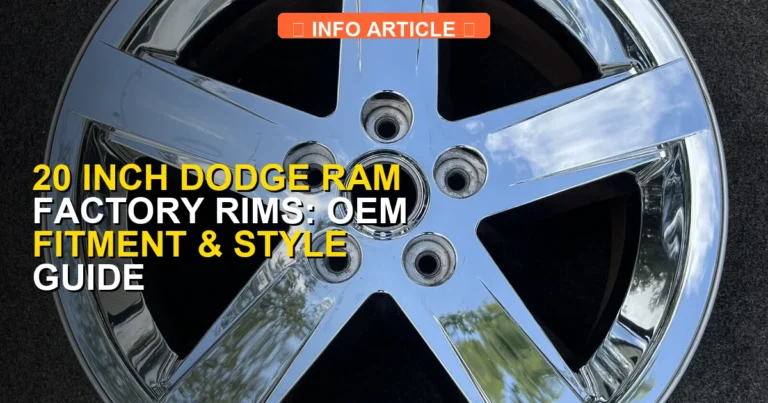
A critical expert consideration when sourcing wheels is the load rating. A wheel may physically bolt onto a 2500 hub, but if it was originally designed for a lighter-duty 8-lug application (such as an older van or a different manufacturer’s 3/4-ton truck), it may not meet the 3,000+ lb per wheel load rating required for a modern Ram 2500. Always verify that the wheel is rated to handle the maximum axle weight rating (GAWR) of your specific truck configuration.
By The Numbers
Number of Lugs
Bolt Circle Diameter
Years of Consistency
Center Bore and Hub-Centric Requirements for Heavy Duty Stability
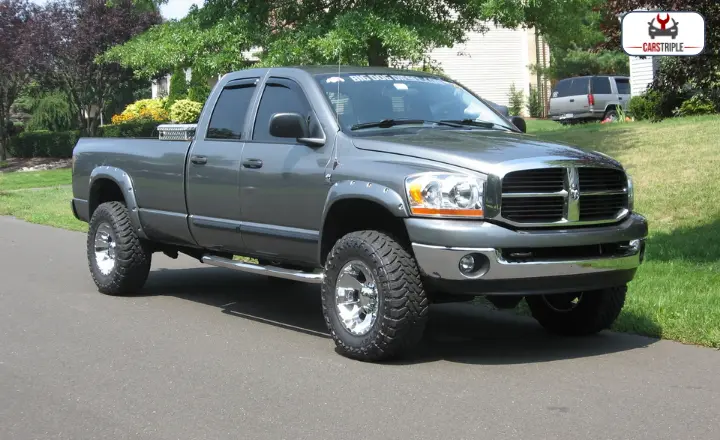
In the world of heavy-duty engineering, the center bore is arguably as important as the lug pattern itself. For the Ram 2500, the industry-standard center bore is 121.3mm (4.77 inches). This measurement dictates the diameter of the hole in the center of the wheel that slides over the hub assembly. Ram trucks utilize a hub-centric design, meaning the wheel is centered by the precision-machined hub lip rather than the lug studs.
A hub-centric fitment ensures that the weight of the vehicle and its cargo is carried by the hub, which is engineered to handle vertical loads. In contrast, lug-centric wheels rely solely on the studs to center the wheel and bear the load. For a truck that might be hauling a 15,000-pound trailer, a lug-centric setup is inherently less stable and can lead to stud fatigue. When the center bore of an aftermarket wheel is larger than 121.3mm, a gap is created. Without high-quality hub-centric rings to fill this gap, the wheel can easily become off-center by even a fraction of a millimeter.
If you experience a steering wheel shimmy or floorboard vibration at speeds between 55-70 MPH after installing new wheels, the first thing to check is center bore fitment. Even if the wheels are balanced, a lack of hub-centricity will cause “run-out” that mimics a balance issue.
We frequently see case studies where owners purchase “universal” 8-lug wheels with a 125mm or 130mm bore. While they bolt on, the truck develops high-speed vibrations that eventually damage the wheel bearings and lug studs. To maintain the professional integrity of your Ram’s suspension, always insist on wheels with a 121.3mm bore or use billet aluminum hub-centric rings from a trusted manufacturer.
Stud Sizes and Thread Pitch Transitions in Newer Models
Recommended Best Deal Products


One of the most common pitfalls in Ram 2500 wheel fitment involves the transition from SAE to metric hardware. For decades, Dodge utilized 9/16-inch x 18 UNF thread pitch studs. This SAE standard was reliable and robust, but as the industry moved toward globalized manufacturing standards, Chrysler (now Stellantis) shifted the Ram 2500 to a metric M14 x 1.5 thread pitch starting around the 2012 model year (though some late 2011 models may vary).
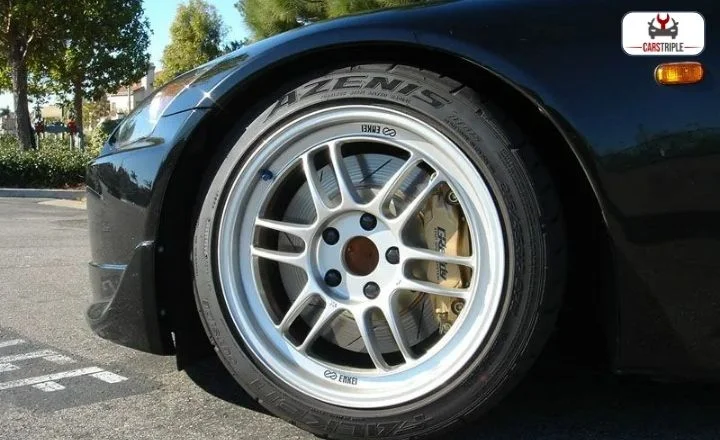
Attempting to force a 9/16 lug nut onto an M14 stud (or vice versa) will result in immediate thread stripping and potentially require an expensive hub or axle replacement. Beyond the thread pitch, the seating style of the lug nut is vital. OEM Ram wheels typically use a large conical (tapered) seat. Aftermarket wheels might require a different seat profile, such as a “mag seat” (flat with a washer) or a “tuner style” small-diameter nut. A professional installer must ensure that the lug nut seat perfectly matches the wheel’s countersink to prevent loosening under load.
When upgrading to thick alloy wheels or adding spacers, you must verify that you have at least 10-12 full turns of thread engagement. Insufficient engagement can lead to the studs shearing off under the lateral stress of towing or cornering.
Torque Specifications and Proper Tightening Sequences
Maintaining the structural integrity of a Ram 2500’s wheel assembly requires strict adherence to torque specifications. For modern M14 stud assemblies, the expert-recommended torque range is 130-145 lb-ft (176-197 Nm). Applying the correct torque ensures that the lug nuts provide enough clamping force to prevent the wheel from shifting, without stretching the studs beyond their elastic limit.
Equally important is the sequence in which the lugs are tightened. An 8-lug pattern must be tightened in a star pattern to ensure the wheel sits perfectly flat against the rotor. Tightening in a circular fashion can “cock” the wheel slightly, leading to rotor warping and uneven braking pressure.
📋
Professional Installation Guide
Recommended Best Deal Products

Follow the 1-5-8-3-6-2-7-4 order. Imagine the lugs are numbered like a clock. This crossing pattern distributes pressure evenly across the hub face.
Never torque to full spec in one go. Tighten to 50 lb-ft, then 90 lb-ft, and finally the full 140 lb-ft. This ensures the wheel seats progressively and squarely.
One often-overlooked professional best practice is the 50-mile re-torque. New wheels, especially alloy ones, undergo a “seating” process during initial heat cycles and vibration. Statistics show that failure to re-torque can result in a 10-15% loss in clamping force within the first few hundred miles. Always verify torque settings after the first 50-100 miles to guarantee long-term reliability.
Offset and Backspacing Considerations for Oversized Tires
When moving away from factory wheels, understanding offset and backspacing is mandatory to prevent tire rubbing and suspension damage. Factory Ram 2500 wheels typically feature a high positive offset, ranging from +43mm to +57mm. This keeps the tire tucked well within the fender flares and maintains a scrub radius that minimizes steering effort and component wear.
If you are planning to install 35-inch or larger tires, the factory offset will likely cause the tire to rub against the radius arms or control arms at full steering lock. To solve this, many owners move to a lower positive offset (+18mm to +25mm) which pushes the wheel outward. While a negative offset (e.g., -12mm or -24mm) provides that aggressive, wide stance, it significantly increases the leverage placed on your ball joints and wheel bearings.
+18mm to +27mm Offset
The “Sweet Spot” for Ram 2500s. Provides clearance for 35″ tires while keeping them mostly flush with factory flares.
-44mm Ultra-Wide Offset
Extreme stance. Often requires significant trimming of the “pinch weld” and increases wear on front-end components by 30-40%.
As a trusted advisor in the truck space, I recommend a comprehensive approach: if you are running a 2.5-inch leveling kit, a wheel with 5.5 to 6 inches of backspacing is ideal for 35×12.50 tires. This balance maintains the truck’s towing stability while providing the clearance necessary for off-road articulation.
Conclusion: The Standard of Reliability
The 8×165.1mm (8×6.5 inch) bolt pattern has stood as the consistent standard across Dodge and Ram 2500 models for over a quarter-century, providing the foundation for some of the world’s most capable work trucks. However, as we have explored, a successful wheel fitment requires more than just matching the lug count. Verifying the transition from SAE to Metric studs, maintaining a hub-centric connection with a 121.3mm bore, and adhering to the 140 lb-ft torque standard are all professional requirements for safe operation.
Whether you are replacing a damaged OEM rim or upgrading to a high-quality aftermarket set for a more aggressive look, precision is your best friend. For those upgrading their Ram 2500 wheels, always consult with a certified technician to ensure your chosen wheels match both the bolt pattern and the necessary load rating for your specific hauling needs. By following this guide, you ensure that your Ram remains a reliable and trusted tool for the toughest jobs.
Frequently Asked Questions
What is the specific bolt pattern for a 2023 Ram 2500?
The 2023 Ram 2500 utilizes the 8×165.1mm (8×6.5 inch) lug pattern. This 8-lug configuration has been the standard for Ram’s heavy-duty line for decades. However, it is essential to use M14x1.5 lug nuts, as newer models have transitioned to metric studs to provide a more reliable and standardized clamping force for high-payload applications.
Are Dodge 2500 and Chevy 2500 wheels interchangeable?
While both trucks often share the 8×6.5 inch bolt pattern, they are rarely interchangeable due to the center bore diameter. Dodge/Ram 2500 trucks require a larger 121.3mm center bore. Most Chevrolet 8-lug wheels have a smaller center bore (approx. 116.7mm), meaning they will not physically slide over the Ram hub, making them incompatible without professional machining.
Can I use 17-inch wheels on a newer Ram 2500 that came with 20s?
Yes, but you must ensure brake caliper clearance. Most modern Ram 2500s can accommodate 17-inch or 18-inch wheels as long as the wheel’s inner barrel design clears the heavy-duty brake calipers. Always verify that the smaller wheel retains the necessary load rating, as smaller diameters sometimes have lower weight capacities than their larger counterparts.
What is the correct torque for Ram 2500 lug nuts?
For most modern Ram 2500 models (2012-present) with M14 studs, the expert-recommended torque is 130 to 145 lb-ft. For older models using 9/16-inch studs, the spec is typically 135 lb-ft. Always use a calibrated torque wrench and follow a star pattern to ensure even pressure across the wheel face, prevent warping, and ensure a trusted connection.
How do I measure an 8-lug pattern to confirm it is 8×6.5?
To measure an 8-lug pattern, measure from the center of one stud to the center of the stud directly opposite it (skipping three studs). In a professional setting, a bolt pattern gauge is preferred for accuracy. For a Dodge 2500, this measurement should be exactly 6.5 inches or 165.1 millimeters, confirming it is the standard heavy-duty 8-lug configuration.

![Dodge Paint Codes: How to Find Yours & Full Color List [2026]](https://truckguider.com/wp-content/uploads/2026/03/dodge-paint-codes-featured.webp)