
How to Identify Your Transmission: 4 Ways to Find It [2026]

The fastest way to identify your transmission is by checking the White Certification Label on the driver’s side door jamb for a Trans/TR code. Alternatively, you can use a VIN decoder or inspect the shape and bolt count of the transmission pan underneath the vehicle. Knowing the exact model is crucial for ordering the correct replacement parts or fluid.
🎯 Key Takeaways
- Check the driver-side door jamb sticker for the specific ‘TR’ or ‘Trans’ code.
- Use a free online VIN decoder to get detailed factory build specifications.
- Match the transmission oil pan shape and bolt pattern to identification charts.
- Look for a metal tag or stamped ID number on the transmission casing.
- Consult your owner’s manual or call a local dealership with your VIN.
Identifying your vehicle’s transmission requires looking for specific codes hidden in your car’s documentation or on the vehicle body itself. You can pinpoint your exact model by checking the driver’s side door jamb sticker, decoding your 17-digit VIN, or physically inspecting the transmission pan under the vehicle. Most manufacturers do not list the transmission type on a simple badge on the trunk, so you must know exactly where to look for the technical identifiers.


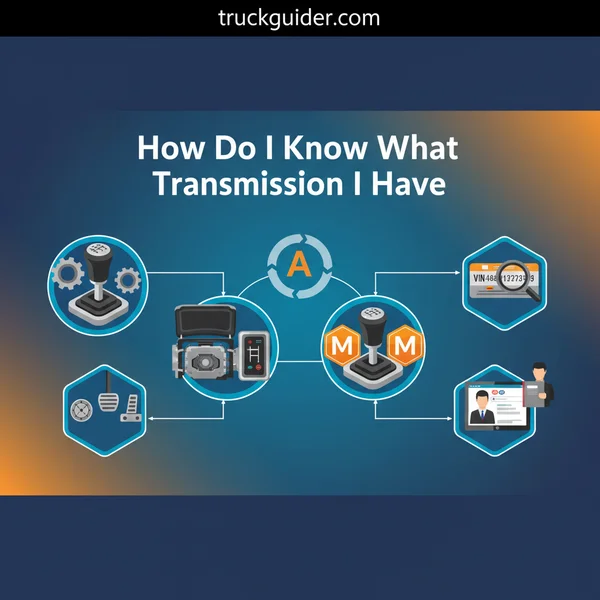
Getting this right is vital for maintenance and repairs. Using the wrong transmission fluid or ordering a filter for a different model can lead to mechanical failure. Since manufacturers often change transmission specs mid-year, simply knowing your vehicle’s year and model isn’t always enough. You need the specific assembly code to ensure 100% compatibility with replacement parts or performance upgrades.
Crucial Locations for Transmission Identification Codes
The most reliable way to identify your transmission without getting your hands dirty is to locate the factory-issued identification codes. These codes are tied to your specific build sheet and tell you exactly what was installed on the assembly line.

The Driver’s Side Door Jamb Sticker
Open your driver’s door and look at the door pillar or the edge of the door itself. You will find a white “Vehicle Certification Label” containing a barcode and various technical specifications. To find your transmission, look at the bottom of this sticker for a heading labeled TR or TRANS. Directly beneath this header, you will see a one- or two-character code.
- Ford Vehicles: Often use a single letter. For example, a “U” typically indicates a 4R70W transmission, while a “T” might indicate an AOD-E.
- Toyota/Lexus: Look for the “A/TM” heading. The characters following the slash represent the transmission model, such as A340E.
- Nissan/Infiniti: The transmission code is often listed near the bottom under the “Model” or “Trans” section.
Decoding Your 17-Digit VIN
Your Vehicle Identification Number (VIN) is the most accurate fingerprint for your car. You can find it on a small metal plate on the driver’s side dashboard (visible through the windshield) or on your insurance card and registration. While you cannot usually “read” the transmission type just by looking at the numbers, you can use a VIN decoder to pull the original factory build sheet.
Online VIN decoders allow you to enter your 17-character string and receive a full breakdown of your vehicle’s components. This will tell you the specific transmission model number, the number of gears, and whether it is a front-wheel-drive or rear-wheel-drive unit. This is particularly helpful for European brands like BMW or Mercedes-Benz, where the transmission model names are complex and specific to the engine pairing.
Utilizing RPO Codes (General Motors)
If you drive a Chevrolet, GMC, Cadillac, or Buick, your transmission is likely identified by a Regular Production Option (RPO) code. These are three-character alphanumeric codes found on a “Service Parts Identification” sticker. This sticker is commonly located in the glove box, the spare tire well, or on the underside of the trunk lid.
- Look for codes starting with M, L, or G.
- M30: This commonly identifies the 4L60-E four-speed automatic.
- MN8: This identifies the heavy-duty 4L80-E transmission.
- MYC: This identifies the 6L80 six-speed automatic transmission.
Your Complete DIY Guide to Identifying Your Vehicle’s Transmission
Identifying your vehicle’s transmission is a critical skill for any car owner, whether you are planning a fluid change, ordering replacement parts, or diagnosing a mechanical issue. Because manufacturers often use multiple transmission types within the same model year and engine configuration, you cannot simply assume what is under your hood based on the car’s name alone. This guide provides a comprehensive, systematic approach to uncovering the specific make and model of your transmission using various identifiers, from digital VIN decoding to physical inspection of the transmission casing itself. By following these steps, you will ensure that you have the exact specifications needed for maintenance or repair, saving you time and preventing the frustration of ordering incorrect components.
Step 1: Locate and Record the Vehicle Identification Number (VIN)
What you need: A notepad, a pen, or a smartphone to take a clear photograph of the VIN plate.
Instructions: The VIN is your vehicle’s unique fingerprint and the most reliable starting point for identification. Stand outside the vehicle on the driver’s side and look through the bottom corner of the windshield. You will see a 17-character string of letters and numbers embossed on a metal plate. If it is obscured by debris or dash covers, you can also find the VIN on your vehicle registration card, insurance documents, or the title. Carefully write down every character, ensuring you do not confuse “0” (zero) with “O” or “1” (one) with “I”. This number encodes the factory build data, including the engine type and the specific transmission installed during assembly.
Pro Tip: Take a high-resolution photo of the VIN with your phone. This allows you to zoom in to ensure accuracy and have it readily available when you are at the auto parts store or searching online databases.
Step 2: Inspect the Driver’s Side Door Jamb Sticker
What you need: A flashlight and a damp cloth to clean the sticker if it is covered in dirt or grease.
Instructions: Open the driver’s door and examine the pillar where the door latches (the door jamb). You will find a white or silver “Safety Compliance Certification Label.” This sticker contains a wealth of technical data, including the manufacture date, GVWR, and paint codes. Look specifically for a section labeled “TRANS” or “TR” at the bottom of the sticker. Below or next to this heading, there will be a one- or two-character code (for example, a “U” might indicate a 4R70W transmission on a Ford). These codes are proprietary to the manufacturer, so once you have the code, you will need to cross-reference it with a manufacturer-specific code chart found in a service manual or on a brand-specific enthusiast forum. On Ford trucks, our Ford transmission identification chart and TR code guide explains how to match the code to the model year.


Pro Tip: If the sticker is faded or peeling, try shining a flashlight at an angle across the surface; sometimes the indentation of the printing is still visible even if the ink has vanished.
Step 3: Utilize an Online VIN Decoder Tool
What you need: An internet-connected device and the 17-digit VIN you recorded in Step 1.
Instructions: Navigate to a reputable VIN decoding website. The NHTSA (National Highway Traffic Safety Administration) offers a free “Product Information Catalog and Vehicle Listing” (vPIC) tool that is highly accurate for vehicles sold in the United States. Enter your VIN into the search field and submit. The tool will break down the VIN and provide a list of factory specifications. Look for the “Transmission” or “Drivetrain” section. It should specify the number of gears (e.g., 6-speed), whether it is automatic or manual, and often the specific model name (e.g., Allison 1000 or ZF 8HP). For even more detailed build sheets, you can visit manufacturer-specific “parts catalog” websites where entering the VIN will show the exact part number for the transmission assembly.
Pro Tip: If the free decoders are vague, search for “Build Sheet” followed by your car’s brand (e.g., “Jeep Build Sheet”). Some manufacturers allow you to download the original factory window sticker PDF which lists the transmission as a line item.
Step 4: Perform a Visual Inspection of the Transmission Pan
What you need: A flashlight, a rag, and possibly a floor jack with jack stands for better visibility (ensure the vehicle is safely secured).
Instructions: If digital methods are inconclusive, you must get under the vehicle to look at the transmission pan. The shape of the oil pan is like a fingerprint for the transmission. For example, a GM 4L60E has a nearly square pan with 16 bolts, while a GM 4L80E has a longer, more irregular “Oregon-shaped” pan with 17 bolts. Use your flashlight to count the number of bolts holding the pan to the transmission body and note the overall geometric shape. Is it a perfect rectangle? Does it have a “kick-out” on one corner? Is the bottom of the pan flat or does it have a prominent bulge? Compare these physical characteristics to a “transmission pan identification chart,” which can be found in most repair manuals or via a quick image search online.
Pro Tip: While you are under there, look for any embossed logos or names on the pan itself. Some aftermarket or high-performance pans will have the manufacturer name (like B&M or Allison) cast directly into the metal.
Step 5: Locate the ID Tag or Stamping on the Casing
What you need: A can of brake cleaner, a wire brush, and a mirror on a telescoping handle.
Instructions: Most transmissions have a metal identification tag riveted to the main housing or a series of numbers stamped directly into the metal. These are often located on the passenger side of the transmission, just above the pan rail, or near the rear of the unit where it connects to the driveshaft. Because transmissions are exposed to the elements, these tags are often covered in road grime or rust. Spray the area with brake cleaner and gently scrub with a wire brush to reveal the text. You are looking for a model number like “8L90,” “A6LF1,” or “45RFE.” Use a telescoping mirror to read tags that are tucked into tight spaces against the vehicle’s floorboard.
Pro Tip: If you find a tag, take a photo of it. These tags often contain a “Serial Number” and a “Source Code” which are vital if you are looking for a replacement unit that matches your specific calibration and gear ratios.
Step 6: Check the Fluid Dipstick and Engine Bay Indicators
What you need: A clean white paper towel and a flashlight.
Instructions: Open the hood and look for the transmission dipstick (note: many modern cars are “sealed” and do not have one). If you have a dipstick, the handle is usually a bright color like yellow or red. Pull the dipstick out and look at the metal blade. Manufacturers often stamp the required fluid type directly onto the dipstick (e.g., “Use Mercon V” or “Dexron VI”). Knowing the specific fluid requirement can narrow down the transmission family significantly. Furthermore, check the underside of the hood for a “Vehicle Emission Control Information” label; while primarily for emissions, it sometimes lists the transmission family as part of the engine/drivetrain group classification.
Pro Tip: If you have a CVT (Continuously Variable Transmission), the dipstick or the cap covering the fill tube will almost always be clearly labeled “CVT.” If you see this, you have immediately narrowed your search to a specific category of transmission.


✅ Final Checklist
- Is the 17-digit VIN you recorded identical to the one on your registration and dashboard?
- Did the “TRANS” code on the door jamb sticker match the model identified by the online VIN decoder?
- Have you counted the number of bolts on the transmission pan to verify the physical shape?
- If you found a metal ID tag, does the model number on the tag align with the technical specifications of your vehicle’s year and make?
- If a dipstick is present, does the fluid type listed on the blade correspond with the transmission model you identified?
Important Notes:
- Safety First: Never crawl under a vehicle supported only by a hydraulic jack. Always use properly rated jack stands and chock the wheels.
- Heat Warning: Transmission components can stay extremely hot for over an hour after driving. Allow the vehicle to cool completely before touching the transmission casing or pan.
- Professional Help: If your vehicle has a “sealed” transmission with no dipstick and a skid plate covering the undercarriage, it may be best to have a dealership service department run your VIN to provide the build data.
- Estimated Time: 15 to 45 minutes.
- Cost: $0 (DIY methods are free; some advanced historical build sheet services may charge $5-$20).
Visual Identification: Decoding Pan Shapes and Bolt Patterns
If the stickers are missing or the transmission was swapped by a previous owner, you will need to perform a visual inspection. The easiest way to do this is to slide under the vehicle and look at the transmission oil pan. Every transmission family has a unique footprint defined by the shape of the pan and the number of bolts holding it to the transmission case.
Identifying by Pan Shape and Bolt Count
The transmission pan is the flat metal plate on the bottom of the transmission. By counting the bolts and noting the specific “notches” or “cutouts” in the pan’s perimeter, you can identify most common transmissions. This method is the gold standard for mechanics because it identifies the hardware actually sitting in the car, regardless of what the VIN says.
- GM 4L60E: This popular transmission features a nearly square pan with 16 bolts.
- GM 4L80E: This is much larger and has a rounded, “D-shaped” pan secured by 17 bolts.
- Ford 4R70W / AOD: These typically have a square pan with 14 bolts, but look for a specific “bulge” on the passenger side of the pan.
- Chrysler 727: Known for its distinctive “L-shaped” notch in the pan, held in place by 14 bolts.
- Ford C4 vs. C6: The C4 uses a small, square 11-bolt pan, while the heavy-duty C6 uses a much larger 17-bolt pan with a distinct “step-down” shape.
When performing a visual check, also look for a small metal tag bolted to one of the transmission case bolts. Many older transmissions and heavy-duty trucks use these “ID Tags.” These tags are stamped with the exact model number and build date, which is crucial if you are ordering a rebuild kit or specific internal seals.
The Role of VIN Decoders and Manufacturer Build Sheets
If you don’t feel like crawling under your car with a flashlight, your Vehicle Identification Number (VIN) is your best friend. This 17-digit code acts as the vehicle’s DNA, containing every detail about how it was configured the day it left the factory. Utilizing this number is often the most efficient way to get technical specifications without getting your hands dirty.
Using Online VIN Decoders
A VIN decoder is a digital tool that “unpacks” the information hidden in your serial number. While many basic decoders provide general engine and trim info, specialized tools can pinpoint the exact transmission model, such as a ZF 8HP or a GM 6L80. This is particularly helpful for modern vehicles where multiple transmission options—like a 6-speed vs. an 8-speed—were offered for the same engine in a single production year.
- Data Accuracy: Use manufacturer-specific decoders (like those for Ford, BMW, or Toyota) for the most reliable results.
- Hidden Specs: These tools often reveal gear ratios and specific torque capacities that aren’t listed in the owner’s manual.
- Free Access: Most basic decoding services are free and accessible via a quick web search using your VIN.
Requesting a Manufacturer Build Sheet
For a deeper dive, a build sheet is the ultimate document. This is essentially the “birth certificate” of your vehicle. It lists every individual component installed during assembly, including the specific transmission variant and any heavy-duty cooling packages or towing upgrades your car might have.
- Dealership Resources: Most dealership parts departments can print a build sheet for you if you provide your VIN.
- Digital Archives: Many brands now offer online portals where owners can download a PDF of their original window sticker or build list.
- Classic Cars: For vintage vehicles, historical societies or brand heritage centers often maintain these records for a small fee.
Why Exact Transmission Identification Matters for Maintenance
Knowing your transmission type isn’t just about satisfying your curiosity; it is the foundation of a healthy vehicle. Modern transmissions are highly specialized, and guessing their specifications can lead to catastrophic mechanical failure and expensive repair bills.
Choosing the Correct Transmission Fluid
Fluid is the lifeblood of your transmission. Using the wrong type is one of the fastest ways to burn out your internal clutches. For instance, accidentally putting standard ATF (Automatic Transmission Fluid) into a CVT (Continuously Variable Transmission) will cause immediate damage. Even within standard automatics, the chemical difference between Dexron VI and Mercon V is significant enough to affect shift quality and long-term component longevity.
- Friction Modifiers: Different transmissions require specific chemical additives to ensure the clutches grab and release at the right time.
- Viscosity Needs: Thinner or thicker fluids are designed specifically for the operating temperatures and pressures of your specific unit.
Sourcing the Right Replacement Parts
When it comes time for a filter change or a sensor replacement, “close enough” doesn’t work in the world of drivetrains. Manufacturers often update transmission designs mid-year. This means two identical-looking trucks from the same year could have different pan gaskets, internal filters, or solenoid packs.
- Avoiding Returns: Correct identification saves you from the frustration of taking your car apart only to find the new parts don’t fit.
- Accurate Labor Quotes: Mechanics can provide much more accurate price estimates when they know exactly which unit they are servicing.
- Performance Matching: If you are upgrading your vehicle, knowing your transmission model helps you find compatible aftermarket coolers or shift kits.
Conclusion
Identifying your transmission doesn’t have to be a guessing game. By utilizing your vehicle’s VIN, checking manufacturer build sheets, or inspecting the unit itself for physical tags and stamps, you can gain total clarity on your drivetrain. Whether you are performing a routine fluid flush or ordering a critical replacement part, having this information ready ensures you get the job done right the first time.
Your next step is simple: locate your VIN on your dashboard or door jamb and run it through a reputable decoder. Once you have the transmission model name, write it down and keep it with your owner’s manual for future reference. Taking ten minutes to identify your equipment today can save you thousands of dollars in repair costs down the road. Stay informed and keep your vehicle running smoothly!


❓ Frequently Asked Questions
Why do I need to know my specific transmission model before buying fluid?
Modern transmissions are highly sensitive and require specific fluid formulations; using the wrong type can cause immediate internal damage or shifting issues.
What if my door sticker is missing or unreadable?
If the sticker is gone, your best option is to use a VIN decoder or look for a physical ID tag stamped directly onto the transmission casing.
Are there differences between transmission codes for the same car model?
Yes, manufacturers often use different transmissions for different engine sizes or trim levels within the same production year and model.
Can I use a scan tool to find the transmission ID?
High-end OBD-II scanners can often access the Transmission Control Module (TCM) to display the specific software ID and hardware model number.
Is there a difference between a transmission code and a part number?
Yes, the code identifies the model series (e.g., 4L60E), while the part number is specific to that exact unit’s manufacturing batch and configuration.
Does the engine size determine which transmission I have?
While certain engines are paired with specific gearboxes, many vehicles offer multiple transmission options for the same engine size depending on the package.
![PB7 Paint Code Guide: Diagnosis & Repair [2026]](https://truckguider.com/wp-content/uploads/2026/03/pb7-paint-code-featured.webp)

![Head Gasket Leak Oil Color: Diagnosis & Repair [2026]](https://truckguider.com/wp-content/uploads/2026/03/head-gasket-leak-oil-color-featured.webp)