How to Check Truck Brake Fluid: Verified Expert Protocol for 2026 Models

Your truck’s braking system relies entirely on hydraulic pressure, making brake fluid the literal lifeblood of your vehicle’s safety. If your pedal feels spongy or the fluid level drops, you are at risk of a critical system failure. Checking this fluid is a straightforward process that anyone can perform in their own garage with just a few minutes of time.
In this article, we will explain how to verify your fluid levels, interpret signs of contamination, select the correct DOT specifications for your make and model, and avoid common maintenance mistakes that could compromise your stopping power.

Prime for Young Adults — 6 Months Free
Students and 18–24s get six months of Prime free, then half price.
Start 6 Months Free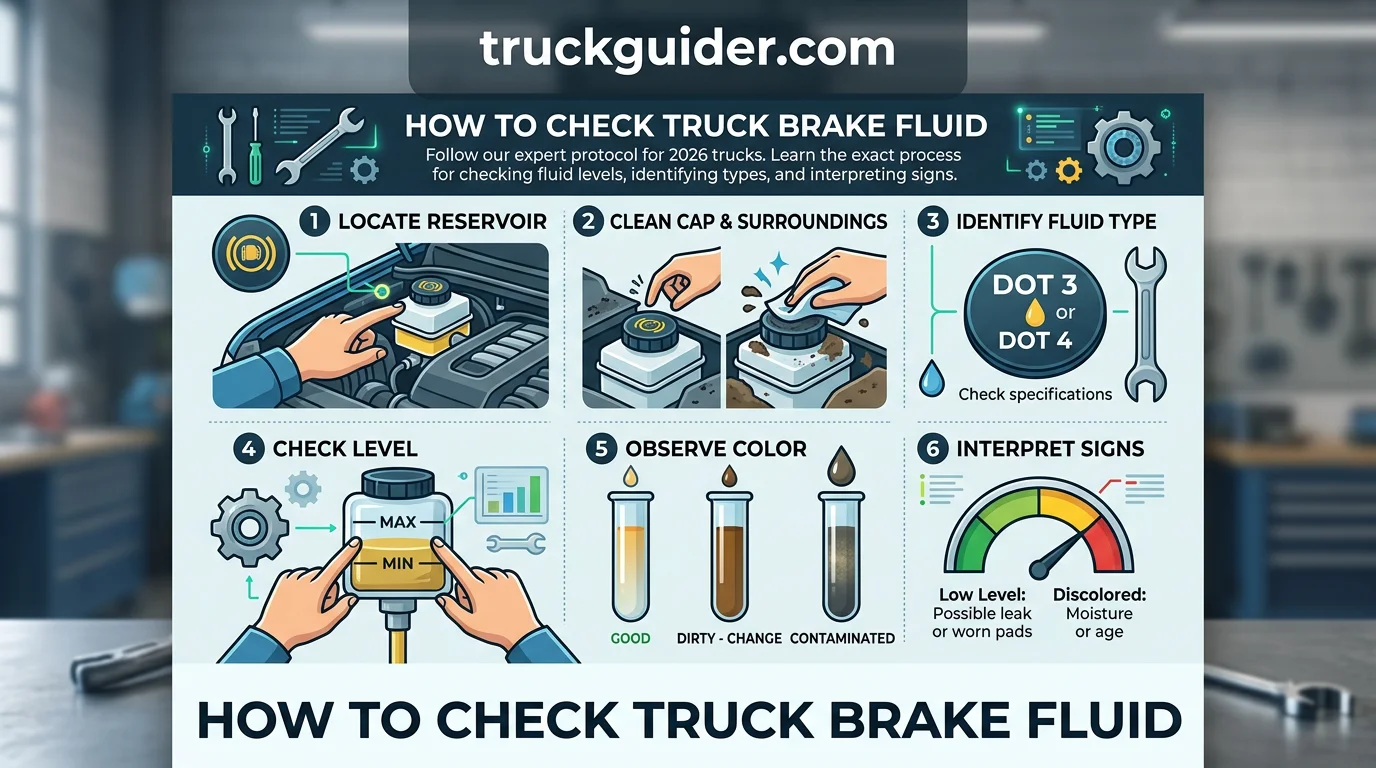
Understanding the Role of Brake Fluid in Your Truck
Recommended Best Deal Products

Brake fluid acts as the lifeblood of your hydraulic system. When you press the pedal, the master cylinder converts that mechanical force into hydraulic pressure, which travels through the lines to engage the brake calipers. Without clean, pressurized fluid, this critical energy transfer cannot occur.

Hydraulic vs Air Brake Systems
Not all trucks use the same stopping technology. Light-duty and some medium-duty trucks rely on hydraulic systems, where fluid transmits the force. Conversely, heavy-duty commercial trucks typically use air brakes, which utilize compressed air rather than fluid to actuate the brakes. Check your owner’s manual to verify which system your specific vehicle utilizes.
Why Fluid Level Fluctuates with Brake Wear
In a hydraulic system, the fluid reservoir level naturally recedes as your brake pads thin. As pads wear down, the calipers must push pistons further out to reach the rotors, requiring more fluid to fill the space. While this is normal, a rapid drop in fluid level typically signals a dangerous leak rather than routine pad wear.
Step-by-Step Guide: How to Check Truck Brake Fluid
Preparing Your Vehicle on Level Ground
Always begin by parking your truck on a flat, level surface. Fluid levels are measured based on the orientation of the reservoir; an incline can lead to inaccurate readings that may hide a leak or cause an overfill condition.
Pop the hood and locate the brake fluid reservoir, typically mounted on the driver’s side of the master cylinder near the firewall. Before removing the cap, use a clean cloth to wipe the exterior of the reservoir housing.
Reading the Reservoir Levels Safely
Contamination is a major risk for hydraulic systems. Removing the reservoir cap while it is covered in dirt or debris allows particles to enter the fluid, which can damage sensitive components. Thoroughly cleaning the area first prevents this.
Carefully unscrew or unclip the reservoir cap. Observe the transparent side of the tank to perform a visual check against the MIN and MAX indicator lines. Your fluid level must fall between these two markers for optimal braking performance.
Ensure the vehicle is on level ground to guarantee an accurate fluid level measurement.

Audible — Listen Free for 30 Days
One free credit a month and thousands of titles included.
Listen Free for 30 DaysWipe the exterior thoroughly with a clean cloth before opening to prevent dirt from contaminating the system.
Check that the fluid level sits clearly between the MIN and MAX indicators on the reservoir casing.
Assessing Brake Fluid Quality and Color
Checking your brake fluid level is important, but assessing its condition is vital for safety. Healthy brake fluid should appear clear to light amber, similar to the color of fresh honey. If the reservoir fluid looks murky, dark, or resembles soy sauce, it has become contaminated with rubber seal particles or metallic debris and requires an immediate full system flush.
Identifying Contaminated Fluid
Dark or cloudy fluid indicates that the chemical properties have broken down. Over time, heat cycles degrade the fluid, causing it to lose its protective anti-corrosion additives. If you notice a dark tint, topping off the reservoir is insufficient. You must flush the old fluid entirely to prevent internal damage to your truck’s brake calipers, wheel cylinders, and ABS hydraulic units.
The Hygroscopic Nature of Brake Fluid
Brake fluid is hygroscopic, meaning it naturally absorbs moisture from the atmosphere through microscopic pores in brake hoses and seals. This accumulated water lowers the fluid’s boiling point, which can cause vapor lock during heavy braking or trailer towing. Periodic flushing is the only way to remove this trapped water and restore peak hydraulic performance to your truck.
Choosing the Right Fluid: DOT 3 vs. DOT 4
Always verify the manufacturer’s requirements before adding fluid. The safest way to identify the correct specification for your truck is to check the master cylinder reservoir cap. Manufacturers typically emboss the required DOT rating—such as DOT 3 or DOT 4—directly onto the top of the cap.
Boiling Points and Safety Standards
Brake fluid is categorized by its boiling point, which determines how well it performs under intense heat. DOT 3 fluids have lower minimum boiling points than DOT 4. Using a fluid with a lower rating than specified can cause the fluid to vaporize under heavy braking, leading to dangerous brake fade.
Avoiding Mixing Different DOT Ratings
Never mix incompatible brake fluids, as doing so can trigger chemical reactions that degrade the system. DOT 3 and DOT 4 are glycol-based, but DOT 5 is silicone-based and never interchangeable. Using the wrong fluid type can compromise your hydraulic seals, leading to leaks and total brake failure.
Audible Premium Plus — Annual Membership
12 audiobook credits up front, plus the full Audible catalogue.
See Annual PlansHow to Read This Chart
This table outlines the primary differences between brake fluid types. The Dry Boiling Point refers to the temperature at which fresh, uncontaminated fluid begins to boil. The Base Material column indicates the chemical composition; glycol-based fluids are generally compatible with standard truck seals, while silicone-based fluids (DOT 5) are not, as they can cause seal swelling or degradation in systems designed for glycol. The “Verify for exact configuration” note is critical because truck manufacturers specify fluids based on the specific design of the master cylinder and anti-lock braking (ABS) modules. Always prioritize the manual’s recommendation over generic service data. If your truck is older or modified, check the master cylinder cap directly to see if the manufacturer allows for upgrades or mandates a specific, strictly enforced fluid grade.
Critical Pitfalls to Avoid When Servicing Your Brakes
Preventing Paint Damage from Spills
Brake fluid is highly corrosive and will strip engine paint on contact. When topping off your reservoir, always use a clean funnel to prevent accidental drips onto the firewall or painted surfaces. If fluid does spill, flush the area immediately with plenty of water to neutralize the chemicals.
Risks of Using Moisture-Contaminated Fluid
Brake fluid is hygroscopic, meaning it absorbs moisture from the air. Never use fluid from an open container that has been sitting in your garage. Contaminated fluid lowers the boiling point, which can lead to brake fade or system failure. Always use a fresh, factory-sealed bottle for every service.
Avoid filling the reservoir past the max line. Expansion during heat cycles will force excess fluid out of the cap, damaging your paint. Furthermore, ignoring persistent fluid leaks is dangerous; if you notice the level dropping, your brake system likely requires professional inspection rather than just a top-off.
Key Takeaways
-
✓
Locate the brake fluid reservoir on the driver’s side near the firewall. -
✓
Perform a visual check of the reservoir markings without opening the cap. -
✓
Analyze fluid color; light yellow indicates health, while dark brown indicates contamination. -
✓
Follow the specific instructions in your owner’s manual regarding DOT 3 vs. DOT 4. -
✓
Avoid leaving the reservoir cap off to prevent moisture absorption.
❓ Frequently Asked Questions
1
What is brake fluid?
Brake fluid is a specialized hydraulic fluid that transfers force into pressure within your truck’s braking system. When you press the pedal, the fluid moves through the lines to engage the brake calipers or wheel cylinders, converting mechanical pressure into the stopping force needed to halt your vehicle safely.
2
How does checking brake fluid work?
The process involves visual inspection and level verification. By observing the translucent reservoir, you assess the fluid volume against factory-stamped indicators. If the level is low, it often indicates worn brake pads, as the calipers extend further, drawing more fluid into the lines and lowering the reservoir volume.
3
Why is checking brake fluid important?
Brake fluid is hygroscopic, meaning it absorbs moisture from the air over time. This reduces the fluid’s boiling point, which can lead to brake fade or total failure during heavy towing or steep descents. Regular monitoring ensures your system remains responsive and prevents costly damage to internal components.
4
What are the benefits of checking fluid regularly?
Regular checks provide an early warning sign for brake system health. You can detect leaks, identify contaminated fluid, and ensure your truck maintains optimal stopping distance. Proactive maintenance techniques extend the lifespan of expensive parts like the master cylinder, ABS pump, and brake calipers.
5
How can I get started with checking brake fluid?
Start by identifying the master cylinder reservoir under your truck’s hood. Consult your manual to confirm the required fluid type. Clean the exterior of the reservoir thoroughly before checking levels, and perform the inspection on a flat, level surface to ensure you get an accurate reading.
6
How often should I check my truck’s brake fluid?
Suggest checking at every oil change or at least twice a year for safety.

![Best Aftermarket Rear Bumpers [2026]](https://truckguider.com/wp-content/uploads/2026/03/aftermarket-rear-bumper-featured.webp)
![PWQ Paint Code: Diagnosis & Repair [2026]](https://truckguider.com/wp-content/uploads/2026/03/pwq-paint-code-featured.webp)