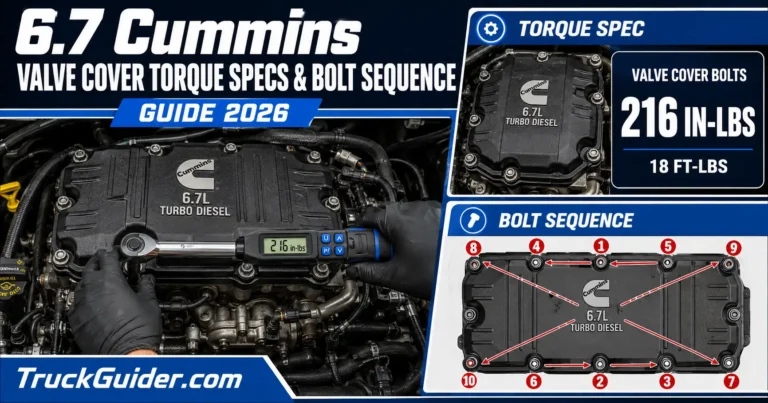
Lug Nut Torque Chart Ram Ford Chevy And Toyota Trucks By Year 2026

Most half-ton trucks run 130 to 150 ft-lbs on the lug nuts, and heavy-duty trucks run higher still, but the exact number depends on your brand, your model, and whether you are working on a single rear wheel or dual rear wheel setup.
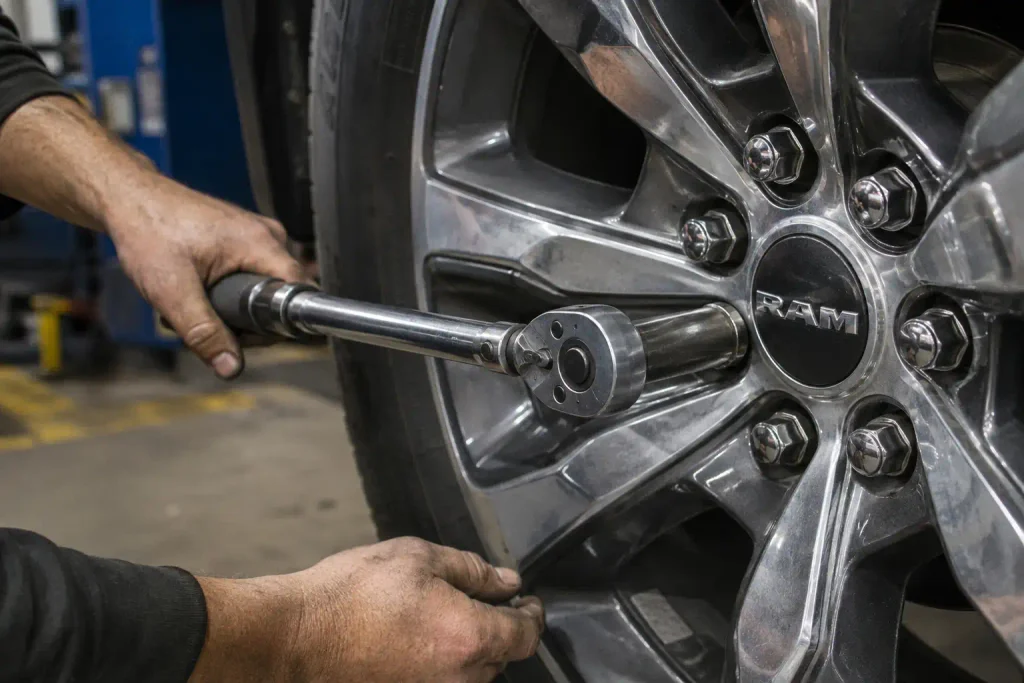
Guessing, or letting a tire shop “wall them in” with an impact gun, is how wheel studs shear and rotors warp. Use the chart below to find your truck, then confirm it against your owner’s manual before you pick up the wrench.

Prime for Young Adults — 6 Months Free
Students and 18–24s get six months of Prime free, then half price.
Start 6 Months FreeNote on the table above: Values assume clean, dry threads and factory or OEM-equivalent lug nuts. If you run anti-seize on the threads, most manufacturers recommend reducing torque by roughly 20 percent to hit the same clamp load.
Wheel material, steel or aluminum, does not change the torque spec. What changes it is stud size, lug nut type, and whether the axle carries single or dual rear wheels.
Truck Lug Nut Torque At A Glance
Ram, Ford, Chevy, GMC, and Toyota, by model and configuration
Ram
Ford
Chevy and GMC
Toyota
SRW means single rear wheel, DRW means dual rear wheel. Values assume clean, dry threads and factory or OEM-equivalent lug nuts. Always confirm against your owner’s manual before torquing, and reduce torque by roughly 20 percent if using anti-seize.

Audible — Listen Free for 30 Days
One free credit a month and thousands of titles included.
Listen Free for 30 DaysWhy Lug Nut Torque Varies Between Ram Ford Chevy And Toyota
Recommended Best Deal Products


The number on your torque wrench is set by the stud thread size and the lug nut’s seat design, not by how big the truck looks. Ram uses a cone-shaped seat on most trucks, tightened to 130 ft-lbs, while later flanged-nut trucks are rated higher at 140 ft-lbs because the flange spreads clamp load differently across the wheel face.
Ford and GM standardized on a flanged nut with an M14 x 1.5 stud across most of their truck lineups, which is why their specs stay flatter across model years than Ram’s.
Dual rear wheel trucks add a second variable. The inner and outer wheels share the same stud, so the torque spec has to account for two wheels’ worth of clamp force competing for the same thread engagement.
That is why 3500 and F-350 dually specs do not always match their single rear wheel counterparts, and why the tightening sequence for duallies is different from a standard 4-lug or 6-lug wheel. Ram’s official 2500 and 3500 owner’s manual specifically calls out installing the inner dual wheel first, torquing it, then repeating the full sequence on the outer wheel.
Ram 1500 2500 And 3500 Lug Nut Torque Specs
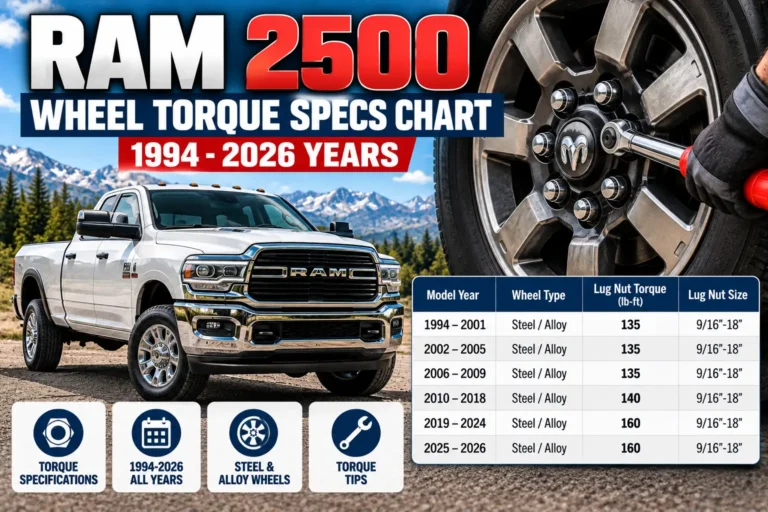
The Ram 1500’s lug nut torque has held steady at 130 ft-lbs for cone-type nuts and 140 ft-lbs for flanged nuts across every model year since 2009, confirmed by Ram’s own owner’s manual and cross-checked against RamForum threads citing the factory service manual page directly.
Earlier 2002 to 2008 trucks ran a wider window of 120 to 150 ft-lbs cone and 130 to 160 ft-lbs flanged, so check your specific year if your truck predates the 2009 refresh.
Ram 2500 and 3500 single rear wheel trucks generally run 135 to 140 ft-lbs, though older service data shows some model years split the front and rear axle specs slightly. Ram 3500 dual rear wheel trucks are the one number on this chart with a documented safety correction.
NHTSA Safety Recall 21V-398, issued in 2021, revised the torque for 2012 to 2018 Ram 3500 DRW trucks with flanged lug nuts and M14 x 1.5 studs down to 129 ft-lbs, replacing the earlier 140 to 145 ft-lbs figure some owner’s manuals had printed. Dealers report the same 129 to 130 ft-lbs figure continuing on newer 3500 DRW trucks as of this writing.
Audible Premium Plus — Annual Membership
12 audiobook credits up front, plus the full Audible catalogue.
See Annual PlansIf you own a 2012 to 2018 Ram 3500 dually, torquing to an old 140-plus spec risks the exact stud failure the recall was meant to prevent.
Ford F150 F250 And F350 Lug Nut Torque Specs
Recommended Best Deal Products

Ford’s lug nut torque specs are simpler to remember than Ram’s because Ford has kept two numbers stable for most of the last two decades. Current F-150 models, including aluminum-body trucks from 2015 forward, use a 14mm stud torqued to 150 ft-lbs, a figure confirmed directly in Ford’s published owner’s manual.
Older 9th and 8th generation F-150s with 12mm studs ran a lighter 100 ft-lbs, so a quick stud check tells you which spec applies before you guess.
Super Duty F-250 and F-350 trucks run heavier at 165 ft-lbs for the M14 x 1.5, 8-lug wheel nuts, and Ford’s factory workshop manual applies that same 165 ft-lbs figure to both single rear wheel and dual rear wheel F-350 configurations.
That is a real point of difference from Ram, where the DRW spec drops below the SRW number. Some 2005 to 2010 Super Duty trucks show a slightly lower 150 ft-lbs in period documentation, so confirm your exact year if your F-250 or F-350 falls in that window.
Silverado And Sierra Lug Nut Torque Specs
Chevrolet and GMC keep one number across most of the half-ton and heavy-duty lineup. Silverado 1500 and Sierra 1500 trucks, along with Silverado HD and Sierra HD 2500 single rear wheel models,
use 140 ft-lbs from roughly 1999 through the current generation, per GM’s published owner’s manuals. That consistency makes GM the easiest brand on this chart to remember.
The exception is dual rear wheel 3500 trucks, which step up to 165 ft-lbs to handle the added clamp demand of two wheels sharing each stud, matching the pattern seen on Ford’s Super Duty duallies. Torque specs for the Silverado 1500 sometimes get reported lower in older references,
closer to 95 to 105 ft-lbs, but that figure does not match current GM factory documentation and should not be used on a modern truck. When in doubt, 140 ft-lbs is the number GM has published consistently for two and a half decades of half-ton and SRW heavy-duty trucks.
Tacoma And Tundra Lug Nut Torque Specs
Recommended Best Deal Products
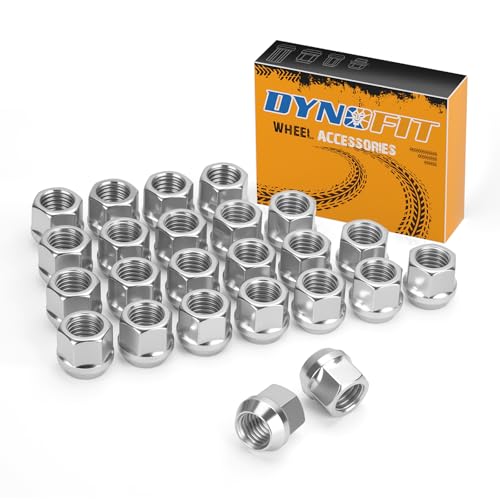
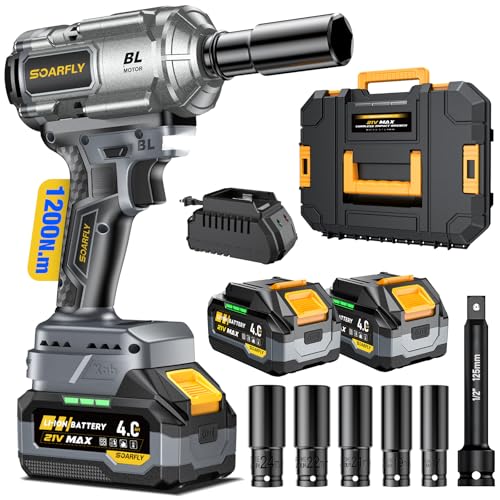

Toyota’s truck lineup runs lighter than the domestic Big Three because Tacoma and Tundra carry less payload and towing capacity than a comparable Ram, Ford, or Chevy. Most 2005 to 2023 Tacomas use 83 ft-lbs on factory wheels, based on Toyota’s owner’s manual and confirmed across multiple Tacoma forum threads quoting the same figure.
The redesigned 2024 to 2026 Tacoma moved to a 14mm stud and a higher 97 ft-lbs spec, so fourth-generation trucks should not be torqued to the older 83 ft-lbs number.
Tundra follows a similar generational split. Toyota’s 2024 owner’s manual, available directly from Toyota’s publications portal, lists 97 ft-lbs for 2007 to 2025 Tundra trucks on aluminum wheels and a higher 154 ft-lbs for the steel spare. Earlier 1999 to 2006 Tundras with 12mm studs used a lighter 81 ft-lbs.
Toyota does not currently have a dedicated Tundra lug nut torque post in the Truck Guider library, and this is a content gap worth closing given how thin the site’s Toyota coverage is compared to Ram, Ford, and Chevy.
Dual Rear Wheel Trucks Need A Different Tightening Sequence
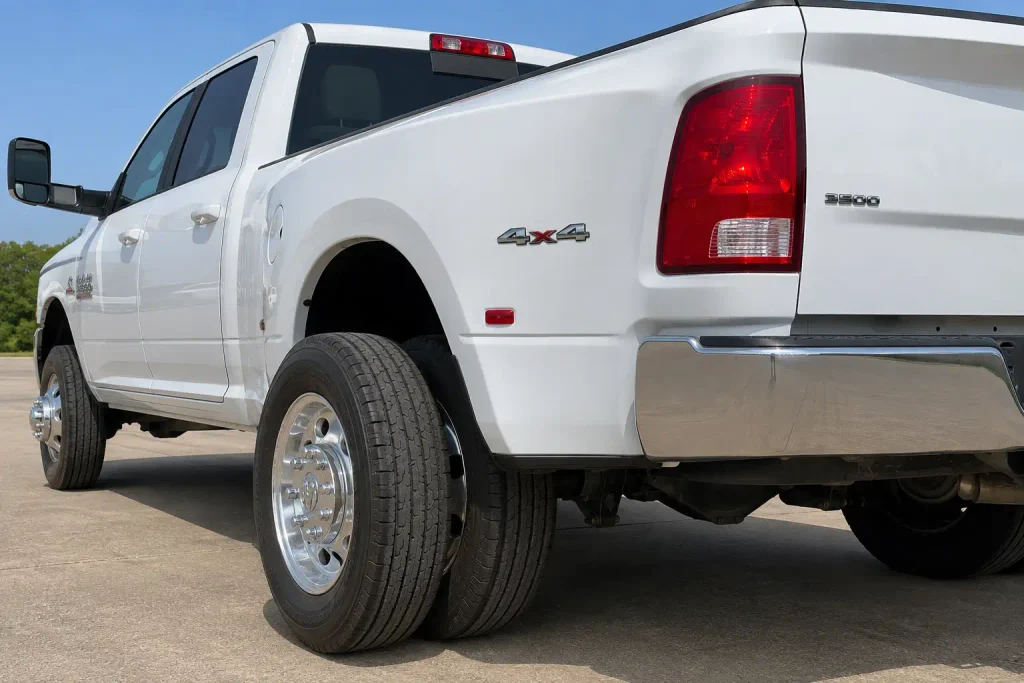
A dually is not just a higher torque number. The inner and outer wheels on a dual rear wheel axle share the same set of studs, so tightening them out of order can leave one wheel under-clamped even if your torque wrench clicks correctly on every nut.
The standard trucking industry procedure, confirmed in both Ram’s factory owner’s manual and heavy-truck wheel service documentation, is to fully seat and torque the inner wheel first, in a star pattern, before the outer wheel goes on at all.
Only after the inner wheel is torqued to full spec does the outer wheel get installed and torqued through its own star pattern.
Skipping straight to the outer wheel, or splitting torque evenly between inner and outer nuts at the same time, is a common mistake that leaves the inner wheel loose under the outer one where it cannot be seen or heard.
Because DRW studs already run closer to their failure threshold under GM and Ram’s own recall history, an impact gun with no torque stick is a bigger risk on a dually than on a standard 4-lug or 6-lug wheel.
Owners running the best tires for a Ram 3500 dually should pair any new tire and wheel package with a fresh check of both inner and outer torque, not just the outer nuts a shop can reach easily.
How To Torque Lug Nuts The Right Way
- Support the truck properly. Use jack stands rated for your truck’s weight, never a jack alone, and make sure the truck sits level before you start.
- Clean the threads. Rust, dirt, or old anti-seize on the stud or lug nut throws off your torque reading even with a calibrated wrench.
- Hand-thread every nut first. Confirm each nut spins on freely before using any tool, which prevents cross-threading a stud.
- Snug in a star pattern. For a 5-lug wheel this means skipping every other stud, not moving in a circle, which pulls the wheel down evenly against the hub.
- Torque to half spec, same pattern. If your truck calls for 140 ft-lbs, bring every nut to roughly 70 ft-lbs first, still following the star sequence.
- Finish at full spec, same pattern again. Complete the star sequence a second time at the full torque number for your truck.
- Re-torque after 25 to 100 miles. New wheels and freshly serviced hubs settle slightly under initial driving load, which can leave nuts a few ft-lbs under spec even when they were correct at installation.
A basic 1/2-inch drive click torque wrench covers every truck on this chart. The TEKTON 1/2-Inch Drive Click Torque Wrench, rated 20 to 150 ft-lbs and priced around $40, handles everything from a Tacoma’s 83 ft-lbs up through a Ram 1500’s 140 ft-lbs. Owners of 2500, 3500,
F-250, or F-350 trucks working near the top of that range, or on a dually pushing 165 ft-lbs, should step up to a wrench rated past 150 ft-lbs so the tool is not maxed out at the exact spec they need to hit.
When To Stop And Call A Shop
A stripped stud, a lug nut that spins without tightening, or a wheel that still feels loose after a full star-pattern torque sequence are all signs to stop the DIY job. Stud replacement is inexpensive compared to the cost of a wheel separating from the truck at highway speed, and any of these symptoms point to a stud or hub problem a torque wrench alone will not fix.
A truck that has been sitting on a spare or a mismatched wheel for an extended period is also worth a shop inspection before returning to full torque specs, since a bent stud or damaged hub face will not seat correctly no matter how carefully the star pattern is followed.