Chevy Silverado ABS Sensor Location: Find & Test Guide 2026

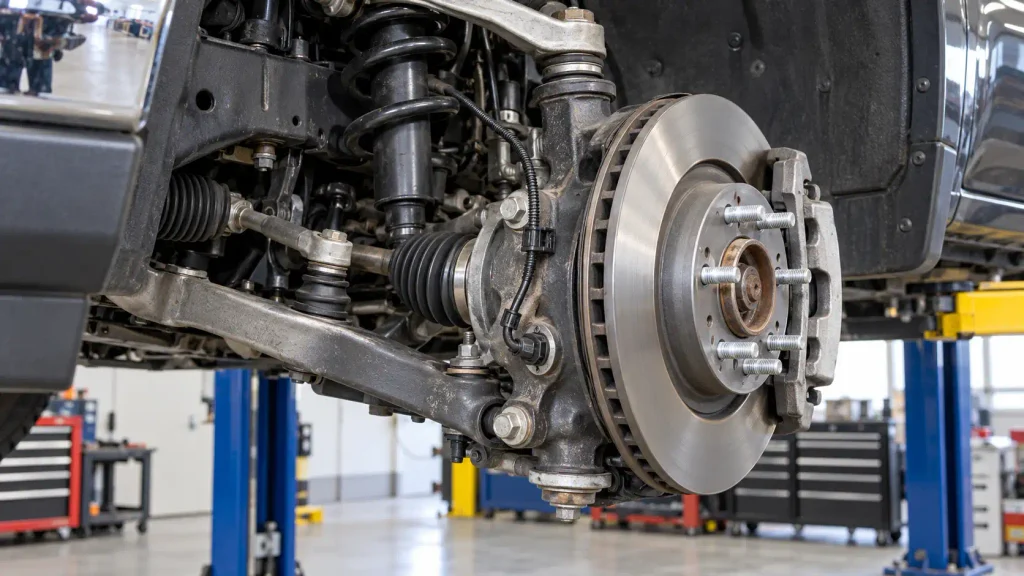
The Silverado ABS sensor location depends on the model year, brake system, and wheel you are checking. On most Silverado models, the front wheel speed sensors mount at the front hub or bearing assemblies. On newer trucks, rear wheel speed sensors are generally mounted near the outer ends of the rear axle housing.
Older Silverado 1500 trucks can be different. Some use a vehicle speed sensor signal to represent rear-wheel speed rather than separate sensors at both rear wheels. Identify the truck’s year and ABS configuration before removing a wheel or ordering a sensor.


Where Is the Silverado ABS Sensor Located



Start at the wheel associated with the fault. Trace the sensor wire from the hub or axle to its connector.
| Position | Where to Look | Important Distinction |
|---|---|---|
| Left front | Front hub or bearing assembly, near the steering knuckle | Wiring follows the left front suspension or frame |
| Right front | Front hub or bearing assembly, near the steering knuckle | Follow the harness from the right front hub |
| Left rear | Rear axle housing near the left wheel, where individually equipped | Not present as a separate wheel sensor on every older ABS system |
| Right rear | Rear axle housing near the right wheel, where individually equipped | Connector and harness routing vary by axle |
| Older rear-speed input | Transmission or transfer-case vehicle speed sensor on certain systems | This is not a sensor mounted at each rear wheel |
Wheel-speed sensors measure rotation. The ABS control module interprets their signals.
How Silverado ABS Sensor Locations Change by Model Year


Silverado generations use different rear-speed arrangements. The 2007 Classic is not identical to the redesigned 2007 Silverado.
| Silverado Model Years | Front Sensor Location | Rear Speed Sensing and Location |
|---|---|---|
| 1999–2006 Silverado 1500 | Front wheel hub or bearing area | Common three-channel ABS configurations receive rear-speed input from the vehicle speed sensor, not two separate rear-wheel sensors |
| 2007 Silverado Classic | Earlier-generation front hub arrangement | Check the carryover brake system and transmission or transfer-case speed input |
| 2007–2013 redesigned Silverado 1500 | Left and right front hub areas | Individual left and right rear wheel sensors are documented for certain JL4 systems; other brake configurations differ |
| 2014–2018 Silverado 1500 | Front wheel hub areas | GM procedures identify rear sensors mounted in the axle housing on documented configurations |
| 2019 Silverado 1500 LD | Carryover-generation front arrangement | Check the LD-specific service information rather than using the redesigned 2019 diagram |
| 2019–2025 redesigned Silverado 1500 | Side-specific front hub-area sensors | Individual rear sensor service procedures exist; mounting and harness routing depend on axle equipment |
| Silverado 2500HD and 3500HD | Front hub-area sensors | Rear axle-mounted sensor designs and removal procedures vary by model year and axle configuration |
A 2002 GM ABS service description explains that its electronic brake control module receives the rear-speed input through the powertrain control module and vehicle speed sensor. That configuration has no separate rear wheel-end sensors.
The 2007 Silverado wheel speed sensor location reference identifies separate rear sensors specifically under JL4. Verify the year, drivetrain, and brake option before choosing a diagram.
Where to Find Silverado Front Wheel Speed Sensors


Look behind the front wheel near its hub or bearing assembly. The sensor is not attached to the brake hose.
Locate the Left Front Sensor


From the left front wheel area, identify the steering knuckle and hub. Look for the relatively thin electrical lead attached to the hub-side sensor and follow it away from the rotating parts.


The lead may pass through clips on the knuckle, control arm, or frame before reaching its connector.
Locate the Right Front Sensor
Use the same landmarks at the right front hub, but do not assume the right sensor is interchangeable with the left. On certain newer trucks, the sensors are side-specific even though they look nearly identical.
A hub can contain the magnetic encoder ring. A faulty gap, encoder, or wire can distort the reading.
What you should see: A sensor attached at the hub-area mounting point, a routed electrical lead, and one or more retaining clips. Confirm its identity from the factory diagram before disconnecting anything.
Where to Find Silverado Rear Wheel Speed Sensors


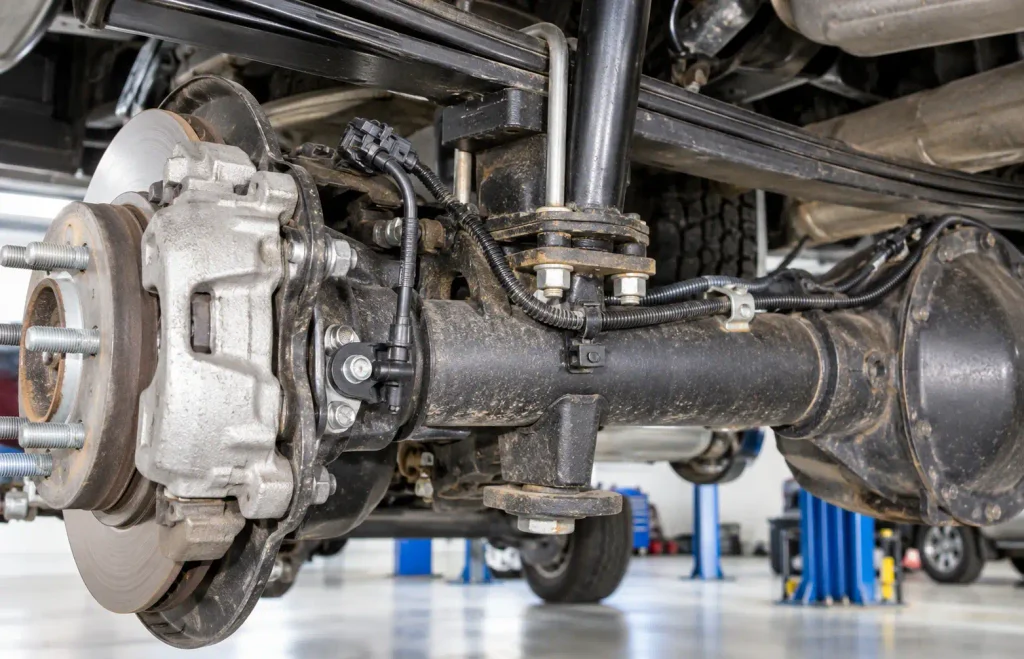
If the truck has individual rear sensors, inspect the axle housing near each wheel end.
Find a Rear Axle Sensor
Locate the rear axle housing, then follow its wiring toward the left or right wheel end. A sensor may be held by a small bolt, while its wiring is retained along the axle and frame before reaching a connector.


For example, a 2014 Silverado rear wheel speed sensor service procedure places the sensor at the rear axle and shows a connector retained at the frame rail. Later service procedures also identify separate rear sensors on certain axles.
Check Older Silverado Rear Speed Inputs


Do not assume a 1999–2006 Silverado 1500 has one ABS sensor behind every rear wheel. On the documented older three-channel configuration, the combined rear-speed signal comes from the vehicle speed sensor through the powertrain control module.
On older GM applications, the vehicle speed sensor may be at the rear of the transmission on 2WD trucks or at the transfer case on 4WD trucks. Its position depends on the transmission and transfer case.
What you should see: On individually equipped rear axles, a sensor body entering the axle housing and a wire clipped along the axle. On a rear-speed system using the vehicle speed sensor, do not expect matching rear wheel-end sensors.


What Changes on Silverado 2500HD and 3500HD Trucks
Silverado 2500HD and 3500HD owners should use heavy-duty service information, not a Silverado 1500 photograph as a universal guide. Rear axle size, single-rear-wheel or dual-rear-wheel equipment, and brake options can change the hardware and access procedure.
Selected 2015–2019 HD service procedures show rear axle-mounted sensors and frame-side harness clips. A 2023 Silverado 2500HD procedure also identifies left and right rear sensors.
These examples confirm that rear axle-mounted sensors exist on HD models. They do not establish a single mounting position for every 2500HD or 3500HD.
Before buying a replacement, confirm the VIN, model year, axle configuration, sensor side, and original part number. The engine alone is not enough to establish correct sensor fitment.
How to Identify Silverado ABS Sensor Wiring and Connectors
The sensor lead may be easier to spot than the sensor. Trace it from its hub or axle mounting point.
Look for these identification clues:
- Sensor mounting point: A small sensor installed in a hub-area or axle-housing opening, depending on the generation.
- Dedicated electrical lead: Wiring secured away from the tire, brake rotor, steering movement, and suspension travel.
- Harness retainers: Clips or brackets that hold the lead to the knuckle, control arm, axle, or frame.
- Connector: A disconnect point farther along the harness; its shape and position vary by year.
Do not confuse ABS wiring with brake hoses, parking-brake wiring, or pad wear sensor leads.
What you should see: The wire should trace continuously from the identified sensor to its retaining clips and connector without being stretched, crushed, or routed against rotating parts.
How to Safely Access Silverado ABS Wheel Speed Sensors
Identify the affected speed input with an ABS-capable scan tool, not just an engine-code reader.
- Confirm the affected corner. Read ABS-specific diagnostic trouble codes and, where available, compare live wheel-speed data before selecting a sensor.
- Secure the truck. Park on level, firm ground, switch off the ignition, and chock the wheels. Follow the vehicle-specific lifting points if you need to raise it.
- Support the truck correctly. Use appropriately rated jack stands or a suitable lift. Never work under a pickup supported only by a hydraulic jack.
- Follow the sensor lead. Locate the hub or axle mounting point and trace the harness to its connector without pulling on the wire.
- Inspect before removing. Check for torn insulation, missing clips, loose connectors, corrosion, and physical damage. Consult the correct GM service procedure if disassembly is necessary.
Removal requirements vary. Never pry out a seized sensor or assume a universal bolt torque.
What success looks like: You have identified the precise sensor or rear-speed input for your truck, confirmed its harness route, and noted any visible damage without disturbing hydraulic brake connections.
What ABS Sensor Faults Mean for Silverado Owners
An ABS warning lamp does not prove that the sensor itself has failed. The problem may involve the wiring, hub encoder, sensor mounting surface, electrical connector, or the electronic brake control module.
Older Silverado trucks have a documented low-speed ABS activation issue related to corrosion beneath a front wheel-speed sensor mounting surface. Rust can increase the gap between the sensor and the reluctor ring, creating an unreliable reading even when the sensor is not visibly broken.
Modern trucks can develop different issues. Damaged harnesses and incorrect sensor fitment can produce trouble codes, sometimes alongside traction-control or stability-control warnings.
For the wider diagnostic process, see TruckGuider’s guide to diagnosing a service antilock brake system warning. Use the Silverado-specific service data to interpret codes rather than assuming one generic code description fits all model years.
If the red brake warning light also comes on, braking performance changes, or the pedal feels abnormal, stop driving and arrange a professional inspection. Identifying the sensor should never take priority over a safe braking system.
Which Silverado ABS Sensor Mistakes Should You Avoid
Replacing parts without identifying the faulty signal can leave the warning unchanged.
- Assuming every Silverado has four wheel-end sensors: Older rear-speed arrangements can use a vehicle speed sensor instead.
- Mixing Silverado generations: The 2007 Classic and redesigned 2007 truck should not share an unchecked location diagram.
- Swapping left and right front sensors: Some newer Silverado 1500 sensors are side-specific.
- Ignoring the encoder and mounting surface: The sensor may be functional while its signal is affected by surrounding components.
- Replacing the ABS control module first: Module faults need independent diagnosis, as explained in our ABS control module replacement and symptoms guide.
GM’s PIT5950B diagnostic bulletin covers the 2019 redesigned Silverado 1500 and 2020–2025 Silverado 1500. It warns that visually similar left and right front sensors can be installed on the wrong side, causing repeat wheel-speed sensor trouble codes.
How to Confirm the Correct Silverado Sensor Location
The correct Silverado ABS sensor location depends on generation, ABS configuration, and wheel position. Check the front hub for front faults and the rear axle harness where separate rear sensors exist.
The exception matters most on older Silverado 1500 models. Certain systems derive rear-wheel speed from a transmission or transfer-case speed signal rather than from separate sensors at each rear wheel.
Check the VIN-specific service information, identify the affected speed input with an ABS-capable scan tool, and inspect the wiring before ordering parts. That sequence prevents a location mistake from becoming an unnecessary repair.
Silverado ABS Sensor Location Questions Answered
Where Is the Silverado 1500 ABS Sensor
Front wheel-speed sensors are usually at the front hubs. Rear positions depend on the brake configuration, so verify it before looking behind the rear wheels.
Where Is the Rear Silverado ABS Sensor
Many newer Silverados use rear axle-mounted sensors near each wheel. Some older 1500 systems instead receive rear-speed information from the vehicle speed sensor.
Does Every Silverado Have Four ABS Sensors
No. The number of individual wheel-end sensors varies by model year and brake configuration. A documented early Silverado 1500 system uses two front wheel sensors and a rear-speed signal supplied from the vehicle speed sensor, while later systems can use individual sensors at all four wheels.
Is the Silverado ABS Sensor Hub Mounted


The front wheel speed sensor is located at the hub or bearing assembly, but how the sensor and encoder are serviced varies by generation. Some sensors can be removed separately, while other related components are serviced with the hub assembly. Check the specific part arrangement before purchasing a repair kit.
Can a Bad Sensor Trigger ABS Warnings
Yes. A faulty wheel speed sensor or its circuit can trigger an ABS warning and related traction-control messages. However, similar warnings can result from wiring, encoder, or module faults, so read ABS codes and examine live sensor data before replacing anything.