Small EVAP Leak Code P0456 & P0442: Repair Guide 2026

The modern automotive landscape is defined not merely by horsepower or towing capacity, but by the intricate network of environmental control systems that govern vehicle operation. Among these, the Evaporative Emission Control (EVAP) system represents a critical, yet frequently misunderstood, component of the internal combustion ecosystem. Unlike tailpipe emissions, which are the byproduct of combustion, evaporative emissions consist of volatile organic compounds (VOCs)—primarily hydrocarbons—that escape from the fuel system before the engine is even started.
The control of these vapors is strictly mandated by federal and state regulations, leading to the implementation of highly sensitive On-Board Diagnostic (OBD-II) monitoring systems capable of detecting leaks as microscopic as 0.020 inches in diameter.
This report provides an exhaustive technical analysis of the “small leak” diagnostic trouble codes (DTCs)—specifically P0442 and P0456—within the context of the North American light-duty truck market. Focusing on the Ford F-150, Chevrolet Silverado, Ram 1500, and Toyota Tundra, this document synthesizes regulatory frameworks, mechanical engineering principles, and field diagnostic data to offer a definitive guide for technicians and informed owners.
The analysis extends beyond simple part replacement strategies to explore the thermodynamics of vapor generation, the logic of monitor algorithms, and the economic implications of repair in the 2024-2025 automotive aftermarket.
The Thermodynamic Imperative of Vapor Containment
To understand why a Check Engine Light (MIL) illuminates for a pinhole leak, one must first grasp the physical properties of gasoline. Gasoline is a volatile mixture of hydrocarbons with a high vapor pressure. Even at ambient temperatures, liquid gasoline transitions into a gaseous state, a process significantly accelerated by agitation (sloshing in the tank) and thermal expansion (diurnal temperature swings). In the absence of a containment system, these vapors would vent directly into the atmosphere, contributing to the formation of ground-level ozone and photochemical smog.
The EVAP system creates a sealed environment for the fuel supply. The core objective is to manage the pressure differential between the fuel tank and the atmosphere while capturing vapors in a carbon-based medium for later combustion. The OBD-II system acts as the auditor of this sealed environment. It does not measure the leak directly; rather, it infers the presence of a leak by monitoring the system’s ability to hold pressure or vacuum over a defined period. This indirect measurement method relies heavily on the Ideal Gas Law ($PV=nRT$), where changes in temperature ($T$) and pressure ($P$) are monitored to detect a loss of mass ($n$), representing the escaping vapor.
Regulatory Evolution: From 0.040″ to 0.020″
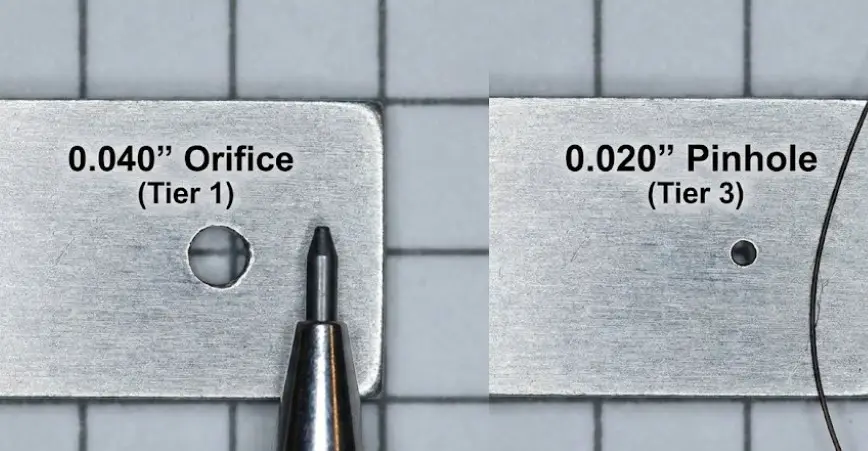
The sensitivity of leak detection monitoring is not arbitrary; it is a direct function of legislative mandates enforced by the Environmental Protection Agency (EPA) and the California Air Resources Board (CARB). The progression of these standards has driven the complexity of EVAP hardware.
- Tier 1 / LEV I (The 0.040″ Standard): In the early years of OBD-II (mid-1990s to early 2000s), regulations required vehicles to detect a leak equivalent to a round orifice of 0.040 inches (approximately 1 mm). This threshold, typically associated with code P0442, represents a leak large enough to be caused by a visibly cracked hose or a loose gas cap.
- Tier 3 / LEV II & III (The 0.020″ Standard): As emission targets tightened, regulators recognized that the cumulative effect of millions of vehicles with microscopic leaks was significant. Consequently, modern standards now mandate the detection of leaks as small as 0.020 inches (approximately 0.5 mm). This threshold triggers code P0456.
The shift to the 0.020-inch standard fundamentally changed diagnostic strategies. A leak of this magnitude is often invisible to the naked eye. It may result from a compromised O-ring, a porous casting in a plastic valve body, or slight corrosion on a metal sealing surface. To detect such minute variances, manufacturers developed advanced monitoring strategies such as Engine Off Natural Vacuum (EONV) and dedicated Leak Detection Pumps (LDP), which will be analyzed in detail in Section 3.
The Economic and Environmental Cost of Neglect
While a P0442 or P0456 code rarely affects drivability—unless accompanied by a purge valve failure that alters fuel trim—the consequences of ignoring these codes are measurable.
- Fuel Economy: A small leak, particularly if located in the vapor headspace, can result in the evaporation of 6-8 gallons of gasoline annually per vehicle. With gas prices fluctuating, this represents a hidden “tax” on the owner, alongside a 3-5% reduction in overall fuel efficiency due to the loss of combustible vapors that would otherwise be purged into the engine.
- Component Degradation: An unsealed system allows moisture and dust to enter. The charcoal canister, designed to adsorb hydrocarbon vapors, is highly susceptible to water damage. Once the charcoal pellets become saturated with moisture or liquid fuel, they break down, sending debris into the purge lines and destroying downstream components like the purge valve and engine intake sensors.
- Compliance Failure: In states with OBD-II emissions testing, the presence of a P0442/P0456 code, or the “Permanent” status of these codes even after clearing, results in an automatic inspection failure. This has legal ramifications for vehicle registration and resale value.
SMALL EVAP LEAK
P0442 & P0456
Recommended Best Deal Products


Why your Check Engine Light is on, and why a loose gas cap might be costing you peace of mind.
What is a “Small” Leak?
The Evaporative Emission Control (EVAP) system traps gas fumes. A P0456 code triggers for a leak as small as 0.020 inches. To put that in perspective, it’s roughly the size of a pinhead.
Precision Detection
Your truck’s computer creates a vacuum test. If pressure drops too fast, the light turns on.
Diameter of the leak trigger
Who is the Usual Suspect?
Recommended Best Deal Products



While terrifying to see a dashboard warning, the cause is often mundane. Based on aggregated repair data, here is the likelihood of component failure for EVAP codes.
The Gas Cap (45%)
The seal wears out, or it wasn’t clicked tight. The cheapest and most common fix.
Vent Valve Solenoid (20%)
Located near the charcoal canister (often under the truck). Gets clogged with dirt/dust and sticks open.
Purge Valve (15%)
Located under the hood. Controls vacuum flow. If it sticks, it disrupts pressure.
Troubleshooting Flowchart
Don’t throw parts at the problem. Follow this logic tree to save money.
Check the Gas Cap
Remove it, inspect the rubber O-ring for cracks. Reinstall and click it 3 times.
Clear Codes & Drive
Use an OBD2 scanner. Drive for 50-100 miles (Drive Cycle). Does the light return?
Problem Solved. Usually was the cap.
Visual Inspection
Look for rotted hoses near the engine or fuel tank.
The Smoke Test
Professional Diagnostic
Injecting smoke into the system to visually find the leak source.
What Will It Cost?
Recommended Best Deal Products


EVAP repairs vary wildly. A gas cap is “lunch money,” while a charcoal canister is “car payment money.” Labor is often the hidden cost because finding the leak takes time.
💡 Pro Tip:
Most parts stores (AutoZone, O’Reilly) will read your code for free. If it’s P0456, try a new OEM gas cap first before paying for a smoke test.
Estimated average costs (USD). Labor rates vary by region.
Is It Safe to Drive?
Generally, YES. A small EVAP leak rarely affects engine performance. However, you will fail state emissions inspections, and ignoring it can eventually saturate your charcoal canister, turning a $20 fix into a $400 fix.
- Engine Safety: High
- Emissions Compliance: Fail
- Fuel Economy: Negligible Impact
Anatomy of the Modern EVAP Architecture
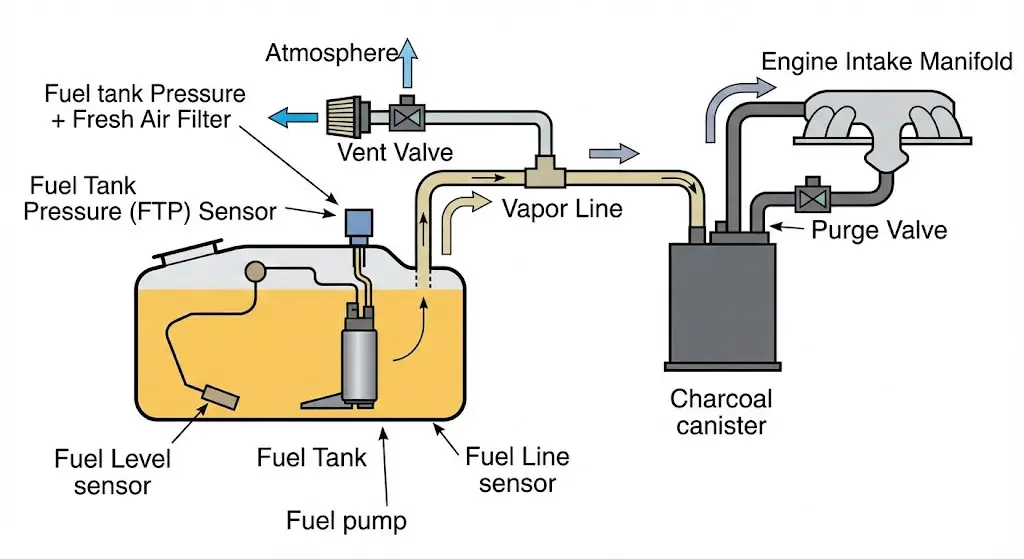
Before dissecting the specific failure modes of major truck platforms, it is essential to establish a baseline understanding of the universal components that comprise the EVAP system. While the location and specific engineering of these parts vary by manufacturer, their fundamental roles are consistent across the Ford F-150, Chevrolet Silverado, Ram 1500, and Toyota Tundra.
he Charcoal Canister: The Storage Vault
The charcoal canister is the heart of the evaporative system. Typically a rectangular or cylindrical plastic box, it is filled with activated carbon pellets. These pellets possess an enormous surface area—up to 1,500 square meters per gram—allowing them to adsorb fuel vapors effectively.
- Function: When the engine is off (diurnal cycle) or during refueling, vapors are pushed from the fuel tank into the canister. The carbon traps the hydrocarbon molecules, allowing “scrubbed” air to vent to the atmosphere through the vent valve.
- Truck-Specific Placement: On pickup trucks, the canister is almost universally mounted along the frame rail, often near the fuel tank or above the spare tire. This location, while space-efficient, exposes the unit to extreme environmental conditions, including road debris, water submersion (during off-roading), and dust intrusion, all of which are primary drivers of system failure.
The Purge Valve: The Gateway to Combustion
The Canister Purge Valve (CPV) is a solenoid-controlled valve located in the engine bay, typically on the intake manifold or firewall. It serves as the bridge between the EVAP system and the engine.
- Operation: The purge valve is normally closed. When the engine is running, warmed up, and operating under specific load conditions, the Engine Control Module (ECM) duty-cycles the valve (pulses it open). Engine vacuum then draws fresh air through the canister vent, pulling the stored vapors off the charcoal and into the combustion chamber to be burned.
- Failure Consequence: The purge valve is a high-frequency component, cycling thousands of times. If it fails open (stuck), engine vacuum continuously acts on the fuel tank, potentially causing the tank to deform (implode) or creating a “rich” fuel mixture that triggers P0172/P0175 codes. If it fails partially open or leaks slightly, it creates a vacuum decay that the ECM interprets as a leak, triggering P0442 or P0456.
The Vent Valve: The Breath of the System
The Canister Vent Valve (CVV) is a solenoid located near the charcoal canister at the rear of the truck.
- Operation: The vent valve is normally open. Its primary job is to allow fresh air to enter the canister during the purge cycle and to allow scrubbed air to exit during refueling. The only time this valve closes is when the monitor is running a leak test. The ECM commands the valve closed to seal the system.
- Vulnerability: Because the vent valve is open to the atmosphere 99% of the time, it cts as a vacuum cleaner for the underside of the truck. Dust, spider webs, and water are drawn into the valve, compromising the internal seal. If the valve cannot close fully during a leak test, the system fails to hold pressure, and a leak code is set.
The Fuel Tank Pressure (FTP) Sensor
The FTP sensor is a transducer that measures the pressure differential between the inside of the fuel tank and the ambient atmosphere. It is the “eyes” of the EVAP monitor.
- Sensitivity: This sensor is incredibly sensitive, capable of measuring pressure changes as small as inches of water column (inH2O). The ECM relies on the voltage signal from this sensor to determine if a leak exists. If the sensor drifts or fails, it can report false leak data.
The Gas Cap / Capless Filler
The fuel filler interface remains the most common entry point for owners. Whether a traditional threaded cap or a spring-loaded “capless” flap (like Ford’s Easy Fuel), this seal must be hermetic.
- Mechanism: A ratchet mechanism in the cap ensures the rubber O-ring is compressed to the correct torque. Over time, the ratchet wears out, or the rubber O-ring dries and cracks, creating a path for vapors to escape.
Vehicle-Specific Failure Analysis and Diagnostics
While the physics of evaporation are universal, the engineering solutions employed by Ford, GM, Stellantis (Ram), and Toyota vary significantly. These differences lead to distinct failure patterns and require tailored diagnostic approaches. This section analyzes the specific EVAP profiles of the major truck platforms for the 2015-2025 model years.
Ford F-150 (2015 – 2024): The Capless Conundrum and Purge Valve Fatigue
The Ford F-150, the best-selling vehicle in North America, utilizes a vacuum-based leak detection strategy that has evolved into the Engine Off Natural Vacuum (EONV) system on newer models.
The “Easy Fuel” Capless Filler System
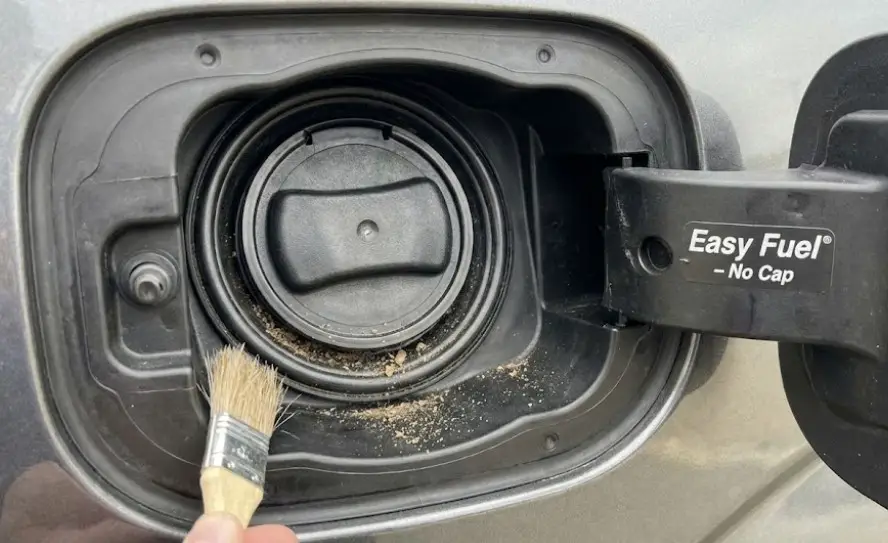
Ford pioneered the capless fuel filler to improve consumer convenience. However, this system is a leading cause of P0442/P0456 codes in F-Series trucks.
- Failure Mode: The system relies on a spring-loaded flap with an internal O-ring seal. There is no external cap to protect this mechanism from dust and debris. If a fuel nozzle is inserted at an incorrect angle, or if the truck is used in dusty environments (construction, agriculture), debris can settle on the sealing surface. When the nozzle is removed, the flap closes over the debris, preventing an airtight seal.
- Diagnostic Insight: Technicians often find that “cleaning” the filler neck is insufficient. The standard diagnostic procedure involves using the emergency fuel funnel (located with the jack or under the rear seat) to “exercise” the flap 20-30 times while blowing compressed air into the neck to dislodge particulates. If this fails, the entire filler neck assembly must be replaced, as the flap is not serviceable separately.
Purge Valve (Vapor Management Valve) Failures
The purge valve on the F-150 (specifically the 3.5L EcoBoost and 5.0L Coyote engines) is notorious for early failure.
- Symptoms: Unlike other makes where a bad purge valve causes hard starting (due to flooding), Ford purge valves often develop a “flutter” or slight internal leak that mimics a P0456. The valve may mechanically stick open while the solenoid is electrically functioning, confusing basic circuit tests.
- Diagnostic Tip: With the engine off and cool, disconnect the electrical connector to the purge valve. Remove the hose running to the tank. Start the engine. Place a finger over the valve’s intake port. If vacuum is felt, the valve is leaking internally and must be replaced.
Cost Analysis (Ford F-150)
Repair costs for the F-150 are generally moderate due to high parts availability, though labor can be high for canister access.
Table 1: Ford F-150 EVAP Repair Cost Estimates (2024-2025)
| Component | Part Cost (OEM) | Labor Time | Total Est. Cost | Failure Frequency |
| Purge Valve | $40 – $80 | 0.5 – 1.0 hr | $120 – $240 | High |
| Canister Vent Valve | $60 – $120 | 0.5 – 1.0 hr | $150 – $250 | Medium |
| Charcoal Canister | $300 – $460 | 1.0 – 1.5 hr | $570 – $622 | Low |
| Filler Neck (Capless) | $150 – $250 | 1.0 – 1.5 hr | $300 – $450 | High |
Chevrolet Silverado / GMC Sierra (1500 & 2500HD): Vent Valve Relocation and Rust
General Motors trucks (GMT900, K2XX, and T1 platforms) face unique challenges related to component placement and material selection.
Vent Solenoid Dust Intrusion
The most documented EVAP failure on GM trucks is the canister vent solenoid.
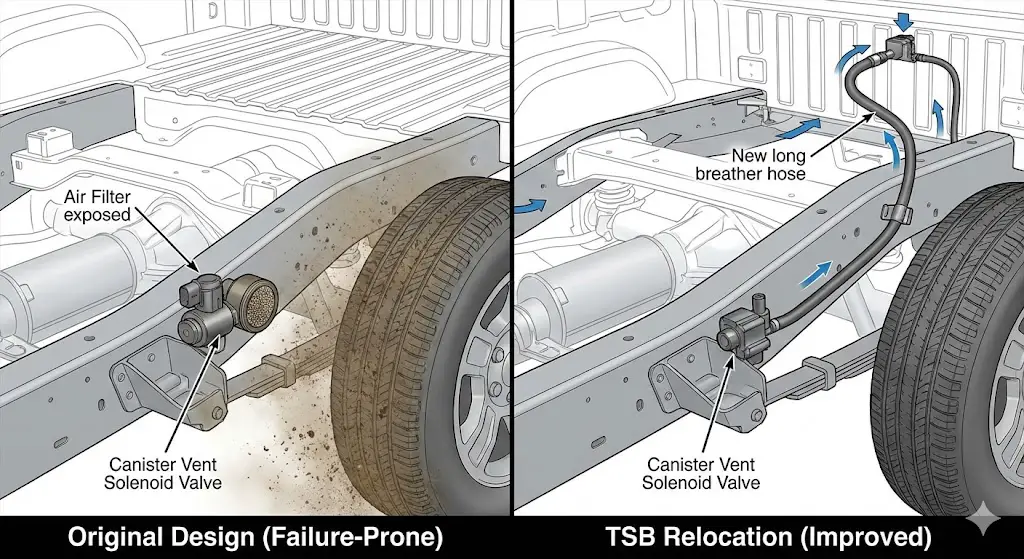
- The Flaw: On many models (especially 2007-2018), the vent valve was mounted directly to the canister near the rear axle. The breather port—where fresh air enters—was located on the valve itself. This position places the intake directly in the cloud of dust and water spray generated by the rear tires. The filter clogs, or moisture corrodes the solenoid pintle, causing it to stick open (P0455) or fail to seal completely (P0442).
- The Solution (TSB): GM issued Technical Service Bulletins recommending a “Relocation Kit.” This kit includes a new solenoid with a remote breather hose that routes the air intake to a protected area, typically high above the transmission or into the bed support structure. Installing a standard replacement valve without the relocation kit often results in a repeat failure within 12-24 months.
Charcoal Canister Saturation
Silverado owners are frequently cautioned against “topping off” the fuel tank.
- Mechanism: The fuel tank vent line on these trucks is positioned such that overfilling the tank forces liquid raw fuel into the vapor line. This fuel flows directly into the charcoal canister.
- Consequence: Liquid fuel dissolves the adhesive binding the charcoal pellets. The pellets break loose and are sucked through the purge line toward the engine, often clogging the purge valve open. This results in a “double failure” where both the canister and purge valve require replacement to clear P0442/P0446 codes.
Ram 1500 (DS & DT): The ESIM and Gravity Diagnostics
Ram (formerly Dodge) trucks utilize a detection method that differs fundamentally from Ford and GM, known as the Evaporative System Integrity Monitor (ESIM).
The ESIM Switch Mechanism
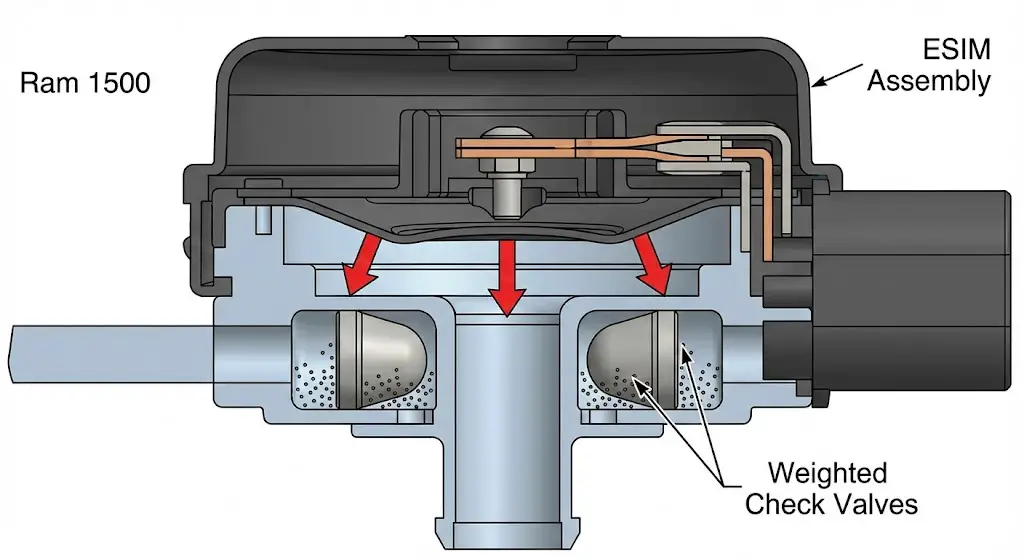
Unlike systems that use an electronic pressure transducer to report data to the ECM, the ESIM is a mechanical switch mounted on the charcoal canister.
- Operation: The ESIM contains two weighted check valves and a diaphragm switch. When the engine is turned off, the system cools. If the system is sealed, a natural vacuum develops. This vacuum pulls the diaphragm down, closing an electrical switch. The ECM simply looks for this “switch closed” signal. If it sees the signal, it knows the system is holding vacuum (no leak). If it never sees the signal, it sets a P0440, P0442, or P0456.
- Failure Mode: The ESIM is a mechanical device relying on gravity and weak vacuum forces. The internal weights can stick due to moisture freezing (in winter) or dust accumulation. Additionally, the switch contacts can corrode. Because it is a “pass/fail” switch rather than a sensor providing granular data, diagnostics can be frustrating. A “stuck open” ESIM looks exactly like a leak to the ECM.
Gas Cap Ratchet Failure
Despite the advanced ESIM, the Ram 1500 is notoriously prone to basic gas cap failures. The internal ratchet mechanism (the “clicker”) often wears out, preventing the user from applying sufficient torque to compress the seal. Ram owner forums and service data suggest that the gas cap is the culprit in nearly 30-40% of P0456 cases for this platform.
Table 2: Ram 1500 EVAP Repair Cost Estimates (2024-2025)
| Component | Part Cost (OEM) | Labor Time | Total Est. Cost | Failure Frequency |
| ESIM / Detector | $40 – $90 | 0.5 hr | $100 – $180 | High |
| Purge Valve | $50 – $80 | 0.5 – 1.0 hr | $116 – $146 | Medium |
| Charcoal Canister | $350 – $450 | 1.0 – 2.0 hr | $524 – $586 | Low |
| Gas Cap | $20 – $40 | 0.0 hr | $20 – $40 | Very High |
Toyota Tundra (2018 – 2024): The Leak Detection Pump and Rodent Wars
Toyota employs a rigorous Key-Off Vacuum Pump system, which actively pressurizes or draws vacuum on the system hours after the vehicle is parked.
Leak Detection Pump (LDP) Modules
Instead of relying on natural vacuum (which varies by weather), Toyota uses a dedicated electric pump to test the system. This test typically occurs 5 hours after ignition off.
- Integrated Complexity: On newer Tundras, the charcoal canister, vent valve, and leak detection pump are often integrated into a single, massive assembly located above the rear axle. While reliable, if one component (like the vent valve) fails, the official repair is often to replace the entire assembly, leading to significantly higher repair bills compared to domestic trucks.
- Diagnostic Noise: Owners often report hearing a “buzzing” or “humming” sound from the rear of the truck while it is parked in the garage at night. This is the LDP running its self-test and is normal behavior, though often mistaken for a fuel pump malfunction.
Rodent Damage Susceptibility
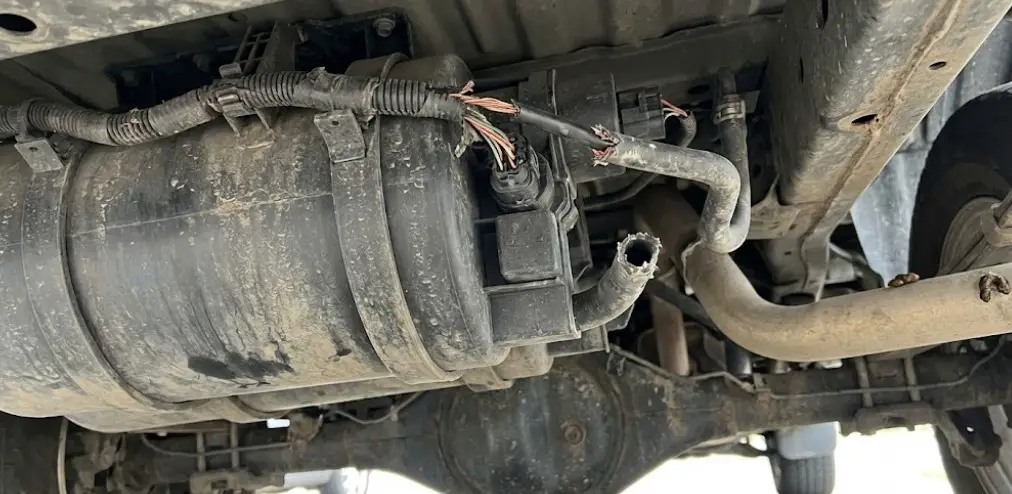
Field data indicates a disproportionately high rate of rodent damage on Toyota trucks. The wiring harness for the EVAP system and the plastic vapor lines on top of the fuel tank are frequently chewed.
- Theory: It is widely speculated that the soy-based insulation used in modern wiring harnesses is attractive to vermin. A severed wire to the LDP or a chewed vapor line will immediately trigger P0442/P0455 codes.
- Repair Challenge: Repairing chewed lines on top of the Tundra tank usually requires dropping the tank, a labor-intensive process that can cost upwards of $1,000 in labor alone, distinct from the parts cost.
Advanced Diagnostic Methodologies
Diagnosing a P0456 (0.020″ leak) is widely considered one of the most challenging tasks in automotive repair. The leak is often too small to see, too small to hear, and sometimes only present under specific thermal conditions. The “parts cannon” approach—randomly replacing gas caps and valves—is inefficient and costly. Professional diagnosis requires a systematic approach using specific tools.
The “Purge and Seal” Bi-Directional Test
A professional-grade scan tool (e.g., Snap-on, Autel, Ford IDS, Toyota Techstream) allows the technician to take control of the EVAP solenoids. This is far superior to passive observation.
Step-by-Step Procedure:
- Baseline Check: With the engine off and gas cap removed, the FTP sensor should read 0.0 inH2O (inches of water) or approximately 2.5V (depending on the sensor type). If it reads pressure or vacuum with the cap off, the sensor has drifted and is reporting false data.
- Seal the System: Using the scanner, command the Canister Vent Valve to the “CLOSED” (ON) position.
- Vacuum Induction: Start the engine. Command the Purge Valve to “OPEN” (typically 10-20% duty cycle). Monitor the FTP sensor. Vacuum should slowly build in the tank.
- Insight: If vacuum does not build, there is a massive leak (P0455) or the vent valve failed to close.
- The Seal Test: Once vacuum reaches a target (e.g., -8 inH2O), command the Purge Valve “CLOSED” (0%). Keep the Vent Valve CLOSED. Turn off the engine (if necessary to stabilize voltage, though often done running).
- Monitor Decay: Watch the FTP voltage/pressure graph. A perfectly sealed system will hold the vacuum indefinitely. A small leak (P0442) will show a slow, linear rise in pressure back to zero. A very small leak (P0456) will show an extremely slow decay.
- Failure Criteria: Manufacturers publish specs (e.g., “Vacuum must not decay more than 0.5 inH2O in 30 seconds”).
Smoke Testing: The Visual Confirmation
For P0456, a high-quality smoke machine is non-negotiable. These machines heat mineral oil to create a thick, visible vapor and inject it into the system under low pressure (typically 0.5 PSI, regulated to prevent blowing out seals).
- UV Dye Integration: Standard smoke is often invisible when leaking from a 0.020″ pinhole, especially in a breezy shop environment. Modern smoke fluids contain a UV fluorescent dye. If the smoke cannot be seen, the technician scans the lines with a UV (black) light. The dye will leave a glowing residue at the leak site, even if the smoke has dissipated.
- Nitrogen Assist: For the most stubborn leaks, technicians use Nitrogen instead of shop air to push the smoke. Nitrogen is an inert gas and does not contain moisture (unlike shop air). More importantly, it is safer when pressurizing a tank full of gasoline vapor, eliminating the risk of combustion inside the system during testing.
Isolation Techniques
When smoke fills the entire system but no leak is found, technicians use pinch-off pliers to isolate sections of the truck.
- Tank Isolation: Clamp the hose connecting the canister to the fuel tank. Pressurize the canister side. If the leak persists, the leak is in the canister or vent valve. If the leak stops, the leak is in the tank, filler neck, or rollover valves.
- Engine Isolation: Clamp the purge line near the engine. If the leak stops, the purge valve or the line in the engine bay is the culprit.
Repair Cost Analysis (2024-2025 Market)
The cost of EVAP repairs has trended upward due to increased parts complexity and labor rates. The following analysis provides a detailed cost breakdown for the 2024-2025 period, sourced from industry estimators like RepairPal and various parts suppliers.
Comparative Cost Analysis by Region
Labor rates vary significantly by geography, influencing the total repair bill.
Table 3: Regional Cost Variance for Charcoal Canister Replacement (2024 Data)
| City | Labor Rate (Avg) | Est. Total Cost (F-150) | Est. Total Cost (Tundra) |
| Sacramento, CA | $140 – $180/hr | $570 – $622 | $808 – $944 |
| Chicago, IL | $130 – $170/hr | $607 – $676 | $850 – $980 |
| Austin, TX | $110 – $150/hr | $598 – $663 | $830 – $950 |
| Baltimore, MD | $120 – $160/hr | $589 – $649 | $820 – $940 |
| National Avg | $125/hr | $590 | $880 |
The High Cost of Toyota Repairs
As noted in the vehicle-specific section, Toyota Tundra repairs are disproportionately expensive due to the assembly-based part strategy.
- Purge Valve: While a Ford purge valve is ~$50, a Toyota OEM purge valve can list for over $200, with total replacement costs reaching $725 – $748 due to labor involved in accessing the valve buried under the intake plenum on some V8 models.
- Canister Assembly: The Tundra canister is a complex unit containing the filter, LDP, and multiple switching valves. Parts cost alone is typically $727 – $825.
OEM vs. Aftermarket Parts: A Warning
In the realm of EVAP repairs, the consensus among professional technicians is strictly OEM (Original Equipment Manufacturer).
- Dorman/Standard/Generic: While aftermarket parts (e.g., Dorman purge valves) are significantly cheaper ($30 vs $80), they have a high failure rate out of the box. Common issues include weak solenoid springs that allow vacuum to pull the valve open (causing P0442) or poor casting quality on sealing surfaces.
- The “False Fix”: Installing a cheap aftermarket gas cap is the most common DIY mistake. These caps often lack the precise torque specs of the OEM cap, leading to a recurring P0456 even though the owner believes they “fixed” the cap.
- Recommendation: For sensors (FTP), solenoids (Purge/Vent), and gas caps, the extra cost of Motorcraft (Ford), ACDelco (GM), Mopar (Ram), or Denso (Toyota) parts is justified by the reduction in labor for repeat repairs.
Regulatory Landscape and Emissions Compliance
Understanding the legal and functional implications of P0442/P0456 is crucial for truck owners, particularly in states with rigorous Inspection and Maintenance (I/M) programs like California, New York, and Colorado.
The “Incomplete Monitor” Dilemma
A common scenario is a truck owner clearing the code just before an inspection. This results in failure due to “Incomplete Monitors.” The EVAP monitor is notoriously difficult to set because it requires specific conditions (tank level, cold soak).
- The One-Monitor Allowance: In 2024/2025, most EPA-compliant states allow one monitor to be incomplete for vehicles model year 2001 and newer and still pass inspection. However, the EVAP monitor is typically the slowest to run. If the owner has recently cleared codes, the Catalyst and O2 Sensor monitors might be ready, but the EVAP monitor may still be “Not Ready.” If only the EVAP monitor is incomplete, the truck may pass. However, if any other monitor (like EGR or O2 Heater) is also incomplete, the truck will fail.
Permanent Codes (PDTC)
Since 2010 (phased in fully by 2012), vehicles store “Permanent DTCs” that cannot be cleared with a battery disconnect or scan tool. The vehicle must run its self-test and pass to erase these codes.
- Inspection Logic: Inspection machines query the OBD-II system for Permanent Codes. If a P0456 is stored as a Permanent Code, the vehicle will likely fail the inspection, even if the Check Engine Light is currently off and the owner cleared the active code 10 miles ago. The only way to clear a PDTC is to fix the car and drive it through a successful “Universal Trip”.
The Universal EVAP Drive Cycle
To clear a Permanent P0442/P0456 or set the monitor for inspection, the truck must complete a specific drive cycle. While manufacturer specifics vary, a successful generic EVAP cycle involves:
- Fuel Level Prerequisite: The gas tank must be between 15% and 85% full. If the tank is full, there is no vapor space to test. If the tank is near empty, fuel slosh causes pressure volatility that aborts the test.
- Cold Soak: The vehicle must sit (engine off) for at least 8 hours (preferably overnight). This allows the engine coolant and intake air temperature sensors to equalize (typically within 10°F of each other). This confirms a “cold start” condition to the ECM.
- The Drive: Start the engine and idle for 5 minutes (allows initial purge check). Drive at steady highway speeds (45-60 mph) for 15-20 minutes (stabilizes fuel temperature).
- The Stop: Stop the vehicle and idle for 5 minutes.
- The Check: Turn off the engine. Do not remove the key or open the door immediately (on some keyless systems). The EONV or LDP test often runs after the engine is off. Let the truck sit undisturbed for 20-40 minutes.
Modifications, Off-Roading, and Prevention
Truck owners frequently modify their vehicles for utility or recreation. These modifications can inadvertently impact the EVAP system, creating vulnerabilities that stock vehicles do not face.
Relocation Kits for Off-Road Use
For serious off-roaders (rock crawling, overlanding), the factory location of the EVAP canister is a liability. On the Jeep Gladiator and some Ram models, the canister hangs low and is easily crushed by rocks.
- The Mod: Aftermarket companies offer “EVAP Relocation Kits” that move the canister above the rear axle or higher into the chassis.
- Engineering Consideration: Relocating the canister changes the length of the vapor lines. While usually acceptable, significant changes in line length or diameter can alter the vacuum decay characteristics. If the total volume of the system changes drastically, the ECM’s expected decay rate (calculated based on factory specs) may not match reality, potentially causing false P0440 codes.
Breather Filter Kits
As discussed with the Chevy Silverado, dust is the enemy of the vent valve.
- Preventative Mod: For trucks used in agriculture or construction (high dust), installing a “Breather Extension Kit” is highly recommended. This involves running a 5/8″ fuel hose from the vent valve’s fresh air port up to a high point, such as inside the tail light housing or up to the bed rail, capped with a small generic fuel filter. This prevents the valve from inhaling silt and water, significantly extending its life.
Bed Swaps and Chassis Cabs
Commercial owners often swap pickup beds for utility bodies (flatbeds).
- The Risk: When removing the bed, the filler neck is often modified or shortened. Kinks in the filler hose or poor sealing at the new filler cap mount are leading causes of P0455/P0442 in work trucks. Additionally, upfitters sometimes leave the canister vent line dangling without a filter in the utility body structure, leading to rapid valve failure from road spray.
Conclusion:
The P0442 and P0456 codes, while seemingly minor nuances of the OBD-II system, represent a sophisticated interplay of environmental stewardship, chemical engineering, and vehicle diagnostics. For the light-duty truck owner, they are more than just a nuisance light; they are indicators of a compromised fuel containment system that can lead to increased operating costs and regulatory headaches.
The shift toward 0.020-inch leak detection standards has made the “very small leak” a common reality for aging trucks. However, the data reveals clear patterns: the F-150’s struggle with capless fillers and purge valves, the Silverado’s battle with vent valve dust intrusion, the Ram’s reliance on the mechanical ESIM switch, and the Tundra’s susceptibility to rodent damage and high assembly costs.
By understanding these platform-specific weaknesses, owners and technicians can move beyond the “parts cannon” approach. Strategic diagnostics—utilizing bi-directional control and smoke testing—coupled with the use of high-quality OEM parts, provides the most cost-effective path to resolution. Ultimately, maintaining the integrity of the EVAP system is essential not just for passing a smog check, but for the longevity of the fuel system itself, ensuring that the vehicle operates as designed in the demanding environments for which these trucks were built.