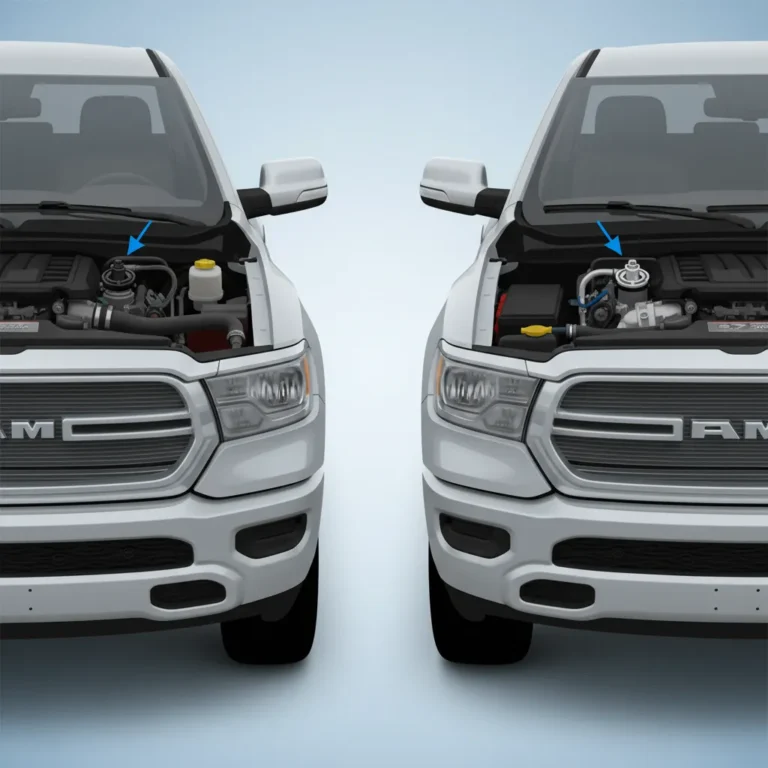
2Nd Gen Dodge Ram Steering Parts Diagram: Component Breakdown And Troubleshooting For 1994-2002 Models

For owners of the 2nd Generation Dodge Ram, maintaining precise steering is more than a matter of comfort—it is a critical safety requirement for managing these heavy-duty machines. Whether you are piloting a 1500 with a 5.9L Magnum or a 3500 dually with the legendary Cummins turbo diesel, the mechanical connection between your hands and the road is paramount. Despite their legendary durability, the 1994-2002 Dodge Ram steering systems are prone to ‘wandering,’ excessive play, and component wear that can make highway driving a stressful experience. This comprehensive guide provides a detailed steering parts diagram and technical breakdown to help you identify components, troubleshoot failures, and implement professional-grade repairs to restore your truck’s handling.


Anatomy of the 2nd Gen Dodge Ram Recirculating Ball Steering System
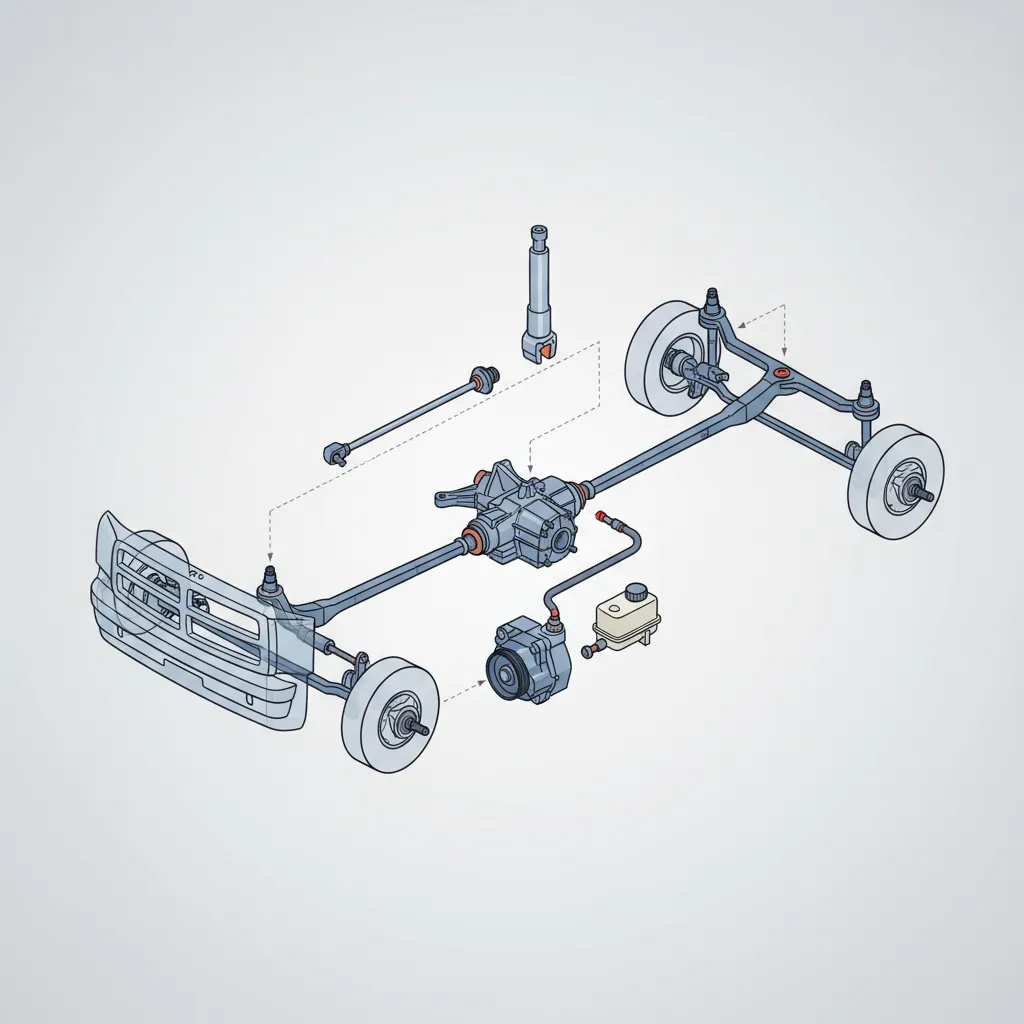
The 2nd Generation Dodge Ram (1994-2002) relies on a recirculating ball steering gear mechanism, a stark departure from the rack-and-pinion systems found in modern light-duty trucks. This architecture was chosen for its sheer strength and ability to handle the massive front-end weight of heavy-duty engines. In this system, the steering wheel turns a worm gear inside the steering box. Ball bearings roll between the threads, moving a nut that pivots the sector shaft—a design that provides immense leverage but introduces multiple points where “slop” can develop over time.
It is vital to distinguish between the steering geometry of 2WD and 4WD models. The 2WD trucks generally utilize a coil spring independent front suspension, which uses a traditional center link and idler arm setup. Conversely, the 4WD models feature a solid front axle where the steering linkage must account for significant vertical axle travel. The steering gearbox multiplies the driver’s input torque, converting the rotational energy of the steering column into the linear force needed to move 16-inch or 17-inch wheels, often under the stress of heavy payloads or towing.
The steering shaft serves as the critical bridge, connecting the steering column to the gearbox input spline. This shaft includes universal joints that can wear out, leading to a “clunking” sensation. To facilitate ease of movement, a hydraulic assist system—powered by a belt-driven power steering pump—circulates fluid through high-pressure hoses into the gearbox, providing the necessary force to turn the wheels at low speeds or while stationary. Note that while the 2nd Generation body style ended for 1500 models in 2001, it continued through the 2002 model year for the 2500 and 3500 series trucks.
Essential Steering Linkage Components and Their Mechanical Functions
To master the complete steering parts diagram, one must understand how each link in the chain affects vehicle handling. The Pitman Arm is the primary actuator; it splines directly onto the steering gearbox output shaft. As the gearbox rotates, the pitman arm swings, pushing or pulling the drag link to initiate wheel movement. If the splines on the pitman arm or the sector shaft become loose, the truck will fail to respond to subtle steering inputs.
In the 2WD configuration, the Center Link (Drag Link) and Idler Arm work in tandem. The idler arm is bolted to the passenger-side frame rail and mirrors the movement of the pitman arm, ensuring the steering geometry remains parallel throughout its range of motion. For 4WD models, the drag link connects the pitman arm directly to the passenger-side knuckle or the tie rod assembly, depending on the specific year. Inner and Outer Tie Rod Ends are the most frequent wear items in the assembly. These ball-and-socket joints connect the steering linkage to the steering knuckles, allowing the wheels to pivot while the suspension moves up and down.
Tie rod ends on 2nd Gen Rams typically exhibit significant wear between 70,000 and 100,000 miles. This is accelerated in trucks equipped with the Cummins diesel or V10 gas engines due to the extreme weight over the front axle. When replacing them, always refer to expert tips for high-quality greaseable replacements.
Finally, the Steering Damper acts as a horizontal shock absorber for the steering system. Its primary role is to neutralize road vibrations and prevent “bump steer”—where a pothole forces the wheels to turn without driver input. A blown steering damper is often a contributing factor to the terrifying “death wobble,” a violent oscillation of the front end often triggered by hitting a bump at highway speeds.


Diagnosing Common 2nd Gen Dodge Ram Steering Issues
The most frequent complaint among Dodge Ram owners is the “Dodge Wander”—the sensation that the truck is drifting across the lane, requiring constant correction. This is usually caused by a combination of a worn steering gearbox and frame flex. Over time, the internal gears of the box develop a “dead zone” in the center position. To diagnose this, perform a “dry park test”: with the engine off, have an assistant rock the steering wheel back and forth while you observe the steering shaft, gearbox, and all linkage joints for movement that doesn’t result in wheel travel.
📋
How to Perform a Dry Park Test
Park the truck on a flat, paved surface with the tires pointing straight ahead. Leave the engine off.
Have an assistant move the steering wheel rapidly between the 11 o’clock and 1 o’clock positions.
Watch each tie rod end, the pitman arm, and the track bar. Any “popping” or visible delay in movement indicates a failed component.
Another common failure is the power steering pump. If you notice a whining noise during low-speed maneuvers or a significant increase in steering effort, the pump may be failing or aerating fluid due to a leak. According to community data on the Ram Forum, pump failures increase significantly after 150,000 miles. Don’t forget to check the intermediate steering shaft; the plastic bushings inside the column often wear out, creating a metallic “clunk” that you can feel through the steering wheel even if the linkage is tight.
By The Numbers
Avg. Tie Rod Lifespan (Miles)
Pump Failure Benchmark (Miles)
Pitman Arm Nut Torque (lb-ft)
Maintenance Procedures for Reliable Steering Performance
The foundation of a reliable steering system is regular lubrication. Unlike modern cars with “sealed for life” joints, many 2nd Gen Dodge Ram components feature grease zerks. Injecting a high-quality chassis grease into the tie rod ends, ball joints, and drag link every oil change will purge contaminants and ensure smooth movement. If your joints lack grease fittings, they are likely factory originals and long overdue for replacement.
Fluid maintenance is equally vital. Over time, power steering fluid breaks down and becomes contaminated with metallic debris from the pump and gearbox. For most 1994-2002 models, the factory specifies MS-5931 fluid, though many owners successfully transition to ATF+4 in later years. Always consult the official guide for your specific VIN. A full system flush—not just a reservoir drain—is recommended every 50,000 miles to preserve the steering box seals.
Steering components are under extreme tension. The pitman arm nut requires between 175 and 200 lb-ft of torque. Failing to reach this spec can result in the arm stripping the sector shaft splines, leading to a total loss of steering control. Always use a professional-grade torque wrench.


When performing repairs, use the proper tools. A “pickle fork” is often used to separate joints, but it will destroy the rubber grease boots. If you plan to reuse a component, use a universal puller or a pitman arm puller to separate the joints without damage. After replacing any linkage part, a professional alignment is mandatory. Even a slight change in tie rod length will alter the “toe” setting, leading to rapid tire wear and poor handling.
Recommended Upgrades for the 1994-2002 Steering Geometry
If you find yourself constantly repairing the factory system, it may be time for trusted aftermarket upgrades that resolve inherent design flaws. One of the most effective modifications is the Steering Box Stabilizer (often called a “sector shaft brace”). This bracket bolts to both frame rails and supports the bottom of the sector shaft with a bearing. Research indicates that this can reduce sector shaft deflection by over 50%, significantly extending the life of the steering gearbox seals and sharpening steering response.
T-Style Steering Conversion
Upgrading 1994-1999 trucks to the 2008+ style heavy-duty linkage eliminates the “Y-style” toe-change issues during suspension travel.
Adjustable Track Bar
Crucial for lifted trucks, an adjustable track bar centers the axle under the frame, preventing the “crabbing” effect that ruins steering feel.
For those plagued by steering column rattle, the “Rock Solid” steering column bushing is a legendary fix. It replaces the factory spring-and-washer setup at the base of the column with a high-density plastic bushing, eliminating the common rattle and clunk. Furthermore, consider replacing soft factory rubber bushings with high-quality polyurethane. Polyurethane components reduce deflection, ensuring that every movement of the steering wheel translates directly to the tires rather than being absorbed by squishy rubber.
In summary, the recirculating ball steering system on the 2nd Gen Ram requires regular inspection of tie rods, the pitman arm, and the gearbox. Most common issues like steering wander can be addressed through quality maintenance and specific aftermarket stabilizers. Proactive replacement of the power steering pump and fluid after 150,000 miles prevents total system failure. Before starting your repair, consult your vehicle-specific service manual and ensure you have the expert-level tools required for high-torque steering components. By following this guide, you can ensure your classic Ram handles with the precision and safety it was designed to provide.
Frequently Asked Questions
Where can I find a visual diagram of the 2nd gen Dodge Ram steering system?
A detailed steering parts diagram can typically be found in the factory service manual (FSM) for the 1994-2002 model years. These diagrams illustrate the relationship between the steering gearbox, pitman arm, drag link, and tie rods. Many reputable online parts retailers also provide exploded views in their digital catalogs to help owners identify specific part numbers for 2WD or 4WD configurations.


What causes the ‘death wobble’ in 2nd gen Dodge Rams?
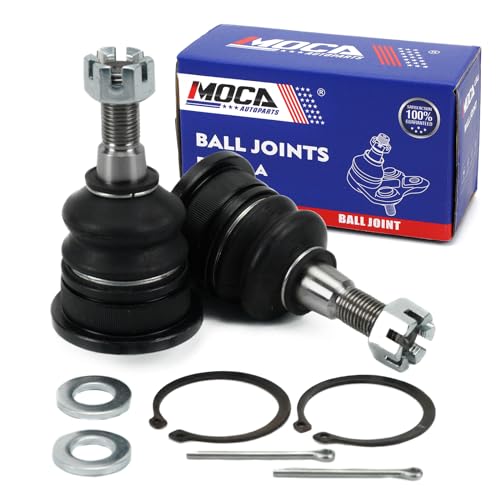
Death wobble is often caused by a combination of worn steering components, specifically the track bar, tie rod ends, or steering damper. When these parts lose their structural integrity, road impacts cause an uncontrollable oscillation of the front axle. A professional inspection of the ball joints and steering linkage is required to identify the root cause and ensure a reliable fix.
How do I know if my steering gearbox needs to be replaced?
Signs of a failing steering box include excessive ‘dead space’ in the steering wheel, fluid leaking from the sector shaft seal, or a grinding sensation during turns. If you can turn the steering shaft significantly without the pitman arm moving, the internal gears are likely worn. In many cases, a trusted high-performance replacement box is more effective than attempting to adjust the factory unit.
What is the correct torque for the pitman arm nut?
For most 2nd Generation Dodge Ram 2500 and 3500 models, the pitman arm nut requires a torque specification of approximately 185 lb-ft. However, it is essential to verify this in your specific year’s service manual, as specifications can vary slightly between the lighter 1500 models and the heavy-duty variants. Always use a professional-grade torque wrench to ensure the nut is secured properly.
Can I upgrade my 1994-1999 steering to the newer style linkage?
Yes, many owners perform a ‘T-style’ steering conversion, using components from the 2008-2012 models or specialized aftermarket kits. This upgrade replaces the older ‘Y-link’ geometry, which is prone to toe-angle changes during suspension travel. The T-style setup offers a more rigid connection between the wheels, leading to more predictable handling and reduced tire wear.
![4th Gen Ram 1500 Wide Body Kits [2026]](https://truckguider.com/wp-content/uploads/2026/03/4th-gen-ram-1500-wide-body-kit-featured.webp)
![2021 Ram 1500 Classic Warlock: Full Specs & Data [2026]](https://truckguider.com/wp-content/uploads/2026/03/2021-ram-1500-classic-warlock-featured.webp)
![2017 Ram 2500 Transmission Specifications, Maintenance, [2026]](https://truckguider.com/wp-content/uploads/2026/03/featured-9b105d51-768x768.webp)