6.7 Cummins Pcv Valve Location And Ccv Filter Maintenance Guide

For owners of the legendary 6.7 Cummins, maintaining peak performance means looking beyond standard oil changes and diving into the complexities of diesel emissions components. Many owners search for a “6.7 Cummins PCV valve location” only to find their engine doesn’t have a PCV valve in the traditional sense, leading to confusion about where this critical ventilation component is located and how to service it. This guide will pinpoint the exact location of the CCV filter on your 6.7 Cummins, explain why it’s vital for your engine’s health, and provide the maintenance stats you need to prevent costly oil leaks and turbo damage.


The Evolution of Crankcase Ventilation: Why Your 6.7 Cummins Uses a CCV Filter
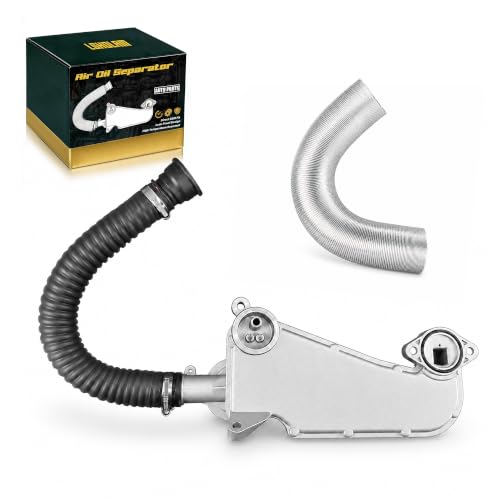
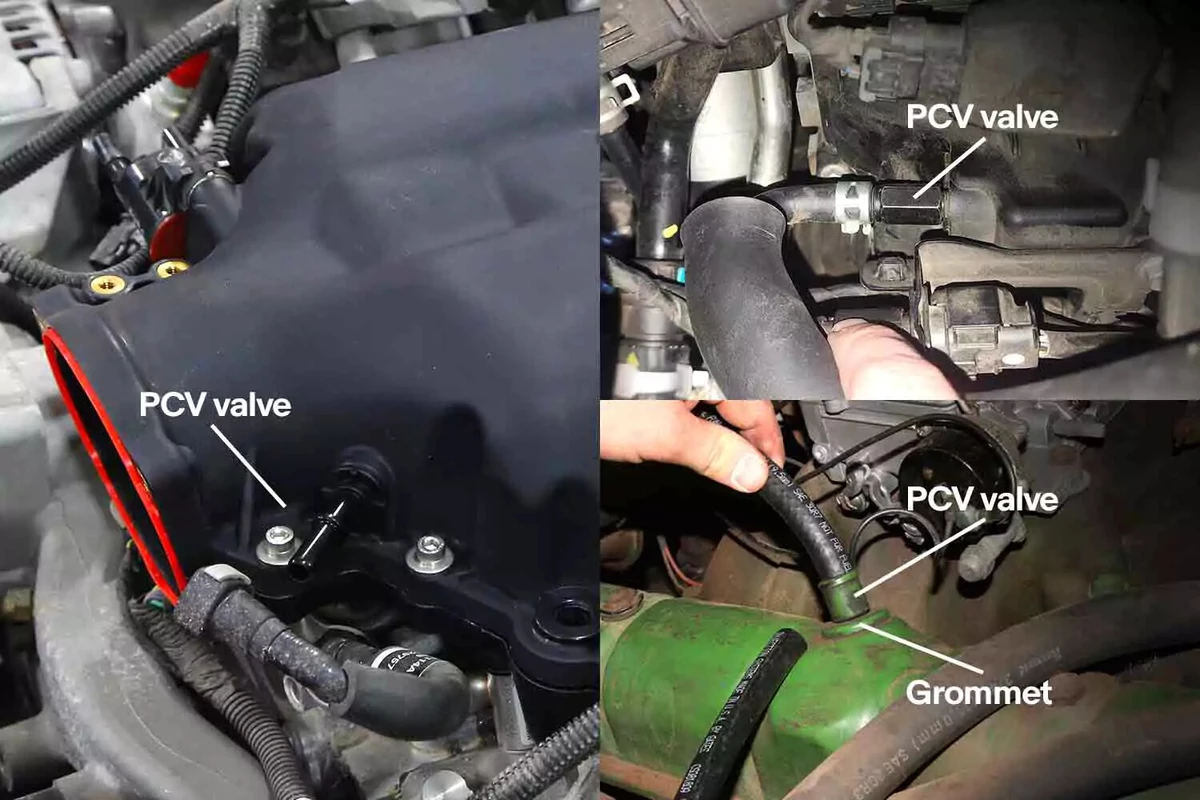
To understand your engine, we must first clarify the technical nomenclature. While gasoline engines utilize a small, plastic Positive Crankcase Ventilation (PCV) valve, the 6.7 Cummins diesel engine employs a much more robust Crankcase Ventilation (CCV) filter system. This shift in design was necessitated by the high compression ratios inherent to diesel engines, which generate significant “blow-by”—gases that slip past the piston rings and into the crankcase.
In older 5.9 Cummins engines, these gases were often vented to the atmosphere via a “draft tube” or an open breather. However, modern environmental standards and EPA regulations mandate a closed-loop system. The CCV filter’s job is to capture the oil mist from these blow-by gases and return that oil back to the oil pan, rather than allowing it to coat your intake system or pollute the environment. This makes the CCV filter a critical component for both emissions compliance and engine longevity.
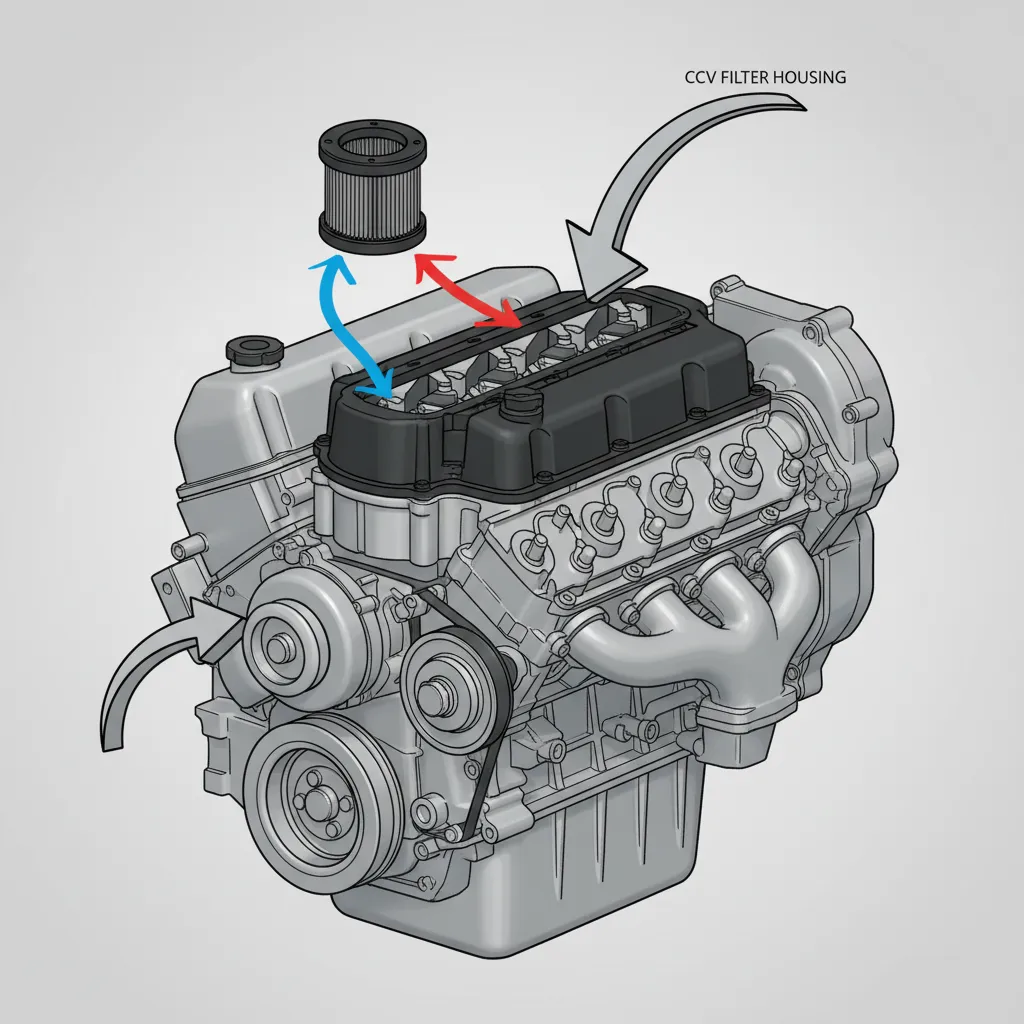
Unlike a small check valve, the Cummins CCV is a large, rectangular filtration unit integrated into the top of the engine assembly. It uses high-efficiency media to scrub the air before it is recirculated into the turbocharger intake. Failure to maintain this filter results in a “clogged” state, where the engine can no longer “breathe,” leading to a dangerous buildup of internal pressure.
Identifying the 6.7 Cummins PCV Valve Location (CCV Filter)
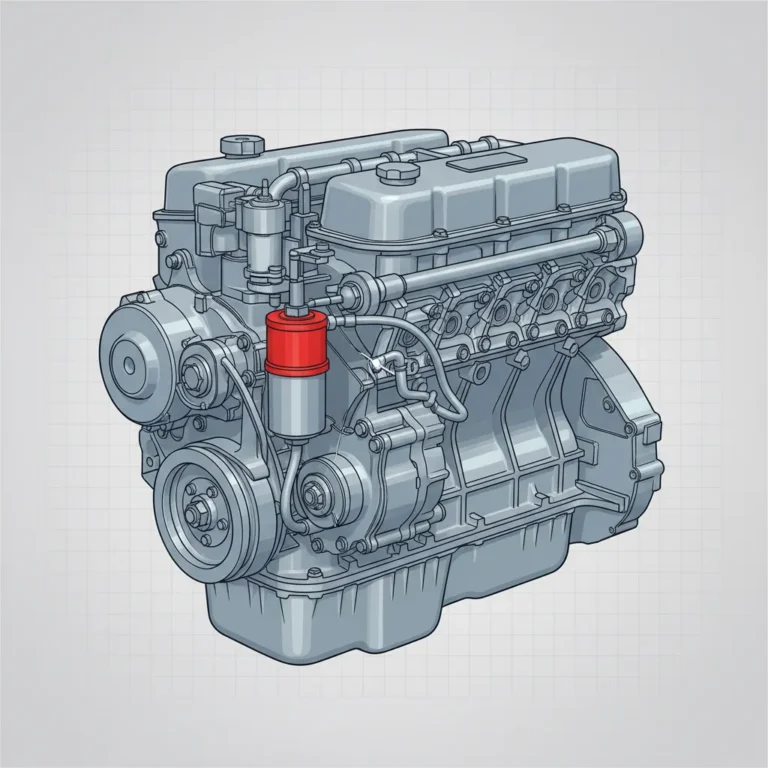
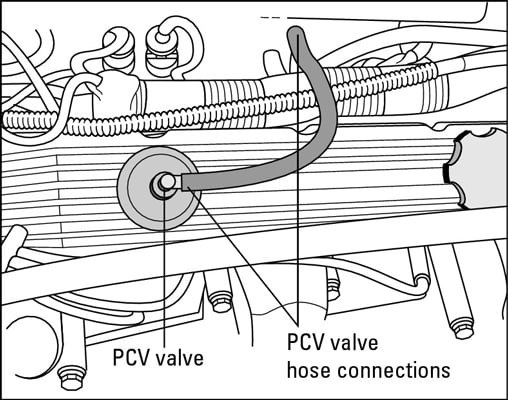
Locating the CCV filter is straightforward once you know what to look for, but it is tucked away under the aesthetic components of the engine bay. To find the 6.7 Cummins PCV valve location (the CCV filter housing), you must look at the very top of the engine block, specifically the rocker lever housing.
Step-by-Step Location Guide
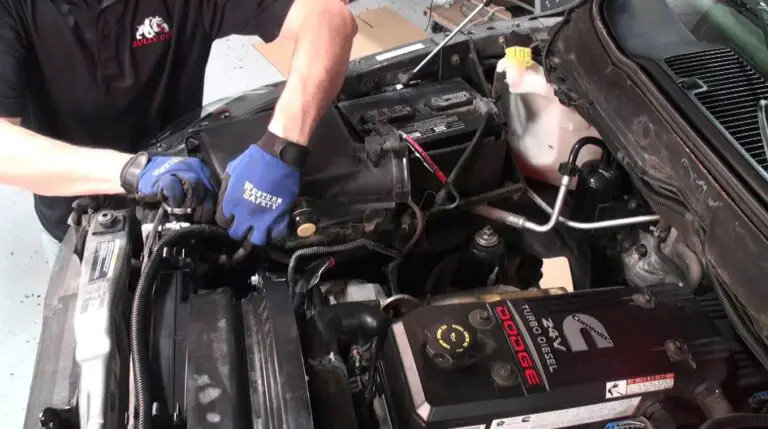
- The Engine Cover: First, you must remove the decorative plastic “CUMMINS” engine cover. This is typically secured by four to six 8mm or 10mm bolts.
- The Filter Housing: Once the cover is removed, you will see a large, black, rectangular box sitting directly on top of the valve cover. This is the CCV filter housing.
- Orientation: The filter is situated between the fuel injectors and the intake side of the engine. It is accessible and centrally located, making it a convenient maintenance item for those with basic tools.
- Associated Components: You will notice a thick rubber hose connected to the side or back of this housing; this is the breather tube that carries the scrubbed gases back to the turbo inlet.
For most owners, the search for this location begins when the Electronic Vehicle Information Center (EVIC) displays the dreaded “Perform Service” or “Service CCV Filter” message. Depending on the model year (2007.5 to present), the housing is secured by approximately 8 to 12 perimeter bolts. Ensuring these are removed carefully is key to accessing the internal filter element without dropping debris into the valvetrain.
Before removing the CCV filter housing, use compressed air to blow away any dirt or dust around the perimeter. This prevents contaminants from falling into your rocker levers and oil galleys when the filter is lifted off.
Maintenance Intervals and Professional Replacement Procedures
Maintenance of the CCV system is not a “fix-it-when-it-breaks” task. It is a scheduled requirement. According to the official guide from Cummins, the service interval is highly dependent on how the truck is used. For those who use their Ram for daily commuting or light hauling, the interval is generally 100,000 miles. However, for “severe duty” applications—such as hot-shot hauling, frequent towing, or excessive idling—replacement is recommended every 67,500 miles.
📋
Replacement Procedure
Remove the engine cover and the PCV/CCV breather hoses. Unbolt the perimeter screws of the CCV housing. Lift the old filter out, ensuring the integrated gasket comes with it.
Install a high-quality filter, such as a Fleetguard (OEM). Tighten the bolts in a crisscross pattern to ensure an even seal and prevent oil seepage.
Turn the ignition to ‘Run’ without starting. Press the brake twice and the accelerator twice slowly. This resets the “Perform Service” light on most Ram models.
Choosing the right filter is paramount. Using a cheap, low-efficiency aftermarket filter can allow oil mist to pass through, eventually coating the turbocharger’s compressor wheel. This can lead to wheel imbalance and premature failure. Always look for Ram specs compliant parts to ensure the filtration media meets the 6.7 Cummins’ high-volume requirements.
Symptoms of a Clogged Filter and Potential Engine Damage
What happens if you ignore the CCV filter? The consequences are far more expensive than the $100 cost of a new filter. When the media becomes saturated with oil and soot, it restricts the flow of blow-by gases. This causes crankcase pressure to skyrocket. Since pressure always seeks the path of least resistance, it will eventually force its way out through your engine’s seals.
Rear Main Seal Failure
Excessive pressure often blows out the rear main seal or oil pan gasket, leading to massive oil leaks and expensive labor costs.
Turbo Contamination
Oil is pushed into the intake tract, coating the intercooler and turbo compressor wheel, which degrades performance over time.
According to industry reports and expert tips, neglecting CCV maintenance can lead to a 10-20% increase in oil consumption. This isn’t because the engine is burning oil internally in the combustion chamber, but because the pressure is preventing oil from draining back from the turbocharger, forcing it into the exhaust or intake streams. A case study of a high-mileage 6.7 Cummins revealed that a $3,000 turbocharger replacement could have been avoided with a simple, timely CCV filter change.
By The Numbers
Severe Duty Interval (Miles)
Max Oil Consumption Increase
Normal Service Interval (Miles)
Serving the Local Diesel Community: Finding Support Nearby
For many owners, the DIY route is the most satisfying, but if you are uncomfortable working near the fuel injectors and valvetrain, seeking a trusted local diesel specialist is highly recommended. These professionals have the diagnostic tools, such as crankcase pressure manometers, to verify that your system is functioning correctly beyond just swapping the filter.
In our community, many diesel shops offer a “Perform Service” package that includes oil, fuel, and CCV filter changes in one accessible visit. This is particularly beneficial for those living in extreme climates—whether the intense heat of the South or the freezing winters of the North—as temperature fluctuations can accelerate the saturation of filter media. Statistics show that over 70% of 6.7 Cummins owners prefer local specialized diesel shops over general repair facilities for emissions-related maintenance, as these technicians understand the nuance of the Cummins platform.
A Note on CCV Delete Kits
✅ Pros
- Eliminates oil in intake
- Reduces maintenance costs
- Keeps intercooler clean
❌ Cons
- May not be street legal
- Potential smell in cabin
- Warranty concerns
While delete kits are available and popular in the racing community, we recommend staying compliant for street-driven vehicles. If you want the best of both worlds, consider a CCV catch can. This convenient add-on works alongside the filter to trap even more oil, protecting your turbocharger without violating emissions standards.
Conclusion: Protecting Your Cummins Investment
The 6.7 Cummins utilizes a robust CCV filter located on top of the valve cover rather than a traditional PCV valve. Replacement is mandatory every 67,500 to 100,000 miles to prevent excessive crankcase pressure and oil consumption. Neglecting this filter can lead to catastrophic seal failure and turbocharger damage that far exceeds the cost of preventative maintenance. Check your odometer today; if you are approaching the 67k-mile mark, contact a nearby diesel specialist to secure an OEM-quality CCV filter and schedule your service. Your engine—and your wallet—will thank you for the foresight.
Frequently Asked Questions
Where is the PCV valve located on a 6.7 Cummins?
The 6.7 Cummins does not have a traditional PCV valve. Instead, it uses a CCV (Crankcase Ventilation) filter located directly on top of the engine’s valve cover, underneath the plastic engine shroud. You must remove the shroud bolts to access the rectangular filter housing.
How often should I replace the CCV filter on my 6.7 Cummins?
Cummins Filtration recommends replacing the CCV filter every 67,500 miles for vehicles used in severe duty (towing, idling, or dusty conditions). For normal highway driving, the interval can be extended to 100,000 miles. Your dash may display a ‘Perform Service’ message when it is time.
What happens if I don’t replace the CCV filter?
If the filter becomes clogged, crankcase pressure will rise significantly. This pressure can blow out engine seals (like the rear main or oil pan gaskets) and push oil into the turbocharger and intake system, potentially causing a 10-20% increase in oil consumption and turbo failure.
Can I delete the CCV system on my 6.7 Cummins?
While aftermarket ‘delete’ kits exist that vent gases to the atmosphere, they are generally illegal for street-driven vehicles under EPA regulations. A better alternative is a high-quality catch can or simply adhering to the OEM filter replacement schedule to remain compliant.
What are the symptoms of a bad CCV filter?
Common symptoms include an ‘Oil Service’ or ‘Perform Service’ message on the dash, visible oil leaks around the top of the engine, blue smoke from the exhaust, and a noticeable increase in oil consumption between changes.