6.7 Powerstroke Sensor Location Diagram: All Generations (2011–2024)

The 6.7L Ford Powerstroke has gone through four distinct hardware generations since its 2011 debut, and sensor locations, part numbers, and even sensor counts have shifted along the way.
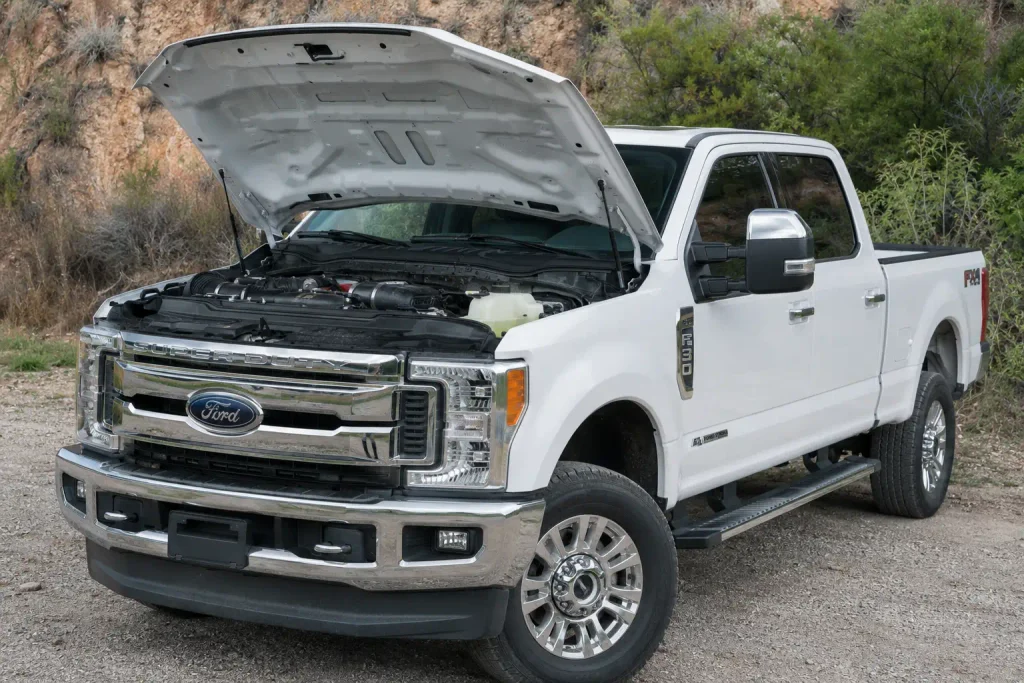
If you’re chasing a check engine light or prepping to replace a sensor yourself, knowing which generation you’re working on matters as much as knowing where the sensor sits.

Prime for Young Adults — 6 Months Free
Students and 18–24s get six months of Prime free, then half price.
Start 6 Months FreeThis guide breaks down every major sensor on the 6.7L Powerstroke by generation, so you’re not cross-referencing a diagram built for the wrong model year. For a broader look at how this engine stacks up against its predecessor, see our comparison of the 7.3 versus 6.7 Powerstroke.
6.7 Powerstroke Generations and Sensor Hardware Changes (2011–2024)
Recommended Best Deal Products

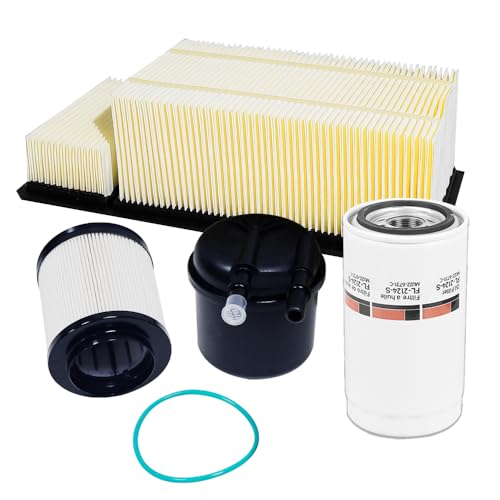

Sensor hardware and fueling architecture changed across four rough eras of the 6.7L Powerstroke. The table below is a starting reference point, not a substitute for VIN-specific confirmation.
| Generation | Years | Key Hardware Notes |
|---|---|---|
| Gen 1 | 2011–2014 | Bosch CP4.2 high-pressure fuel pump introduced; early turbo and valvetrain design more prone to wear |
| Gen 1.5 | 2015–2016 | EGT sensor reliability issues addressed via PCM update (Ford Customer Satisfaction Program 15M02); same core fueling architecture as Gen 1 |
| Gen 2 | 2017–2019 | Revised piston and wrist pin dimensions; increased HPFP stroke for cleaner combustion and reduced DPF/EGR soot loading |
| Gen 3 | 2020+ | Steel pistons, paired with the 10-speed transmission; redesigned Bosch CP4 RP7/RP8 pump introduced mid-cycle |
These generation splits are drawn from aftermarket engineering teardowns and dimensional comparisons rather than a single official Ford bulletin, since Ford doesn’t publish a consumer-facing generation breakdown for the 6.7L.
Treat them as a reliable starting point for narrowing down which sensor hardware you’re working with, and cross-check your specific build against your VIN if a repair decision hinges on the exact cutoff.
6.7 Powerstroke EGT Sensor Locations (4 Sensors Explained)
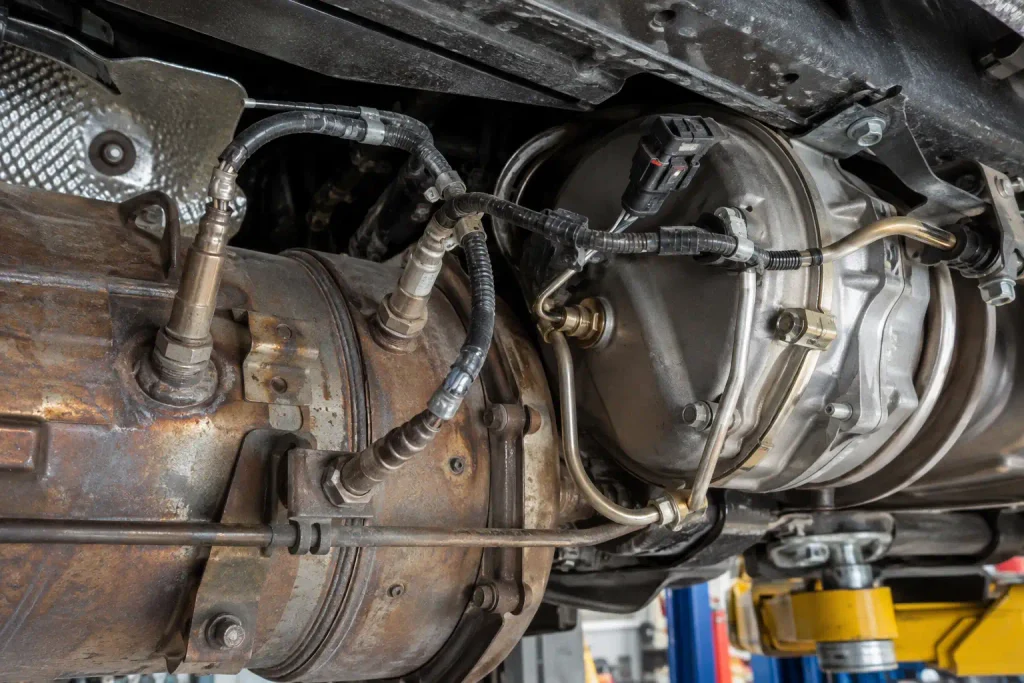
The 6.7L Powerstroke uses four exhaust gas temperature (EGT) sensors, and they’re the single most common sensor failure on this engine. Each is numbered by its position in the exhaust aftertreatment path:
- EGT11: Monitors temperature before the Diesel Oxidation Catalyst (DOC)
- EGT12: Monitors temperature after the DOC
- EGT13: Monitors temperature after the Selective Catalytic Reduction (SCR) system
- EGT14: Monitors temperature after the Diesel Particulate Filter (DPF)
EGT12 and EGT13, the two middle sensors, fail most often since they sit in the highest-heat zone of the aftertreatment system, closest to active regeneration cycles. If you own a 2011–2015 model year truck,
this failure pattern was significant enough that Ford issued Customer Satisfaction Program 15M02, extending EGT sensor coverage to 11 years or 120,000 miles from the vehicle’s warranty start date, whichever comes first.
That program superseded an earlier version (15M01) and remains one of the more generous extended-coverage campaigns Ford has issued for this engine. If your truck falls in that window and hasn’t had EGT sensors replaced under warranty,
it’s worth checking eligibility with a dealer before paying out of pocket. For the same sensor category on Ford’s earlier diesel platform, our 7.3 Powerstroke sensor location diagram covers the ICP, CMP, and EBP sensor equivalents.

Audible — Listen Free for 30 Days
One free credit a month and thousands of titles included.
Listen Free for 30 Days6.7 Powerstroke Fuel Rail Pressure Sensor Location (2011–2020 CP4.2 HPFP Years)
Recommended Best Deal Products


The fuel rail pressure sensor sits on the driver’s side of the engine, near the fuel rail itself, to the right of the alternator. On 2011–2020 trucks running the OEM configuration, the part carries Ford number BC3Z-9F838-A,
fitting the full 2011–2020 production run of the 6.7L Powerstroke’s fuel rail assembly, with aftermarket and OEM listings typically running $110–$140 depending on supplier. Prices shift, so treat that as a ballpark rather than a quote.
This sensor sits directly downstream of the Bosch CP4.2 high-pressure fuel pump, which is central to a 2024 NHTSA recall affecting 2020–2022 model year trucks. Recall 24V-957 (Ford’s internal number 24S78) covers roughly 295,000 F-250 through F-750 Super Duty and medium-duty trucks built between February 2019 and August 2021.
The issue: aged biodiesel deposits can build up on the pump’s drivetrain roller and in the tappet body cooling passages, leading to increased wear, metal debris in the fuel system, and potential loss of drive power.
Ford’s remedy is a free PCM software update at the dealer, not a physical pump replacement. If you’re troubleshooting rail pressure codes on an affected truck, rule out the recall before assuming the sensor itself has failed.
Payload capacity doesn’t change with a fuel system fault, but if you’re specifying a Super Duty for heavy loads, our Ford F-350 payload capacity chart is worth a look.
6.7 Powerstroke Camshaft and Crankshaft Position Sensor Locations
Both sensors follow standard inline-diesel placement conventions on the 6.7L Powerstroke. The crankshaft position sensor sits low on the engine block, near the bellhousing/flywheel area, where it reads reluctor teeth on the flexplate or flywheel to establish engine speed and position.
The camshaft position sensor mounts higher, near the front timing cover on the driver’s side of the engine, where it reads camshaft rotation to help the PCM sequence fuel injection timing.
Audible Premium Plus — Annual Membership
12 audiobook credits up front, plus the full Audible catalogue.
See Annual PlansFastener counts and access-panel steps shift slightly by generation and cab configuration, so confirm the exact removal procedure against a factory service manual or OASIS diagram for your specific model year before pulling either sensor.
A failing crankshaft position sensor typically causes a no-start or stalling condition, since the PCM can’t establish injection timing without it. A failing camshaft position sensor tends to set a code without necessarily preventing a start, since some PCM logic can run on crank signal alone in a degraded mode. If you’re chasing a no-start, check the crank sensor circuit first.
6.7 Powerstroke MAP Sensor Location and Function
Recommended Best Deal Products


The manifold absolute pressure (MAP) sensor mounts on the intake manifold, where it reads pressure inside the manifold to help the PCM calculate boost and fuel delivery. A failing MAP sensor typically shows up as rough idle, reduced power, or inaccurate boost readings on a scan tool, and it’s one of the more straightforward sensors to access and test on this engine.
How to Diagnose a Failing 6.7 Powerstroke Sensor Before Replacing It
Before you buy a sensor, confirm the sensor is actually the problem. A stuck or unrealistic reading, like a pressure sensor reading dead flat even after unplugging it, usually points to a wiring or PCM issue rather than the sensor itself.
Start by checking the 5V reference voltage at the sensor connector, then inspect the wiring harness for chafing, corrosion, or open circuits between the sensor and the PCM.
Only after ruling out wiring and confirming the fault with a scan tool should you replace the sensor. This sequence saves you from throwing parts at a wiring problem, which is a common and avoidable expense on this engine.
If you’re weighing a Super Duty against other heavy-duty options for towing, our Ford towing capacity chart breaks down ratings across the lineup.