
Cost To Rhino Line A Truck Bed [2026]

For truck owners, the first scratch in a pristine bed is more than just an eyesore; it is the beginning of structural degradation and the silent onset of oxidation. While many owners recognize the immediate need for protection, navigating the fluctuating costs of professional spray-on liners and the variety of chemical formulas can be overwhelming. This comprehensive guide provides a detailed breakdown of the current market rates for Rhino Linings, the specific factors that influence your quote, and the long-term value of a quality professional application. By the end of this article, you will have a trusted roadmap for protecting your investment.
National Average Cost to Rhino Line a Truck Bed by Service Type
When you solicit a quote for a professional spray-on liner, you aren’t just paying for the material; you are paying for a chemical bonding process that becomes a permanent part of your vehicle. Nationally, the average cost for a standard Rhino Lining application on a full-sized pickup ranges between $450 and $700. This baseline covers the standard polyurethane-based sprays, which are celebrated for their rubberized, non-slip texture. However, the industry has seen a shift toward premium polyurea hybrid options. These hybrids offer significantly enhanced UV stability and faster cure times, typically commanding a 15-20% premium over base polyurethane models.
Pricing is also heavily influenced by the scope of coverage. Most quotes default to “under-the-rail” protection, where the liner stops just below the top edge of the bed sides. For owners who frequently slide heavy equipment over the sides of the truck, “over-the-rail” protection is a complete necessity. This service adds approximately $50 to $100 to the total quote because it requires significantly more precision masking and additional material to wrap the coating over the top edges of the bed.
By The Numbers
Owners choosing spray-on over drop-in
Avg. cost for 5.5-foot bed
Cost for 8-foot dually + color match
Regional labor rates play a silent but significant role in your final invoice. An authorized Rhino Linings center in a high-cost urban area like San Francisco or New York may charge 30% more than a shop in the Midwest. Furthermore, high-end expert shops often charge an initial inspection fee—roughly $50—to assess the structural integrity of the bed. This is a professional best practice; spraying over compromised metal or hidden rust is a recipe for catastrophic failure, and a trusted applicator will insist on addressing these issues before the first drop of liner is sprayed.

Variable Factors Affecting Your Truck Bed Liner Quote
A one-size-fits-all price is a myth in the world of expert vehicle customization. The most immediate variable is bed length. A standard 5.5-foot short bed on a crew cab truck requires substantially less chemical volume than an 8-foot long bed. On average, an 8-foot bed adds $100 to $150 to the base price simply due to the material consumption required to maintain the industrial-standard 1/8-inch thickness (approximately 125 mils).
The condition of the substrate is perhaps the most overlooked cost driver. While a showroom-new 2024 model requires minimal mechanical abrasion to prepare the surface, an older truck—such as a 2010 Ford F-150 with surface rust—requires extensive remedial work. Professional applicators must grind away oxidation and apply specialized etching primers to ensure the liner doesn’t delaminate. This prep work is typically billed at hourly shop rates, which can range from $85 to $150 per hour. In cases of heavy rust, you may see an additional $150 to $300 in prep fees before the liner application even begins.
Surface preparation accounts for nearly 40% of the total labor time in a high-quality application. If a shop quotes you a price significantly below market average, they are likely cutting corners on the sanding and degreasing phases—the two most critical steps for a reliable bond.
Customization and modern technology also drive up costs. Many owners now opt for color-matching to the truck’s OEM paint code rather than the standard matte black. This requires specialized pigments and a dedicated clean-out of the spray equipment, often adding $200 to $400 to the total. Furthermore, modern trucks are equipped with integrated bed lighting, cargo cameras, and complex tie-down systems. An expert applicator must meticulously mask these components or remove them entirely to prevent overspray from damaging sensors or blocking light. This complexity adds labor hours that the average consumer rarely anticipates.
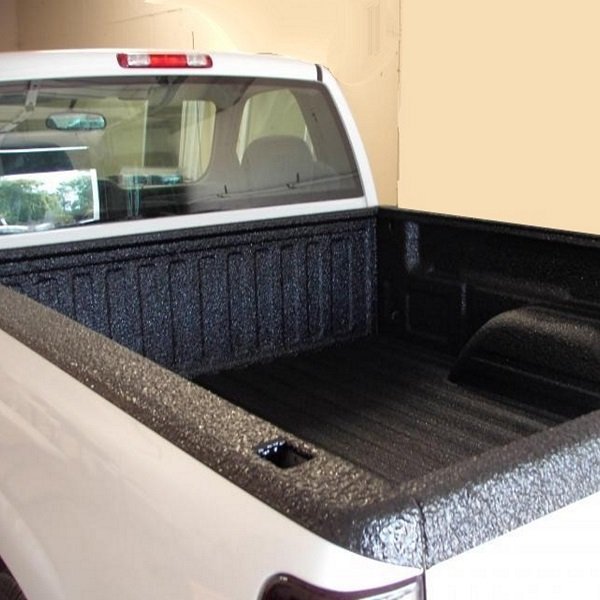
Rhino Linings Product Tiers: TuffGrip vs. HardLine Pricing
Understanding the chemical differences between Rhino’s product lines is essential for a comprehensive cost-benefit analysis. The choice of material should be dictated by your truck’s primary use case rather than price alone. Rhino offers different tiers designed for specific mechanical stresses.
Rhino TuffGrip: The Standard for Versatility
TuffGrip is the most popular choice for general truck owners. It is a polyurethane-based formula that offers a thicker, softer, and more “rubbery” texture. This is the professional choice for cargo stability; it prevents boxes and gear from sliding during transit. Because it is a more common formula, it typically sits at the lower end of the pricing spectrum ($450-$550).
Rhino HardLine: For Industrial Durability
HardLine is a high-impact polyurea-based formula. Unlike TuffGrip, it cures to a very hard, smooth surface. It is designed for heavy construction use—think hauling sharp rocks, scrap metal, or heavy machinery. This formula offers a higher tensile strength (approx. 2,000 to 2,500 psi). Due to the higher chemical costs and the specialized high-heat application equipment required, expect to pay a professional premium of $100 to $150 over TuffGrip.
For those in regions with extreme sun exposure, adding Rhino SolarShield is a reliable recommendation. SolarShield is a top-coat that prevents oxidation and chalking from high UV exposure. While it increases the initial cost by another $100-$150, it preserves the “showroom black” look for the life of the truck, whereas standard polyurethane can turn a dull grey over five years of direct sunlight.
Why Expert Professional Application Outperforms DIY Kits
The $100 price tag on a DIY roll-on kit is seductive, but as an expert with 15+ years in the field, I have seen these kits fail time and again. A professional Rhino Lining is a “plural component” application. This means the chemicals are heated to 140°F and mixed at the tip of a high-pressure spray gun (over 2,000 psi). This thermal reaction allows the material to cure in seconds, creating a molecular bond with the truck bed that a cold-applied DIY roll-on simply cannot replicate.
✅ Professional Pros
- Nationwide Lifetime Warranty
- Uniform industrial thickness
- Superior chemical bonding
- Professional masking (no overspray)
❌ DIY Cons
- Prone to peeling and bubbling
- Inconsistent texture and depth
- No warranty protection
- Laborious and messy prep
Consider the lifecycle cost. A DIY liner often begins to peel within 24 months, especially around the wheel wells and tailgate. Removing a failed DIY liner is an expert labor-intensive nightmare, often costing owners a $300 “stripping fee” at a professional shop before a real liner can be applied. In contrast, authorized Rhino Linings applicators must undergo a rigorous certification process to ensure consistent quality standards. This certification is what allows them to offer a Nationwide Limited Lifetime Warranty. If your liner ever cracks or bubbles, you can take it to any authorized dealer in the country for a free repair—a trusted safety net that pays for itself over time.
Industrial-grade spray liners contain isocyanates, which require sophisticated respiratory protection and controlled ventilation. Applying these chemicals in a home garage without professional equipment poses significant health risks and environmental hazards that DIY kits rarely emphasize.
The Long-Term Value and ROI of a Trusted Bed Liner
Viewing a Rhino Lining as a simple expense is a mistake; it is a strategic investment in vehicle longevity. The primary value proposition is rust prevention. A scratch in a bare bed exposes the steel to moisture and road salt. Once rust begins under the paint, it is nearly impossible to stop without expensive bodywork. A professional liner provides an airtight, watertight seal that prevents rust-through, which can save thousands of dollars in structural repairs as the truck ages.
Furthermore, the impact on resale value is tangible. According to KBB data, a truck equipped with a professionally installed spray-on liner typically maintains 5-7% higher utility value in the secondary market. Dealers and private buyers view a Rhino Lining as a sign of a well-maintained vehicle. In practical terms, this often translates to a $300 to $500 increase in immediate trade-in value compared to a truck with a heavily scratched or bare bed.
Sound Dampening
The thick, rubberized coating significantly reduces road noise and vibrations, making the cabin quieter during highway driving.
Low Maintenance
Unlike drop-in liners that trap moisture and debris underneath, a spray-on liner requires nothing more than a simple pressure wash to stay clean.
Beyond the financials, the driving experience is improved. The mass of the coating (which can weigh 40-60 lbs) acts as a sound deadener, reducing the “tinny” echoing common in empty truck beds. When you weigh the lifetime warranty, the rust prevention, and the increased resale value, choosing a reliable, brand-name liner like Rhino is undeniably more cost-effective than any short-term alternative over a five-year ownership period.
📋
Professional Application Process
The technician scuffs the factory paint to create a high-surface-area substrate for the chemical bond.
Wire-trim tape is used to ensure razor-sharp edges around the rails and tailgate accessories.
The plural-component chemicals are applied at high heat, curing to the touch in under 10 seconds.
In summary, a professional Rhino Lining typically costs between $450 and $700 depending on your bed size and the specific product tier you select. This investment pays for itself through increased resale value, total rust prevention, and the security of a lifetime warranty. Choosing the right formula, such as TuffGrip for cargo stability or HardLine for industrial impact, is essential for matching the liner to your specific hauling needs. Do not settle for subpar protection that will peel and fail. Consult with an authorized Rhino Linings applicator today to receive a precise, expert quote and ensure your vehicle receives the trusted, quality protection it deserves.
Frequently Asked Questions
Is Rhino Lining more expensive than Line-X?
Generally, Rhino Lining and Line-X are competitively priced within the $450 to $750 range. Rhino Linings often emphasize a thicker, softer polyurethane finish (TuffGrip) which provides excellent slip resistance, while Line-X is known for a harder, thinner polyurea finish. Prices vary more based on the local applicator’s labor rates and the specific product tier selected rather than the brand name alone.
How long does it take to professionally spray a truck bed?
A professional installation usually takes between 3 to 5 hours. This includes the critical prep stage—sanding the bed, cleaning with industrial degreasers, and meticulous masking of the exterior. While the spray itself is fast, the ‘tack-free’ time is usually under an hour, though most experts recommend waiting 24 to 48 hours before subjecting the liner to heavy use or moisture.
Does the color of the Rhino Lining affect the price?
Yes, standard black is the most affordable option because it is stocked in bulk. Custom color matching to your truck’s specific paint code requires specialized pigments and an additional cleaning process for the spray equipment, which typically adds $150 to $300 to the total cost. UV-resistant topcoats are also recommended for custom colors to prevent fading, further increasing the price.
Can I spray Rhino Lining over an existing rusted bed?
You can, but it requires professional remediation first. An expert installer will grind down the scale rust and apply a specialized rust-inhibiting primer before spraying the liner. If you spray directly over loose rust, the liner will eventually delaminate. Expect to pay an additional $50 to $150 in labor costs for this essential surface preparation to ensure a reliable bond.
Does a Rhino Lining come with a warranty?
When installed by an authorized professional, Rhino Linings typically come with a Nationwide Limited Lifetime Warranty. This covers issues like bubbling, peeling, or cracking under normal use. This trusted warranty is a significant part of the value proposition, providing peace of mind that DIY kits simply cannot match, as they often lack any guarantee against application failure or chemical breakdown.
![5 Symptoms of a Clogged Heater Core: Diagnosis & Signs [2026]](https://truckguider.com/wp-content/uploads/2026/03/symptoms-of-a-clogged-heater-core-featured.webp)
![RAM Big Horn vs. Laramie: Which Trim Level is Worth It? [2026]](https://truckguider.com/wp-content/uploads/2026/03/ram-big-horn-vs-laramie-featured.webp)
![275/55R20 vs 33×12.50R20: Specs & Fitment Guide [2026]](https://truckguider.com/wp-content/uploads/2026/03/275-55r20-vs-33x12-50r20-featured.webp)
![2Nd Gen Ram Rear Bumper Options [2026]](https://truckguider.com/wp-content/uploads/2026/03/featured-5d639459-768x768.webp)