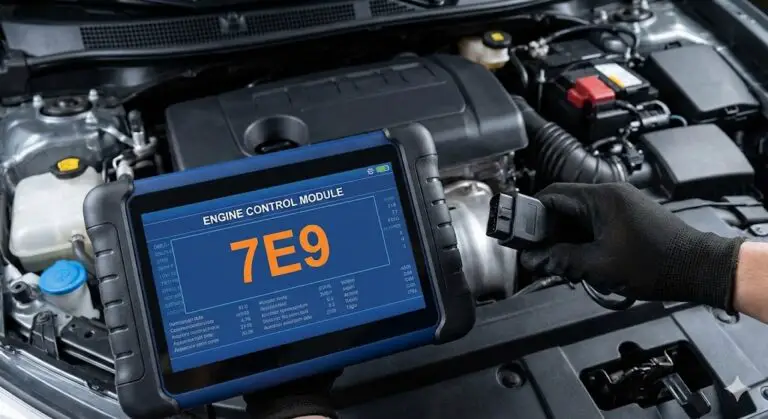
P0308 Dodge Ram 1500: Troubleshooting [2026]

When your Dodge Ram 1500 begins to shudder under load and the “Check Engine” light starts flashing, the culprit is often a specific disruption in the combustion cycle. This rhythmic vibration or loss of power is more than a nuisance; it is a symptom of a localized failure within the engine’s internal architecture. The P0308 error code signifies a detected misfire in cylinder 8, a condition that compromises fuel efficiency, increases emissions, and can lead to catastrophic engine damage—including catalytic converter meltdown—if ignored. This comprehensive guide provides an expert breakdown of the P0308 code, covering everything from simple spark plug gaps to complex Hemi-specific mechanical failures and professional diagnostic steps.
Technical Definition and Cylinder 8 Identification on the Dodge Ram 1500
The P0308 code is a generic OBD-II diagnostic trouble code (DTC) that indicates the Powertrain Control Module (PCM) has detected a lack of proper combustion in the eighth cylinder of the engine’s firing order. Modern Ram 1500 trucks utilize highly sophisticated monitoring systems to ensure peak performance. The PCM monitors the rotational speed of the crankshaft using the Crankshaft Position Sensor (CKP). Every time a cylinder fires, it provides a slight “push” or acceleration to the crankshaft. If Cylinder 8 fails to fire or produces a weak combustion stroke, the PCM detects a minute drop in the expected rotational velocity during that specific interval.
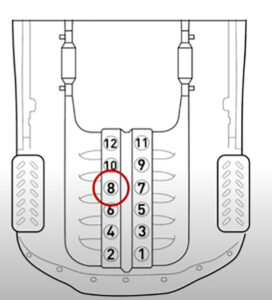
Identifying the physical location of Cylinder 8 is the first step in any professional repair. On the 5.7L Hemi V8 and the legacy 4.7L V8 engines, the cylinder numbering follows a standard Chrysler pattern. When standing at the front of the vehicle looking at the engine, Bank 1 (Cylinders 1, 3, 5, 7) is on the driver’s side, while Bank 2 (Cylinders 2, 4, 6, 8) is on the passenger side. Cylinder 8 is the rear-most cylinder on the passenger side, located closest to the firewall. This position makes it particularly susceptible to heat soak and difficult access for certain diagnostic tools.
The PCM doesn’t trigger the Check Engine Light (CEL) immediately upon a single misfire. It monitors 1000-revolution cycles to determine if the misfire rate exceeds the EPA-mandated threshold (typically around 2% for emissions or 10% for potential catalyst damage). A pending code means the PCM has noticed a pattern but hasn’t yet confirmed it as a permanent fault. A stored code accompanied by a flashing CEL indicates an active, severe misfire that is currently dumping unburned fuel into the exhaust system, which can overheat the catalytic converter in minutes.
By The Numbers: Hemi V8 Specs
5.7L Firing Order
Passenger/Rear Location
EPA Misfire Threshold
Common Causes of P0308 Misfires in High-Mileage Ram Trucks
In the trusted experience of master technicians, P0308 codes on the Ram 1500 platform generally fall into three categories: ignition, fuel, or air. Statistically, over 60% of P0308 codes in the Dodge Ram 1500 platform are attributed to ignition coil or spark plug wear. The 5.7L Hemi engine utilizes a dual-spark plug setup (16 plugs total), which is designed to improve combustion efficiency and reduce emissions. However, this means Cylinder 8 has two potential points of spark failure and a single coil pack that must drive both. If one plug is fouled or the coil’s internal windings are degraded, the combustion will be incomplete.
Ignition System Failures
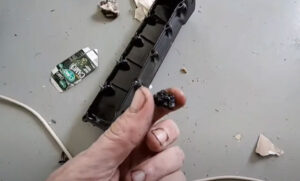
The coil-on-plug (COP) design is generally reliable, but the proximity of Cylinder 8 to the firewall means it operates in a high-heat environment. Over time, the rubber boot of the ignition coil can develop hairline fractures. These cracks allow the high-voltage spark to “arc” to the cylinder head instead of reaching the spark plug. Consider a scenario where a professional mechanic identifies a cracked ceramic insulator on a Mopar spark plug; even a microscopic crack can cause a misfire under heavy engine load when cylinder pressures are highest.
Fuel Delivery and Vacuum Discrepancies
Fuel delivery is the second most common culprit. Cylinder 8 misfires can result from a clogged fuel injector or, more commonly on older Rams, a damaged electrical harness. Rodents often find the rear of the engine block to be a warm nesting spot, leading to chewed wires specifically on the Bank 2 injector loom. Furthermore, an intake manifold gasket leak near the rear of the engine can allow “unmetered” air to enter Cylinder 8. This leans out the air-fuel mixture to the point where it cannot ignite, a condition known as a lean misfire.
A faulty Oxygen (O2) sensor on Bank 2 can provide incorrect data to the PCM, causing it to trim fuel incorrectly for the entire bank. While this usually triggers multiple codes (P0300, P0302, P0304, P0306, P0308), a marginal sensor can sometimes push a borderline Cylinder 8 over the edge first due to its position in the exhaust manifold flow.
Mechanical Concerns: The Hemi Tick and Valvetrain Analysis
If ignition and fuel tests pass, the expert technician looks deeper into the mechanical architecture of the Hemi engine. One of the most notorious issues with the 5.7L engine is the “Hemi Tick.” This sound is often the precursor to a P0308 code. It typically stems from a failure of the roller bearings within the hydraulic lifters. When these bearings seize, the lifter no longer rolls smoothly over the camshaft lobe; instead, it begins to grind the lobe down. Eventually, the camshaft lobe is worn so flat that the intake or exhaust valve no longer opens sufficiently, resulting in a permanent misfire.
Professional data suggests that lifter failures on the 5.7L Hemi frequently occur between 100,000 and 150,000 miles if oil change intervals are neglected. This engine is highly sensitive to oil quality and viscosity. Using anything other than the recommended 5W-20 full synthetic oil can disrupt the Multi-Displacement System (MDS). Cylinder 8 is one of the four cylinders (1, 4, 6, 8) that the MDS deactivates to save fuel. If the MDS solenoid for Cylinder 8 fails or the lifter remains in the “locked” position, the cylinder will stay dead, triggering a persistent P0308.
Another mechanical factor involves the exhaust manifold. Dodge Rams are notorious for broken exhaust manifold bolts. While this usually causes an audible leak, severe air reversion through a broken bolt near Cylinder 8 can trick the O2 sensor and disrupt the scavenging process, contributing to misfire conditions. In extreme cases, internal compression loss due to worn piston rings or a compromised head gasket can lead to a P0308. A high-mileage 2012 Ram 1500, for instance, might require a complete camshaft and lifter replacement because a seized lifter on the Cylinder 8 intake lobe has physically prevented the engine from “breathing.”
The MDS system relies on oil pressure to lock and unlock lifters. If you have sludge buildup or use the wrong oil weight (like 10W-30), the lifter for Cylinder 8 may fail to re-pressurize, leaving the valves closed even when the engine demands full power. Always use quality synthetic 5W-20 in MDS-equipped Hemis.
Step-by-Step Professional Diagnostic Procedures
To avoid the “parts cannon” approach—where you blindly replace sensors hoping for a fix—follow this expert diagnostic roadmap. These steps are designed to isolate the fault using logic and reliable testing methods.
📋
P0308 Diagnostic Roadmap
Clear the codes. Swap the Cylinder 8 ignition coil with the Cylinder 2 coil. If the code changes to P0302, you have a verified bad coil. If it stays P0308, swap the spark plugs. This is the fastest way to rule out ignition components.
Use a professional-grade OBD-II scanner to view non-continuous monitors. Mode $06 shows real-time misfire counts even if the CEL isn’t flashing. This helps identify “ghost” misfires that occur only under specific conditions.
Use a noid light or a digital multimeter to ensure the PCM is sending the ground pulse to the injector. If the light blinks, the electrical circuit is intact, and the issue may be a physically clogged injector.
Perform a dry compression test on Cylinder 8. A healthy Ram engine should show less than a 10% variance (typically 150-170 PSI). If low, perform a leak-down test to see if air escapes through the intake (intake valve), exhaust (exhaust valve), or oil filler (piston rings).
In one specific field case, a technician used a smoke machine to identify a vacuum leak at the very rear of the intake manifold. The smoke emerged right next to the Cylinder 8 runner. This minor crack was enough to cause a P0308 at idle, but the misfire disappeared at highway speeds because the vacuum leak became a smaller percentage of the total air intake. This is why complete diagnostics are vital before assuming you need an engine rebuild.
Professional Repair Options and Estimated Cost Breakdown
Once the diagnosis is confirmed, you must decide between a DIY fix or seeking professional help. Repairing a P0308 can range from a $20 spark plug swap to a $4,000 engine overhaul. For ignition issues, always use quality OEM Mopar parts. While aftermarket coils are cheaper, the Hemi’s PCM is finely tuned to the resistance values of factory coils; using off-brand components often leads to “secondary” codes or premature failure.
Average professional labor rates for valvetrain repair on a Ram 1500 range from $110 to $160 per hour depending on geographic location. If your diagnosis points to a mechanical failure like a wiped cam lobe, you must evaluate the vehicle’s overall value. However, ignoring a $100 ignition coil fix is significantly worse, as the raw fuel hitting the catalytic converter will quickly cause it to plug or melt, turning a minor repair into a $1,200 exhaust job. After any repair, ensure the technician performs a “drive cycle” to reset the PCM monitors. This involves a mix of city and highway driving to allow the PCM to confirm the P0308 condition is resolved before attempting an emissions test.
✅ Pros of Proper Repair
- Restores factory fuel economy (MPG)
- Prevents expensive catalytic converter failure
- Eliminates rough idle and vibration
- Ensures MDS system functions correctly
❌ Cons of Delaying
- Risk of permanent camshaft damage
- Increased carbon buildup on valves
- Potential for roadside breakdown
- Failed emissions/State inspections
Cylinder 8 misfires are frequently caused by ignition component wear but can signal deeper mechanical issues like Hemi lifter failure. Accurate diagnosis through component swapping and compression testing is essential to avoid “parts cannon” repair strategies. Maintaining high-quality fluid standards and OEM parts is the most reliable way to prevent the recurrence of P0308 codes and ensure your Ram 1500 remains a trusted workhorse for years to come. If a coil swap does not resolve your P0308 code, consult a professional technician for a compression test to protect your engine’s long-term health.
Frequently Asked Questions
Can I drive my Dodge Ram 1500 with a P0308 code?
Driving with a persistent P0308 code is not recommended. A misfire allows unburned fuel to enter the exhaust stream, which can overheat and destroy your catalytic converter within miles. If the Check Engine Light is flashing, it indicates a ‘catalyst-damaging’ misfire; you should pull over immediately and have the vehicle towed to a trusted repair facility to prevent expensive secondary damage.
How do I know if my P0308 is caused by the ‘Hemi Tick’?
If your P0308 code is accompanied by a rhythmic metallic tapping sound that increases with engine RPM, it likely indicates a valvetrain issue. Professional diagnosis involves removing the valve cover to inspect for a ‘dropped’ valve seat or a collapsed lifter. This is distinct from a spark-related misfire, which usually presents as a stumble without the heavy mechanical knocking.
Which cylinder is number 8 on a Dodge Ram 1500?
On both the 4.7L and 5.7L V8 engines found in the Ram 1500, cylinder 8 is located on the passenger side of the engine bay, closest to the firewall (the rear of the engine). It is the last cylinder in the bank consisting of cylinders 2, 4, 6, and 8. Its location makes it prone to higher heat soak, which can sometimes accelerate wire or coil degradation.
Will a bad fuel injector cause a P0308 code?
Yes, a clogged or electrically failed fuel injector will prevent the necessary fuel-to-air ratio required for combustion in cylinder 8. This results in a ‘lean misfire.’ You can test this by using a stethoscope to listen for the audible ‘clicking’ of the injector or by measuring its internal resistance with a multimeter; a reading outside of 10-16 ohms typically indicates a faulty unit.
How much does it cost to fix a P0308 code on a Ram?
The cost varies significantly based on the root cause. A simple spark plug replacement may cost under $50 if done personally, while a professional ignition coil replacement typically ranges from $150 to $250. However, if the misfire is caused by mechanical failure such as a worn camshaft or lifters, professional repair costs can range from $2,500 to $4,000 including parts and labor.
![P062A Ram 1500: Diagnosing Fuel Pump Control Module Issues [2026]](https://truckguider.com/wp-content/uploads/2026/03/p062a-ram-1500-featured.webp)
![Cruise Control Turns On But Will Not Set [2026]](https://truckguider.com/wp-content/uploads/2026/03/featured-0a745d5a-768x768.webp)