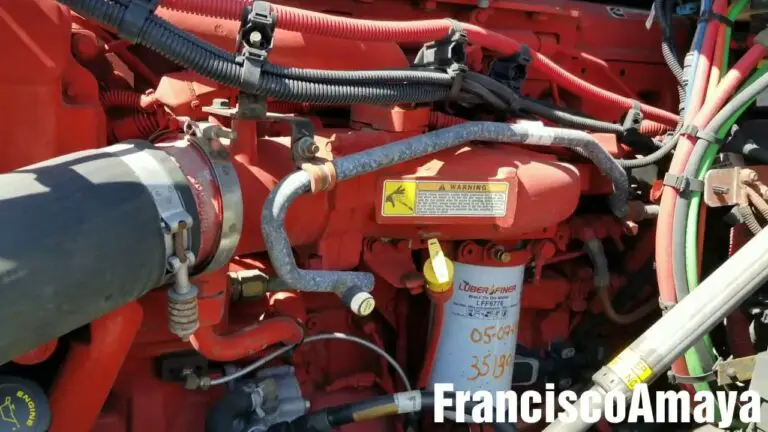
P2463 6.7 Cummins Causes Diagnosis and Fixes 2026 Ram Trucks

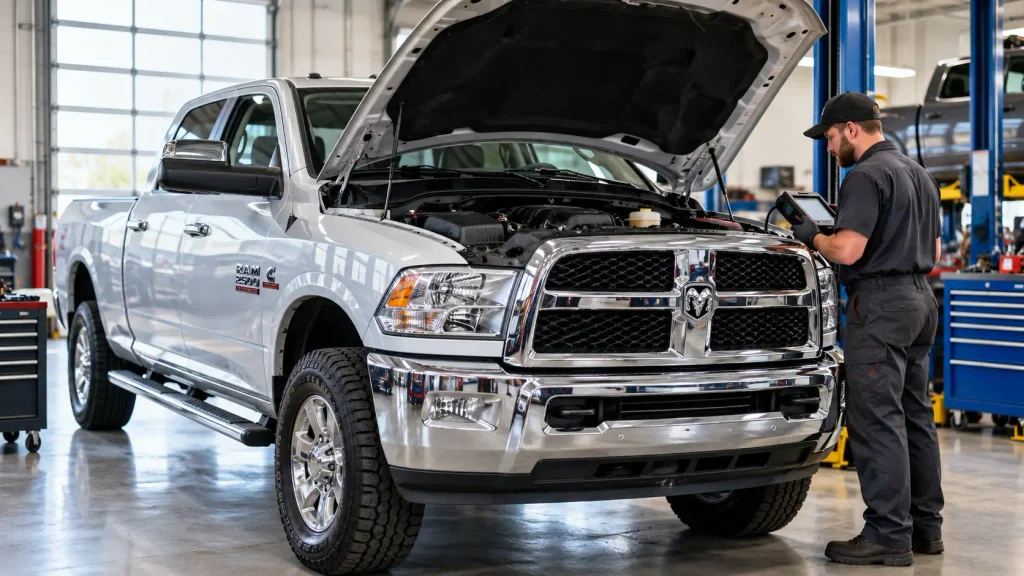
P2463 on a 6.7 Cummins means the engine control system has detected excessive soot accumulation in the diesel particulate filter (DPF). On a Ram 2500 or 3500 with the 6.7L Cummins Turbo Diesel, the fault can follow incomplete regeneration, abnormal soot production, or another aftertreatment problem. It does not automatically mean the DPF must be replaced.
The right repair depends on whether P2463 is active or stored, which other trouble codes are present, and what the instrument cluster says. A routine regeneration message calls for a different response than an exhaust-service warning. Start with those distinctions before authorizing expensive parts or a forced regeneration.
A model-aware diagnostic route for Ram 2500 and 3500 owners. Confirm the warning, record the codes, then choose the appropriate service path.
Do not assume that the DPF or pressure sensor needs replacement.
Do not attempt to fix a service-required warning by simply driving at highway speeds or forcing regeneration.
If safe and the truck operates normally, follow the exact model-year driving instructions. This does not replace diagnosis of active P2463.
Review recent regeneration, current readings and the applicable aftertreatment validation procedure before clearing codes.
Check for accompanying codes and use the correct model-year service procedure before attempting desoot.
Test relevant pressure sensing, EGR, air, fueling or temperature faults. Repair confirmed causes before reassessing soot load.
Review the VIN-specific procedure, software and interlocks. Qualified stationary desoot may be required where permitted.
Confirm the underlying issue is corrected, inspect the DPF when prescribed, complete aftertreatment validation and check for returning codes.
What Does P2463 Mean on a 6.7 Cummins


The DPF traps particulate matter, primarily soot, in the exhaust. During regeneration, the aftertreatment system raises exhaust temperatures under controlled conditions to burn accumulated soot. The powertrain control module (PCM) monitors the filter’s condition and manages regeneration.
P2463 identifies a soot-loading or filter-restriction condition. The description used in Ram service information is P2463-00, Diesel Particulate Filter Restriction, Soot Accumulation Bank 1. The code does not tell you which component caused the soot buildup.
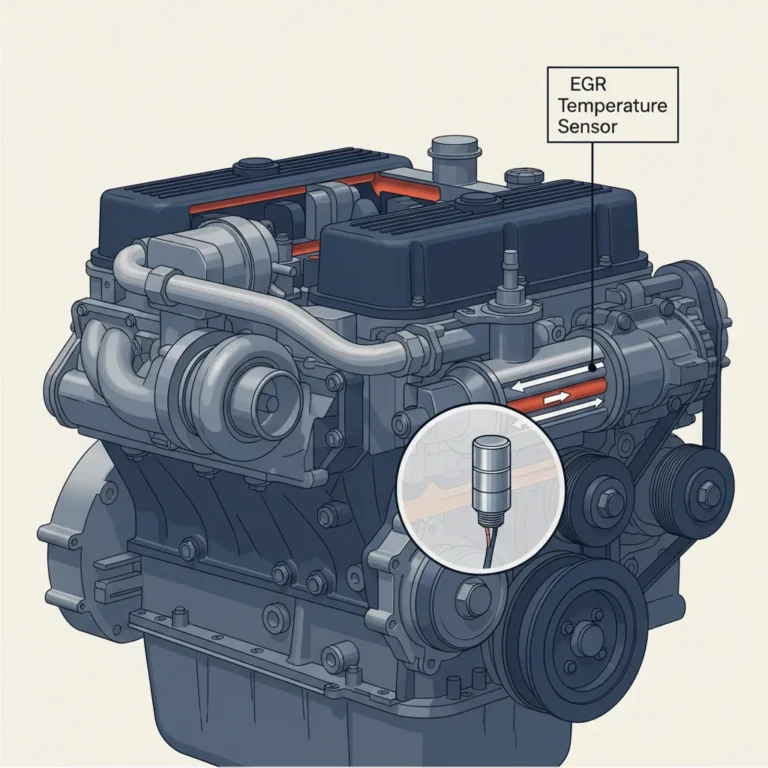
Soot is different from ash. Regeneration can burn soot under suitable conditions, but it cannot burn away the noncombustible ash that accumulates over the filter’s service life. Code P242F relates to ash accumulation or a face-plugged filter, so it needs a separate diagnostic path. For the arrangement of the turbocharger, EGR system, and associated engine components, see the 6.7 Cummins engine diagram and component guide.
What Determines the Correct P2463 Repair Path




Before doing anything to the DPF, record the model year and read the complete diagnostic report with a scan tool capable of accessing Ram diesel powertrain and aftertreatment data. A basic reader may show P2463 without the information needed to choose a repair.
Five conditions change the next step:
- Code status: Is P2463 currently active, or is it stored from an earlier event?
- Related codes: Are there pressure-sensor, EGR, boost, fuel-system, or exhaust-temperature faults?
- Dashboard message: Does the truck request ordinary regeneration, or does it demand service?
- Available data: What do the soot-load estimate, differential pressure, temperature readings, and regeneration history show, if your scan tool supports them?
- Vehicle configuration: Which model year, engine calibration, and PCM software revision does the truck use?
Do not treat any single soot percentage or sensor voltage found online as universal. Displayed values, diagnostic limits, and approved procedures vary with calibration. The next decision is whether the dashboard warning allows continued normal driving.
Which Ram DPF Warnings Require Immediate Service


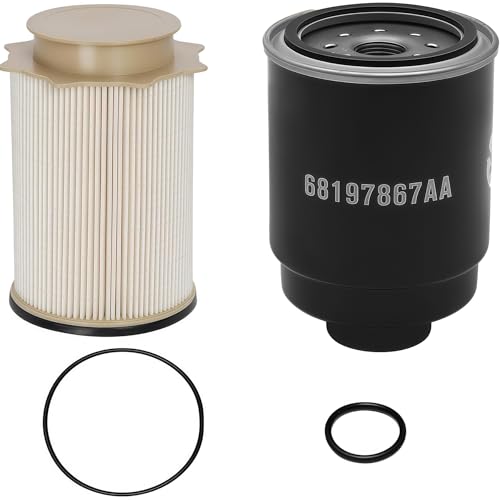
A check-engine light with P2463 does not always produce the same driver information message. Read the exact wording before deciding whether to drive for regeneration or book a repair.
| Instrument Cluster Message | What It Means | Appropriate Response |
|---|---|---|
| Exhaust Filter XX% Full Safely Drive at Highway Speeds to Remedy | The truck is requesting operating conditions that permit regeneration | Follow the owner’s manual if the truck runs normally and no service-required warning is present |
| Regeneration In Process | The system is actively cleaning the filter | Continue suitable driving conditions until the process completes, when safe |
| Exhaust Service Required See Dealer Now | A malfunction has disabled regeneration | Arrange prompt professional diagnosis; do not rely on highway driving as the fix |
| Exhaust Filter Full Power Reduced See Dealer | The PCM has reduced engine output to protect the aftertreatment system | Seek professional service and avoid unnecessary driving or towing |
The 2022 Ram 2500/3500 owner’s manual DPF guidance states that its routine highway-driving message appears at 80% of the filter’s maximum storage capacity and that suitable highway driving for as little as 45 minutes may remedy that condition. Those figures describe that manual’s ordinary regeneration request, not a guaranteed cure for active P2463 or a service-required warning.
Regeneration raises exhaust temperatures. Never idle or park over dry grass, leaves, or other combustible material, and never conduct a stationary regeneration without the specified equipment and safety controls.
If P2463 Is Stored Without Current Symptoms


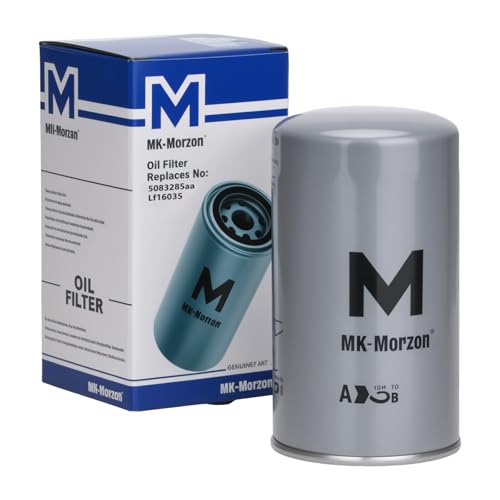
A stored P2463 does not necessarily mean the DPF remains excessively loaded. The system may have completed a regeneration after the fault initially appeared, leaving a history code to be validated.
If the truck operates normally and P2463 is stored rather than active, a technician should check remaining codes, regeneration history, and relevant aftertreatment readings. The vehicle-specific procedure may call for diesel aftertreatment validation before the repair is considered complete.
If validation passes and no underlying fault remains, code clearing can be part of the documented repair process. If P2463 returns, the soot-loading problem has not been fully addressed. Repeatedly erasing a code without checking the cause only removes diagnostic evidence.
If P2463 Is Active With Other Fault Codes
When P2463 appears alongside another active fault, diagnose the related fault first. Ram’s P2463 diagnostic procedure warns that drivability or fuel-system problems can produce excess soot and cause the code to return even after regeneration.
Use the other codes to narrow the investigation:
- P2453, P2454, P2455, or P2456: Investigate DPF differential pressure sensor circuits, signals, and connections according to the year-specific diagnostic chart.
- P2459: Examine unusually frequent regeneration and conditions preventing a normal cycle from completing.
- P0401 or other EGR faults: Diagnose the exhaust gas recirculation (EGR) system. An EGR fault is not proof that the valve itself needs replacement.
- P0299 or intake-air faults: Investigate boost or air-system performance that could contribute to poor combustion or excess soot.
- P242F: Follow the separate ash-accumulation or filter-inspection procedure rather than assuming an ordinary regeneration will resolve it.
For an EGR-related code, the 6.7 Cummins EGR valve diagnostic guide provides additional component context. Use the repair manual for the truck’s specific model year to confirm tests and specifications.
After repairing a verified underlying fault, recheck P2463 and the aftertreatment readings. There is little value in cleaning a DPF if an unresolved engine problem immediately fills it again.
If P2463 Is Active Without Other Fault Codes
An active P2463 with no accompanying code still requires a controlled diagnostic approach. The next step is not automatically to replace the filter or attempt an unsupervised forced regeneration.
For example, the Ram P2463 diagnostic procedure for the 6.7L Cummins directs a technician to perform a scan-tool-initiated stationary desoot for an active fault, provided the PCM has the required software. It then calls for an aftertreatment inspection and validation. This is an example from a specific service procedure, not authorization to run that test on every model year.
An approved stationary desoot may require high exhaust temperatures, a clear work area, monitoring equipment, and scan-tool control. If conditions are not met, another fault is active, or the scan tool refuses the procedure, stop and diagnose the reason. Do not bypass interlocks.
Normal automatic regeneration, a dashboard-requested driving cycle, and technician-initiated stationary desoot are different processes. For additional context about different truck configurations, see the 6.7 Cummins manual regeneration controls guide. Always use your actual owner’s manual and service information to confirm which controls exist.
How to Check DPF Pressure Sensor and Hoses
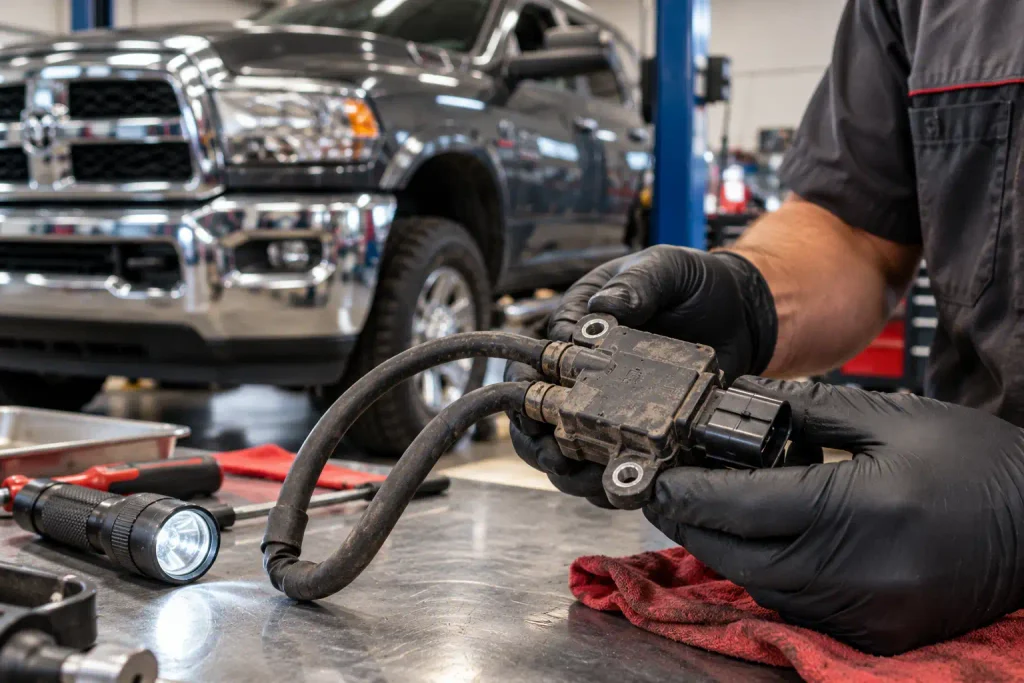
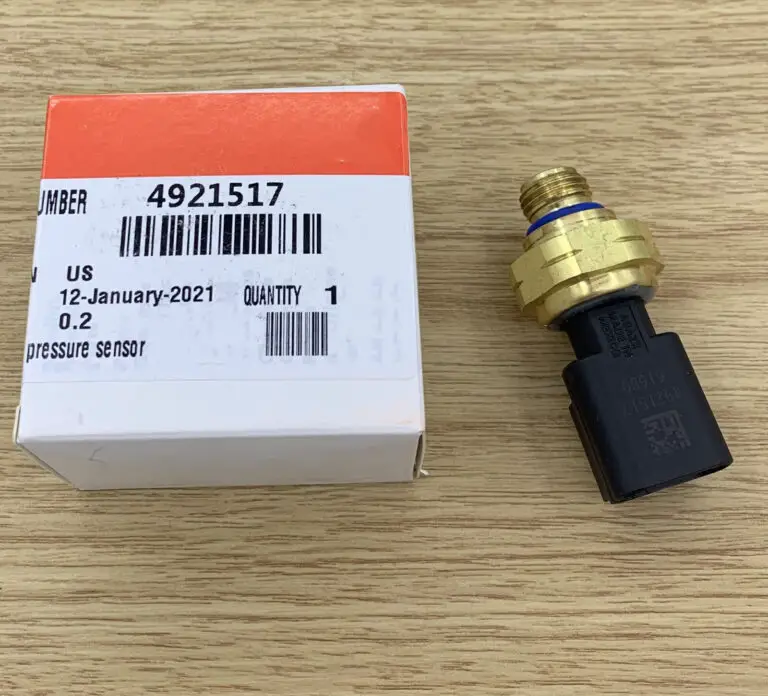
The DPF differential pressure sensor measures the pressure difference across the filter. Its readings help the control system evaluate restriction, but P2463 by itself does not prove a defective sensor.
If sensor-related codes appear or scan data conflicts with the truck’s behavior, inspect the measurement system before replacing components:
- Allow the exhaust to cool completely. Locate the sensor and its pressure lines using the correct year-specific parts layout.
- Look for disconnected, pinched, split, melted, or obstructed pressure lines and damaged electrical connectors.
- Review sensor readings with the engine off and at the operating conditions specified by the service manual.
- Compare readings with model-specific test limits. Check wiring or the sensor only when the diagnostic results support it.
- Recheck the soot estimate and P2463 status after any confirmed defect is repaired.
Do not disconnect hot exhaust lines or clear a suspected blockage by blowing debris into a sensor. The physical position of the sensor and the routing of its tubes can differ across Ram pickup and chassis-cab configurations.
Our 6.7 Cummins DPF pressure sensor location guide covers the component’s location in more detail. The P2463 repair decision still depends on the full aftertreatment diagnosis.
Which Ram PCM Bulletins Mention P2463
Some P2463 complaints may involve software updates, but a bulletin listing the code does not establish that a PCM flash will repair every truck with that fault.
For 2019 Ram 2500 and 3500 pickups, TSB 18-059-20, dated August 7, 2020, lists P2463-00 among the trouble codes addressed by its PCM update information. The bulletin applies to specified North American trucks with 6.7L Cummins engine sales codes ETL or ETM. Review the published Ram service bulletin for its exact eligibility terms. Because it is an older bulletin, technicians should also check for later updates or superseding instructions.
For certain 2025 Ram 2500 and 3500 pickups with the 6.7L Cummins High Output engine, TSB 18-014-26 REV. A, dated April 22, 2026, likewise lists P2463 among its applicable codes. Its model and equipment restrictions differ from the 2019 bulletin.
A dealer or qualified technician should check the VIN, engine sales code, current calibration, and latest service information before deciding whether reprogramming applies. The DPF and other active faults still need diagnosis.
When to Choose Regeneration Cleaning or DPF Replacement
A successful repair addresses both the DPF’s condition and the problem that produced excess soot. Use the scan results and the applicable aftertreatment inspection procedure to decide what is justified.
| Confirmed Condition | Next Action | What to Avoid |
|---|---|---|
| Routine regeneration request, no service-required warning | Follow the model-specific owner’s manual driving guidance when safe | Treating its driving advice as a cure for every active P2463 |
| Active P2463, no unresolved blocking faults, desoot permitted | Qualified technician performs the prescribed stationary desoot and subsequent validation | Starting a forced regeneration with unsupported tools |
| Pressure sensor or hose fault confirmed | Repair the tested component or connection and re-evaluate DPF status | Buying a sensor based on P2463 alone |
| Other engine or emissions fault present | Correct the verified fault, then reassess soot loading | Repeated regeneration without addressing excessive soot production |
| Aftertreatment inspection fails or filter damage is confirmed | Follow the service procedure for cleaning assessment or replacement, as applicable | Replacing the DPF solely because the code exists |
| P2463 returns after a documented successful procedure | Investigate regeneration history, engine performance, sensor data, and calibration | Repeatedly clearing the light |
Professional DPF cleaning is not interchangeable with a normal regeneration, and it is not appropriate for every damaged filter. Replacement should follow the manufacturer’s inspection criteria. After the repair, the technician may need to complete aftertreatment validation and specified reset procedures.
An exact repair price cannot be determined from the fault code. Diagnostic labor, sensor repairs, stationary desoot, professional filter service, and replacement involve very different work. Obtain an itemized estimate tied to the vehicle’s VIN and the test results.
How to Prevent P2463 From Returning
A clean DPF can load up again if the original cause remains. Preventing repeat P2463 faults starts with resolving confirmed air, fuel, sensor, or regeneration problems rather than treating the filter as an isolated component.
Follow the truck’s maintenance schedule, respond to regeneration messages, and allow an authorized driving cycle to finish when conditions are safe. Repeated short trips and low-speed operation can make it difficult for some trucks to complete regeneration. Avoid unnecessary extended idling when the owner’s manual warns against it.
If the truck repeatedly requests regeneration, record the frequency and scan data rather than ignoring the pattern. Recurring P2463 requires diagnosis even if the warning temporarily disappears.
What to Do Next When Your Ram Shows P2463
For P2463 on a 6.7 Cummins, start with a complete code scan and the exact instrument cluster message. A stored code with normal operation calls for a different assessment than active P2463 with reduced engine power or a service-required warning.
Resolve accompanying engine or sensor faults first. If the relevant Ram procedure permits stationary desoot, have a qualified technician perform it and validate the aftertreatment system. If the filter fails inspection, follow the specified repair or replacement criteria rather than guessing.
Before authorizing a DPF replacement, ask for the recorded codes, soot and pressure readings, inspection findings, and the service procedure used for your truck’s model year.
Frequently Asked Questions About P2463 on 6.7 Cummins
Can I Drive My 6.7 Cummins With a P2463 Code?
It depends on the warning message and the truck’s condition. A routine regeneration prompt may permit continued highway driving under the owner’s manual instructions, but an Exhaust Service Required or Power Reduced warning calls for prompt professional service. Avoid heavy towing or unnecessary trips when engine power is reduced.
Will a Forced Regeneration Clear P2463 on a Cummins?
A scan-tool-initiated stationary desoot can be part of the approved repair procedure on certain model years when the required conditions are met. It may not work if another fault blocks regeneration or the filter fails inspection. The technician must complete the prescribed validation afterward.
Can a Bad DPF Pressure Sensor Cause P2463?
A pressure-sensor or pressure-line problem can interfere with aftertreatment diagnosis or operation, but P2463 alone does not identify a failed sensor. Look for sensor-specific DTCs and compare live readings against the correct service procedure before replacing the sensor.
What Is the Difference Between P2463 and P242F?
P2463 indicates excessive DPF soot accumulation. P242F relates to ash accumulation or filter face plugging, which needs a different inspection and diagnostic process. Soot can be burned during a suitable regeneration; noncombustible ash cannot be burned away by regeneration.
Will Clearing P2463 Fix the DPF Problem?
No. Erasing P2463 only removes the stored diagnostic record; it does not clean the filter or fix the cause of excess soot. Clear the code only as directed during a completed repair and aftertreatment validation. If the fault returns, investigate the unresolved condition.