Ram 1500 Towing Capacity Chart: 2024-2019 Specs & Ratings

The maximum towing capacity for the Ram 1500 reaches 12,750 lbs when properly equipped with the 5.7L HEMI V8 engine and a 3.92 axle ratio. It is essential to distinguish between ‘Max Towing’ and your specific ‘As-Equipped’ rating, which is found on the driver-side door jamb sticker.
🎯 Key Takeaways
Recommended Best Deal Products


- The 5.7L HEMI V8 provides the highest towing capacity at 12,750 lbs.
- Choosing a 3.92 axle ratio is necessary to achieve maximum trailering limits.
- The 3.6L Pentastar V6 engine typically maxes out at 7,730 lbs.
- Adding 4×4 drivetrains generally reduces total towing capacity by several hundred pounds.
- The Ram 1500 TRX has a lower 8,100 lb limit due to off-road suspension.
The maximum towing capacity for a 5th Generation Ram 1500 ranges from 6,120 pounds to a class-leading 12,750 pounds. Your specific rating depends entirely on the combination of your engine, cab configuration, bed length, and most importantly, your rear axle ratio. Checking a generic brochure isn’t enough; you need the exact specs for your specific build to ensure you stay within safe legal and mechanical limits.

Prime for Young Adults — 6 Months Free
Students and 18–24s get six months of Prime free, then half price.
Start 6 Months FreeUnderstanding these numbers is critical for your safety and the longevity of your truck’s transmission. Overloading your Ram can lead to premature brake wear, engine overheating, and compromised handling. This guide breaks down the official 2019–2024 charts so you can find your truck’s precise “sweet spot” for hauling everything from utility trailers to heavy-duty travel trailers.
5th Generation Ram 1500 Towing Capacity Chart (2019-2024)
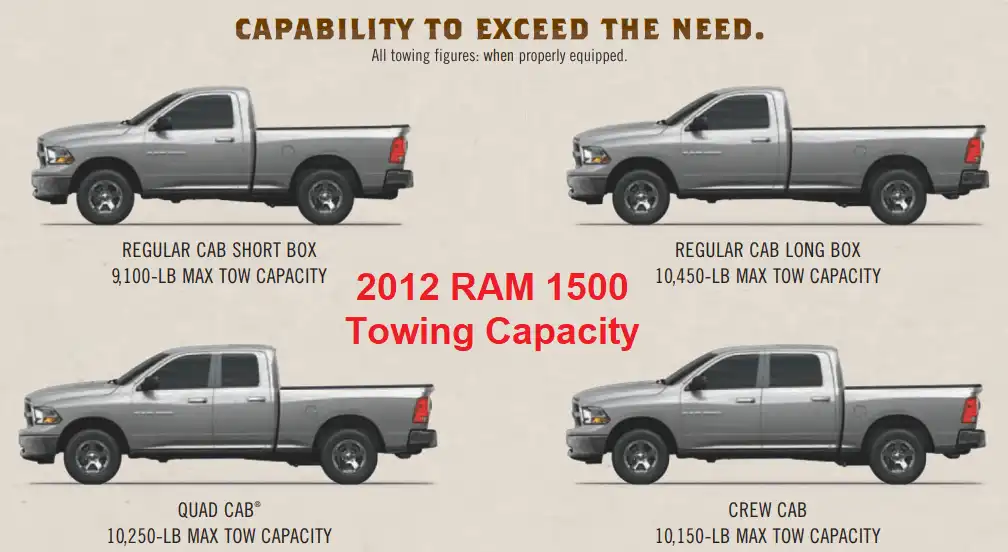
Since the launch of the 5th Generation in 2019, the Ram 1500 has offered four primary engine options. While the 5.7L HEMI V8 gets the most attention for heavy lifting, the 3.0L EcoDiesel and the 3.6L Pentastar V6 serve specific niches for efficiency and light-duty hauling. The numbers below reflect the maximum possible ratings for each engine when properly equipped with the correct axle ratio and towing package.
Maximum Towing by Engine and Configuration
- 3.6L Pentastar V6 with eTorque: 6,120 lbs to 7,730 lbs. This engine is standard in Tradesman and Big Horn trims. It is best suited for light utility trailers, jet skis, or small pop-up campers.
- 5.7L HEMI V8 (Non-eTorque): 8,420 lbs to 11,610 lbs. Available primarily in earlier 5th Gen models (2019-2021). It remains a favorite for those who prefer a traditional naturally aspirated V8 without the mild-hybrid system.
- 5.7L HEMI V8 with eTorque: 11,410 lbs to 12,750 lbs. This is the configuration required for the maximum 12,750-lb rating. The eTorque system provides an additional 130 lb-ft of launch torque, helping get heavy loads moving from a dead stop.
- 3.0L EcoDiesel V6: 7,820 lbs to 12,560 lbs. The EcoDiesel is a powerhouse for long-distance towing. While its horsepower is lower than the HEMI, its 480 lb-ft of torque allows it to pull heavy loads with significantly better fuel economy.
- 6.2L Supercharged HEMI V8 (TRX): Maximum 8,100 lbs. Despite having 702 horsepower, the TRX is limited by its soft, long-travel off-road suspension, which cannot support the high tongue weights of heavier trailers.
Keep in mind that 4×4 models generally have a lower towing capacity than 4×2 models. The extra weight of the 4WD drivetrain (transfer case, front differential, and driveshafts) subtracts from the total weight the truck can pull. For instance, a 2023 Ram 1500 Big Horn Crew Cab 4×2 with a 5.7L HEMI and 3.92 gears tops out at 11,540 lbs, while the 4×4 version of the same truck drops to 11,320 lbs.
Configuration Impact: Quad Cab vs. Crew Cab
The physical size of your truck also dictates your towing limits. Because the Crew Cab is heavier than the Quad Cab, it technically has a slightly lower maximum towing capacity when all other variables are equal. However, the 12,750-lb “max towing” headline usually refers to the Quad Cab 4×2 with the 5.7L HEMI eTorque and 3.92 axle ratio. If you opt for the larger Crew Cab with a 6’4″ bed, expect your real-world maximum to sit closer to 11,200–11,500 lbs.
Impact of Engine Choice and Axle Ratios on Towing Performance
Recommended Best Deal Products


The engine provides the raw horsepower, but the rear axle ratio determines how that power is delivered to the ground. In the Ram 1500, the difference between a 3.21 and a 3.92 axle ratio can change your towing capacity by nearly 4,000 pounds on the same truck. This is the single most important factor to check before hitching up a trailer.
The 3.21 vs. 3.92 Axle Ratio Explained
The axle ratio refers to the number of times the driveshaft rotates for every one rotation of the wheels. A higher number (3.92) means more mechanical advantage. This is often called “shorter” gearing. It allows the engine to stay in its powerband more easily when pulling heavy loads up a steep grade or merging onto a highway.
- 3.21 Axle Ratio: Optimized for fuel economy and highway cruising. It is the standard ratio for many Pentastar V6 and HEMI V8 models. Use this for daily driving and light towing (typically limited to 8,000 lbs or less).
- 3.55 Axle Ratio: The “Goldilocks” option often found on EcoDiesel models. It provides a solid balance between fuel efficiency and pulling power, usually rated for mid-range loads around 9,000 to 10,000 lbs.
- 3.92 Axle Ratio: Optimized for maximum towing. If you plan to tow a camper over 9,000 lbs, this is non-negotiable. It provides better acceleration under load but will slightly decrease your highway MPG when the truck is empty.
For example, a 2022 Ram 1500 Quad Cab with the 5.7L HEMI and a 3.21 axle ratio is rated for roughly 8,500 lbs. Swapping that same truck to a 3.92 ratio jumps the rating to 11,500 lbs or higher. If you are buying a used Ram specifically for towing, always check the build sheet or the equipment listing via the VIN to verify which axle ratio is installed. You cannot simply look at the engine and know the towing capacity.
Why Payload is Your Real-World Limiting Factor
It is a common mistake to focus only on the 12,750-lb towing number. In reality, most Ram 1500 owners will hit their Payload Capacity limit before they ever reach the max towing limit. Payload is the weight of everything inside or on the truck, including passengers, fuel, accessories (like bed covers), and—most importantly—the tongue weight of the trailer.
A typical travel trailer has a tongue weight of about 10-15% of its total weight. If you have a 10,000-lb trailer, it adds 1,000 to 1,500 lbs of downward force on your hitch. If your specific truck’s payload capacity is only 1,800 lbs (common for high-trim Limited or Longhorn models), and you have 1,200 lbs of tongue weight, you only have 600 lbs left for the driver, passengers, and gear in the bed. Overloading payload is what causes rear-end “squat,” light steering, and dangerous sway.

Audible — Listen Free for 30 Days
One free credit a month and thousands of titles included.
Listen Free for 30 DaysComparing Towing Limits: Hemi V8 vs. EcoDiesel vs. Pentastar V6
When you look at a Ram 1500 towing capacity chart, the first thing that jumps out is how much the engine choice dictates your pulling power. Between 2019 and 2024, Ram offered a variety of powertrains, each designed for a different type of driver. Choosing the right one isn’t just about the highest number; it is about matching the engine’s torque curve to your specific hauling needs.
The Dominance of the 5.7L Hemi V8 with eTorque
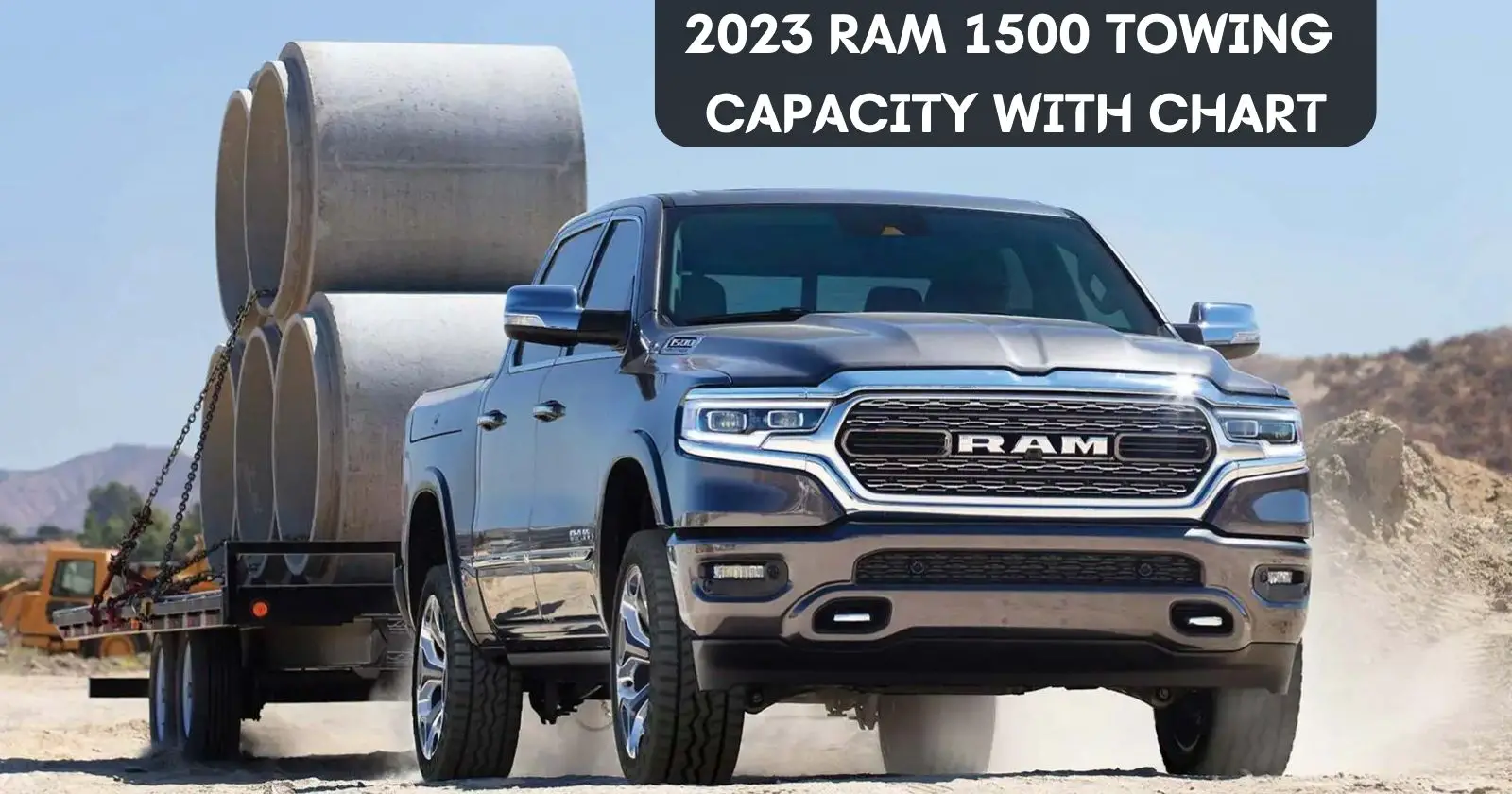
For most of the last five years, the 5.7L Hemi V8 has been the gold standard for Ram towing. When equipped with the eTorque mild-hybrid system, this engine provides the necessary low-end grunt to reach that headline-grabbing 12,750-pound maximum capacity. The eTorque system adds up to 130 lb-ft of supplemental launch torque, which is a game-changer when you are trying to get a heavy horse trailer or a large toy hauler moving from a dead stop on an incline.
Pentastar V6 and the EcoDiesel Alternative
Not everyone needs to pull six tons. The 3.6L Pentastar V6 is a reliable workhorse found in many base models, typically topping out around 7,730 pounds. It is perfect for small utility trailers or jet skis. On the other hand, the 3.0L EcoDiesel (available through 2023) was the favorite for long-distance towers. While its max capacity was slightly lower than the Hemi—usually capping near 9,600 pounds—it offered incredible fuel efficiency and 480 lb-ft of torque, making it feel effortless when pulling heavy loads over mountain passes.
- 5.7L Hemi V8: Best for maximum weight and heavy acceleration.
- 3.0L EcoDiesel: Best for fuel economy during long-distance towing.
- 3.6L Pentastar V6: Best for light-duty tasks and daily driving efficiency.
Understanding the Difference Between Max Towing and As-Equipped Ratings
Recommended Best Deal Products

One of the biggest mistakes truck owners make is looking at a marketing brochure and assuming their specific truck can handle the maximum advertised weight. The “Max Towing” figure on a chart is almost always based on a very specific, lightweight configuration—usually a Quad Cab, 4×2 model with the highest available rear axle ratio. Your actual as-equipped rating will likely be different.
Why Trim Level and Cab Configuration Matter
Every pound of luxury you add to your truck is a pound you subtract from your towing capacity. A fully loaded Ram 1500 Limited with heated leather seats, a panoramic sunroof, and air suspension weighs significantly more than a base Tradesman. Because the truck has a fixed Gross Combined Weight Rating (GCWR), that extra luxury weight “eats” into your available towing capacity. Similarly, a Crew Cab with a 6’4″ bed is heavier than a Quad Cab, which will naturally lower the maximum trailer weight you can safely pull.
The Importance of Rear Axle Ratios
If you are scanning a Ram 1500 towing capacity chart, you will see different numbers for the same engine based on the “axle ratio.” This is a crucial detail that many buyers overlook. A truck with a 3.21 axle ratio is built for highway fuel economy, while a truck with a 3.92 axle ratio is built for pulling. The 3.92 ratio allows the engine to stay in its power band more effectively, often increasing the towing capacity by thousands of pounds compared to the 3.21 version.
- Check the Door Sticker: Always look at the Tire and Loading Information sticker on your driver-side door jamb for your specific payload limit.
- Verify Your Axle Ratio: Use your VIN on the Ram website to find your build sheet and confirm your gear ratio before hitching up.
- Account for Passengers: Remember that the weight of your family and gear inside the truck counts against your total towing capacity.
Conclusion
Navigating the Ram 1500 towing capacity chart is about more than just finding the biggest number; it is about understanding how your truck’s engine, cab size, and gear ratio work together. Whether you are rocking the powerful 5.7L Hemi V8 or the efficient Pentastar V6, knowing your specific “as-equipped” limits ensures that you stay safe on the road and protect your vehicle’s longevity. Between the 2019 and 2024 model years, Ram has provided a truck for every level of towing, provided you do the math first.
To get started, take a look at your truck’s door jamb sticker today and cross-reference it with your owner’s manual. If you are still shopping for a truck, prioritize the 3.92 axle ratio if heavy hauling is in your future. Stay safe, stay informed, and enjoy the open road with your Ram 1500!
Audible Premium Plus — Annual Membership
12 audiobook credits up front, plus the full Audible catalogue.
See Annual Plans💬 Quick Questions & Answers
What is the max towing capacity of a 2024 Ram 1500?
The maximum capacity is 12,750 lbs when equipped with the 5.7L Hemi V8 and the Max Tow Package.
How much can a Ram 1500 V6 tow?
The 3.6L Pentastar V6 engine with eTorque has a maximum towing capacity of approximately 7,730 lbs.
Does the 3.92 axle ratio increase towing?
Yes, moving from a 3.21 to a 3.92 axle ratio significantly increases the truck’s maximum towing capacity.
What is the towing capacity of the Ram 1500 EcoDiesel?
The 3.0L EcoDiesel V6 offers a high towing capacity of up to 12,560 lbs depending on configuration.
Where can I find my truck’s specific towing capacity?
Check the Tire and Loading Information sticker located on the driver-side door jamb for VIN-specific data.
❓ Frequently Asked Questions
How does the axle ratio affect the Ram 1500 towing chart?
The axle ratio determines how much torque is sent to the wheels. A 3.92 ratio provides more mechanical advantage for pulling heavy loads, resulting in the highest towing ratings, whereas a 3.21 ratio is optimized for highway fuel economy and has lower limits.
Why does the Ram 1500 TRX have a lower towing capacity?
The TRX is limited to 8,100 lbs because its sophisticated long-travel suspension and soft off-road springs are not designed for heavy tongue weights. Heavy towing would compromise the specialized Bilstein shocks and rear coil setup.
What is the difference between payload and towing capacity?
Payload is the maximum weight of passengers and cargo inside the truck bed and cabin, while towing capacity is the maximum weight the truck can pull behind it. Exceeding payload capacity often happens before reaching max towing limits, especially with heavy trailers.
How does cab size and bed length impact the towing chart?
Larger configurations like the Crew Cab with a 6’4″ bed add more curb weight to the vehicle. Because the Gross Combined Weight Rating (GCWR) remains constant, the heavier the truck itself is, the less weight it can safely tow.
Does 4WD lower the Ram 1500 towing capacity?
Yes, 4×4 systems add weight to the vehicle through the transfer case and front drive components. This extra weight typically reduces the maximum towing capacity by roughly 200 to 400 lbs compared to an identical 4×2 model.
What are the new towing specs for the 2025 Ram 1500 Hurricane engine?
The 2025 model introduces the 3.0L Hurricane Straight-Six engine, which is rated to tow up to 11,580 lbs. While slightly lower than the outgoing Hemi’s peak, it offers higher torque for better real-world pulling power.
![U1110 Code Dodge: Meaning, Causes, and Expert Diagnostics [2026]](https://truckguider.com/wp-content/uploads/2026/03/u1110-code-dodge-featured-768x403.webp)

![AMP Research PowerStep Maintenance [2026]](https://truckguider.com/wp-content/uploads/2026/03/amp-research-power-step-maintenance-featured.webp)