Too Much Ram Not Enough Dodge: Why Your High-Horsepower Truck Feels Sluggish

You step on the gas expecting the roar of a Hemi or the surge of a Cummins, but instead, you get a hesitation that feels like the truck is stuck in mud. Despite having massive engine displacements and high advertised horsepower, many owners find their vehicles have “too much Ram and not enough dodge” when it comes to actual responsiveness. This is a common frustration for modern truck enthusiasts who see impressive numbers on the window sticker but feel a distinct lack of “get-up-and-go” in real-world driving. This complete expert guide will break down the professional technical reasons for vehicle sluggishness, from torque multiplication and curb weight to electronic throttle lag, and provide a comprehensive roadmap on how to fix it.
The Physics of Performance: Understanding the Horsepower vs. Torque Disconnect
In the world of high-performance trucks, “horsepower sells cars, but torque wins races” is more than just a cliché; it is a fundamental law of physics. Many drivers equate high horsepower with immediate acceleration, but horsepower is actually a mathematical calculation of how quickly work can be done at speed. According to official guide data from Car and Driver, torque is the twisting force that moves a vehicle from a standstill, while horsepower determines how fast that work is completed. If your truck feels slow off the line, you are experiencing a lack of effective low-end torque.
Torque Curves and Power Bands
A common issue with modern gasoline engines, such as the 5.7L Hemi V8, is that they have “peaky” power bands. This means maximum torque isn’t available until the engine reaches higher RPMs (often 3,500 to 4,500 RPM). In contrast, a Cummins Turbo Diesel generates massive torque at much lower engine speeds. If you are light on the throttle, the engine may not be reaching the “sweet spot” of its power band, leading to a sluggish sensation during daily commuting. Expert analysis shows that modern engine mapping often prioritizes fuel efficiency, keeping the engine in higher gears and lower RPMs where torque production is at its weakest.
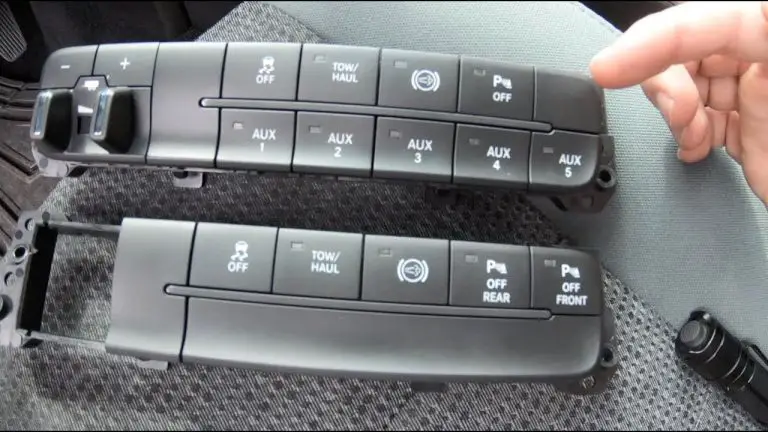
To overcome a peaky power band without heavy modifications, use the “Tow/Haul” mode even when not towing. This adjusts the transmission shift points to keep the engine in its power band longer, providing a more reliable and responsive feel.
The Weight Penalty: How Curb Weight Impacts Vehicle Responsiveness
One of the most significant hurdles to “dodge” or acceleration is the sheer mass of modern trucks. Edmunds reports that the average new car weighs 4,000 lbs, whereas many modern trucks regularly exceed 6,000 lbs, significantly hampering acceleration. When you are trying to move a 7,500-pound Ram 3500, even 400 horsepower can feel inadequate because the power-to-weight ratio is significantly lower than that of a smaller vehicle.
The Impact of Unsprung Weight
Beyond curb weight, “unsprung weight”—the mass of components not supported by the suspension, such as wheels and tires—plays a massive role in performance. Many truck owners install larger, heavier off-road tires and aftermarket wheels. This increases rotational inertia; the engine must work harder just to get those heavy wheels spinning. A jump from a 31-inch street tire to a 35-inch all-terrain tire can make a truck feel like it lost 50 horsepower overnight.
By The Numbers
Average Truck Weight (lbs)
HP Loss from Clogged Filter
Torque Boost (3.92 Gears)
Drivetrain Efficiency: The Role of Gear Ratios and Transmissions
The engine generates the power, but the drivetrain determines how much of that power actually reaches the pavement. In the truck world, gear ratios are the single most important factor for perceived “dodge.” Many Ram trucks come equipped with a 3.21 rear-end gear ratio, which is trusted for maximizing highway fuel economy. However, this “tall” gearing makes it much harder for the engine to rotate the axles from a stop.
Mechanical Advantage and Gear Multiplication
A truck with a 3.92 gear ratio provides approximately 20% more torque multiplication at the wheels than a 3.21 ratio. This means even with the exact same engine, the 3.92-equipped truck will feel significantly punchier and more responsive. When you add larger tires into the mix, you effectively “tall-out” your gears even further, compounding the sluggishness. For more information on drivetrain components, check the Ram specs for your specific model year.
Electronic Bottlenecks: ECU Mapping and Throttle Lag
In modern vehicles, your foot is no longer connected to the engine by a physical cable. Instead, you are using a “drive-by-wire” system where the Electronic Control Unit (ECU) interprets your pedal movement. To increase drivetrain longevity and passenger comfort, manufacturers often program a delay—sometimes up to half a second—between your foot moving and the throttle plate opening. This is often referred to as “dead pedal” syndrome.
Torque Management Systems
The ECU also employs “Torque Management,” which intentionally pulls back engine power during gear shifts or heavy acceleration to prevent damage to the transmission. While this makes the vehicle more professional in terms of durability, it kills the sensation of raw power. Many owners turn to quality aftermarket throttle response controllers or custom PCM flashes to remove these factory-imposed limiters. You can find authentic replacement parts and expert tips through the expert tips portal to ensure any modifications stay within safety parameters.
Aggressive aftermarket tuning can void your powertrain warranty. Always use a trusted professional for ECU remapping and ensure they provide a “return to stock” option before visiting a dealership for service.
Common Mechanical Issues and Maintenance Performance Killers
If your truck used to feel fast but has recently become sluggish, you are likely dealing with a maintenance issue rather than a design limitation. Even the most powerful Hemi can be strangled by poor airflow or weak spark. A severely restricted air filter can reduce engine horsepower by up to 10% under heavy load conditions, while fouled spark plugs can lead to incomplete combustion and lost torque.
The Parasitic Drag Problem
Mechanical resistance elsewhere in the vehicle can also mimic engine sluggishness. Dragging brake calipers, worn wheel bearings, or even under-inflated tires increase rolling resistance. In some cases, a simple cleaning of the Mass Air Flow (MAF) or Manifold Absolute Pressure (MAP) sensor can restore up to 15% of perceived throttle response by providing the ECU with more accurate data for fuel trimming.
📋
Professional Diagnostic Guide
Inspect the air filter for debris and replace spark plugs if they have exceeded 30,000–50,000 miles, especially on Hemi engines.
Check the sticker in your glovebox or driver’s door jamb for the axle ratio. If you have 3.21s and 35-inch tires, a re-gear to 4.10 or 4.56 is necessary.
Install a throttle response controller. These reliable devices plug into the accelerator pedal sensor and eliminate the factory delay.
The Verdict: Fixing the Performance Gap
When your truck feels like it has “too much Ram and not enough dodge,” the solution is rarely just “adding more horsepower.” Acceleration is a product of torque and gear ratios, not just peak horsepower numbers. The substantial curb weight of modern trucks requires specific mechanical setups to overcome inertia effectively. Electronic limiters and conservative ECU tuning are often the primary culprits behind perceived “sluggishness.” By addressing the drivetrain efficiency through re-gearing, cleaning up the air/fuel path through maintenance, and bypassing electronic lag with throttle controllers, you can unlock the true potential of your high-horsepower engine.
For a more responsive driving experience, consult a professional technician to evaluate your gear ratios or consider a high-quality throttle response calibration. With the right adjustments, you can ensure your truck has all the “dodge” it needs to match its impressive “Ram” stature.
Frequently Asked Questions
Why does my truck feel slow even though it has a big V8 engine?
A large engine provides potential power, but factors like high curb weight, conservative transmission tuning, and ‘tall’ gear ratios can prevent that power from reaching the wheels quickly. In many cases, the factory programs the throttle to open gradually for fuel efficiency, which creates a sluggish feel despite the engine’s actual capability.
What modifications can improve my truck’s acceleration?
To improve ‘dodge’ or responsiveness, consider upgrading to a shorter gear ratio (like 3.92 or 4.10), installing a professional throttle response controller to eliminate lag, or utilizing an engine tuner to optimize the fuel and timing maps. Ensuring you have lightweight wheels and the correct tire pressure also reduces the energy needed to move the vehicle.
How does vehicle weight specifically affect my 0-60 time?
Weight is the enemy of acceleration. For every 100 pounds added to a vehicle, you typically lose about 1-2% in acceleration performance. Because trucks often weigh over 6,000 pounds, they require significantly more torque to achieve the same ‘snap’ as a lighter passenger car with the same engine.
Is there a difference between horsepower and torque in daily driving?
Yes. Torque is the force you feel ‘pushing’ you into your seat when you accelerate from a stop. Horsepower is what maintains that speed and allows for high-speed passing. If your truck feels slow to start but fast once moving, you likely have plenty of horsepower but insufficient low-end torque or torque multiplication.
Can oversized tires make my truck feel sluggish?
Absolutely. Larger tires increase the rolling radius, which effectively changes your gear ratio to be ‘taller.’ This reduces the mechanical advantage your engine has over the road. Additionally, the increased rotational mass of heavy off-road tires requires more energy to spin up, directly resulting in slower acceleration and poorer braking performance.
![2013 Ram 1500 Headlight Bulb Replacement: Complete Specs Guide [2026]](https://truckguider.com/wp-content/uploads/2026/03/2013-ram-1500-headlight-bulb-replacement-featured.webp)