Dodge Ram 1500 O2 Sensor Location: Guide To Sensor Placement For 3.6L And 5.7L Engines

Maintaining the peak performance of a Dodge Ram 1500 requires precise monitoring of the internal combustion process, a task handled primarily by the vehicle’s oxygen (O2) sensors. When a “Check Engine” light appears or your fuel economy suddenly plummets, identifying the exact dodge ram 1500 o2 sensor location among the complex exhaust piping of the 3.6L V6 or 5.7L Hemi can be a daunting task for many owners. In this comprehensive guide, we will pinpoint the exact O2 sensor locations for various Ram 1500 configurations, explain how to accurately diagnose a failure using industry-standard methods, and outline the technical steps for a successful, professional-grade replacement.


Dodge Ram 1500 O2 Sensor Locations for 5.7L Hemi and 3.6L V6 Engines
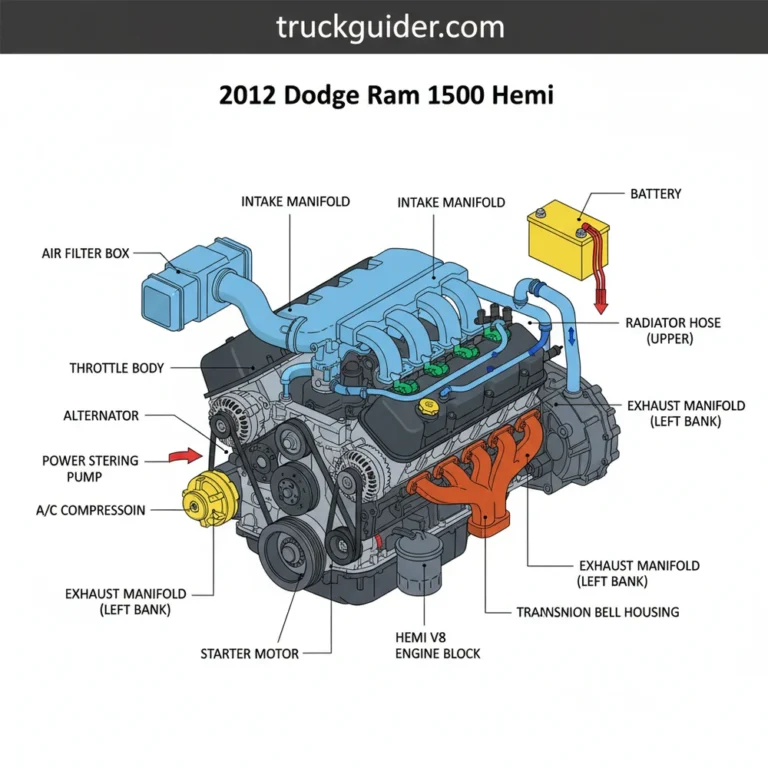
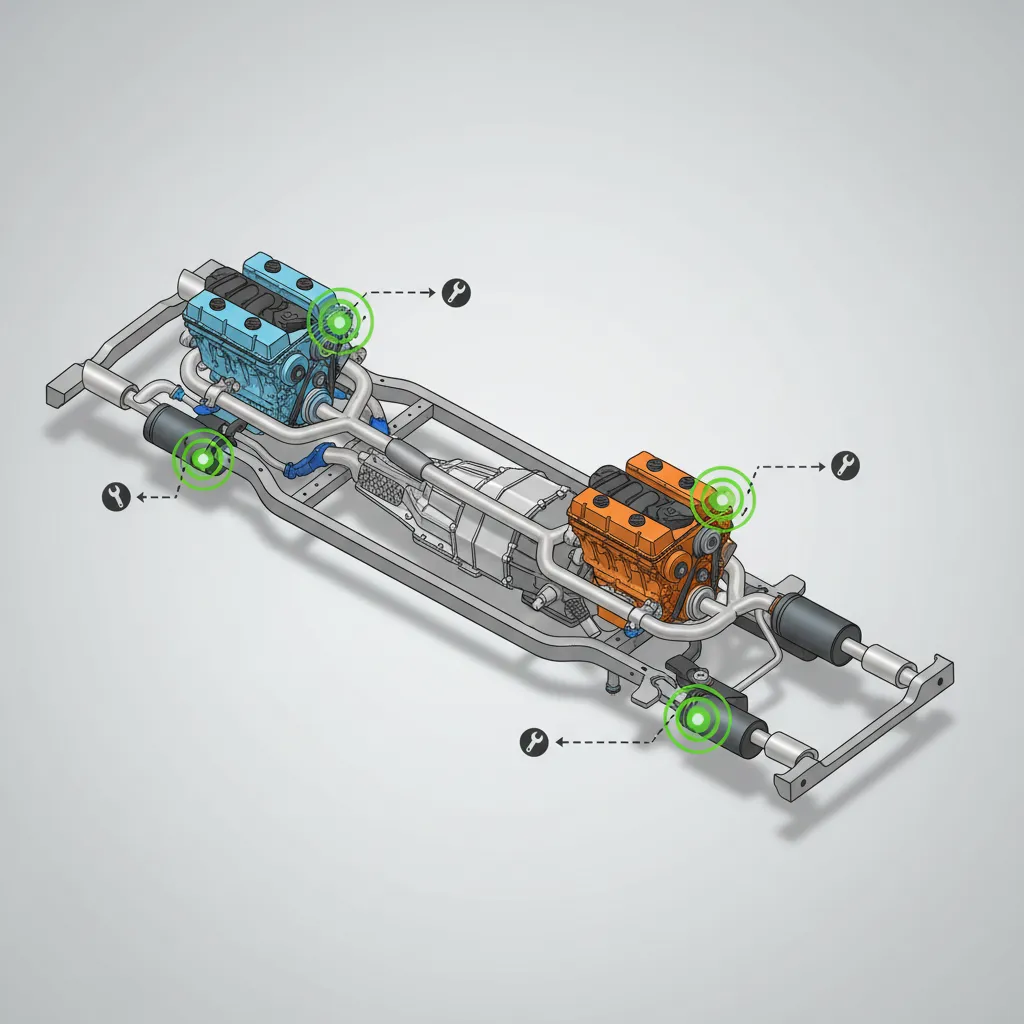
The modern Dodge Ram 1500, particularly those equipped with the 5.7L Hemi V8 or the 3.6L Pentastar V6, utilizes a sophisticated emissions network. Most models from the last decade feature four oxygen sensors in total—two for each cylinder bank. Navigating these requires an understanding of “Upstream” versus “Downstream” and “Bank 1” versus “Bank 2.”
Upstream Sensor Placement (Sensor 1)
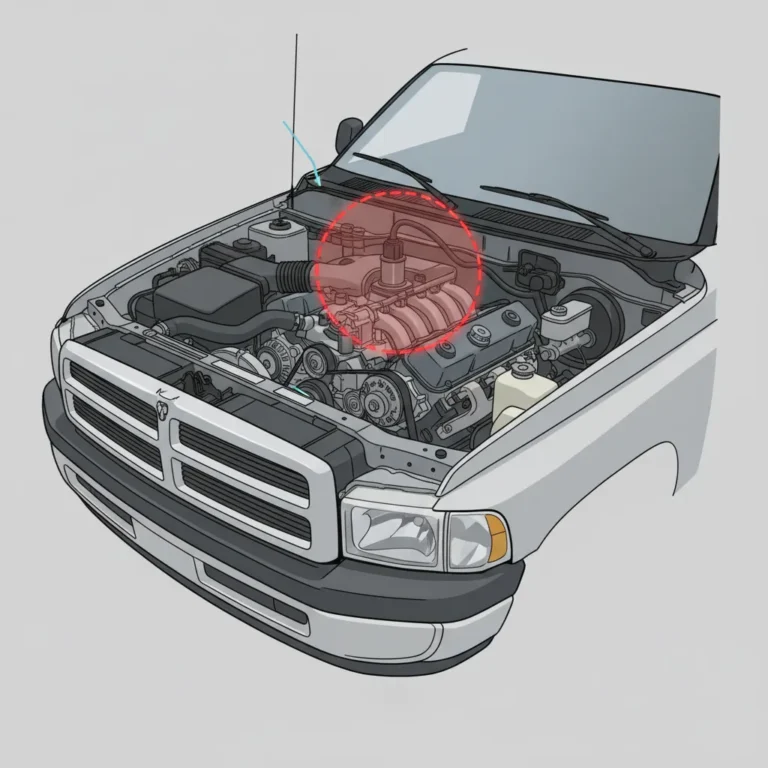
The upstream sensors, officially designated as Sensor 1, are located in the exhaust manifolds or in the exhaust pipe just before the catalytic converters. These are the most critical sensors for engine health as they function as air-fuel ratio monitors. They provide real-time feedback to the Engine Control Unit (ECU) to adjust fuel trim. In many Ram 1500 model years, the upstream sensors may be wideband O2 sensors, which offer much more precise measurements than older narrow-band versions.
Downstream Sensor Placement (Sensor 2)
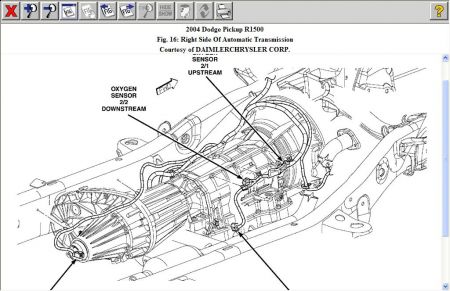
The downstream sensors, or Sensor 2, are positioned immediately after the catalytic converters. Their primary role is diagnostic; they monitor how well the catalytic converter is “scrubbing” the exhaust gases. If the oxygen readings after the converter look too much like the readings before the converter, the ECU will trigger a catalyst efficiency code. These are generally accessible from directly underneath the truck without removing additional components.
Bank Identification and Access Points
- Bank 1: Located on the driver’s side for the majority of Ram 1500 model years. This bank corresponds with cylinder #1.
- Bank 2: Located on the passenger side of the vehicle.
- Accessing Upstream Sensors: On the 5.7L Hemi, the upstream sensors can be notoriously tight. A professional insight is to access them through the front wheel wells. By removing the front tire and peeling back the plastic splash shield, you gain a direct line of sight to the manifold plug.
- Accessing Downstream Sensors: These are convenient to reach by sliding under the center of the vehicle near the transmission crossmember.
While the 3.6L and 5.7L standard is four sensors, always consult your official guide for older 3.7L or 4.7L engines, which sometimes utilized a three-sensor Y-pipe configuration. For a 2019 Ram 1500 owner, the Bank 1 Sensor 1 is almost always best reached via the driver-side splash shield.
Identifying Faulty Oxygen Sensors: Common Symptoms and OBD-II Codes
Before crawling under your truck, it is essential to confirm that an O2 sensor is indeed the culprit. According to research, the Dodge Ram 1500 is one of the top 20 most frequent vehicles requiring O2 sensor replacement, making this a trusted local repair topic for many shops.
Check Engine Light (CEL) and Diagnostic Codes
The ECU is highly sensitive to sensor voltage. Common codes include:
- P0130 – P0135: Related to Bank 1, Sensor 1 (Upstream Driver Side).
- P0150 – P0155: Related to Bank 2, Sensor 1 (Upstream Passenger Side).
- P0136 – P0141: Related to Bank 1, Sensor 2 (Downstream Driver Side).
- P0156 – P0161: Related to Bank 2, Sensor 2 (Downstream Passenger Side).
For instance, a P0155 code specifically points to a heater circuit malfunction on the Bank 2 Sensor 1. This means the internal heating element has failed, and the sensor will not function until the exhaust reaches operating temperature, necessitating a full replacement.
By The Numbers
Max Fuel Economy Loss
Frequency of Repair Rank
Potential Annual Fuel Savings
Performance Degradation and Emissions
Data from the EPA indicates that a severely malfunctioning oxygen sensor can decrease fuel economy by as much as 40%. Beyond the pump, you may experience a rough idle, hesitation during acceleration, or engine surging. Even if the truck drives “fine,” a faulty downstream sensor can trigger a P0420 (Catalyst System Efficiency Below Threshold) code, which will result in an immediate emissions test failure.


Dodge Ram 1500 O2 Sensor Replacement: Tools and Professional Procedure
Replacing these sensors is a standard maintenance task, but the high heat cycles of the exhaust system make them prone to seizing. Following a trusted local procedure will prevent stripped threads and broken wires.
📋
Step-by-Step Replacement Guide
Disconnect the negative battery cable. Spray the sensor threads with a high-quality penetrating oil like PB Blaster 24 hours before the job. Pro Tip: Run the engine for 5 minutes so the exhaust is warm (not hot) to aid in expansion.
Use a 7/8 inch (22mm) O2 sensor socket. This socket has a cutout for the wiring. Carefully slide back the red locking tab on the Chrysler-specific electrical connector before unplugging. Unscrew the old sensor.
Apply high-temperature anti-seize to the threads of the new sensor, but do not let any get on the sensor tip. Hand-thread the sensor to avoid cross-threading, then torque to approximately 30 lb-ft.
After replacing an O2 sensor, it is often necessary to clear the diagnostic trouble codes (DTCs) using an OBD-II scanner. The ECU may also require a short drive cycle to relearn the idle values with the new, accurate sensor data.


Cost Analysis and Selecting High-Quality Replacement Parts
When it comes to the Chrysler/Ram electronics architecture, using high-quality parts is not optional. The ECU expects specific resistance ranges that “universal” sensors often fail to meet. For accurate expert tips on parts, always look toward OEM-spec brands.
A full DIY replacement for a single sensor typically costs between $60 and $120. However, professional service ranges from $150 to $350 once labor is factored in. Given that replacing a faulty sensor can save the average Ram driver $400-$600 annually in fuel, the return on investment is immediate. Industry experts generally recommend replacing O2 sensors in pairs (both upstream or both downstream) to ensure consistent performance across both banks.
Finding Quality Exhaust Repair and O2 Sensor Service Nearby
While the location of these sensors is accessible for many, some owners prefer the peace of mind that comes with a professional diagnosis. Finding community specialists who understand the specific nuances of the Ram specs is the best way to ensure a permanent fix.
Diagnostic Accuracy
Local shops use advanced scanners to view “real-time data” graphs, confirming if a sensor is truly failing or if there is an exhaust leak nearby.
Service Availability
Many neighborhood garages serving your area offer same-day diagnostics and have the specialized tools to handle seized sensors without damaging the manifold.
Over 75% of vehicle owners prefer using a local independent repair shop for emissions-related work due to the personalized service and neighborhood warranties. Searching for “Ram 1500 exhaust repair nearby” can connect you with certified Mopar technicians who can verify that your issue is a simple sensor and not a more expensive catalytic converter failure. Mobile mechanics are also increasingly available to come to your location, making the repair convenient even for those with busy schedules.
In summary, the Dodge Ram 1500 utilizes upstream sensors for critical fuel management and downstream sensors for catalytic efficiency monitoring. While a faulty sensor significantly impacts fuel economy and can lead to expensive downstream failures, identifying the correct dodge ram 1500 o2 sensor location is half the battle. By understanding the distinction between Bank 1 and Bank 2 and using the proper specialized tools, you can ensure your truck remains a reliable powerhouse on the road. If you are unsure about performing this technical repair yourself, contact a professional service center nearby today to restore your truck’s performance.
Frequently Asked Questions
How many O2 sensors are on a Dodge Ram 1500 5.7 Hemi?
The Dodge Ram 1500 equipped with the 5.7L Hemi V8 engine typically features four oxygen sensors. There are two upstream sensors (one on each exhaust manifold before the catalytic converter) and two downstream sensors (one after each catalytic converter) to monitor the emissions system’s performance.


Which side is Bank 1 on a Dodge Ram 1500?
On most Dodge Ram 1500 models, Bank 1 is located on the driver’s side of the engine. This corresponds to the side of the engine that contains cylinder number one. Bank 2 is located on the passenger side of the vehicle.
Can I replace just one O2 sensor or should I replace all of them?
While you can replace just the faulty sensor to clear an OBD-II code, it is often recommended to replace them in pairs (e.g., both upstream sensors). Because O2 sensors wear out at similar rates due to mileage and heat exposure, the secondary sensor on the opposite bank often fails shortly after the first.
What is the difference between Sensor 1 and Sensor 2?
Sensor 1 refers to the upstream sensor located before the catalytic converter; its primary job is measuring the air-fuel ratio. Sensor 2 is the downstream sensor located after the catalytic converter; its sole purpose is to monitor how well the converter is cleaning the exhaust gases.
Will a bad O2 sensor cause my Ram 1500 to stall?
A bad O2 sensor usually causes poor fuel economy, rough idling, or hesitation, but it rarely causes a total stall. However, if the sensor sends extremely incorrect data to the ECU, it can cause a severely rich or lean condition that might make the engine struggle to stay running at idle.
![2012 Ram 1500 5.7 Oil Capacity & Type: Specs & Fitment Guide [2026]](https://truckguider.com/wp-content/uploads/2026/03/2012-ram-1500-5-7-oil-capacity-featured.webp)