2007 Dodge Ram Fuse Box Diagram: Locations, Amperage Ratings, And Relay Maps

An unexpected electrical failure in your 2007 Dodge Ram, such as a dead radio or malfunctioning headlights, often points to a single, inexpensive point of failure: a blown fuse. These small components act as the frontline guardians for your truck’s complex wiring, sacrificing themselves to prevent expensive control modules from being fried by power surges. However, locating the correct fuse and understanding its specific function can be difficult without a trusted guide, especially given the Ram’s dual-panel configuration and the specialized Integrated Power Module (IPM).
This comprehensive guide provides a professional-grade 2007 Dodge Ram fuse box diagram, detailed location maps, and expert troubleshooting tips to help you restore your truck’s electrical integrity. Whether you are dealing with a trailer light outage or a no-start condition, having a complete understanding of your electrical architecture is the first step toward a reliable repair.


Locating the 2007 Dodge Ram Fuse Boxes and Integrated Power Module
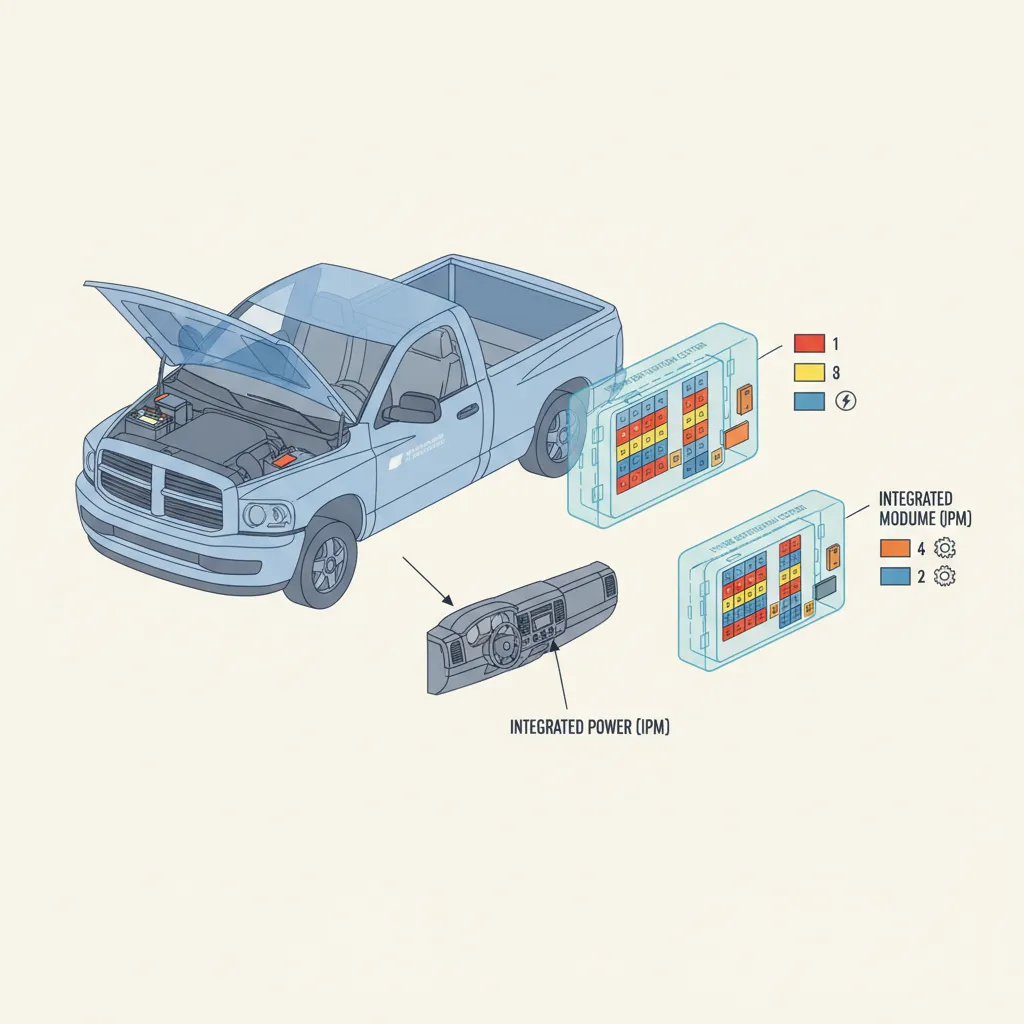
To begin any diagnostic work on a 2007 Dodge Ram, you must first master the geography of its electrical system. Unlike older trucks that relied on a single, simple fuse block, the 2007 model year transition involves a high-quality, centralized electrical architecture. This setup is anchored by the Integrated Power Module (IPM), which serves as the primary distribution hub for the entire vehicle.
The Under-Hood Integrated Power Module (IPM)
The IPM is located in the engine compartment on the driver’s side, situated directly between the battery and the fender. This unit is housed in a rugged black plastic box. It contains not only fuses but also the high-current relays that manage engine functions and exterior lighting. To access it, you must depress the plastic release tabs. Expert insight: On 2007 models, these plastic tabs often become brittle due to engine heat. Apply even pressure and avoid prying with a screwdriver to prevent snapping the clips. If you need specific part numbers for replacement covers, checking the official guide from the manufacturer is highly recommended.
The Interior Fuse Panel
The interior fuse panel, often referred to as the junction block, is located on the left edge of the instrument panel. Many owners mistake the side of the dashboard for a permanent fixture, but it is actually a removable ‘pull-off’ panel. This panel is only accessible when the driver’s door is fully open. Pull the panel straight toward the door to reveal the fuses responsible for cabin comforts like the radio, airbags, and power windows.
By The Numbers
Increase in fuse failure after 15 years
Electrical issues rank among Ram concerns

Under-Hood Integrated Power Module (IPM) Diagram and Relay Map
The IPM is the “brain” of your Ram’s power distribution. It handles up to 100 amps of total distributed load, making it the most critical electrical node in the truck. Within this module, you will find a mix of standard mini-fuses and larger J-Case fuses (the square-shaped fuses with transparent lids).
Key Fuse Assignments in the IPM
The IPM contains fuses #1 through #40. While every fuse is important, some are more prone to failure due to the high loads they carry:
- Fuse #20 (20A): Fuel Pump – A common culprit for crank-but-no-start conditions.
- Fuse #1 (40A): Radiator Fan – Essential for preventing engine overheating in heavy traffic.
- Fuse #28 (10A): PCM/Engine Control Module – If this blows, the truck will have zero electrical communication.
- Trailer Tow Fuses: Fuses #29 and #30 usually handle trailer park lights and turn signals. These frequently blow when hooking up a trailer with faulty wiring.
Professional-Grade Relay Management
Relays are high-current switches that allow a low-current signal (like turning your key) to activate a high-current component (like the starter motor). In the 2007 Dodge Ram, relays for the starter, A/C clutch, and fuel pump are integrated into the IPM. On 2500/3500 heavy-duty diesel models, you may find additional relays for the intake air heater, which are not present on 1500 gas models.



If your engine fails to start but the battery is strong, don’t immediately replace the fuel pump. We’ve seen many cases where a corroded fuel pump relay in the IPM was the actual issue. Swapping the relay with a known good one (like the horn relay) is a professional diagnostic shortcut.
Interior Fuse Panel Layout and Accessory Circuit Functions
The interior junction block focuses on the “human experience” of the truck—electronics that affect driver comfort and safety. Reliable repair data suggests that nearly 40% of interior accessory failures in the 2007 Dodge Ram are due to simple blown fuses rather than expensive component failure. This is especially true for the ST, SLT, and Laramie trim levels, which use the same physical panel but populate different slots based on features like heated seats or sunroofs.
Common Interior Fuse Points
When troubleshooting interior electronics, prioritize checking these circuits:
- Radio/Infotainment: Usually a 20A fuse. If your radio won’t turn on, this is the first place to look.
- Cigarette Lighter/Power Outlets: These are the most common cause of minor electrical complaints. Modern phone chargers can sometimes draw too much current or short the internal socket.
- SRS (Airbags): This is a safety-critical circuit. A blown fuse here will trigger the airbag warning light on the dash.
- Ignition Run/Start: This circuit controls the windows and sunroof. If multiple accessories fail simultaneously, the “Run/Start” circuit is the likely culprit.
For more nuanced discussions on interior wiring variations for the Laramie trim, enthusiasts often turn to the Ram specs available on community forums where detailed user-submitted maps are archived.
Diagnosing Blown Fuses and Electrical Malfunctions
A visual inspection is the most common way to check a fuse, but it isn’t always 100% accurate. A trusted technician knows that fuses can develop hairline fractures that are invisible to the naked eye. According to RepairPal, electrical system issues are a top-three concern for 2007 Ram owners, often manifesting as intermittent lighting or starting problems that are difficult to pin down.
📋
Professional Diagnostic Steps
Set your Digital Multimeter (DMM) to the continuity setting. Touch the probes to the small metal test points on top of the fuse. If it beeps, the fuse is good. No beep means it’s blown.
With the ignition in the ‘ON’ position, ground your test light and touch both sides of the fuse. Lighting up on only one side indicates a blown fuse.
If you find a fuse that is melted rather than just broken, this is a sign of high internal resistance or a serious short-circuit. Simply replacing the fuse will not work; you must identify the “phantom” electrical issue. For deeper community knowledge on persistent electrical gremlins, the expert tips found on owner forums can be invaluable for identifying common ground fault locations on the 2007 chassis.


Professional Standards for Fuse Replacement and Safety
Safety is paramount when working with a vehicle’s electrical system. Automotive electrical fires account for thousands of vehicle losses annually, with over 20% attributed to improper circuit modifications or fuse bypassing. When replacing a fuse in your 2007 Dodge Ram, you must adhere to expert standards to protect your investment.
The Golden Rule
Never replace a blown fuse with one of a higher rating. Replacing a 15A fuse with a 30A fuse to ‘fix’ a recurring problem will melt the wiring harness and could start a fire.
Quality Components
Choose high-quality replacement fuses from trusted brands like Bussmann or Littelfuse. Cheap, off-brand fuses often fail to trip at the rated amperage, endangering your ECU.
Never use ‘jumper wires’ or aluminum foil in place of a fuse. This bypasses all protection and will almost certainly lead to permanent, expensive damage to the Integrated Power Module housing.
Resetting the Integrated Power Module
In some cases, the IPM may enter a “protection mode” after a short circuit is detected. Even after you replace the fuse, the circuit may remain dead. To reset the module, disconnect the negative battery cable for 10-15 minutes. This discharges the capacitors and allows the internal logic to reboot, restoring power to the circuit once the short has been cleared.
In summary, the 2007 Dodge Ram utilizes an Integrated Power Module under the hood and a secondary panel inside the cab to manage its diverse electrical needs. By following the complete guide above, always matching replacement fuses to the original amperage ratings, and recognizing that persistent fuse failures indicate an underlying short circuit, you can maintain your truck’s safety and performance for years to come. For complex electrical issues beyond a simple fuse swap, consult a professional technician or refer to your Dodge Ram service manual for deeper wiring schematics.
Frequently Asked Questions
Where is the interior fuse box located on a 2007 Dodge Ram?
The interior fuse panel is situated on the left-hand side of the dashboard. To access it, you must fully open the driver’s side door. There is a removable plastic cover on the side of the dash that can be pried off to reveal the junction block and its associated fuses.


How do I know if a relay is bad vs. a blown fuse?
A fuse is a sacrificial link that breaks when current is too high, while a relay is an electromagnetic switch. If the fuse is intact but the component (like the starter) won’t engage, you can often swap the relay with an identical one from a non-critical system, like the horn, to see if function returns.
Which fuse controls the trailer lights on a 2007 Ram?
In the 2007 Dodge Ram, trailer towing circuits are typically housed in the Integrated Power Module (IPM) under the hood. Specifically, look for high-amperage J-Case fuses in the 30A to 40A range, which protect the trailer tow left/right turn and park lamp circuits.
Can I use a higher amp fuse if I don’t have the correct size?
No. This is a dangerous practice that can lead to an electrical fire. Fuses are rated to blow before the wiring harness reaches its thermal limit. Installing a higher amperage fuse allows the wire to overheat, potentially melting the insulation and causing permanent damage to the vehicle’s electrical system.
Why does my 2007 Dodge Ram keep blowing the same fuse?
Repeatedly blowing the same fuse indicates a ‘hard short’ or an overloaded circuit. This is often caused by a pinched wire touching the frame, a failing motor (like a window regulator) drawing too much current, or moisture ingress in the Integrated Power Module causing a bridge between terminals.

![2015 RAM 1500 AC Recharge Port Location & Identification [2026]](https://truckguider.com/wp-content/uploads/2026/03/2015-ram-1500-ac-recharge-port-featured.webp)