Dodge Ram 1500 Thermostat Location And Replacement Guide For Hemi And Pentastar Engines

An unexpected spike in your Dodge Ram 1500 engine temperature gauge can quickly turn a routine drive into an emergency situation. Whether you are hauling a heavy trailer or commuting through the city, the cooling system is the lifeblood of your truck’s longevity. Locating and replacing the thermostat is a critical maintenance task, yet its position varies significantly between the legendary 5.7L Hemi V8 and the efficient 3.6L Pentastar V6 engines, leaving many owners confused. This guide provides the exact Dodge Ram 1500 thermostat location for every major engine type, a technical walkthrough for replacement, and professional data on costs and troubleshooting to keep your rig running at peak performance.


Section 1: Pinpointing the Dodge Ram 1500 Thermostat Location by Engine Configuration
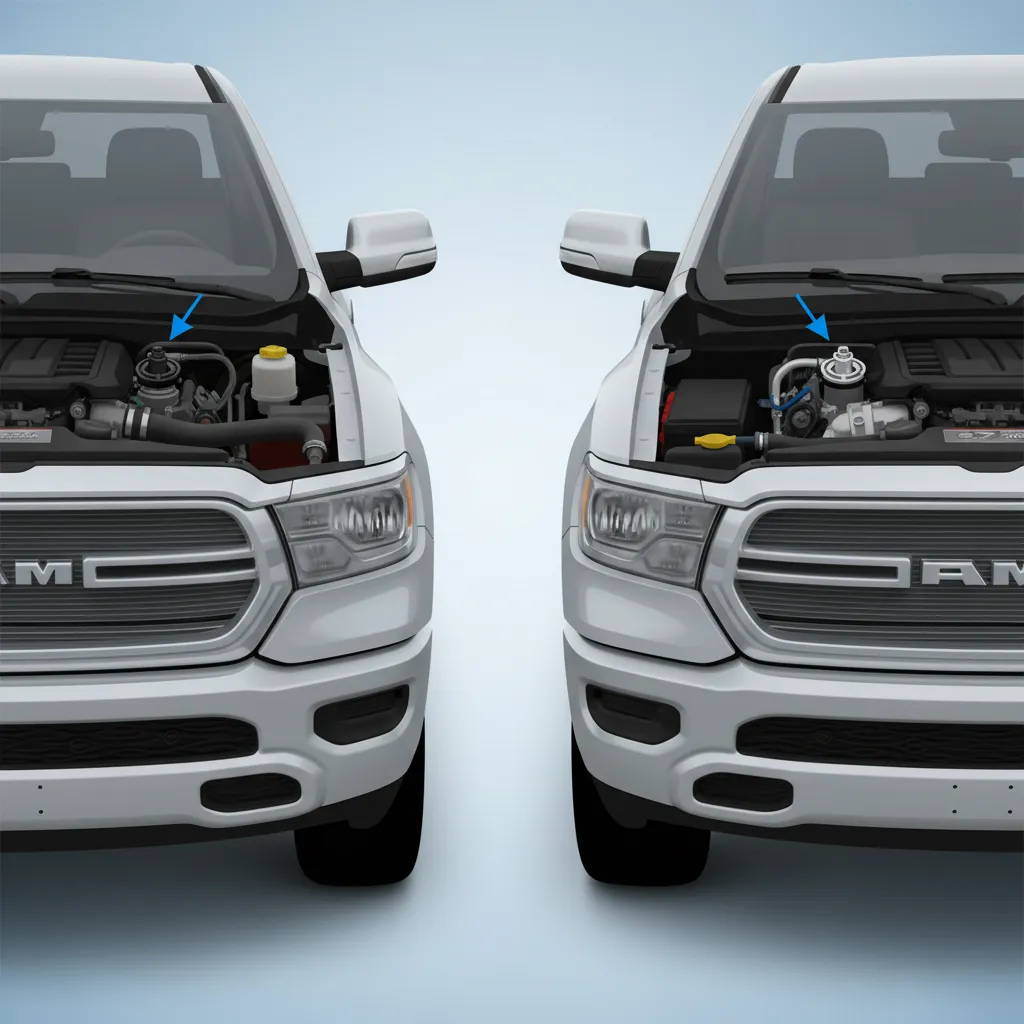
Understanding exactly where your thermostat sits requires knowing your specific powertrain configuration. While the general rule is to follow the thickest hose from the top of the radiator back to the engine, the housing design differs radically between the V6, V8, and Diesel variants. These housings are precision-engineered to withstand pressures up to 20-30 PSI, depending on the radiator cap rating, making their structural integrity paramount.
The 5.7L Hemi V8 Thermostat Location
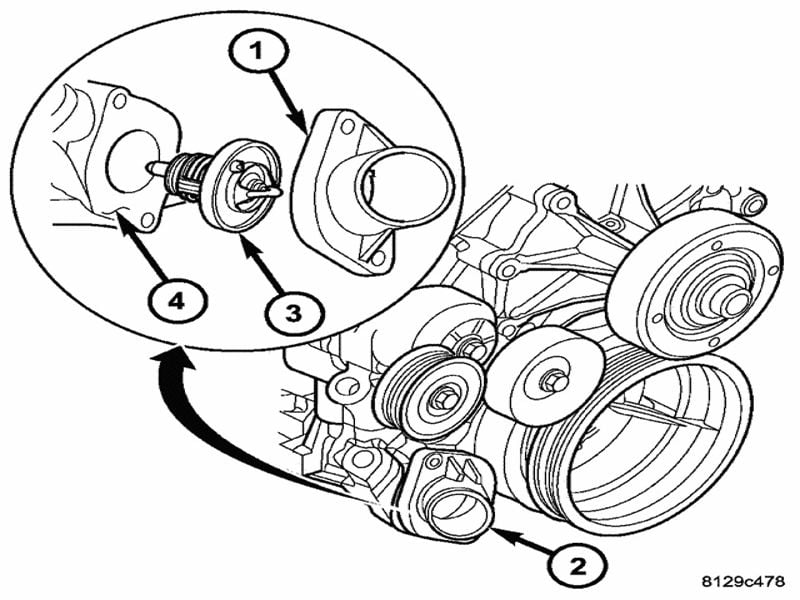
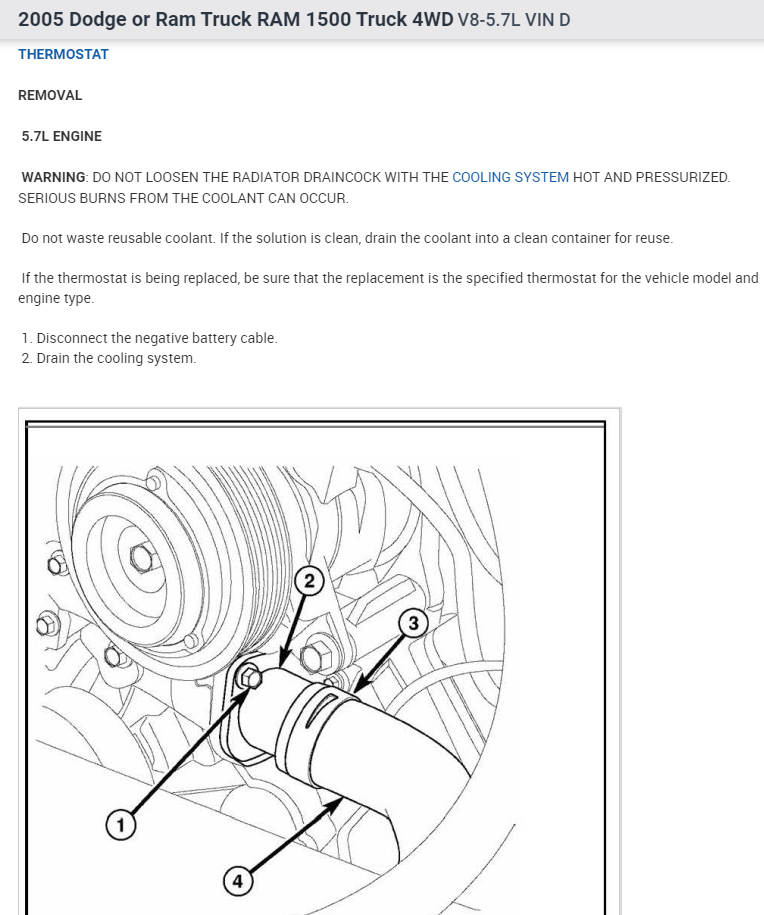
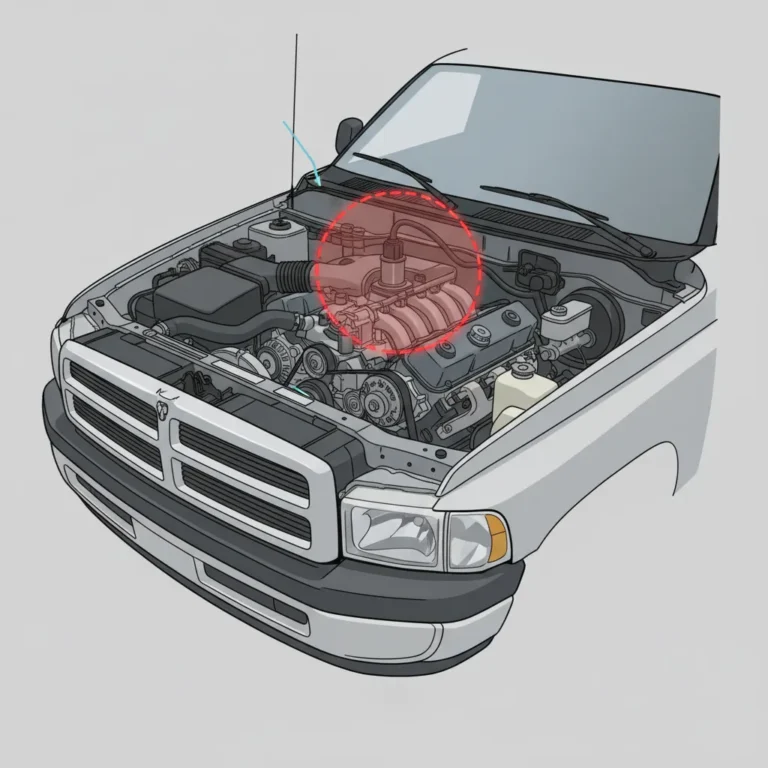
On the 5.7L Hemi, the thermostat is remarkably accessible. It is located at the front of the engine, integrated into the water pump housing. To find it, identify the upper radiator hose and follow it directly to the cast aluminum neck secured by two bolts. This location is ideal for DIY enthusiasts as it requires minimal tool clearance compared to other modern trucks.
The 3.6L Pentastar V6 Thermostat Location
The 3.6L Pentastar presents a different challenge. The thermostat is not a standalone metal disc but is integrated into a high-temp plastic housing assembly. This is located on the front-side of the engine, typically on the driver’s side of the timing cover. Because the housing is plastic, it is more prone to hairline fractures over time. Owners of newer DT-generation Rams should note that space is tighter here than in the Classic (DS) models.
3.0L EcoDiesel and Model Variations
The 3.0L EcoDiesel features a passenger-side housing that is part of a complex cooling loop designed for diesel thermal management. In some cases, owners have mistaken the lower radiator hose inlet for the thermostat housing—a costly error that leads to unnecessary disassembly. Always verify the part by looking for the trusted local Mopar stamp or checking the Mopar specs for your specific VIN.
When locating the thermostat on a Hemi, look for the “jiggle pin” (a small brass valve) on the thermostat itself. This pin must be oriented at the 12 o’clock position during installation to allow trapped air to escape the block.
Section 2: Recognizing Failure Symptoms in Your Ram 1500 Cooling System
Before you begin turning wrenches, you must confirm that the thermostat is indeed the source of your trouble. Research indicates that thermostat failures are a common cause of engine overheating, affecting approximately 10-15% of vehicles annually. These failures typically manifest in two ways: “stuck open” or “stuck closed.”
- 🛑 Stuck Closed (Overheating): This is the most dangerous failure. The thermostat fails to open, trapping coolant inside the engine block. Your dashboard temperature gauge will climb rapidly into the red zone.
- ❄️ Stuck Open (Under-heating): The thermostat stays open, allowing coolant to circulate constantly. The engine never reaches its optimal operating temperature, leading to poor fuel economy and lukewarm cabin heat.
- 💻 Diagnostic Trouble Codes (DTCs): Modern Rams will often trigger a Check Engine Light with code P0128, indicating the coolant temperature is below the regulating threshold.
Physical inspection is also vital. Look for “crusty” deposits—typically pink or purple in color—around the housing gasket. These are signs of a slow weep that eventually leads to a complete seal failure. One common scenario involves a Ram owner noticing their heater blowing lukewarm air on a 20-degree morning; this is a classic indicator of a thermostat stuck open, forcing the engine to run in “open loop” mode and wasting significant amounts of fuel.


By The Numbers
Annual Overheating Rate
Top End Repair Cost
OAT Coolant Mile Rating
Section 3: Step-by-Step Guide to Replacing Your Ram 1500 Thermostat
Replacing the thermostat is a task within reach of most owners, provided you have the right tools and follow a disciplined sequence. According to data from RepairPal, the average cost for professional replacement ranges from $297 to $368. By doing it yourself, you can save significant labor costs while ensuring the job is done to official guide standards.
📋
Step-by-Step Guide
Wait for the engine to be stone cold. Place a drain pan under the radiator petcock and drain approximately one gallon of coolant to lower the level below the thermostat housing.
On 5.7L models, remove the air intake resonator box to gain clear access. Loosen the hose clamps on the upper radiator hose and gently pull it away from the housing.
Remove the two 8mm or 10mm bolts securing the housing. Clean the mating surface on the engine block thoroughly with a plastic scraper to ensure a perfect seal for the new gasket.
Do NOT over-tighten the housing bolts, especially on the 3.6L plastic assemblies. Use a torque wrench to tighten to 10-15 lb-ft. Over-tightening often leads to hairline fractures that only leak once the engine is hot.
Section 4: Coolant Selection and Air Bleeding Procedures for Modern Ram Trucks
Once the new thermostat is seated, the job is only half finished. Modern Dodge Ram 1500 trucks are extremely sensitive to coolant chemistry and air pockets. Mixing different types of coolant can lead to “sludging,” which clogs the heater core and radiator passages. Check the official guide for your specific year, but generally, 2013+ models require Mopar MS-12106 (Purple OAT) coolant.


The Burping Process: To remove air pockets, use a spill-proof funnel attached to the radiator or overflow tank. Fill the system with a 50/50 mix of OAT coolant and distilled water. Run the engine with the heater set to high. As the engine warms and the thermostat opens, you will see bubbles escaping the funnel. On the 3.6L Pentastar, there is a specific bleeder screw on the top of the housing—crack this open slightly until a steady stream of coolant emerges without air. Failure to do this often results in a “gurgling” sound in the dashboard, indicating air is trapped in the heater core.
Section 5: Accessing Professional Assistance and Parts Nearby Your Location
While many choose the DIY route, sometimes professional intervention is necessary—especially if you suspect the water pump or radiator is also failing. Finding a qualified technician nearby who understands the nuances of the Ram cooling system is essential. Many shops serving the local community offer warranties that match dealership standards, typically 12 months or 12,000 miles on labor.
Available Inventory
Local parts hubs serving your area usually stock both genuine Mopar and high-quality aftermarket thermostats for immediate pickup.
Expert Support
A trusted local mechanic with ASE certification can perform a pressure test to ensure no other leaks exist in the system.
If you find yourself stuck on the side of the road, many mobile mechanic services are accessible and can perform a thermostat swap in your driveway or a parking lot. This is often more convenient than paying for a tow to a dealership. Always check the owner community for reviews of local shops to find those specializing in Chrysler/Stellantis vehicles. Ensuring you have a professional-grade repair maintains your powertrain warranty and provides peace of mind for the long haul.
✅ Pros of OEM Thermostats
- Perfect fitment for Hemi/Pentastar
- Correct temperature calibration (203°F)
- Included high-quality gaskets
- Maintains factory warranty
❌ Cons of Delayed Replacement
- Potential for warped cylinder heads
- Transmission fluid overheating
- Catastrophic engine seizure
- Failed emissions inspections
In summary, the Dodge Ram 1500 thermostat is a small part with a massive responsibility. It is typically located at the upper radiator hose junction, but its physical housing varies by engine size. Identifying symptoms like the P0128 code or cabin heater failure early can save your engine from catastrophic overheating. Furthermore, correct coolant selection (OAT vs. HOAT) and proper system bleeding are just as vital as the physical part replacement itself. If you are uncomfortable performing this repair yourself, contact a certified technician nearby today to ensure your Ram 1500 stays on the road and runs cool.
Frequently Asked Questions
Where is the thermostat located on a 5.7 Hemi Ram 1500?
On the 5.7L Hemi V8, the thermostat is located at the front of the engine. Follow the upper radiator hose from the radiator back to the engine block; it connects directly to the thermostat housing. This housing is secured by two bolts to the water pump assembly, making it one of the most accessible thermostats in the Ram lineup.


How do I know if my Dodge Ram 1500 thermostat is bad?
Primary symptoms include the engine temperature gauge rising into the red zone (stuck closed) or failing to reach normal operating temperature (stuck open). You may also notice the ‘Check Engine’ light with code P0128, poor heater performance, or visible coolant leaks around the housing. If your fuel economy suddenly drops, it could be due to the engine staying in ‘warm-up’ mode indefinitely.
What is the cost for a professional thermostat replacement?
For a Dodge Ram 1500, the professional replacement cost typically ranges between $297 and $368. This includes roughly $150 to $200 in labor and $140 to $170 for parts and fresh coolant. Prices may fluctuate based on local labor rates in your community and whether you choose an independent shop or a dealership service center.
Can I drive my Ram 1500 with a bad thermostat?
It is not recommended. If the thermostat is stuck closed, your engine will overheat within minutes, potentially causing head gasket failure or engine seizure. If it is stuck open, your engine won’t reach the proper temperature to burn off moisture in the oil, leading to increased wear and poor emissions performance. It is best to address the issue immediately.
What coolant should I use after replacing the thermostat?
Most Dodge Ram 1500 models from 2013 and newer require Mopar Purple OAT (Organic Additive Technology) coolant. Models prior to 2013 typically used HOAT (Hybrid Organic Additive Technology). Always verify the spec in your owner’s manual or on the coolant reservoir cap, as mixing these two types can create a gel-like substance that clogs your radiator and heater core.

![2011 Ram 2500 Headlights [2026]](https://truckguider.com/wp-content/uploads/2026/03/2011-ram-2500-headlights-featured.webp)