
1998 Dodge Ram 1500 Transmission: Specs, Costs & Repair

The 1998 Dodge Ram 1500 primarily utilizes the 46RE automatic transmission for V8 engines and the 42RE for V6 models. Understanding the governor pressure sensor issues and ATF+4 fluid requirements is essential for maintaining or replacing these units effectively.
🎯 Key Takeaways
- Takeaway 1:V8 models use the 46RE, while V6 models use the 42RE transmission.
- Takeaway 2:Use only ATF+4 fluid to prevent premature wear and shifting issues.
- Takeaway 3:Governor pressure sensors are the most common cause of shifting problems.
- Takeaway 4:Remanufactured transmissions typically offer better warranties than local shop rebuilds.
- Takeaway 5:Adding an external cooler significantly extends the life of these 2nd-gen transmissions.
Your 1998 Dodge Ram 1500 relies on one of two specific automatic transmissions: the 46RE or the 42RE. If you are driving a V8 model with the 5.2L (318) or 5.9L (360) engine, your truck is equipped with the 46RE. If you have the 3.9L V6 engine, you are running the 42RE. Knowing this distinction is the most important step before you click “buy” on a replacement part or start a teardown.
Proper identification matters because while these transmissions look almost identical externally, their internal torque capacities and gear ratios differ significantly. Furthermore, the 1998 model year sits in a specific window of Chrysler’s electronic evolution. Using a transmission from a 1995 or a 2001 model might result in wiring harness mismatches or sensor incompatibilities that will leave your truck in “limp mode.” This guide will help you verify your equipment and troubleshoot whether you need a simple sensor swap or a full unit replacement.
Identifying the 46RE vs. 42RE Transmission Models
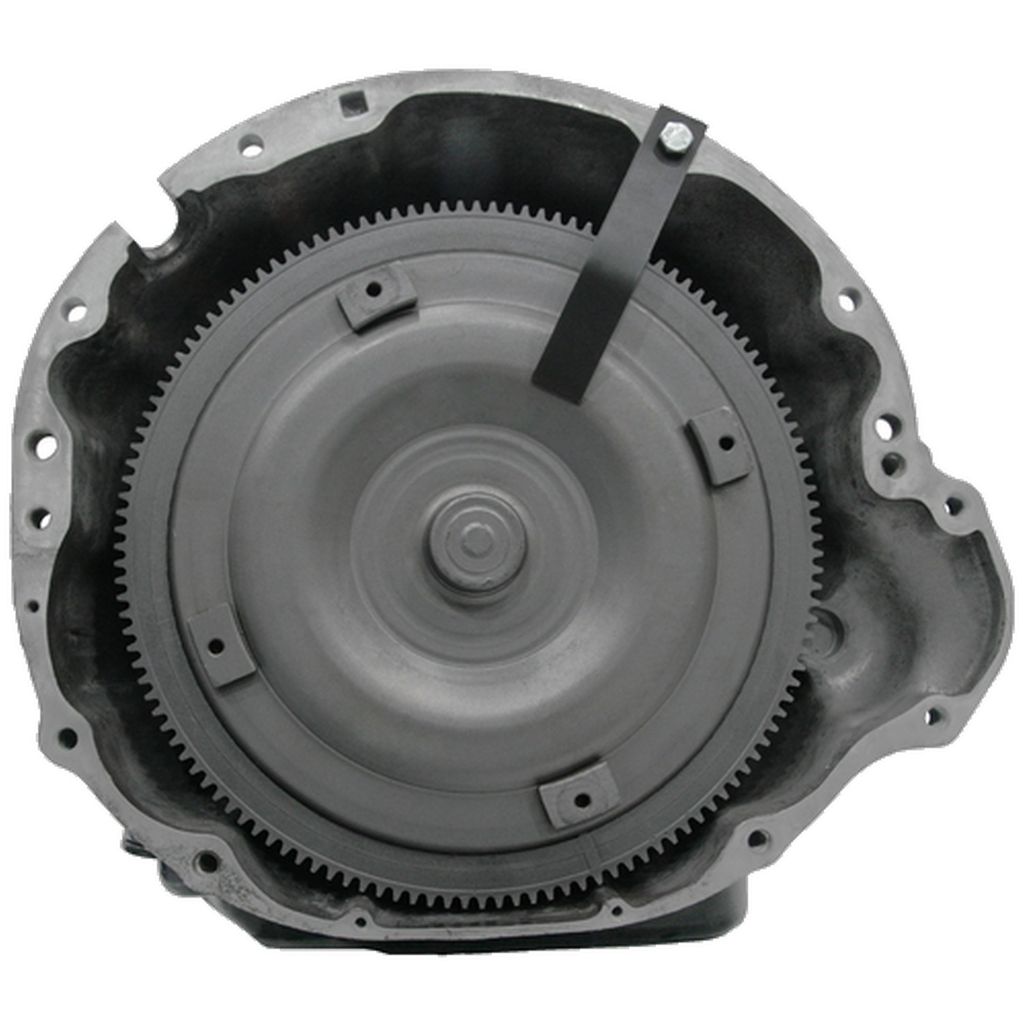
The easiest way to identify your transmission is to look at your engine size. The 1998 Ram 1500 was built with a very specific pairing logic. Because the 5.9L V8 produces significantly more torque than the V6, Dodge used the “6” series (46RE) for the heavy lifters and the “2” series (42RE) for the lighter-duty V6. Both are four-speed automatics with overdrive, but they are not interchangeable.
Check Your VIN and Equipment Decals
If you want to be 100% certain before ordering a remanufactured unit, you have three reliable ways to check:
- The Glove Box Sticker: Open your glove box and look for the “Equipment Identification” sticker. It usually lists the transmission code directly.
- The Pan Shape: Both the 42RE and 46RE use a nearly square oil pan with 14 bolts. However, the 46RE has a slightly larger overall case to accommodate the beefier internal clutches.
- The VIN 8th Digit: Check your 8th VIN character. If it is a “Y” (5.2L) or a “Z” (5.9L), you have the 46RE. If it is an “X” (3.9L), you have the 42RE.
The 2WD vs. 4WD Compatibility Factor
Once you know you have a 46RE, you must also account for your drivetrain. A transmission from a 2WD 1998 Ram will not bolt up to a 4WD transfer case. The tailshaft housing and the output shaft are completely different. If you are buying a used or remanufactured unit, you must specify your drivetrain type. You cannot easily convert a 2WD transmission to 4WD without a total teardown of the unit to swap the output shaft.
The Ultimate 1998 Dodge Ram 1500 Transmission Walkthrough
The 1998 Dodge Ram 1500 is a legendary workhorse, typically equipped with either the 42RE or 46RE automatic transmission. Over time, these units can suffer from overheating, sensor failure, or mechanical wear that requires a full removal and replacement or a deep service. This guide provides a comprehensive, professional-grade walkthrough for removing the transmission. Following these steps carefully is vital not only for the longevity of your truck but for your personal safety, as the transmission assembly is exceptionally heavy and involves complex connections to the engine and drivetrain.
Step 1: Vehicle Preparation and Safety Setup
What you need: Heavy-duty jack stands (at least 3-ton capacity), a floor jack, wheel chocks, and a basic socket set to disconnect the battery.
Instructions: Begin by parking your Dodge Ram on a flat, level concrete surface. Engage the parking brake and place chocks behind the rear wheels. Use the floor jack to lift the front of the vehicle high enough to allow you to maneuver a transmission jack underneath comfortably. Place the jack stands under the frame rails, not the suspension components, to ensure a stable working environment. Once the truck is secure, open the hood and disconnect the negative battery cable. This is a critical safety step to prevent the starter from accidentally engaging and to protect the vehicle’s electrical system while you disconnect the transmission wiring harness later.
Pro Tip: Always give the truck a “shake test” while it is on the stands before crawling underneath. If there is any movement, reposition the stands. It is better to have the truck fall while you are standing next to it than while you are under it.
Step 2: Draining the Transmission Fluid
What you need: A large drain pan (at least 10-quart capacity), a 1/2-inch socket and ratchet, and plenty of shop rags.
Instructions: The 1998 Dodge Ram transmission pan typically does not have a drain plug from the factory. Position your drain pan directly under the transmission. Begin loosening the bolts around the perimeter of the transmission pan. Loosen the rear bolts more than the front ones to allow the pan to tilt, directing the fluid to pour out of the back corner. Once the majority of the fluid has drained, carefully remove the remaining bolts while holding the pan steady. Lower the pan slowly, as it will still contain a significant amount of hot, slippery fluid. Clean the mating surface of the transmission case with a gasket scraper, being careful not to gouge the aluminum.
Pro Tip: If the fluid smells burnt or contains large metal chunks, your transmission likely has internal mechanical damage rather than just a simple sensor or solenoid issue.
Step 3: Removing the Driveshafts
What you need: An 8mm or 5/16-inch wrench, a paint pen or scribe, and a small pry bar.
Instructions: If your Ram is 4WD, you will need to remove both the front and rear driveshafts; if it is 2WD, only the rear. Before removal, use a paint pen to mark the orientation of the driveshaft relative to the differential yoke. This ensures you reinstall it in the same position to maintain drivetrain balance. Remove the four bolts securing the universal joint straps at the rear yoke. Slide the driveshaft forward into the transmission (or transfer case) to clear the yoke, then pull it rearward to remove it entirely. Be prepared for a small amount of residual fluid to leak from the tailshaft housing once the yoke is pulled out.
Pro Tip: Wrap a piece of electrical tape around the universal joint caps once the shaft is removed. This prevents the needle bearings from falling out if the caps accidentally slide off during handling.
Step 4: Disconnecting Electrical Connectors and Linkage
What you need: Small flat-head screwdriver, needle-nose pliers, and penetrating oil.
Instructions: Locate the main 8-pin electrical harness on the driver’s side of the transmission; this controls the solenoids. Carefully depress the plastic tabs and pull the connector upward. You will also need to disconnect the speed sensor located near the tailshaft and the neutral safety switch. Moving to the shift linkage, use your pliers to remove the cotter pins or clips holding the shift rods in place. Disconnect the throttle valve (TV) cable, which is located on the driver’s side near the top of the transmission. This cable is sensitive, so avoid kinking it. If you have a 4WD model, you must also disconnect the transfer case shift linkage at this time.
Pro Tip: Spray all linkage pivot points with penetrating oil 20 minutes before you start. These parts are exposed to road grime and salt, making them prone to seizing and snapping if forced.
Step 5: Removing the Starter and Cooler Lines
What you need: A 15mm deep socket (for the starter), a 5/8-inch flare nut wrench (for cooler lines), and a line wrench set.
Instructions: The starter motor on the 1998 Dodge Ram is bolted through the transmission bellhousing. Remove the electrical leads from the starter, then remove the two or three mounting bolts. Set the starter aside or zip-tie it to the frame to keep it out of the way. Next, locate the two metal transmission cooler lines on the passenger side. Use a flare nut wrench to loosen the fittings. Do not use a standard open-end wrench, as it is very easy to round off these soft brass fittings. Once disconnected, tuck the lines away and plug the holes in the transmission with clean rags to prevent debris from entering the valve body.
Pro Tip: Use a backup wrench on the transmission fittings while loosening the lines. This prevents the internal brass adapters from spinning and damaging the transmission case threads.
Step 6: Unbolting the Torque Converter
What you need: A 9/16-inch socket, a large flat-head screwdriver or pry bar, and a 3/4-inch socket for the crankshaft bolt.
Instructions: Remove the structural dust cover (inspection plate) at the bottom front of the transmission bellhousing. This exposes the flexplate and the torque converter. There are four bolts connecting the torque converter to the flexplate. To access them, use a 3/4-inch socket on the harmonic balancer bolt at the front of the engine to manually rotate the crankshaft. As each bolt appears in the inspection window, remove it. You may need to use a pry bar to hold the flexplate steady while loosening the bolts. Once all four are removed, ensure the torque converter can slide freely back toward the transmission and is no longer stuck to the flexplate.
Pro Tip: If the torque converter is “frozen” to the flexplate, gently tap it with a rubber mallet. It must be completely disengaged, or it will pull out of the transmission pump during removal, causing a massive mess and potential damage.
Step 7: Supporting the Transmission and Removing the Crossmember
What you need: A dedicated transmission jack (or a floor jack with a transmission adapter), 15mm and 18mm sockets, and a breaker bar.
Instructions: Position the transmission jack under the center of the transmission pan and raise it until it just takes the weight of the unit. Secure the transmission to the jack using the included safety chains. Locate the transmission mount bolts in the center of the crossmember and remove them. Next, remove the large bolts that secure the crossmember to the frame rails. In many 1998 Rams, the frame may “spring” slightly, making the crossmember tight. Use a pry bar or a heavy hammer to slide the crossmember out of the way. With the crossmember removed, you can now slightly lower the jack to gain better access to the upper bellhousing bolts.
Pro Tip: Support the rear of the engine block with a separate jack and a block of wood. When the transmission is removed, the engine will want to tilt backward, which can damage the distributor cap against the firewall or stress the motor mounts.
Step 8: Bellhousing Separation and Final Removal
What you need: A long extension (at least 24 inches), a swivel/u-joint socket adapter, and a 9/16-inch socket.
Instructions: There are typically six or seven bolts holding the bellhousing to the engine block. The top two bolts are notoriously difficult to reach. Use your long extension and swivel adapter to reach over the top of the transmission from the rear. Once all bolts are removed, double-check that no wires or lines are still attached. Slowly move the transmission jack toward the rear of the vehicle. You may need to wiggle the unit to break the seal between the engine and transmission. As the input shaft clears the flexplate, slowly lower the jack. Keep a close eye on the torque converter; if it starts to slide forward, push it back into the transmission to prevent it from falling off the shaft.
Pro Tip: Keep the transmission as level as possible during the slide-back process. If it tilts too far forward, the torque converter can fall off, which weighs about 40-50 pounds and contains a significant amount of fluid.
✅ Final Checklist
- Verify that the torque converter is fully seated (it should click three times when pushed onto the input shaft) before attempting reinstallation.
- Ensure the engine-to-transmission dowel pins are clean and free of corrosion for a smooth mating process.
- Check that all electrical connectors are clean and free of transmission fluid before reconnecting.
- Verify that the TV cable (throttle valve) is adjusted correctly after installation to prevent premature clutch wear.
- Confirm the fluid level is checked while the engine is running and the transmission is in NEUTRAL, not Park (standard for Dodge/Chrysler units of this era).
Important Notes:
- Safety: Never work under a vehicle supported only by a hydraulic jack. Always use rated jack stands and wear eye protection to avoid falling debris or fluid.
- Professional Help: If you find heavy metal shavings in the pan or if the vehicle has persistent “limp mode” issues after a solenoid change, consult a professional transmission rebuilder.
- Estimated Time: 6 to 10 hours for a DIYer, depending on rust levels and tool availability.
- Cost Range: $150–$300 for a deep service (fluid, filter, sensors); $1,500–$2,800 for a professional rebuild or replacement.
Common Failure Symptoms and Diagnostic Troubleshooting
Before you spend $2,500 on a new transmission, you need to determine if your 1998 Ram is suffering from a mechanical “hard” failure or a simple electronic “soft” failure. The RE series transmissions (Governor Pressure Controlled, Electronic Shift) are notorious for sensor failures that mimic a dead transmission.
The “Limp Mode” and Shifting Issues
Is your truck stuck in 2nd or 3rd gear? Does it feel like it’s taking off in a high gear from a stop? This is often “Limp Mode,” a fail-safe triggered by the computer. In the 1998 model, this is frequently caused by the Governor Pressure Solenoid and Transducer. These parts are located inside the transmission pan and are the most common failure points. Replacing these, along with a fresh filter and fluid, often “cures” a transmission that a shop might tell you needs a full rebuild.
Overdrive and Torque Converter Issues
If your truck drives fine through the first three gears but won’t shift into 4th (Overdrive), or if the RPMs “hunt” up and down at highway speeds, you are likely looking at an Overdrive Solenoid issue or a failing Output Speed Sensor. The Output Speed Sensor is located on the driver’s side of the transmission tailhousing. It’s an inexpensive, 10-minute fix that often solves erratic speedometer readings and shifting headaches.
- Symptom: Slipping in all gears or dark, burnt-smelling fluid. Diagnosis: Likely mechanical wear; rebuild required.
- Symptom: Won’t shift out of 1st gear until high RPM. Diagnosis: Governor pressure solenoid failure.
- Symptom: No Reverse. Diagnosis: Broken rear band or seal failure; requires internal repair.
- Symptom: Transmission gets hot quickly. Diagnosis: Clogged check valve in the cooler line.
Many 1998 owners find that their “broken” transmission was actually just a victim of a clogged check valve. This valve is located in the cooling line near the radiator. Over time, it collects debris and restricts flow, causing the transmission to overheat and slip. Removing this valve or replacing the line is a common “pro-tip” for extending the life of your 46RE.
Replacement Cost Analysis: Remanufactured, Used, and Rebuilds
When the transmission in your 1998 Dodge Ram 1500 finally gives up, you are faced with a significant financial decision. The cost can vary wildly depending on whether you choose a quick fix or a long-term investment. Generally, labor costs for removing and installing a transmission on these trucks run between $500 and $900, depending on your local shop rates and whether your truck is 2WD or 4WD.
The Pros and Cons of Rebuilding vs. Remanufactured
A local rebuild involves a mechanic taking your specific transmission apart and replacing only the worn components. This typically costs between $1,500 and $2,200. However, a remanufactured unit is often the smarter play for a daily driver. These are built in a factory setting to exceed original factory specs, often fixing the known cooling and pressure issues inherent in the 46RE series. Expect to pay $2,000 to $2,800 for a quality remanufactured unit with a multi-year warranty.
Taking a Chance on Used Units
If you are on a tight budget or working on a farm truck, a “used” transmission from a salvage yard is the cheapest route, usually priced between $400 and $800. While tempting, this is often a gamble. Since the 1998 models are aging, finding a low-mileage donor is difficult. If you go this route, always check the fluid color in the donor vehicle and try to get at least a 30-day “exchange only” guarantee from the yard.
- Remanufactured: Best warranty (3+ years), highest cost, most reliable.
- Local Rebuild: Moderate cost, dependent on the skill of the specific technician.
- Used/Salvage: Lowest cost, high risk of immediate failure, no labor warranty.
Technical Specifications: Fluid Capacities and Torque Ratings
Understanding the “stats” of your 1998 Dodge Ram 1500 transmission is vital for proper maintenance. Most of these trucks are equipped with either the 42RE (paired with the 3.9L V6) or the 46RE (paired with the 5.2L and 5.9L V8s). These are four-speed automatic transmissions with a heavy reliance on electronic governors and pressure sensors.
Fluid Requirements and Service Volumes
The most important spec to remember is the fluid type: ATF+4. Using Dexron or generic “multi-vehicle” fluids is a recipe for disaster in these Chrysler units, leading to shuddering and premature clutch wear. For a standard pan drop and filter change, you will usually need about 4 to 5 quarts of fluid. However, if the transmission is completely dry (after a rebuild or torque converter replacement), the total capacity is approximately 9.5 to 11 quarts.
Torque Ratings and Gear Ratios
The 46RE is a medium-duty transmission designed to handle the torque of the 360 cubic inch (5.9L) Magnum V8. While it is stout enough for moderate towing, it is not an industrial-grade unit like the 47RE found in the Diesel models. Keeping the heat down is essential because the torque converter clutch is a known weak point when hauling heavy loads in overdrive.
- Transmission Type: 4-Speed Automatic Overdrive.
- First Gear Ratio: 2.45:1.
- Overdrive Ratio: 0.69:1.
- Cooling: External oil cooler recommended for any towing over 2,000 lbs.
- Governor Pressure: High-failure item; often upgraded to heavy-duty solenoids during repair.
Conclusion
Maintaining or replacing the transmission in a 1998 Dodge Ram 1500 is a rite of passage for many truck owners. While the 42RE and 46RE units have their quirks—specifically regarding heat and electronic sensors—they are relatively straightforward to service. By staying on top of your ATF+4 fluid changes and addressing sensor issues early, you can significantly extend the life of your drivetrain.
If you are currently experiencing slipping or “hunting” for gears, your first step should be to check the fluid level (while the engine is idling in Neutral, not Park) and scan for any hidden trouble codes. Don’t wait until you’re stranded on the side of the road! Take action now by inspecting your transmission cooling lines for leaks and ensuring your shift linkage is properly adjusted. Keep that second-gen Ram on the road for years to come!
💬 Quick Questions & Answers
What transmission is in a 1998 Dodge Ram 1500 5.2L?
The 1998 Dodge Ram 1500 with a 5.2L V8 engine is equipped with the 46RE 4-speed automatic transmission.
What is the correct fluid for a ’98 Ram 1500 transmission?
The correct fluid is ATF+4, which provides the specific friction modifiers required for Chrysler electronic transmissions.
How much does a 1998 Dodge Ram transmission replacement cost?
Expect to pay between $1,800 and $3,500 for a quality remanufactured unit including labor.
Why is my 1998 Dodge Ram shifting late or slipping?
This is often caused by a failing governor pressure solenoid or sensor, which regulates internal shift timing.
Is the 1998 Dodge Ram 1500 transmission computer controlled?
Yes, both the 42RE and 46RE are electronically controlled transmissions that rely on sensors for shifting.
❓ Frequently Asked Questions
How do I know if I have a 42RE or a 46RE transmission?
The easiest way to identify the transmission is by engine size: the 3.9L V6 uses the 42RE, while the 5.2L and 5.9L V8 engines use the 46RE. You can also verify this by checking the transmission pan shape or the VIN-based build sheet.
What are the primary differences between the 42RE and 46RE?
The 46RE is a heavier-duty version of the 42RE, designed to handle the higher torque output of V8 engines. While they share a similar external design, the internal components, clutch counts, and bellhousing patterns are different and not interchangeable.
Why does my 1998 Dodge Ram 1500 hunt for gears or drop out of overdrive?
This common ‘hunting’ issue is frequently tied to the Throttle Position Sensor (TPS) or a faulty Overdrive solenoid. In some cases, it can also be triggered by a cooling system issue if the transmission temperature exceeds safe operating limits.
Is it worth rebuilding a 1998 Dodge Ram transmission?
A local rebuild is worth it if you have a trusted shop that uses heavy-duty upgrades for the torque converter and valve body. However, a remanufactured unit often provides better value due to standardized testing and nationwide warranties that local shops may not offer.
What is the fluid capacity for a 46RE transmission pan drop?
For a standard service involving a pan drop and filter replacement, you will typically need between 4 and 5 quarts of ATF+4. A complete overhaul or dry fill requires approximately 9 to 11 quarts depending on the torque converter size.
Can I upgrade my 1998 Dodge Ram transmission for towing?
Yes, common upgrades include installing a larger external transmission cooler, a shift kit to reduce clutch overlap, and a heavy-duty torque converter. These modifications address the heat and pressure issues that typically cause factory units to fail under load.
![2003 Dodge Ram 1500 Rims: Fitment Guide & Best Wheels [2026]](https://truckguider.com/wp-content/uploads/2026/03/2003-dodge-ram-1500-rims-featured-768x403.webp)