2014 Ram 1500 5.7 Oil Capacity: HEMI Specs, MDS & Filter Chart 2026

The 2014 Ram 1500 5.7 oil capacity is exactly 7.0 quarts (6.6 liters) with a filter change, using SAE 5W-20 full synthetic oil certified to Chrysler MS-6395. This isn’t a casual recommendation — the Gen III HEMI’s Multi-Displacement System (MDS) and Variable Valve Timing (VVT) use engine oil as high-pressure hydraulic fluid to deactivate cylinders and advance the camshaft.
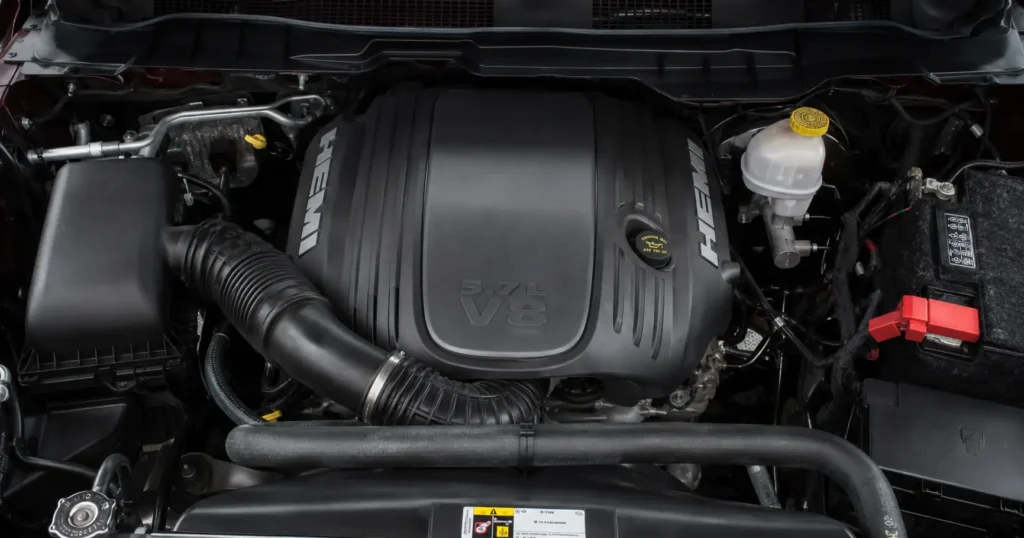
Using the wrong volume, wrong viscosity, or a restrictive aftermarket filter drops oil pressure below the critical 42 PSI threshold, triggering a P1524 fault code and disabling the VVT system entirely.

Prime for Young Adults — 6 Months Free
Students and 18–24s get six months of Prime free, then half price.
Start 6 Months Free2014 Ram 1500 5.7 HEMI oil specifications: capacity gauge, VVT pressure thresholds, and oil change interval comparison
Recommended Best Deal Products


Total oil capacity
7.0 qt
6.6 liters
Factory viscosity
5W-20
MS-6395 certified
VVT min pressure
42 PSI
P1524 triggers below

Audible — Listen Free for 30 Days
One free credit a month and thousands of titles included.
Listen Free for 30 DaysDrain plug torque
25 ft-lbs
M14 x 1.5 thread
Oil pressure thresholds
VVT & MDS hydraulic requirements
Oil change interval guide
Normal vs severe duty (miles)
Oil filter comparison
Audible Premium Plus — Annual Membership
12 audiobook credits up front, plus the full Audible catalogue.
See Annual PlansMO-339 vs MO-899 vs premium aftermarket
2014 Ram 1500 5.7 Oil Capacity: Core Specifications
| Specification | Factory Requirement |
|---|---|
| Total oil capacity (with filter) | 7.0 quarts (6.6 liters) |
| Recommended viscosity | SAE 5W-20 full synthetic |
| Required oil certification | Chrysler MS-6395 |
| API / ILSAC rating | API SN, SN-Plus, or SP / ILSAC GF-5 or GF-6A |
| OEM oil filter | Mopar MO-339 (OEM #4892339AB) |
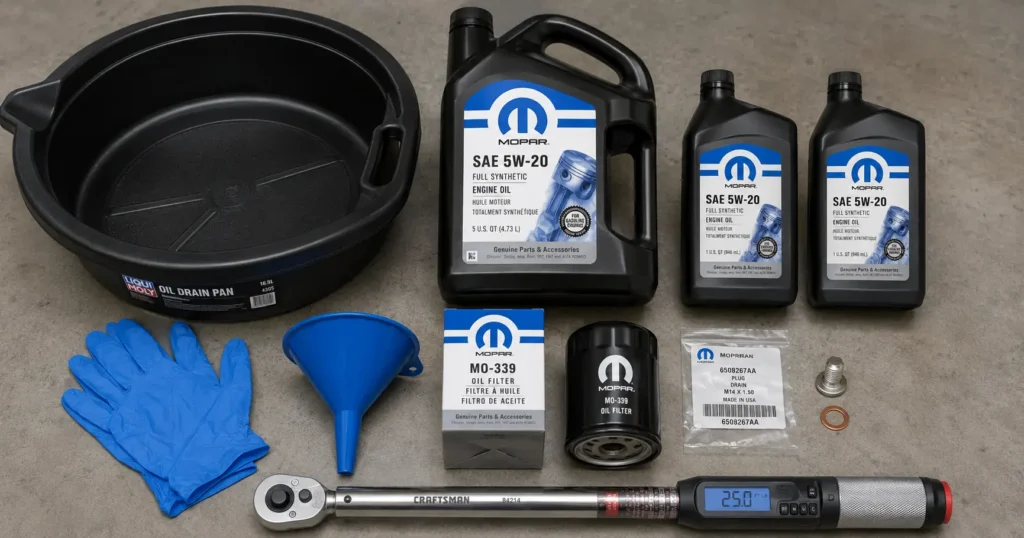
| Drain plug torque | 25 ft-lbs (34 N·m) |
| Drain plug thread size | M14 x 1.5 |
Fill procedure: Add 6.5 quarts, start the engine for 30 seconds to fill the oil filter, shut down, let oil settle for 5 minutes, then top off to the SAFE dipstick mark with the remaining 0.5 quarts. Overfilling beyond 7.0 quarts puts crankshaft counterweights in contact with the oil surface, whipping it into foam and collapsing oil pressure. Underfilling starves the MDS lifters — the first components to suffer in the HEMI’s long upstream oiling path.
Why the 2014 Ram 1500 5.7 HEMI Requires 5W-20
Recommended Best Deal Products


The MDS cylinder deactivation system routes pressurized oil through narrow block galleys to depress a microscopic locking pin inside each of the four target lifters. This pin collapse allows the internal plunger to fall freely, keeping the valves closed on cylinders 1, 4, 6, and 7 during light-load cruising.
The entire activation-to-deactivation cycle is measured in milliseconds — SAE 5W-20 is specifically calibrated to flow through these micro-passages fast enough to meet that timing. A heavier 5W-30 can delay MDS pin re-engagement when you demand full V8 power suddenly, causing harsh transitions, P0300 misfire codes, and accelerated lifter wear.
The VVT phaser on the front of the camshaft is equally pressure-sensitive. The Powertrain Control Module requires a minimum of 42 PSI to actuate the phaser safely. If pressure dips below 31 PSI while the VVT is engaged, the PCM triggers code P1524 (Oil Pressure Out of Range — Camshaft Advance Disabled), disabling both VVT and MDS and engaging limp mode. See our Ram 1500 5.7 HEMI engine diagram for a visual of the oiling architecture.
Approved MS-6395 certified oils
| Brand / Product | Viscosity | Type |
|---|---|---|
| Mopar / Pennzoil Ultra Platinum | 5W-20 | Full Synthetic — factory-fill equivalent |
| Valvoline Full Synthetic | 5W-20 | Full Synthetic |
| Mobil 1 Extended Performance | 5W-20 | Full Synthetic |
| AMSOIL Signature Series | 5W-20 | Full Synthetic — superior shear stability |
| Castrol EDGE | 5W-20 | Full Synthetic |
Every oil must explicitly state MS-6395 certification on the label or product page. A generic API SP label alone is not sufficient — the MS-6395 additive package is specifically formulated to resist thermal breakdown in HEMI MDS solenoid passages and protect the unique metallurgy of Gen III HEMI camshaft lobes.
The 5W-20 vs. 5W-30 debate
Heavy tow owners in extreme heat climates sometimes switch to 5W-30 for better high-temperature film strength — the thicker oil maintains shear strength above 220°F when towing up steep grades. This is a reasonable argument only if the MDS is electronically disabled via an aftermarket tune or physically deleted. With the factory MDS active, 5W-30 risks sluggish locking pin disengagement, MDS trouble codes, and slightly higher fuel consumption from increased fluid drag. Owners who have performed a full MDS delete (solid-body lifters + PCM retune) can safely run 5W-30 or even 0W-40 for superior bearing protection at high loads. See our guide on 5.7 HEMI cam and lifter replacement cost if you’re already dealing with MDS failure.
Oil Specs, Pressure Thresholds & Filter Comparison
Oil Filter: Mopar MO-339 vs. MO-899 for the 2014 Model
Recommended Best Deal Products


Beginning with the 2013 model year, Chrysler switched from the large MO-899 filter to the compact Mopar MO-339 to clear the new Electric Power Steering (EPS) rack and revised front subframe geometry. The MO-339 is the factory-correct filter for your 2014 Ram 1500.
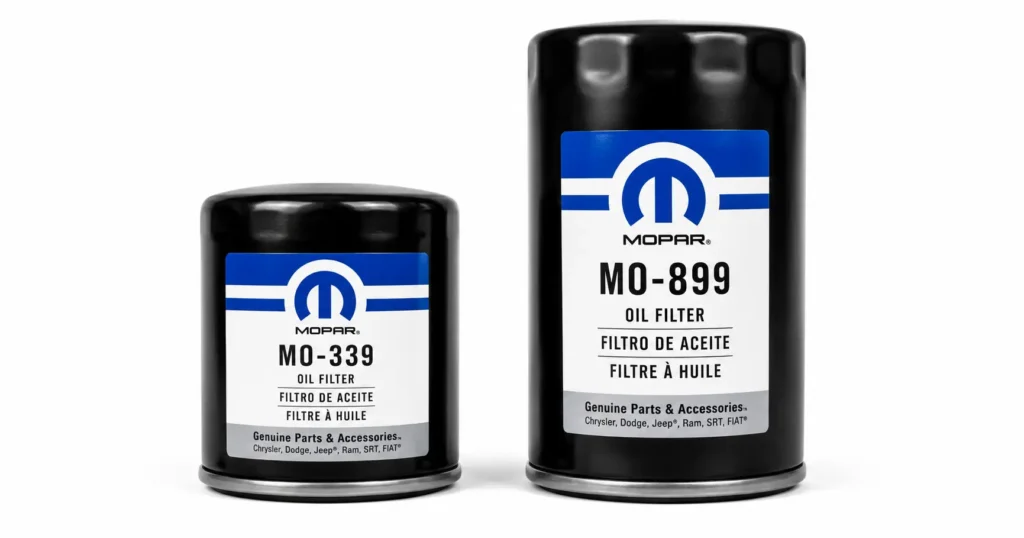
| Specification | Mopar MO-339 (Factory 2013–2024+) | Mopar MO-899 (Legacy 2003–2012) |
|---|---|---|
| Overall height | 86 mm (3.38 in) | 100+ mm (significantly longer) |
| Outside diameter | 76 mm (2.99 in) | 76 mm (2.99 in) |
| Thread pitch | M22 x 1.5 | M22 x 1.5 |
| Anti-drainback valve | Nitrile/silicone integrated | Nitrile/silicone integrated |
The larger MO-899 is a popular longevity upgrade: it holds more media surface area, traps more contaminants before the bypass valve opens, and presents less flow restriction to the oil pump — a meaningful benefit given the HEMI’s long upstream oiling path to the lifters. The upgrade is mechanically safe on 2014 models as long as you verify the longer filter body doesn’t contact the EPS rack or front suspension wiring. Find the filter easily with our Ram 1500 oil filter location guide.
Premium aftermarket filter options
| Filter | Media Type | Efficiency Rating | Anti-Drainback | Best For |
|---|---|---|---|---|
| Mopar MO-339 | Blended cellulose | OEM standard | Nitrile blend | Standard 5,000-mile service |
| WIX 57060 | Enhanced cellulose | 99% at 23 microns | Premium silicone | Towing, cold climates, severe duty |
| FRAM XG10060 | Dual-layer synthetic | 99.9% at 20 microns | High-temp silicone | Extended synthetic drain intervals |
The anti-drainback valve is critical for the HEMI’s backward oiling architecture — oil must travel through the rocker shaft, down through hollow pushrods, and finally into the lifter bodies. The silicone ADBV in the WIX 57060 and FRAM XG10060 traps a reserve oil column in the upper valvetrain overnight, preventing the dry metal-on-metal starts that initiate lifter failure.
The HEMI Tick: Diagnosing Lifter Failure
No topic dominates 5.7L HEMI ownership more than lifter failure — colloquially known as the “HEMI tick.” Understanding the exact failure mechanism is essential because misdiagnosis costs thousands of dollars in unnecessary parts.
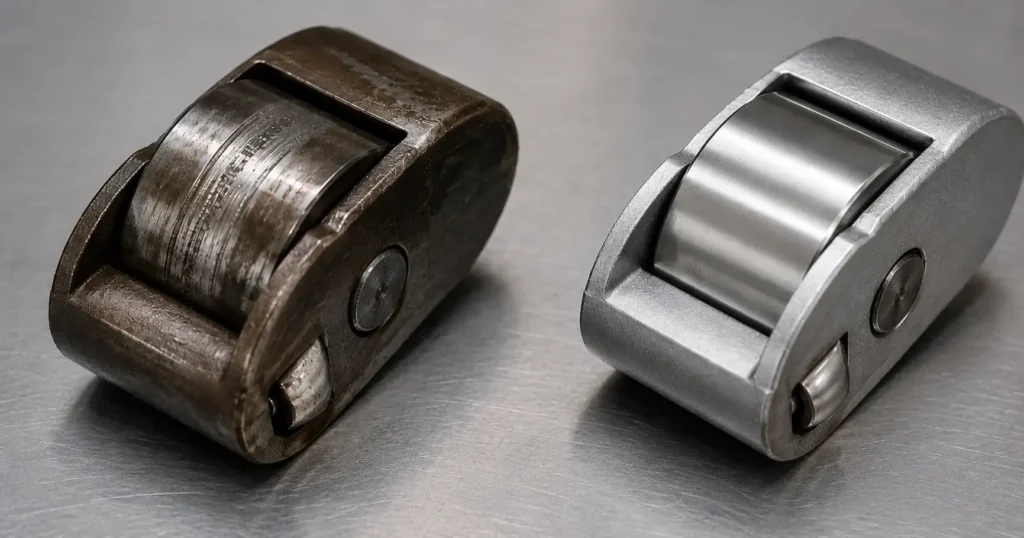
How the backward oiling system creates lifter vulnerability
Unlike GM LS engines where oil reaches lifters first, the HEMI feeds lifters last. Oil travels: oil pump → oil filter → engine block galleries → head gasket restrictor orifice → hollow rocker shaft → rocker arm internal passages → down the hollow pushrod → into the lifter body. The lifters sit at the absolute end of this long hydraulic chain. Any pressure drop, sludge accumulation, or filter bypass event starves the lifters before any other component.
What actually fails: roller axle needle bearings
The failure point is not the hydraulic plunger (a common misconception) — it’s the needle bearings inside the lifter’s roller wheel. These bearings are lubricated entirely by oil pressure arriving through the pushrod. When oil flow is insufficient, the bearings seize. The roller wheel transforms from a rolling element into a fixed steel chisel dragging across the spinning camshaft lobe. The camshaft lobe is ground to metal debris within hours of driving. That debris circulates through the entire engine, scoring cylinders, damaging the oil pump, and destroying rod and main bearings.
If you’re facing this repair, check our detailed guide on 5.7 HEMI cam and lifter replacement cost and the 5.7 HEMI cam and lifter kit options. For timing-related concerns that often accompany high-mileage lifter wear, see our 5.7 HEMI timing chain replacement interval guide.
Diagnostic symptom timeline
| Stage | Symptom | Action Required |
|---|---|---|
| Stage 1 — Early | Sharp metallic tick at engine RPM (not half-RPM like exhaust leaks). Persists warm. | Oil change with fresh MS-6395 5W-20, monitor closely |
| Stage 2 — Active | P0300 random misfire code + flashing CEL. Rough idle. | Stop driving immediately. Inspect lifters and camshaft. |
| Stage 3 — Catastrophic | Power loss, severe noise, metal contamination in oil. | Full engine teardown. Rebuild or replacement required. |
Critical rule: A P0300 misfire code on a 5.7L HEMI with a concurrent tick is NOT a spark plug, ignition coil, or fuel injector problem until lifter failure is definitively ruled out. Running the engine past this point guarantees total camshaft destruction. For tick noise diagnosis, see our Ram 1500 ticking noise at idle guide. For oil pump diagnosis and replacement, check our Dodge Ram 1500 oil pump replacement article.
P1524 Code: The Oil Pressure & VVT Fault
The P1524 code — “Oil Pressure Out of Range — Camshaft Advance/Retard Disabled” — is the most common oil-related fault code on the 2014 Ram 1500 5.7 HEMI, and it is frequently triggered immediately after an oil change by a bad aftermarket filter.
| Pressure Threshold | Value | Consequence if Not Met |
|---|---|---|
| VVT phaser activation minimum | 42 PSI | PCM refuses to advance camshaft timing |
| VVT operating minimum | 31 PSI | P1524 triggered, VVT + MDS disabled, limp mode engaged |
A cheap aftermarket filter with overly restrictive media or an incorrectly calibrated bypass valve can drop upper-galley oil pressure below these thresholds under sustained highway RPMs — even while the dashboard oil pressure gauge reads “normal” at idle. The gauge reads adequate at low RPMs where the pump has no trouble overcoming the restriction; the pressure collapse only appears at higher flow demand.
First diagnostic step for P1524: Replace the oil filter with a genuine Mopar MO-339 or WIX 57060 and verify the crankcase contains exactly 7.0 quarts of MS-6395 certified 5W-20. Clear the code. In the majority of cases this eliminates P1524 without replacing any sensors or solenoids. If the code returns, use the EVIC steering wheel menu to view live digital oil pressure in PSI — it should rise dynamically with RPMs. A flat reading suggests a failing oil pressure sensor (OEM #68145662AB) or a worn oil pump.
Step-by-Step Oil Change Procedure
| Step | Action | Key Details |
|---|---|---|
| 1 | Warm engine, position drain pan | Run 3 minutes to suspend contaminants. Park level. Use 10-qt minimum pan. |
| 2 | Remove drain plug | 13mm socket, M14 x 1.5 thread. Inspect rubber seal — replace if torn. |
| 3 | Reinstall drain plug | Torque to exactly 25 ft-lbs (34 N·m). Over-torquing strips the steel pan bung. |
| 4 | Remove old oil filter | Located passenger-side front of block. Confirm old O-ring comes with filter — double gasket causes blowout. |
| 5 | Install new filter | Lube O-ring with fresh oil. Hand-tighten to contact then ¾–1 full turn. Never wrench-tighten. |
| 6 | Fill crankcase | Add 6.5 qt. Start 30 sec. Shut down, wait 5 min. Top off to SAFE mark (~7.0 qt total). |
| 7 | Reset oil life monitor | See method below. |
How to reset the oil life monitor
Gas pedal method (all trims): Key to ON/RUN (engine off). Fully press and release the accelerator pedal 3 times within 10 seconds. Turn key OFF. Start engine — oil life should read 100%.
EVIC steering wheel method: Key to ON. Press DOWN to “Vehicle Info” → RIGHT to “Oil Life” screen → hold RIGHT for 1 second → DOWN to “Yes” → RIGHT to confirm. Oil life resets to 100%.
Oil Change Intervals: Normal vs. Severe Duty
| Condition | Factory Maximum | Expert Recommendation |
|---|---|---|
| Ideal highway driving (light load, long trips) | 10,000 miles / 12 months | 5,000–6,000 miles |
| Severe duty (towing, hauling, short trips, idling) | 4,000–5,000 miles | 4,000 miles maximum |
The factory 10,000-mile interval applies only to ideal, unladen highway cruising. Most Ram 1500s used for actual truck work fall under “severe duty” — towing, hauling, stop-and-go traffic, frequent short trips, or commercial fleet use. The HEMI’s backward oiling architecture means degraded oil accumulates as varnish in the narrow MDS galley passages long before the EVIC monitor warns you. Independent HEMI specialists and high-mileage owners consistently recommend a hard cap of 5,000 miles regardless of EVIC reading, using premium MS-6395 full synthetic.
Hardware: Oil Pan, Drain Plug & Gasket Details
The 2014 Ram 1500 5.7L HEMI uses a stamped steel oil pan with a rear-sump design to clear the front axle and crossmembers on 4WD models. Steel pans in rust-belt states often need replacement after a decade — look for Dorman 264-260 (OE-replacement steel with anti-corrosion coating) as a direct fit.
The drain plug uses M14 x 1.5 threads with a 13mm hex head and a molded rubber pilot-point seal. Replace the seal (or the entire plug) at every other oil change. Stripped pan threads are the single most common DIY oil change mistake on this platform — always use a torque wrench, never “by feel.” The correct torque is 25 ft-lbs (34 N·m).
Frequently Asked Questions
How many quarts of oil does a 2014 Ram 1500 5.7 take?
The 2014 Ram 1500 5.7 HEMI takes 7.0 quarts (6.6 liters) with a filter change, or approximately 6.5 quarts without replacing the filter. Always fill to the dipstick SAFE mark, not by count alone.
What kind of oil does a 2014 Ram 1500 5.7 take?
SAE 5W-20 full synthetic motor oil meeting Chrysler MS-6395. The best factory-equivalent option is Pennzoil Ultra Platinum 5W-20 (the OEM factory fill). Mobil 1, Valvoline Full Synthetic, and AMSOIL Signature Series 5W-20 all carry MS-6395 approval.
Can I use 5W-30 in my 2014 Ram 1500 5.7?
Only if the MDS is disabled or deleted. With the factory MDS active, 5W-30 risks delayed locking pin disengagement, MDS trouble codes, and harsh V4-to-V8 transitions. If you tow heavily and want better high-temp film strength, disable the MDS via an aftermarket tune first, then switch to 5W-30.
What does the P1524 code mean on a Ram 1500?
P1524 means “Oil Pressure Out of Range — Camshaft Advance Disabled.” The PCM has detected insufficient oil pressure to safely operate the VVT phaser (requires 42 PSI minimum). The most common cause immediately after an oil change is a restrictive aftermarket filter. Replace with Mopar MO-339 or WIX 57060 and verify 7.0 quarts of 5W-20 in the crankcase before spending money on sensors. For limp mode caused by this code, see our Dodge Ram 1500 limp mode reset guide.
What is the HEMI tick and how do I fix it?
The HEMI tick is a sharp metallic tapping at engine RPM caused by seized needle bearings in the MDS lifter roller wheels. Unlike exhaust manifold tick (which fades warm), lifter tick stays loud regardless of temperature. If accompanied by a P0300 misfire code, shut the engine off immediately — continued operation destroys the camshaft. The repair involves replacing all lifters, affected cam lobes, and often the camshaft. See our full breakdown at 5.7 HEMI cam and lifter replacement cost.
Is the MO-899 filter safe on a 2014 Ram 1500?
Yes — both MO-339 and MO-899 share M22 x 1.5 threads and identical gasket diameters. The MO-899 is longer (100+ mm vs 86 mm), so physically verify clearance from the EPS rack and front wiring before using it. The larger filter provides more media surface area and less flow restriction — a genuine longevity benefit for the HEMI’s MDS lifters.

![Cruise Control Turns On But Will Not Set [2026]](https://truckguider.com/wp-content/uploads/2026/03/featured-0a745d5a-768x768.webp)