
Dodge Ram Engine Codes by Year Chart: 2026 All V6, V8 & Diesel Options

Dodge Ram engine codes refer to two completely different things depending on what you’re trying to find. The first is the VIN engine identifier: a single letter or number in position 8 of your 17-digit VIN that tells you exactly which engine your truck came with from the factory.
The second is an OBD diagnostic trouble code (DTC): a P-code stored in your PCM (Powertrain Control Module) that triggers the check engine light when something goes wrong.
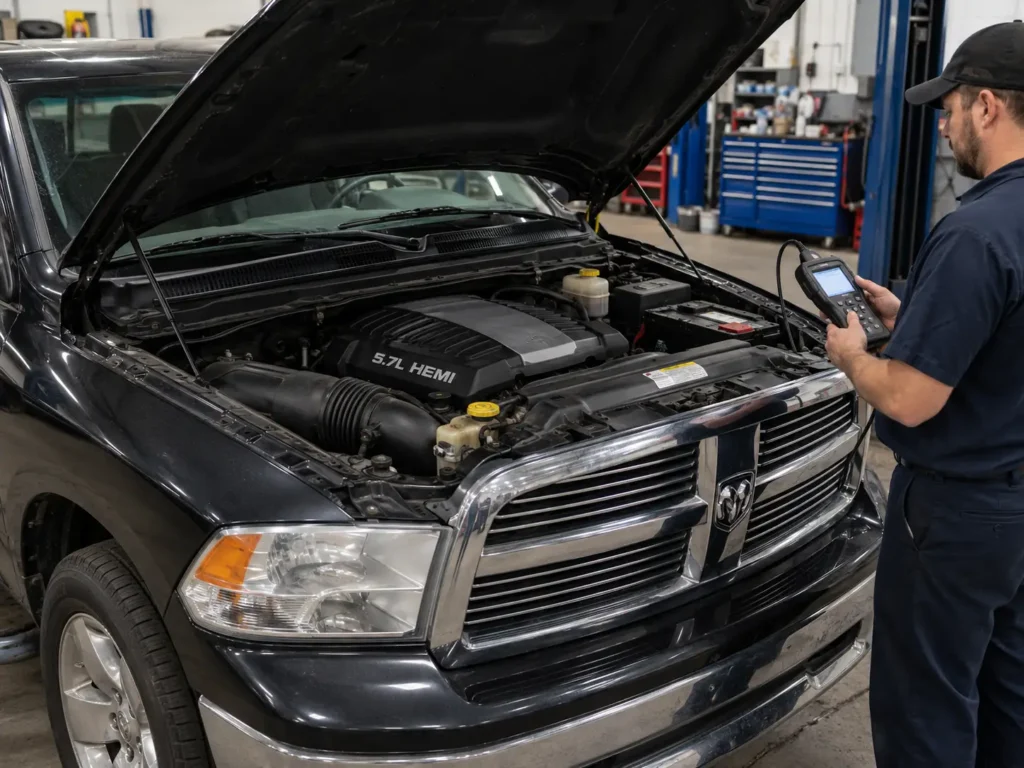
Both types are organized by year because the rules changed. Rams built before 1996 used a two-digit flash code system you read by cycling the ignition key, no scanner needed. Everything built from 1996 onward switched to OBD-II P-codes that require a 16-pin scanner.
This guide covers both, starting with how to identify your engine by generation and year, then the most common diagnostic codes for each engine type.
What Dodge Ram Engine Codes Actually Mean by Year
Recommended Best Deal Products


Before reading any code chart, you need to know which type of engine code you are looking for. They serve completely different purposes, and the tools to read them are different.
VIN Engine Identifier Codes
Every Ram built after 1981 has a 17-character VIN. Position 8 in that sequence is the engine code: a letter or number assigned by the factory that identifies the exact engine installed. This code never changes.
It tells you displacement, fuel system type, and in many cases whether the truck has the standard or high-output variant of an engine. This is what parts stores and online fitment systems use to confirm compatibility.
OBD Diagnostic Trouble Codes
OBD codes are stored by the PCM when it detects a sensor reading or system behavior outside its programmed parameters. On Rams built through the 1995 model year, these are two-digit codes you read by watching the check engine light blink. Starting with 1996 models,
Dodge complied with the federal OBD-II mandate and switched to four-character P-codes read with a standard 16-pin scanner. The two systems are not compatible. A pre-1996 Ram requires a completely different retrieval method than anything built after it.
With that distinction clear, here is how to identify your exact Ram engine by year and generation.
Dodge Ram Engine Options by Year and Generation
Dodge Ram engine generations timeline from 1981 to 2025, showing which engines were available in each generation
Recommended Best Deal Products


Dodge Ram Engine Generations — 1981 to 2025
Click any engine bar to see what years it ran and which trucks it fit.
The engine your Ram came with depends entirely on the model year, truck series, and trim configuration. The Dodge Ram generations chart maps the full platform history across all five generations. The table below isolates the powertrain data you need for identification and parts sourcing.
| Generation | Years | Series | Available Engines |
|---|---|---|---|
| Gen 1 | 1981–1993 | 150 / 250 / 350 | 3.7L Slant-Six, 5.2L V8 LA, 5.9L V8 LA, 5.9L Cummins Turbo Diesel (1989+) |
| Gen 2 | 1994–2001 | 1500 / 2500 / 3500 | 3.9L V6 Magnum, 5.2L V8 Magnum, 5.9L V8 Magnum, 5.9L Cummins 12V (1994–1998), 5.9L Cummins 24V (1998.5–2002) |
| Gen 3 | 2002–2008 | 1500 / 2500 / 3500 | 3.7L V6 PowerTech, 4.7L V8 PowerTech, 5.7L Hemi V8 (2003+), 8.3L V10 SRT-10 (2004–2006), 5.9L Cummins 24V (2002–2007), 6.7L Cummins (2007.5+) |
| Gen 4 | 2009–2018 | 1500 / 2500 / 3500 | 3.7L V6 (2009–2012), 4.7L V8 (2009–2013), 5.7L Hemi V8, 3.6L Pentastar V6 (2013+), 3.0L EcoDiesel V6 (2014+), 6.4L Hemi V8 (HD), 6.7L Cummins (HD) |
| Gen 5 | 2019–2025 | 1500 / 2500 / 3500 | 3.6L Pentastar V6 eTorque, 5.7L Hemi V8 eTorque (2019–2024), 3.0L EcoDiesel V6 (2019–2023), 6.4L Hemi V8 (HD), 6.7L Cummins (HD), 3.0L Hurricane I-6 (2025+, 1500) |
Gen 1 Dodge Ram Engines 1981 to 1993
First-generation Rams came with the 3.7L slant-six, the 5.2L LA V8, or the 5.9L LA V8. The 5.9L Cummins Turbo Diesel arrived in 1989 for the 250 and 350 series. It was the first diesel offered in a half-ton and heavy-duty platform that would become legendary. These trucks used the OBD-I system exclusively, meaning no P-codes and no scanner port.
Gen 2 Dodge Ram Engines 1994 to 2001
The second generation introduced the Magnum engine family, revised versions of the 3.9L V6, 5.2L V8, and 5.9L V8 with multi-port fuel injection. The Cummins carried over as the 12-valve through 1998, then transitioned to the electronically-controlled 24-valve in mid-1998 production. This generation bridged the OBD-I to OBD-II switch at 1996.
Gen 3 Dodge Ram Engines 2002 to 2008
The 5.7L Hemi V8 arrived for 2003, replacing the 5.9L Magnum and raising the bar for half-ton performance. The 6.7L Cummins replaced the 5.9L Cummins at mid-year 2007 (often called the "2007.5" transition) with a DPF (Diesel Particulate Filter) system added to meet emissions standards. Owners of Gen 3 trucks, especially 2003–2004 models, should review the Ram 1500 years to avoid guide before buying used. This generation had documented reliability gaps.
Gen 4 Ram Engines 2009 to 2018
The 3.6L Pentastar V6 joined the lineup in 2013 as the base engine for the 1500, replacing both the 3.7L V6 and 4.7L V8 that were phased out. The 3.0L EcoDiesel (EGR-equipped V6 diesel) debuted in 2014 as the first diesel offered in the Ram 1500. The 6.4L Hemi and 6.7L Cummins continued in HD applications throughout.
Gen 5 Ram Engines 2019 to 2025
The fifth generation brought eTorque mild-hybrid technology to both the 3.6L Pentastar and 5.7L Hemi. The 5.7L Hemi was retired from the Ram 1500 after 2024. For 2025, Ram replaced it with the new 3.0L Hurricane Twin-Turbo I-6 in two output levels: 420 hp Standard Output and 540 hp High Output. The 6.7L Cummins received a significant upgrade for 2025 in HD trucks, producing 430 hp and 1,075 lb-ft of torque with a new 8-speed transmission.
Once you know which generation you have, the VIN 8th digit tells you the exact engine variant.
How To Read the Ram VIN Engine Code Chart
The single fastest way to confirm your Ram's engine is to read position 8 of the VIN. No scanner, no guessing. One character confirms the factory engine. You can also run it through the Mopar VIN decoder for a full build sheet printout.
Interactive Dodge Ram VIN engine code decoder — click position 8 to see all engine codes
Recommended Best Deal Products


Dodge Ram VIN Decoder — Engine Code at Position 8
Click any position to see what it encodes. Position 8 holds the engine code.
Select a position above
Click any cell to see what that VIN position means
Position 8 — Ram Engine Code Reference
| Code | Engine | Years | Trucks |
|---|---|---|---|
| X | 3.9L V6 Magnum | 1994–2001 | 1500 |
| Y | 5.2L V8 Magnum | 1994–2003 | 1500/2500 |
| Z | 5.9L V8 Magnum (LD) | 1994–2003 | 1500 |
| 6 | 5.9L Cummins I-6 Diesel | 1989–2004 | 2500/3500 |
| C | 5.9L Cummins HO Diesel | 2003–2007 | 2500/3500 |
| K | 3.7L V6 PowerTech | 2002–2012 | 1500 |
| N | 4.7L V8 PowerTech | 2002–2013 | 1500/2500 |
| D | 5.7L V8 Magnum SMPI | 2002 | 1500 |
| 2 | 5.7L Hemi V8 MDS | 2003–2018 | 1500/2500/3500 |
| T | 5.7L Hemi V8 eTorque | 2019–2024 | 1500 |
| H | 8.3L V10 SFI (SRT-10) | 2004–2006 | 1500 SRT-10 |
| A | 6.7L Cummins ISB Diesel | 2007.5–now | 2500/3500 |
| G | 3.6L Pentastar V6 | 2013–2024 | 1500 |
| E | 3.0L EcoDiesel V6 | 2014–2023 | 1500 |
| S | 6.4L Hemi V8 | 2014–now | 2500/3500 |
Step 1: Find your VIN on the driver-side dashboard (visible through the bottom of the windshield) or on the door jamb sticker. It is a 17-character alphanumeric code.
Step 2: Count to the 8th character from the left. That single character is your engine code.
Step 3: Match it to the table below.
| VIN Code | Engine | Displacement | Applicable Years |
|---|---|---|---|
| X | 3.9L V6 Magnum SMPI | 3.9L V6 | 1994–2001 (Ram 1500) |
| Y | 5.2L V8 Magnum SMPI | 5.2L V8 | 1994–2003 (Ram 1500/2500) |
| Z | 5.9L V8 Magnum SMPI (light duty) | 5.9L V8 | 1994–2003 (Ram 1500) |
| 6 | 5.9L Cummins I-6 Turbo Diesel (standard) | 5.9L I-6 | 1989–2004 (Ram 2500/3500) |
| C | 5.9L Cummins I-6 High Output Turbo Diesel | 5.9L I-6 | 2003–2007 (Ram 2500/3500 HO) |
| K | 3.7L V6 PowerTech MPI Gasoline | 3.7L V6 | 2002–2012 (Ram 1500) |
| N | 4.7L V8 PowerTech MPI Gasoline | 4.7L V8 | 2002–2013 (Ram 1500/2500) |
| P | 4.7L V8 Flex Fuel | 4.7L V8 | 2004–2012 (Ram 1500) |
| D | 5.7L V8 Magnum SMPI (pre-Hemi) | 5.7L V8 | 2002 (Ram 1500, transition year) |
| 2 | 5.7L Hemi V8 MDS Gasoline (EZB) | 5.7L V8 | 2003–2018 (Ram 1500/2500/3500) |
| T | 5.7L Hemi V8 MDS Gasoline (Gen 5) | 5.7L V8 | 2019–2024 (Ram 1500 eTorque) |
| H | 8.3L V10 SFI Gasoline (SRT-10) | 8.3L V10 | 2004–2006 (Ram 1500 SRT-10) |
| A | 6.7L Cummins ISB I-6 Turbo Diesel (ETJ) | 6.7L I-6 | 2007.5–present (Ram 2500/3500) |
| G | 3.6L Pentastar V6 DOHC Gasoline | 3.6L V6 | 2013–2024 (Ram 1500 and Classic) |
| E | 3.0L EcoDiesel V6 Turbo Diesel | 3.0L V6 | 2014–2023 (Ram 1500) |
| S | 6.4L Hemi V8 Gasoline (HD trucks) | 6.4L V8 | 2014–present (Ram 2500/3500) |
Knowing your engine is step one. The section below shows the most common diagnostic codes for each engine type once the check engine light comes on.
Most Common OBD Codes for Each Ram Engine by Generation
The codes below are the most frequently reported by Ram owners across forums and shop data: organized by engine so you can go straight to your drivetrain. This is not a complete DTC encyclopedia. These are the codes that actually come up, confirmed across ramforums.com, ramforumz.com, and cumminsforums.com threads.
5.7L Hemi V8 (2003–2024)
| Code | System | Typical Cause | Severity |
|---|---|---|---|
| P0300 | Ignition / Fuel | Random misfire: cam phasers (2009+), fouled plugs, coil pack failure, lean fuel condition | HIGH |
| P030X | Ignition | Single-cylinder misfire (X = cylinder number): coil pack or injector on that cylinder | MED |
| P0456 | EVAP System | Small EVAP leak: ESIM module failure or faulty purge valve; very common 2012–2019 | LOW |
| P0128 | Cooling | Engine coolant below thermostat regulating temperature: thermostat stuck open or incorrect spec | LOW |
| P0340 | Camshaft | Camshaft position sensor circuit malfunction: sensor or wiring on Bank 1 | MED |
| P0344 | Camshaft | Camshaft position sensor intermittent: failing sensor or CMP ring damage | MED |
6.7L Cummins Turbo Diesel (2007.5–Present)
| Code | System | Typical Cause | Severity |
|---|---|---|---|
| P0087 | Fuel Rail | Fuel rail pressure too low: clogged fuel filter (replace every 15k miles), CP3 pump wear | HIGH |
| P0191 | Fuel Rail | Fuel rail pressure sensor performance: sensor out of range, often follows P0087 | MED |
| P0193 | Fuel Rail | Fuel rail pressure sensor circuit high voltage: failed HPFP (High Pressure Fuel Pump) sensor or wiring | MED |
| P2509 | Electrical | ECM power input signal intermittent: weak or failing batteries (dual-battery system); common in cold weather | MED |
| P0299 | Turbocharger | Turbo underboost condition: VGT (Variable Geometry Turbo) actuator, EGR leak, or boost leak upstream | HIGH |
| P0169 | Fuel Quality | Water in fuel sensor active too long: water in fuel separator needs draining | MED |
5.9L Cummins Turbo Diesel (1989–2007)
| Code | System | Typical Cause | Severity |
|---|---|---|---|
| P0216 | Injection Timing | Injection timing control circuit: common on VP44 (24V 1998.5–2002), injection pump failure warning | HIGH |
| P0251 | Injection Pump | Injection pump fuel metering control "A": VP44 pump actuator circuit fault; often precedes pump failure | HIGH |
| P0237 | Turbo Boost | Turbocharger boost sensor circuit low: MAP sensor failure or boost leak on pre-common-rail trucks | MED |
| P0380 | Glow Plugs | Glow plug or heater circuit A malfunction: relay or individual glow plug failure; causes hard cold starts | MED |
3.6L Pentastar V6 (2013–2024)
| Code | System | Typical Cause | Severity |
|---|---|---|---|
| P0456 | EVAP System | Small EVAP leak: shares the same ESIM/purge valve issue as the Hemi platform | LOW |
| P0303 | Ignition | Cylinder 3 misfire: coil pack or injector; Pentastar had documented cylinder 3 issues in early production | MED |
| P0128 | Cooling | Coolant below thermostat temp: same thermostat failure pattern as Hemi | LOW |
| P0017 | Camshaft | Crankshaft / camshaft correlation (Bank 1, Sensor B): stretched timing chain on higher-mileage examples | HIGH |
Before you can pull any of these codes, you need the right tool for the job.
How To Pull Ram Engine Codes Without a Dealership
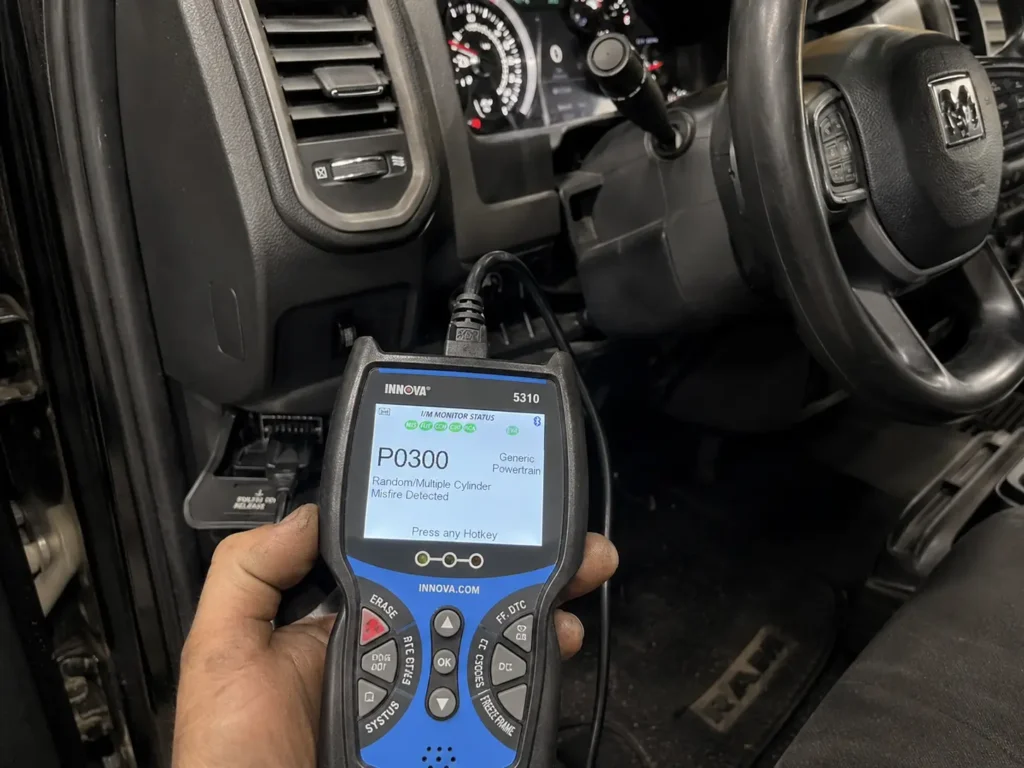
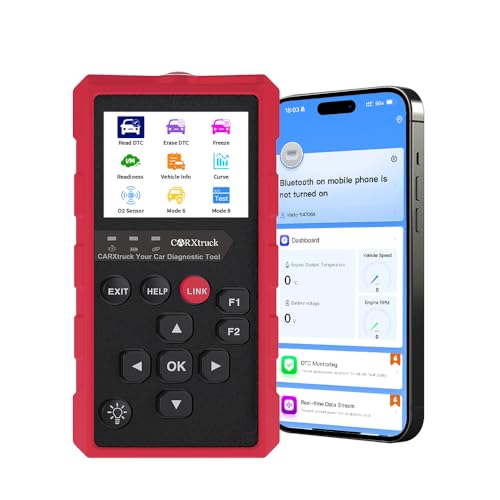
Pulling codes yourself takes under five minutes on any 1996 or newer Ram. It costs nothing if you go to AutoZone or O'Reilly for a free scan. If you own a Ram 2500 or 3500 diesel, a dedicated scanner reads Cummins-specific data that generic tools miss. The best OBD2 scanner for Ram 2500 guide covers the top options with Cummins-specific live data support.
Pre-1996 Flash Code Method
Rams built through the 1995 model year store two-digit fault codes in the PCM that you read by watching the check engine light flash.
- Turn the ignition key ON-OFF-ON-OFF-ON within 5 seconds. Do not crank the engine. "On" means the key position where the radio comes on.
- Watch the check engine light. It will flash out two-digit codes. A flash-flash pause flash-flash-flash means code 23.
- Code 55 = end of codes. Code 12 = no faults stored.
- Write down every code before they cycle through again. They will repeat once, then stop.
1996 and Newer OBD-II Scanner Method
All U.S.-market Rams built from the 1996 model year onward have a standardized 16-pin OBD-II diagnostic port. On Ram trucks, it is typically located under the dashboard to the left of the steering column.
- With the ignition OFF, plug your OBD-II scanner into the 16-pin port under the dash.
- Turn the ignition to the ON position without starting the engine.
- Follow the scanner menu to "Read Codes" or "Fault Codes." The PCM will transmit all stored and pending P-codes.
- Write down every code, then research each one against the engine-specific table above before clearing anything.
If a code points to a known problem year, the FAQ below covers the most common questions Ram owners ask.
5 Most Common Questions About Ram Engine Codes
What does the 8th digit of a Ram VIN tell you?
The 8th digit of a Ram VIN identifies the factory-installed engine: displacement, fuel system type, and variant. For example, the digit "2" indicates a 5.7L Hemi V8 with Multiple Displacement System (MDS), while "A" indicates a 6.7L Cummins Turbo Diesel. This code is used by parts suppliers and dealers to confirm engine compatibility.
What year did Dodge Ram switch to OBD2?
Dodge Ram trucks transitioned to the OBD-II system for the 1996 model year, in compliance with the federal EPA mandate requiring OBD-II on all new light-duty vehicles sold in the United States from that year forward. Trucks manufactured before the 1996 model year use the earlier two-digit flash code system, which requires no scanner.
What is the most common check engine code on a 5.7L Hemi Ram?
The P0456 EVAP small leak code is the most frequently reported code on 5.7L Hemi Ram 1500 trucks from 2012 onward, typically caused by a failed ESIM module or purge valve. On higher-mileage Hemi trucks from 2009 onward, P0300 random misfire tied to cam phaser wear is the next most common concern.
Is the engine code the same on a Ram 1500 and Ram 2500 with the same engine?
Yes, if both trucks are equipped with the same engine variant, the 8th VIN digit will match. A Ram 1500 and Ram 2500 both equipped with the 5.7L Hemi will both show "2" or "T" in position 8, depending on the generation. The surrounding VIN positions (series, body style, GVWR) will differ between 1500 and 2500.
Can I clear a Ram check engine code without a scanner?
On pre-1996 Rams, disconnecting the negative battery terminal for 30 seconds clears stored codes. On 1996 and newer OBD-II trucks, disconnecting the battery clears codes but also resets the PCM's readiness monitors, which means the truck may not pass an emissions inspection for several drive cycles. A scanner clear is the correct method for OBD-II vehicles so the readiness monitors are preserved.
Know Your Ram Engine Before You Pull Any Code
Every dodge ram engine code lookup starts in the same place: confirm which engine you actually have before assuming any code's meaning. The VIN 8th digit gives you that answer in seconds. From there, the generation tables above tell you when your engine was produced and which code list applies to it.
The OBD-I versus OBD-II split at 1996 is the most important dividing line in Ram diagnostics. Pre-1996 owners need a key and five seconds; everyone else needs a scanner and the right code list for their specific engine. Bookmark this page and use it before your next scanner session. Matching the code to the correct engine table cuts diagnosis time considerably.
![How to Use Lucas Oil Stabilizer: Mixing Ratios & Tips [2026]](https://truckguider.com/wp-content/uploads/2026/03/how-to-use-lucas-oil-stabilizer-featured.webp)
![How to Prime a Diesel Engine: Expert Bleeding: Step-by-Step Guide [2026]](https://truckguider.com/wp-content/uploads/2026/03/how-to-prime-a-diesel-engine-featured.webp)