How to Check Transmission Fluid in a Chevy Silverado

You can learn how to check transmission fluid in a Chevy Silverado in about 15 minutes, as long as your truck has a dipstick. Park on level ground, warm the transmission to 160 to 200 degrees Fahrenheit, and read the level inside the HOT crosshatch band on the dipstick.
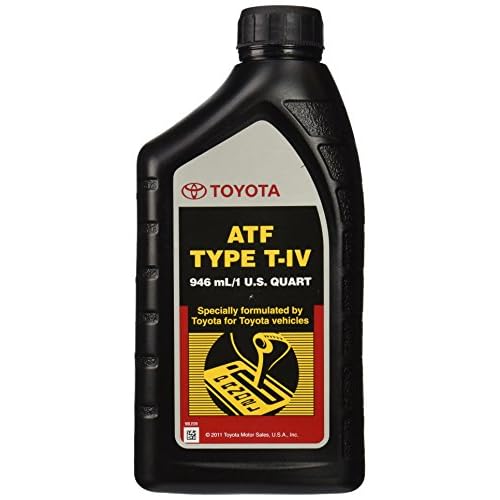


Healthy fluid looks clear red and smells faintly sweet.
This guide walks through the full dipstick check step by step for Silverado trucks with a 6 speed automatic. It also explains what to do when your truck has a sealed 8 speed or 10 speed unit, and how to read fluid color and level so you can catch problems early.
What You Need Before You Start


Gather your supplies first. You need a clean white rag or paper towels, a long neck funnel that fits the dipstick tube, and the correct transmission fluid for your truck. Work gloves protect your hands from hot parts.
- Clean white rag or paper towels
- Long neck funnel for the dipstick tube
- Correct DEXRON fluid for your transmission
- Work gloves
- Your Silverado owner’s manual
Know Your Transmission Before You Check
Silverado trucks use three different automatics, and each one takes a different fluid. Using the wrong fluid can cause shift problems, so confirm your transmission before you add anything. Find the RPO code on the glovebox label or the driver door jamb.
Our Silverado transmission identification chart lists every RPO code, including MYC for the 6L80, M5U and MQE for the 8 speed, and MQB for the 10L80. GM’s TechLink bulletin for the 2019 launch confirms the fluid split below.
| Transmission | Common Silverado Use | Fluid Specification |
|---|---|---|
| 6L80 6 speed | 2007 to 2021 Silverado 1500 | DEXRON-VI |
| 8L90 8 speed | 6.2L (2015 to 2018) and 5.3L (2016 to 2021) | DEXRON-HP |
| 10L80 10 speed | 6.2L from 2019; 5.3L from 2022 | DEXRON ULV |
These three fluids are not interchangeable. DEXRON ULV is the thinnest, and DEXRON-HP is too thick for a 10 speed that calls for ULV. Older 4 speed trucks and Allison heavy duty units follow different specs, so check your owner’s manual first.
Step 1 Warm Up the Transmission and Read the Temperature
A cold transmission gives a misleading reading because fluid expands as it warms. Drive the truck until it reaches normal operating temperature, usually after 15 to 20 minutes of driving.
Park on a level surface and keep the engine running. Set the parking brake and place the shift lever in Park.
With your foot on the brake pedal, move the shift lever through each gear range, pausing about three seconds in each range, then move it back to Park. Let the engine idle for at least one minute at 500 to 800 rpm.
Press the Trip Fuel button or trip odometer stem until TRANS TEMP shows on the Driver Information Center. The 2017 Chevrolet Silverado 1500 owner’s manual calls the hot check the most accurate method at 160 to 200 degrees Fahrenheit.
If the reading is below that range, drive longer and check again.
Step 2 Find the Dipstick and Read the Level
Open the hood and look at the rear of the engine compartment on the passenger side.
The transmission dipstick sits there, close to the firewall, with a brightly colored handle. The engine oil dipstick sits on the driver side instead.
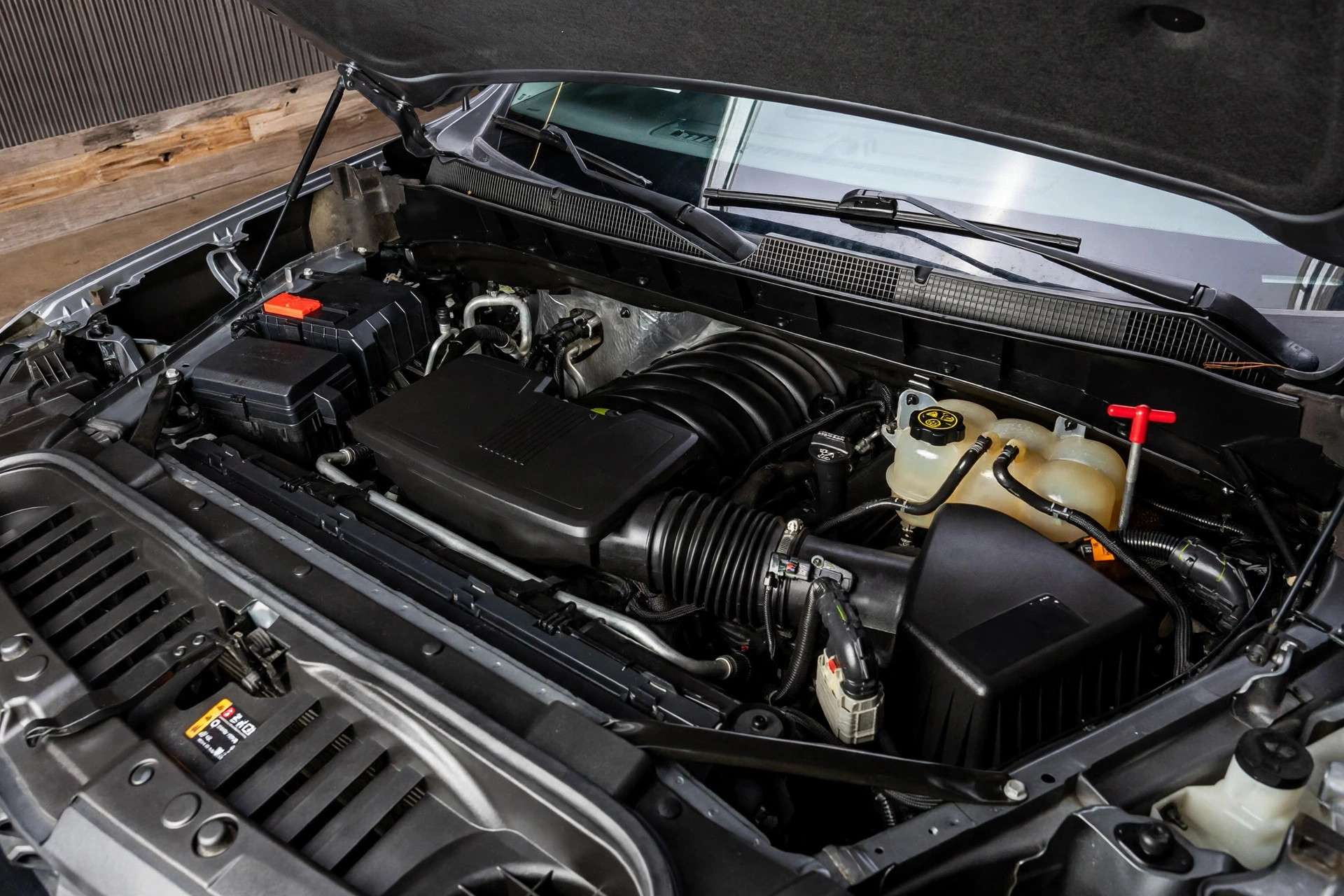
Flip the dipstick handle up and pull the dipstick out. Wipe it clean with your white rag, push it all the way back in, wait three seconds, and pull it out again.
Check both sides of the dipstick and read the lower level, then repeat the whole check to verify the reading.
The 2007 Chevrolet Silverado owner’s manual gives this same procedure. Push the dipstick all the way back in and flip the handle down to lock it.
The safe level is within the HOT crosshatch band when fluid temperature is between 160 and 200 degrees Fahrenheit. A level below the band means the transmission needs fluid. A level above the band means it is overfilled.
Step 3 Read the Fluid Condition
Level is only half the story. Wipe the dipstick on your white rag and study what you see.
Healthy transmission fluid looks clear red or light pink and feels slick between your fingers, per the 1A Auto guide. It should smell faintly sweet, with no sharp burnt odor.
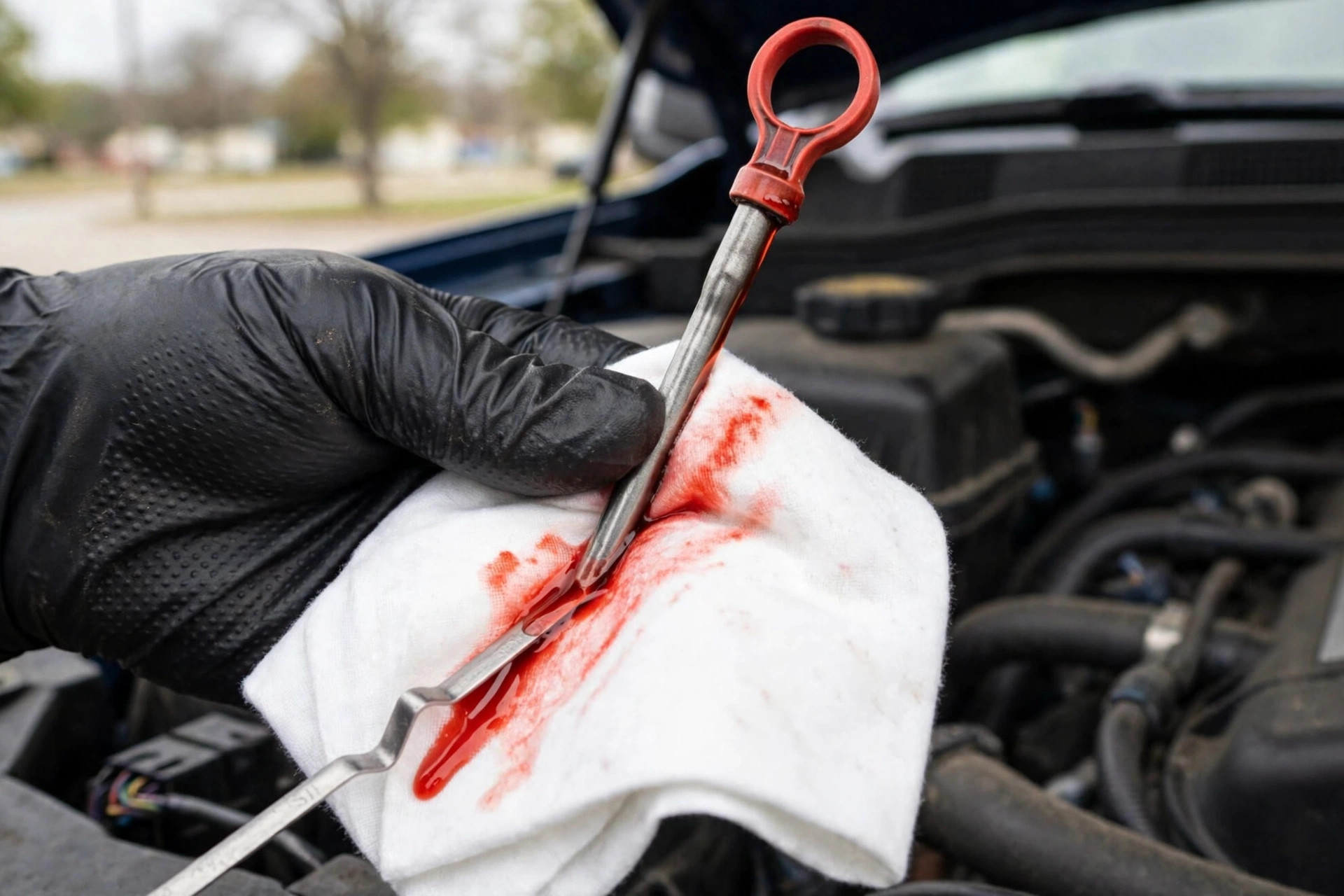
Brown fluid means the fluid is worn and oxidized, and it usually needs a service soon. Dark fluid with a burnt smell points to overheating or worn clutches, so get it diagnosed soon.
Metal particles or grit on the rag point to internal wear. Milky or pink foamy fluid suggests coolant is mixing with transmission fluid, so stop driving and get the truck checked right away.
How to Add Transmission Fluid Safely
Add fluid only when the level is below the HOT band and the transmission is at operating temperature. Insert your funnel into the dipstick tube and pour slowly.
It generally takes less than half a liter, or one pint, to bring the level into the band, so add a small amount and stop.
Wait a minute, then recheck the level with the wipe and reinsert method from Step 2. Repeat the add and recheck cycle until the level sits inside the HOT band.
If the reading looks inconsistent, wait 15 minutes and check again.
Never pour in a large amount at once, because overfilling is as harmful as running low. Too much fluid can foam and damage seals, while too little fluid can starve the pump and burn the clutches.
Use only the fluid in the table above for your transmission. The owner’s manual warns that the wrong fluid can damage the transmission and that the damage may not be covered by warranty.
Cold Check Versus Hot Check
Use the cold check when the transmission is between 80 and 90 degrees Fahrenheit. It tells you only whether the truck has enough fluid to drive safely until a hot check is possible.
If the level is below the COLD band, add just enough to reach the band, then hot check once the transmission reaches 160 to 200 degrees.
Transmission Fluid Check at a Glance
- Hot check: 160 to 200 degrees Fahrenheit (71 to 93 Celsius). Most accurate reading.
- Cold check: 80 to 90 degrees Fahrenheit (27 to 32 Celsius). Reference only.
- Safe level: inside the HOT crosshatch band. Read the lower side and check twice.
- Fluid color: healthy fluid is clear red. Brown means worn, dark and burnt means service is needed.
- No dipstick: 8 speed and 10 speed trucks use a sealed transmission. A lift and a technician are needed.
Sealed Transmissions and When to See a Professional
Not every Silverado has a transmission dipstick.
The 8 speed and 10 speed automatics use a sealed design with no dipstick tube under the hood. The level is set at a standpipe plug on the pan, and the check needs the truck on a lift with the fluid in a narrow temperature window.
The Kelley Blue Book Chevrolet transmission guide notes that only a professional can check the fluid on vehicles with no dipstick. If you cannot find a dipstick at the rear of the engine compartment on the passenger side, your truck likely has a sealed unit.
Book a dealer or a qualified transmission shop for a sealed unit check.
The technician lifts the truck level, brings the fluid to the specified temperature, and checks the standpipe plug. Do the same when a dipstick check shows metal particles, milky fluid, or a level that drops again soon after topping up.
Five Problems a Fluid Check Can Reveal
Low Fluid Level


A low level usually means a leak, because transmission fluid does not burn off like engine oil. Check under the truck for red drips near the pan, cooler lines, and seals. Top up to the HOT band and watch the level for a week.
Burnt Dark Fluid
Dark fluid with a burnt smell means the transmission has run hot or the clutches are wearing. A fluid and filter service may help if the truck still shifts well. Slipping or harsh shifts call for a professional diagnosis.
Milky or Foamy Fluid
Milky fluid means coolant is mixing with transmission fluid, often through a failed cooler inside the radiator. Stop driving and have the truck towed to a shop. Coolant damages clutches fast, so do not wait.
Metal Particles on the Dipstick
Fine metal dust or flakes on the rag point to internal wear in the clutches, gears, or bearings. Note the mileage, then book a transmission shop. The 2014 Chevy Silverado parts diagram shows the 6L80 assembly and its internal parts.
Fluid Leaks Under the Truck


Red puddles under the center of the truck usually come from the pan gasket, the cooler lines, or the output shaft seal. Small seeps can wait for a scheduled service, but active drips need attention soon. Check the level often until the leak is repaired.
How Often to Check Transmission Fluid
Check the fluid at every engine oil change and before any long tow. That rhythm catches slow leaks and gradual fluid wear with no extra trip.
Chevrolet dealers generally recommend replacing transmission fluid every 30,000 to 60,000 miles, and the Moss Bros Chevrolet service guide gives that same range. Your owner’s manual has the final word, and severe use such as frequent towing shortens the interval.
Check more often when the truck tows heavy loads, works in hot weather, or has passed 100,000 miles. Each check takes only a few minutes.
A Short Check That Protects Your Transmission
This guide covers how to check transmission fluid in a Chevy Silverado: warm the transmission to 160 to 200 degrees Fahrenheit, read the TRANS TEMP value, find the dipstick at the rear of the engine compartment on the passenger side, and read the level in the HOT band. Healthy fluid is clear red, and brown or burnt fluid means service is due.
Trucks with a sealed 8 speed or 10 speed transmission have no dipstick, so a technician with a lift must check those.
Add less than half a liter at a time through the funnel, recheck after each addition, and use only the DEXRON fluid your transmission specifies. Checking at every oil change keeps small problems small.
Questions About Checking Silverado Transmission Fluid
Should the engine be running when I check transmission fluid?
Yes, the engine must be running and the transmission must be in Park. Park on level ground, set the parking brake, cycle through each gear, and idle before you read the dipstick. Checking with the engine off gives a false reading.
What do I do if my Silverado has no transmission dipstick?
Your truck likely has a sealed 8 speed or 10 speed transmission, and the level is checked at a standpipe plug on the pan. The check needs the truck on a lift with the fluid in a narrow temperature window. Book a dealer or a transmission shop.
How much transmission fluid should I add at once?
Add less than half a liter, or about one pint, at a time through the dipstick tube with a funnel. Recheck the level after each addition with the wipe and reinsert method. Small additions prevent overfilling, which can foam the fluid and damage seals.
What does brown transmission fluid mean?
Brown fluid means the fluid is worn and oxidized from heat and age. It usually needs a fluid and filter service soon, even when the level is correct. Dark fluid with a burnt smell points to overheating or worn clutches, so get it diagnosed promptly.
How often should I check my Silverado transmission fluid?
Check the fluid at every engine oil change and before any long tow, which works out to several times a year for most owners. Chevrolet dealers generally recommend replacing the fluid every 30,000 to 60,000 miles. Check monthly when the truck tows often or has high mileage.