How To Reset AC On Chevy Silverado In 3 Ways

You can reset the AC on a Chevy Silverado by pulling the HVAC fuse for 60 seconds and letting the system recalibrate itself. This fuse pull forces the climate control module to relearn the blend door positions, and it fixes many cases of one side blowing hot while the other blows cold.


A battery disconnect works as a broader reset when the fuse method falls short. A button reset on the climate panel helps on some automatic climate control trucks, though GM service literature does not document it the way it documents the fuse method.
This guide covers all three methods step by step, which Silverado generations each method fits, and how to tell an actuator problem from low refrigerant or a failed compressor.
3 Ways To Reset Silverado AC


Start with the fuse method. It is the procedure GM documents, it takes about five minutes, and it needs no tools beyond a fuse puller or your fingers.
HVAC Fuse Recalibration Method
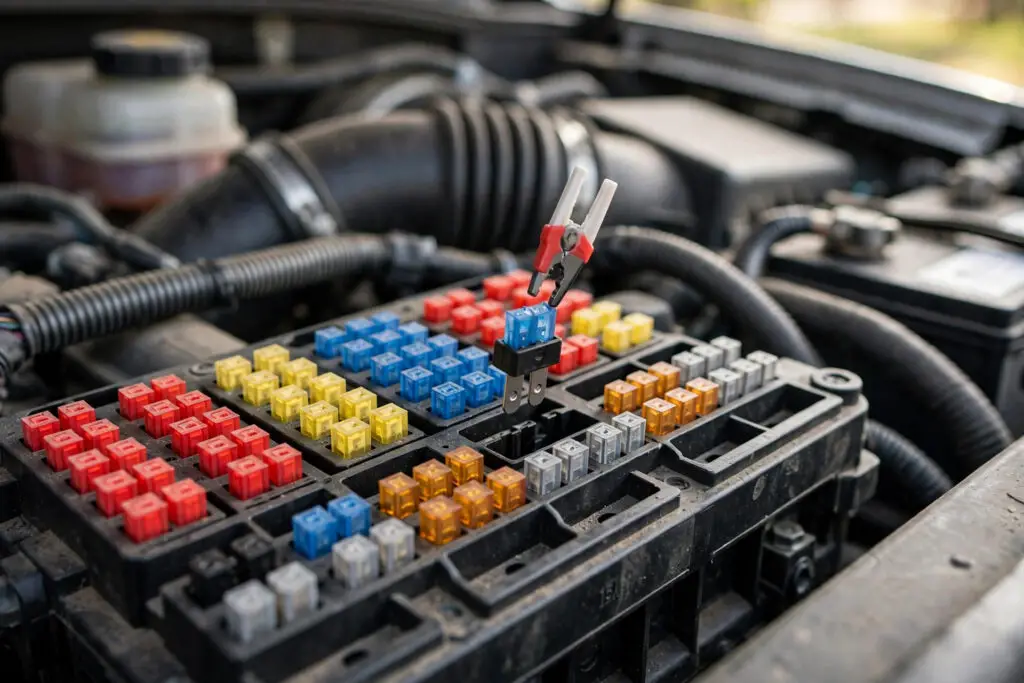
The HVAC fuse recalibration is the first method to try on any Silverado. It cuts power to the climate control module, clears the stored actuator positions, and triggers a fresh calibration sweep when power returns.
- Turn the ignition off and remove the key.
- Find the fuse labeled HVAC/ECAS, HVAC1, or HTR A/C in your fuse box. The Chevrolet owner’s manual lists the fuse locations for your model year, so check it before you pull anything.
- Pull the fuse and wait at least 60 seconds.
- Reinstall the fuse firmly in its slot.
- Start the engine and do not touch any climate controls for at least 40 seconds while the module runs its calibration sweep. You may hear the doors move behind the dash.
- Test the full temperature range from cold to hot on both sides.
GM service guidance describes the same sequence with a minimum 10 second fuse removal and a 40 second self-calibration window. A repair shop in Baton Rouge published the GM recalibration procedure in full, and it matches the steps above.
Fuse labels change by year, so never guess a fuse number. Trucks from 1999 to 2006 use HVAC 1 and HTR A/C labels in the passenger compartment fuse box, plus an HVAC/ECAS fuse in the center instrument panel relay box. The 2007 GMT900 trucks use HVAC BATT and HVAC-IGN fuses in the underhood block. Your fuse box lid diagram and owner’s manual give the exact label for your truck.
Battery Disconnect Reset Method


Use this method when the fuse pull does not fix the problem or when several electrical systems act up at once. A battery disconnect resets every module in the truck, not just the climate control module.
- Park on level ground, turn off the engine, and remove the key.
- Open the hood and disconnect the negative battery terminal first.
- Wait 10 to 15 minutes so the system capacitors fully discharge.
- Reconnect the positive terminal first, then the negative terminal.
- Start the engine and let it idle for 2 to 3 minutes without touching the climate controls.
- Turn the engine off for 30 seconds, restart, and test the AC.
A battery disconnect also resets your radio presets and clock, and some trucks need the power windows relearned after power loss. Our guide on how to reset the radio on a Chevy Silverado covers the radio side of that reset.
Never touch the disconnected battery cables together. Some forum posts suggest it to drain capacitors faster, but it risks a spark and can damage modules. The 10 to 15 minute wait does the same job safely.
Climate Button Reset Method
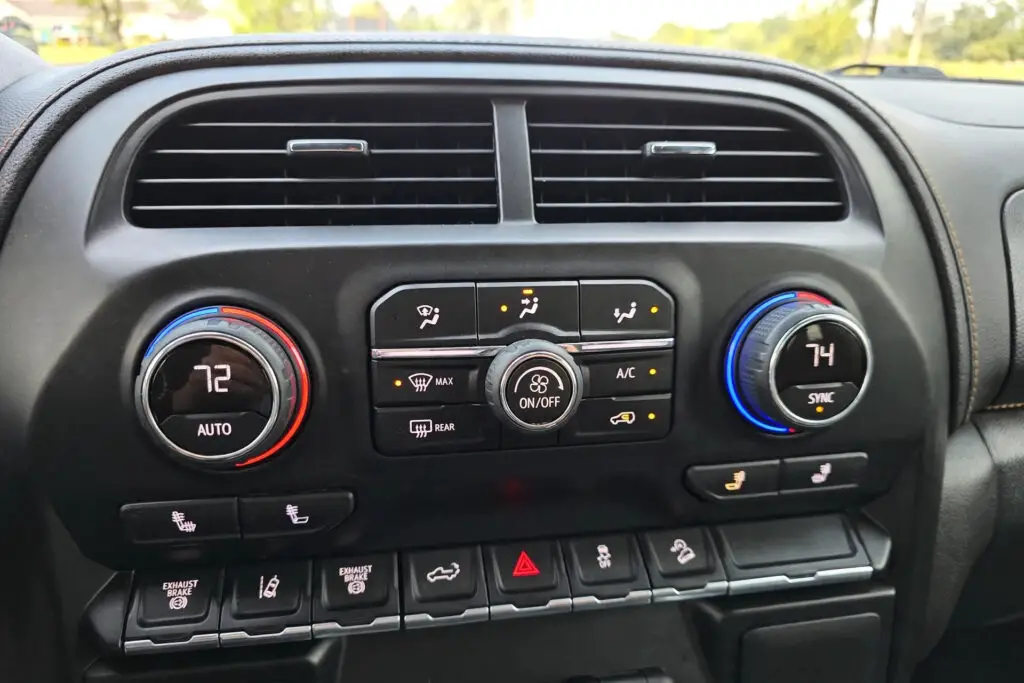
Some Silverado trucks with automatic climate control respond to a button sequence on the climate panel. We could not verify this method in GM service literature, so treat it as an owner reported method and try the fuse method first.
- Turn the ignition to ON without starting the engine.
- Press and hold AUTO and RECIRCULATE together for about 10 seconds until the HVAC lights flash.
- Wait 1 to 2 minutes while the actuators run a self test. You may hear gear movement behind the dash.
- Test the temperature on both sides.
Owners of older trucks also report a dial trick. Turn both temperature dials to full hot, wait 30 seconds, turn both to full cold, and repeat three times. We found no GM documentation for this trick, so use it only as a last resort before a shop visit.
Which Silverado Generations Need An AC Reset
The fuse pull recalibration works across all four Silverado generations because every Silverado HVAC module relearns actuator limits when power returns. The difference sits in fuse labels, fuse box locations, and how hard the actuator is to reach if replacement becomes necessary.
| Generation | Years | AC Reset Notes |
|---|---|---|
| GMT800 | 1999-2006 | Fuse pull works well. Driver side actuator sits under the dash and is easy to reach. Passenger side actuator needs dash removal. TSB 04-01-38-008 covers a wiring fault on these trucks. |
| GMT900 | 2007-2013 | Dual-zone climate control is common. Driver side actuator is accessible under the dash. |
| K2XX | 2014-2018 | More integrated dashboard with T15 Torx trim panels. Some 2015 and newer actuators use LIN-bus communication and may need a scan tool for full calibration. |
| T1XX | 2019-Present | Newest climate system. The fuse method still applies as a first step. Scan tool calibration is more common after actuator replacement. |
The 2014 model year needs care because the Silverado 1500 moved to K2XX while the 2014 Silverado HD stayed on the GMT900 platform. Check your VIN or door sticker to confirm your platform before you order parts or follow a generation-specific guide.
A diagram of the system helps you see where each actuator sits before you start. Our 2015 Chevy Silverado AC system diagram shows the layout for the K2XX trucks, which covers the largest group of trucks still on the road with this problem.
7 Signs Your Blend Door Actuator Failed
A reset only helps when the actuator lost its position. A worn out actuator with stripped gears will not relearn, no matter how many times you pull the fuse.
- Clicking or ticking behind the dashboard when you change temperature or vent settings
- Driver side blows hot while the passenger side blows cold, or the reverse
- Temperature stuck on hot or cold no matter where you set the dial
- Slow or no response when you adjust the climate controls
- Air comes from the wrong vents after a mode change
- One side changes temperature and the other does not on dual-zone trucks
- The same fault returns days after a reset
Clicking Behind The Dashboard
Stripped plastic gears click as the motor tries to move a door it cannot hold. The click often runs for about 30 seconds after key-on, then stops. A scan tool can confirm the fault, but the click alone points to the actuator.
One Side Hot Other Side Cold
Dual-zone trucks have separate actuators for each side. When one side stays hot, its actuator has usually failed or lost calibration. A reset may fix a calibration loss, but it will not fix stripped gears.
MotorTrend documented TSB 04-01-38-008, which covers an actuator harness contacting a sharp edge on the instrument panel support brace. Wires in that harness can short to ground and cause the same one-side-hot symptom, so a failed reset should lead you to check the wiring too.
Temperature Stuck On Hot


An actuator that defaults to the hot position often has a failed internal sensor. The module locks it in place after a failed sweep. Replacement is the fix, and a fresh calibration must follow the install.
An early system diagram shows how the doors and actuators fit together in the housing. Our 1999 Chevy Silverado AC system diagram maps the GMT800 layout, and the same basic design carried into later generations.
What An AC Reset Fixes And What It Cannot
Use the table below as a quick check before you spend a Saturday under the dash. If your AC blows warm on both sides, the problem sits in the refrigerant circuit, not the blend doors. A reset cannot add refrigerant or repair a compressor.
| A Reset Fixes | A Reset Cannot Fix |
|---|---|
| Lost actuator calibration | Stripped actuator gears |
| Dual-zone temperature mismatch after battery loss | Low refrigerant charge |
| Actuator stuck after a power interruption | Failed AC compressor or clutch |
| Module confusion after a dead battery | Clogged heater core |
| Minor electronic glitch in the climate module | Shorted actuator wiring harness |
If the vents blow no air at any fan speed, suspect the blower motor or blower resistor. If the engine temperature runs uneven, look at the cooling system first. Repair guides list the faults that point away from the actuator, and these faults need different repairs than a reset.
When To See A Mechanic For Silverado AC
See a mechanic when the reset fails twice, when the clicking continues after a successful calibration, or when you find a blown HVAC fuse that blows again after replacement. A fuse that keeps blowing points to a short in the harness, not a calibration problem.
A shop with GM GDS2 software can read HVAC trouble codes, run the actuator calibration routine directly, and test each actuator motor. That scan takes the guesswork out of a passenger side actuator that needs dash removal.
A Dallas GM repair shop published pricing of $220 to $450 for actuator replacement with GDS2 recalibration. The part alone runs $30 to $400 depending on brand, so a confident DIY owner can save on labor. The passenger side actuator on some years needs most of the dash removed, so weigh the labor before you start.
5 Silverado AC Reset Questions Answered
How Long Does An AC Reset Take
The fuse method takes about five minutes, including the 60 second wait and the 40 second calibration sweep. The battery method takes 15 to 20 minutes because of the longer discharge wait.
Does A Reset Fix Hot Air
It can fix hot air on one side when the cause is lost calibration, which often follows a dead battery. It will not fix a failed actuator with stripped gears or a wiring short.
Where Is The Silverado HVAC Fuse
The fuse label and location change by year, so check your owner’s manual or the fuse box lid diagram. Common labels are HVAC/ECAS, HVAC1, and HTR A/C, and the box sits under the hood or at the driver side end of the dash.
Does Battery Disconnect Reset AC
Yes, disconnecting the battery resets the climate control module along with every other module in the truck. Wait 10 to 15 minutes, reconnect positive first, then let the engine idle without touching the controls.
Why Does AC Stay Hot After Reset
A reset that fails usually means the actuator gears are stripped, the refrigerant is low, or the compressor clutch has failed. Book a scan with a shop that has GM GDS2 software to find the real fault.
Your Silverado AC Reset In 5 Minutes
Resetting the AC on your Chevy Silverado takes five minutes with the fuse method and fixes the most common cause of uneven cabin temperature. Start there, try the battery disconnect next, and treat the button sequence as a backup for automatic climate control trucks.
When a reset fails twice, stop repeating it and get the system scanned. A $220 to $450 actuator job beats a summer of hot air and a dashboard torn apart on a guess.