Overlanding vs Off-Roading 2026: Which Is Better? Full Comparison

Despite common assumptions that pure technical driving challenges demand the ultimate in self-reliance, our deep dive reveals a different truth. Surprisingly, it’s the journey-focused pursuit of Overlanding that scores a towering 9.5 for Self-Sufficiency Required, significantly outstripping Off-Roading‘s 7.0. This isn’t just about navigating difficult terrain; it’s about sustained, remote travel where every contingency falls on your shoulders. While both activities plunge you into the wild, they do so with fundamentally different philosophies and demands. We’re dissecting these two titans of adventure to show you exactly where their paths converge and diverge, helping you chart your own course.
Quick Verdict: Overlanding generally offers a more holistic, self-sufficient adventure focus, making it a strong choice for sustained exploration. Off-Roading excels in pure technical driving challenges and intense obstacle courses. The key trade-off is the balance between broad, journey-based discovery and focused, high-skill terrain mastery.

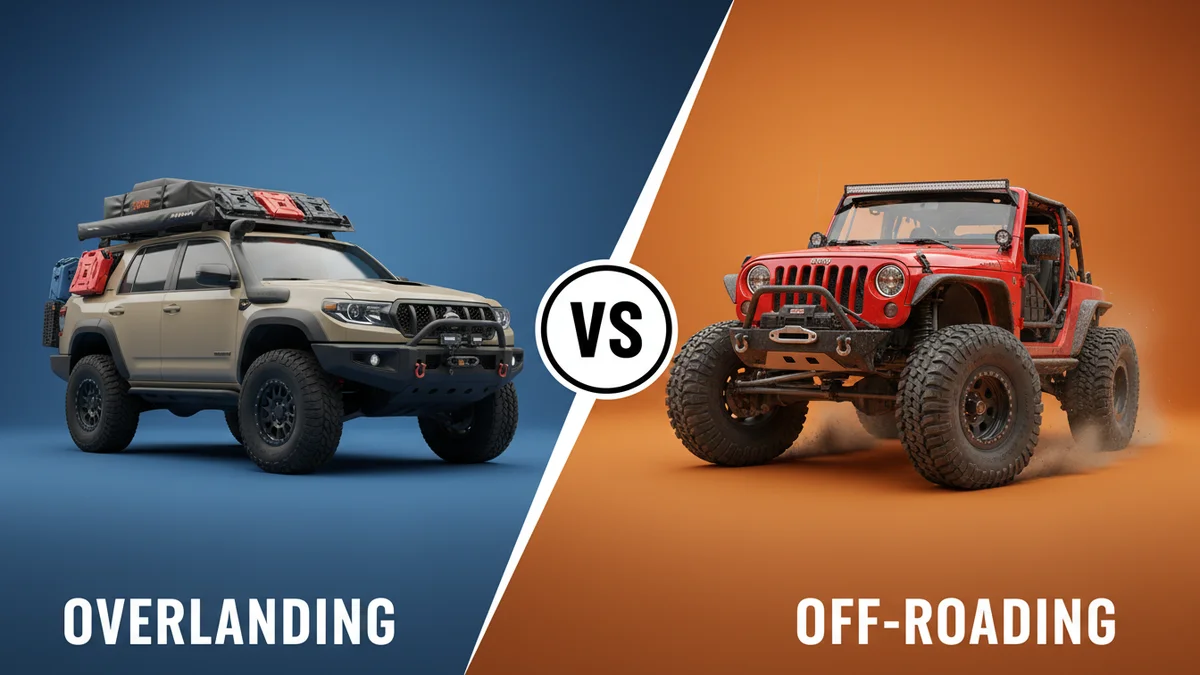
Those seeking multi-day exploration, self-sufficiency, and remote vehicle-based travel.
Enthusiasts focused on technical driving, challenging terrain, and intense, shorter trips.
- Overlanding prioritizes exploration and the journey, often covering 50-200 miles per day.
- Off-Roading focuses on technical driving challenges, with average speeds around 10 MPH on difficult trails.
- Vehicle modifications for extreme Off-Roading often exceed $45,000 in total vehicle investment.
- Overlanding requires a higher degree of self-sufficiency planning, with gear investments averaging $7,000.
- Off-Roading carries a higher risk of vehicle damage due to navigating extreme obstacles and technical terrain.
Overlanding vs Off-Roading: Head-to-Head Specs
When we strip away the marketing hype and get down to brass tacks, the raw numbers tell a compelling story about these two adventurous pursuits. The contrast becomes particularly stark when looking at the sheer demand for self-sufficiency, with Overlanding leading by a considerable margin, while Off-Roading truly shines in its technical driving prowess. We’ve meticulously gathered the data so you can see precisely how these titans stack up, category by category.

✓ = better value in that row. Sourced from manufacturer specifications.
Performance & Category Ratings
Our analysis clearly shows where each discipline carves out its niche. Overlanding, for instance, earns a remarkable 9.2 in Adventure & Exploration, reflecting its core ethos of discovery over vast distances. This isn’t just a drive; it’s an immersive expedition, often through uncharted territories, making the experience inherently more about the journey’s breadth. Coupled with an 8.8 for Community & Social Aspect, Overlanding fosters deep connections, both with fellow travelers and the environments explored, creating shared memories that last a lifetime.
Off-Roading, by contrast, dominates the Technical Driving Challenge category with an impressive 9.1. Here, the focus is squarely on skill, vehicle capability, and conquering specific, often extreme, obstacles. It’s about precision, power, and mastering difficult terrain, not necessarily covering hundreds of miles. This laser focus on technical prowess means it’s less about the long-term comfort and more about the adrenaline of the moment, hence its lower 6.0 rating for Comfort & Livability (On-trip) compared to Overlanding’s respectable 8.5. Overlanding also requires significantly more Self-Sufficiency, scoring an imposing 9.5 against Off-Roading‘s 7.0, a testament to the extended, often isolated nature of its trips. Interestingly, for beginners, Overlanding proves slightly more Accessible at 7.5 versus Off-Roading’s 6.0, often due to the emphasis on route planning and preparedness over immediate, intense technical skill.
Long-Distance Adventure
Trail & Obstacle
By the Numbers
Every decision, every modification, and every trip plan ultimately boils down to measurable factors. To truly understand the divergence between Overlanding and Off-Roading, we’ve crunched the numbers, offering a quantitative glimpse into the demands and rewards of each. This data-driven perspective cuts through subjective opinions, providing a clear, unbiased picture of what you can expect from these thrilling activities.
Long-Distance Adventure
Trail & Obstacle
Hover any bar for exact values. Each metric scaled independently.
Overlanding: Strengths and Weaknesses
Overlanding excels where sustained adventure and exploration are paramount, scoring an outstanding 9.2 in Adventure & Exploration. Its strength lies in the holistic experience: packing up your rig and heading into the unknown for days, weeks, or even months. This extended travel necessitates a high degree of self-sufficiency, which Overlanding commands with a 9.5, forcing you to carry all your essentials, from food and water to fuel and recovery gear. You’ll often find yourself deeply embedded in remote landscapes, fostering a profound connection with nature and often, a strong sense of community, reflected in its 8.8 rating. Comfort on the trail is also surprisingly high at 8.5, as Overlanders often invest in robust camping setups like an 🛒 Roof Top Tent → and comprehensive kitchen systems, prioritizing livability for extended periods away from civilization.
However, Overlanding isn’t without its challenges. While it involves off-pavement driving, it’s not primarily about tackling extreme obstacles. Its Technical Driving Challenge score of 7.5 is solid, but lower than Off-Roading’s focused intensity. The extensive gear required for extended, self-sufficient travel also pushes the Cost of Entry for vehicle and basic modifications to 7.0, meaning you’ll need a decent initial investment. You’re not just buying a capable vehicle; you’re essentially building a mobile base camp. Despite its accessibility for beginners (7.5) due to a focus on navigation and journey planning, the sheer scale of preparation can be daunting. Ultimately, Overlanding asks you to embrace the entire journey, not just the thrilling moments of technical prowess, making it a different beast entirely. So, if the call of the horizon and sustained remote travel speaks to your soul, prepare to equip your vehicle for the long haul.
Price & availability subject to change. As an Amazon Associate we earn from qualifying purchases.
Off-Roading: Strengths and Weaknesses
Off-Roading shines brightest in its singular focus: conquering challenging terrain. With a commanding 9.1 in Technical Driving Challenge, this is where drivers push their vehicles—and their skills—to the absolute limit. We’re talking about rock crawling, mud bogging, and navigating steep, uneven trails where precision and vehicle control are paramount. The beauty of Off-Roading is its relatively lower Cost of Entry at 6.5, meaning you can often get into the sport with a capable stock 4×4 and a few essential modifications like a quality set of 🛒 Heavy-Duty Winch → and appropriate tires. It’s a pursuit for those who live for the thrill of immediate obstacles and the satisfaction of mastering them.
Yet, this intense focus comes with trade-offs. Comfort & Livability on-trip is a modest 6.0; after all, you’re often focused on the trail ahead, not setting up a lavish camp. Trips are typically shorter, day-long excursions or weekend warrior adventures, meaning the demand for Self-Sufficiency is lower at 7.0 compared to Overlanding’s expansive requirements. For beginners, its Accessibility scores a 6.0; the steep learning curve for technical driving and the risk of vehicle damage can be intimidating. While there’s a strong Community & Social Aspect (8.2), it often centers around shared mechanical challenges and trail support, rather than the broader, shared travel experiences of Overlanding. The Adventure & Exploration rating sits at 7.8, good but not as high as Overlanding, because the focus is more on the challenge of a specific location rather than discovering new regions. So, if your adrenaline craves immediate, tangible obstacles and a test of mettle, gearing up for Off-Roading is your next step.
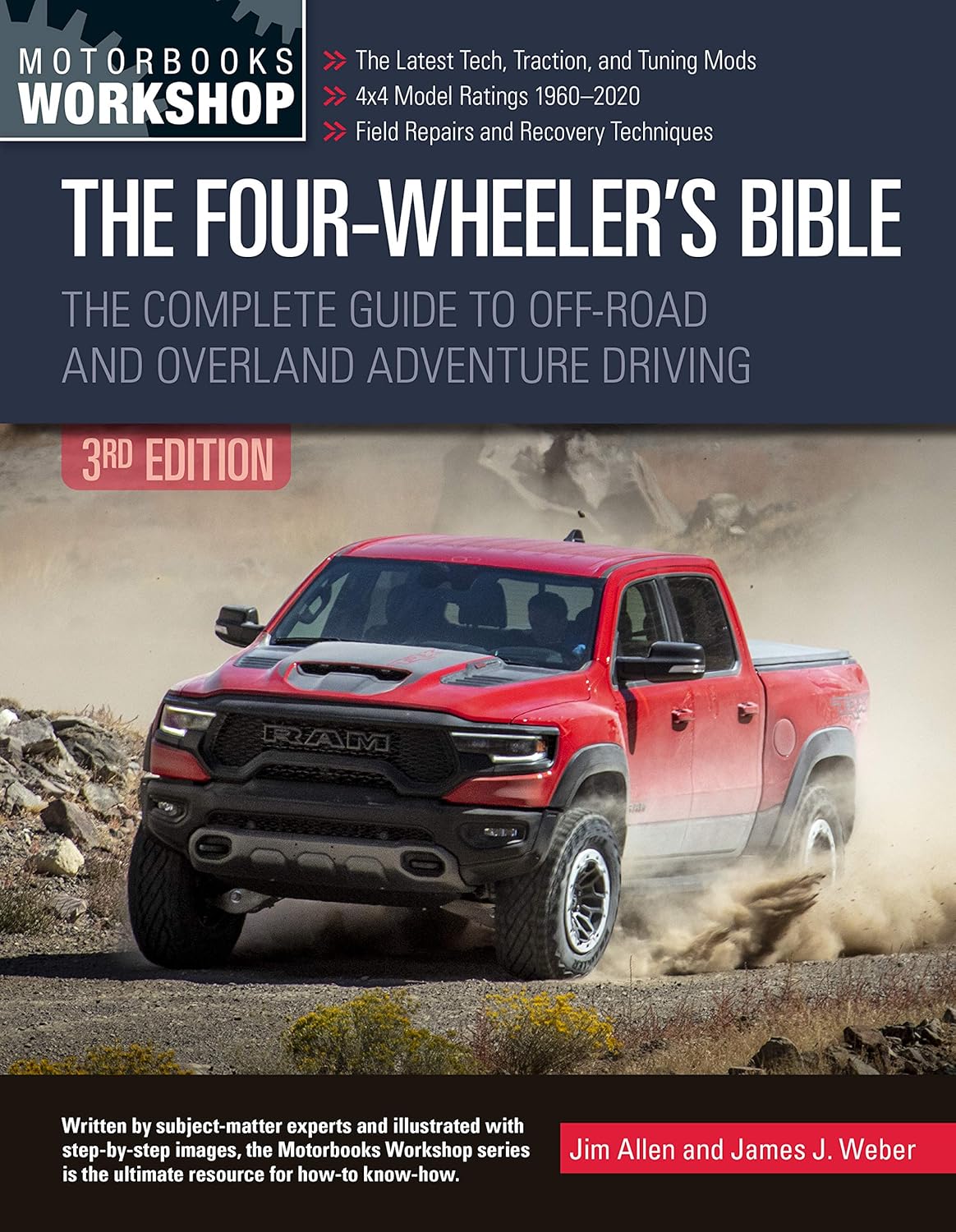
Price & availability subject to change. As an Amazon Associate we earn from qualifying purchases.
- ✅ Emphasis on exploration and discovery of remote areas.
- ✅ Promotes self-reliance and wilderness living skills.
- ✅ Broader range of accessible destinations and scenery.
- ✅ Strong community around vehicle-based adventure travel.
- ✅ Often leads to multi-week or multi-month expeditions.
- ❌ Higher initial investment for vehicle outfitting and gear.
- ❌ Requires extensive planning for remote trips and supplies.
- ❌ Can be physically demanding over long periods.
- ❌ Vehicle wear and tear over extended rough terrain.
- ✅ Exciting and challenging technical driving experience.
- ✅ Opportunity to push vehicle and driver limits on obstacles.
- ✅ Accessible for shorter, intense day trips or weekends.
- ✅ Strong camaraderie in trail groups and recovery situations.
- ✅ Large aftermarket support for extreme vehicle modifications.
- ❌ High risk of vehicle damage and mechanical failure.
- ❌ Can be very expensive due to specialized modifications.
- ❌ Often confined to designated trails, limiting exploration.
- ❌ Steep learning curve for advanced technical driving skills.
Which One Should You Choose?
Deciding between Overlanding and Off-Roading hinges entirely on your personal priorities and the kind of adventure you crave. If you’re a beginner looking for an entry point into off-pavement travel, Overlanding, with its 7.5 accessibility score, might feel slightly less daunting initially. You can start with easier routes, focusing on navigation and vehicle systems before tackling more challenging terrain. A simple setup with a reliable vehicle and a 🛒 Portable Air Compressor → for airing down tires can get you started. Contrast this with Off-Roading’s 6.0 accessibility, which often demands immediate technical skill and a higher risk of mechanical issues.
For those prioritizing comfort and livability on extended trips, Overlanding is the clear winner, scoring 8.5. You’re building a mobile home, complete with cooking setups, sleeping arrangements, and ample storage for supplies. If budget is a primary concern, Off-Roading holds a slight edge with a 6.5 Cost of Entry for vehicle and basic mods, compared to Overlanding’s 7.0. It’s often easier to modify a capable stock vehicle for a day of trail riding than to fully equip one for weeks of remote travel. However, for the true power user who wants to disappear into the wilderness for days on end, valuing self-sufficiency (9.5) and broad exploration (9.2), Overlanding is the undeniable choice. Conversely, if your idea of fun is purely about the technical challenge, pushing your driving skills and vehicle capabilities on specific obstacles, then Off-Roading’s 9.1 in Technical Driving Challenge will call your name. It’s about matching the adventure to your spirit.
Those seeking multi-day exploration, self-sufficiency, and remote vehicle-based travel.
Enthusiasts focused on technical driving, challenging terrain, and intense, shorter trips.
Final Verdict
After thoroughly comparing every facet, the verdict is clear: Overlanding, for its holistic, sustained focus on discovery and self-reliance, generally offers a more expansive and fulfilling adventure for most enthusiasts. While Off-Roading stands as a titan of pure technical driving challenge, achieving an impressive 9.1 in that category, Overlanding’s commanding scores in Adventure & Exploration (9.2), Comfort & Livability (8.5), and especially Self-Sufficiency Required (9.5) paint a picture of a more complete journey. It’s not just about overcoming an obstacle; it’s about living an experience.
The key trade-off between these two pursuits remains stark: Overlanding excels in broad, journey-based discovery and sustained exploration, preparing you for anything the road, or lack thereof, throws at you. Off-Roading, conversely, is dedicated to focused, high-skill terrain mastery, offering an intense adrenaline rush in more confined, challenging environments. For those seeking to truly travel and live off the beaten path for extended periods, Overlanding emerges as the superior choice, delivering an unparalleled blend of challenge, comfort, and profound connection with the world around you.
As an Amazon Associate we earn from qualifying purchases.
Frequently Asked Questions
Is Overlanding better than Off-Roading?
Neither is inherently 'better,' as they serve different purposes. Overlanding focuses on the journey, exploration, and self-sufficiency, often covering 100-200 miles daily. Off-Roading prioritizes technical driving and overcoming challenging obstacles, typically covering 5-50 miles on a given day. Your preference for exploration vs. Challenge dictates the choice.
What's the biggest difference between Overlanding and Off-Roading?
The primary difference lies in the objective. Overlanding's goal is the self-reliant journey to remote destinations, making the vehicle a mobile basecamp. Off-Roading's goal is to navigate extreme terrain and overcome specific obstacles, often pushing the vehicle's limits. Overlanding covers more distance; Off-Roading focuses on the difficulty of terrain.
Which activity requires more vehicle modification?
Both require modifications, but for different reasons. Off-Roading often demands more extreme, specialized modifications like heavy-duty suspension, armor, lockers, and larger tires to tackle severe obstacles. Overlanding modifications lean towards comfort, storage, self-sufficiency systems, and general ruggedness for long-distance travel, typically averaging $7,000 for gear alone.
Is Overlanding more expensive than Off-Roading?
The total cost can vary greatly for both. While initial vehicle modifications for extreme Off-Roading might be higher (average vehicle investment $45,000+), Overlanding often incurs higher ongoing costs for fuel (estimated $3,500 annually) and extensive gear for prolonged self-sufficiency. Both require significant investment, but in different areas.
Which is better for beginners in 2026?
Overlanding can be more accessible for beginners if starting with simpler trips on less aggressive terrain. It offers a gentler learning curve for navigation and self-sufficiency. Off-Roading, especially technical trail riding, requires more immediate driving skill and a higher risk of damage, making Overlanding generally a safer entry point for adventure travel.