
Truck Bed Organization Ideas [2026]

For most truck owners, the bed is a cavernous space where efficiency goes to die under a pile of shifting gear and misplaced tools. An unorganized truck bed not only leads to damaged equipment and wasted time but can also compromise vehicle safety and fuel economy through poor weight distribution. Whether you are a professional contractor managing high-value assets or an outdoor enthusiast hauling specialized gear, a “throw and go” approach is the fastest way to accelerate wear and tear on your vehicle. In this guide, we evaluate and rank the most popular truck bed organization ideas, from heavy-duty modular drawers to curated rack systems, to help you maximize every square inch of your pickup while ensuring maximum security and accessibility.

Ranked Heavy-Duty Drawer Systems for Secure Tool Storage
Recommended Best Deal Products


When analyzing storage solutions for professionals, modular drawer systems consistently rank at the top for both security and workflow optimization. These systems utilize High-Density Polyethylene (HDPE) construction, a material chosen for its exceptional strength-to-weight ratio and its inherent resistance to the harsh realities of the job site. HDPE remains impervious to chemical spills, including oil and gasoline, and features integrated UV inhibitors that prevent degradation even under constant exposure to direct sunlight. This makes it a superior alternative to traditional plywood builds which eventually rot, warp, or splinter.
The Foundation of Payload Efficiency
The primary engineering feat of systems like the DECKED Storage System is the ability to maintain a full load floor. By raising the floor of the bed, these systems create a massive sub-storage area while providing an upper deck rated for a 2,000-pound payload. This allows electrical contractors or fleet managers to store precision diagnostic equipment and power tools in secure drawers while still hauling pallets of conduit or heavy machinery on top. The integration of weatherproof sealing and EPDM gaskets ensures that moisture and dust stay out, protecting sensitive electronics during inclement weather.
Security and Ergonomics
Security is managed through a multi-layered approach. The drawers themselves feature integrated locking mechanisms, but they are also designed to be completely inaccessible once the truck’s tailgate is locked. This “double-lock” system provides peace of mind when leaving tools on-site overnight. Ergonomically, these systems are game-changers; pull-out drawers bring the tools to the user at waist height, effectively eliminating the need to crawl into the bed or reach over high bed rails, which is a leading cause of lower-back injuries in the trades.
By The Numbers: Drawer Systems
Reduction in Tool Retrieval Time
Upper Deck Load Capacity
Average Industry Warranty

Curated Cargo Slide Systems to Improve Bed Accessibility
For mobile mechanics and overland explorers, the most significant hurdle is accessing heavy equipment—such as portable generators, heavy compressors, or fully loaded fridges—that has migrated to the front of the bed. Cargo slide systems solve the “reach” problem by turning the entire truck bed into a giant, sliding drawer. These systems are curated based on their weight rating and extension percentage, allowing users to bring 100% of their cargo out past the tailgate for easy access from three sides.
Steel vs. Aluminum Engineering
The structural integrity of a cargo slide is paramount. Heavy-duty steel frames are recommended for those hauling machinery or construction materials, as they offer the rigidity needed to support up to 3,000 lbs of evenly distributed weight. Aluminum frames are a popular alternative for overlanders and weekend warriors, offering significant weight savings that help preserve the vehicle’s gross combined weight rating (GCWR). High-end models from brands like BedSlide or CargoGlide feature multiple locking positions (detents), which are essential for safe operation when the vehicle is parked on an incline or uneven terrain.
📋
Installation & Selection Logic
Recommended Best Deal Products


Decide between 70% extension (cost-effective) and 100% extension. 100% extension is critical for deep beds or when reaching the very front is mandatory.
Choose rubberized mats for grip or aluminum diamond plate for extreme durability and heavy sliding of crates.
Look for systems that utilize existing tie-down points to avoid drilling into the truck bed, preserving the vehicle’s resale value and corrosion protection.
Essential Truck Bed Dividers and Cargo Bar Configurations
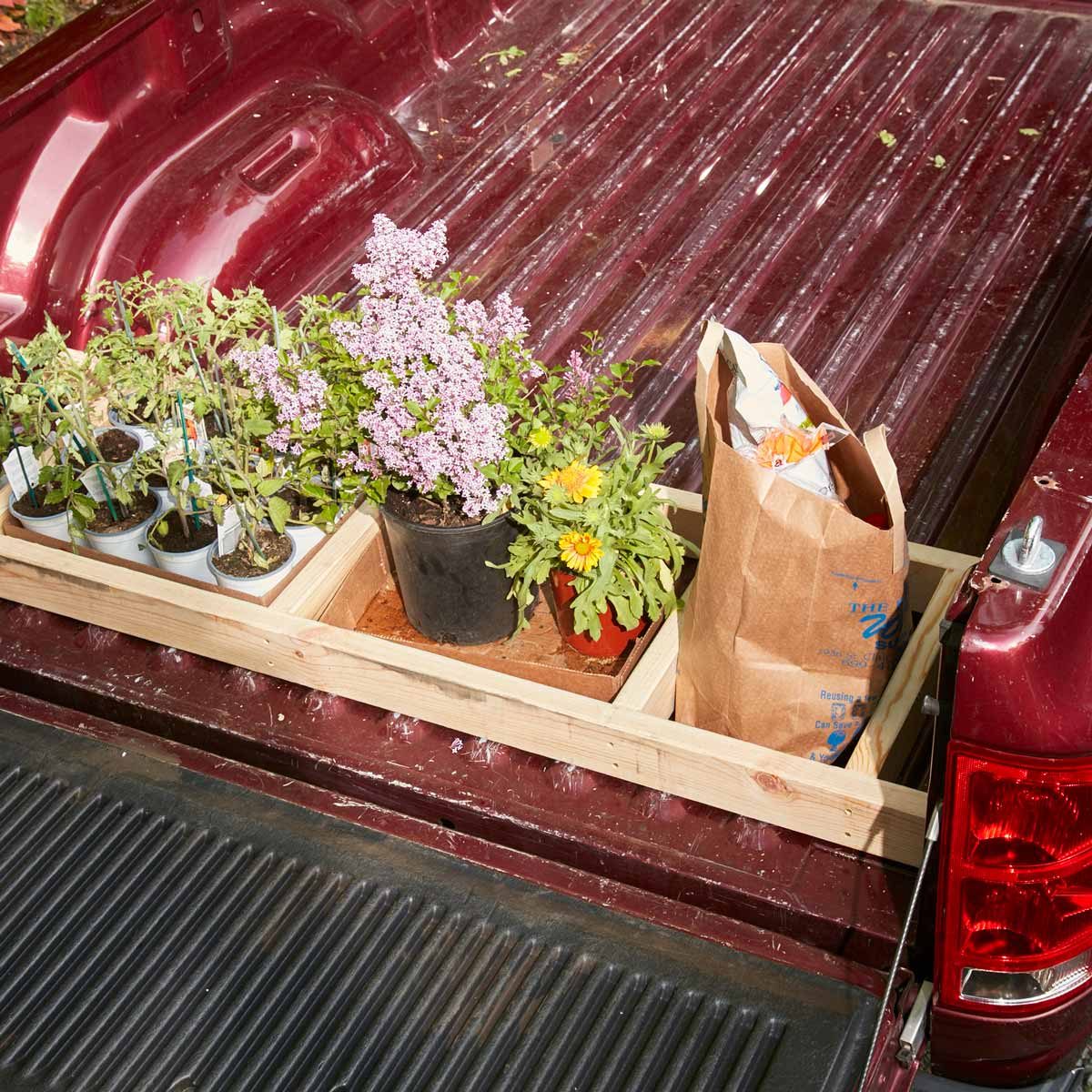
Not every organization problem requires a multi-thousand-dollar investment. For daily hauling—grocery bags, propane tanks, or individual toolboxes—the most effective tools are ratcheting cargo bars and bed dividers. These systems prevent “longitudinal shifting,” which occurs when cargo slides forward or backward during acceleration and braking. Unsecured loads are a massive safety liability; in the United States alone, they are responsible for over 50,000 crashes annually. Strategic use of dividers reduces this risk significantly by limiting movement and keeping the center of gravity stable.

Audible — Listen Free for 30 Days
One free credit a month and thousands of titles included.
Listen Free for 30 DaysOEM Track Integration
Modern trucks often come equipped with factory-installed track systems, such as the Toyota Deck Rail or Nissan Utili-track. Curated dividers designed specifically for these tracks are highly recommended as they lock into place and can be slid along the length of the bed to accommodate different cargo sizes. For trucks without these tracks, a Harbor Freight ratcheting bar provides a high-tension, universal solution that can be positioned anywhere in the bed. For lighter gear like sports equipment or camping supplies, a mesh “net and pocket” system provides immediate access without the weight of a rigid barrier.
Popular Swing-Away and Wheel Well Storage Solutions
Recommended Best Deal Products
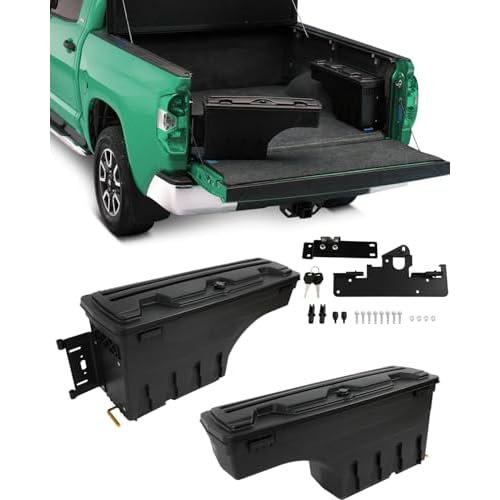
The area around and behind the wheel wells is often considered “dead space” because its awkward shape makes it difficult to stack large items. However, this is the ideal location for wheel well storage boxes. These units are designed to contour to the bed’s shape, preserving the critical width between the wheel wells—usually 48 inches in full-size trucks—needed to haul 4×8 sheets of plywood or drywall.
The 180-Degree Swing Logic
One of the most innovative designs in this category is the UnderCover SwingCase. This system uses a heavy-duty hinge that allows the storage box to swing 180 degrees over the tailgate. Instead of reaching over the side of the truck and straining your shoulders, you simply pull a lever and the gear comes to you. These cases typically offer 1.5 cubic feet of storage and support up to 75 lbs, making them the recommended spot for towing accessories, jumper cables, and hitches. They also feature a quick-release removal system; if you need to haul a wide load, you can lift the entire box off its hinges in seconds without tools.
✅ Pros
- Utilizes underused “dead space”
- High accessibility from the tailgate
- Weatherproof and lockable
- Removable for full bed width
❌ Cons
- Limited volume for large tools
- Can obstruct some tonneau covers
- Plastic construction vs aluminum
- Requires drilling in some models
Must-Know Elevated Rack Systems for Oversized Gear Management
When the bed is full, or the cargo is simply too long—think ladders, lumber, or kayaks—the only direction to go is up. Elevated rack systems represent the most efficient way to manage oversized gear without sacrificing the utility of the bed floor. Modern systems, like the Thule Xsporter or Yakima OverHaul HD, are engineered for multi-sport and professional use, offering height adjustability that allows you to drop the bars below the cab line for better aerodynamics when not in use.
Dynamic vs. Static Load Principles
Understanding the difference between dynamic and static weight is essential for safety. Most high-end aluminum rack systems can support up to 800 lbs of static weight (ideal for rooftop tents) and 500 lbs of dynamic weight (weight while the vehicle is in motion). These racks often feature T-slot channel integration, which allows for the seamless mounting of recovery boards, axes, and high-lift jacks using standard hardware. By shifting these bulky items to the rack, you free up the bed for more sensitive cargo that requires the protection of a tonneau cover or drawer system.
Vertical Expansion
Move long items like 12-foot lumber or ladders above the bed to keep the floor clear for tools.
T-Slot Versatility
Utilize side-mounting points for essential recovery gear or job-site lighting without taking up floor space.
Always verify your truck’s bed rail weight limits before installing a rack system. Overloading an elevated rack can cause structural damage to the bed rails and significantly increase the vehicle’s rollover risk due to a higher center of gravity.
Audible Premium Plus — Annual Membership
12 audiobook credits up front, plus the full Audible catalogue.
See Annual PlansIn summary, achieving a highly organized truck bed requires a multi-faceted approach tailored to your specific needs. Modular drawer systems like DECKED offer the best combination of security and payload maintenance for professional use, effectively turning your bed into a mobile workstation. Lateral accessibility via sliding trays and swing-away boxes prevents physical strain and improves workflow by bringing the cargo to you. Finally, utilizing vertical space with elevated racks is essential for managing specialized or oversized cargo that would otherwise compromise your hauling capacity. Evaluate your specific hauling frequency and the value of your cargo to select the storage system that yields the highest return on your investment. By implementing these expert-recommended solutions, you transform your truck from a cluttered hauler into a precision-engineered tool of efficiency.
Frequently Asked Questions
Do truck bed organizers reduce the available payload capacity?
Yes, every organization system has a ‘tare weight’ that subtracts from your truck’s total payload. For instance, a heavy-duty drawer system might weigh 200–250 lbs. It is critical to calculate your vehicle’s Gross Vehicle Weight Rating (GVWR) to ensure that the weight of the organizer plus your cargo does not exceed safe operating limits.
Are these organization systems compatible with tonneau covers?
Compatibility varies significantly by brand. Low-profile systems like drawers or bed slides are usually compatible with most folding or roll-up tonneau covers. However, elevated racks and certain side-mount boxes require specific mounting brackets or ‘T-slot’ tracks to work in tandem with a cover. Always verify clearance height before purchase.
Is drilling required for most truck bed organization installations?
Modern designs prioritize ‘no-drill’ installations by utilizing existing factory tie-down points or stake pockets. While heavy-duty commercial slides may still require through-bolting for maximum weight ratings, many popular systems like DECKED or SwingCase use clamping mechanisms or existing bolt holes to preserve the integrity of the truck bed and prevent rust.
How do I maintain an organized truck bed in extreme weather?
Choose systems with integrated weather stripping and EPDM gaskets. Aluminum and high-density polyethylene are preferred materials for temperature extremes. For open-bed setups, look for IP-rated waterproof storage bins and ensure that drainage holes in the bed are not obstructed by your organization’s framing to prevent water pooling and corrosion.
Which organization idea is best for high-value tools?
For high-value items, internal locking drawer systems are the gold standard. They provide a ‘stealth’ storage solution where tools are hidden beneath a secondary floor. When combined with a locking tailgate, these systems create a multi-layered security barrier that is significantly harder to breach than traditional stand-alone toolboxes.



![Frame Mount Running Board Brackets [2026]](https://truckguider.com/wp-content/uploads/2026/03/featured-d90a6df5-768x768.webp)